
Discover how this innovative building material transforms comfort, savings, and sustainability
We've all been there: stepping into a home on a sweltering summer day and feeling an instant wave of relief—the kind that makes you sigh, "Ah, finally, cool air." Or shivering through a winter evening, cranking up the heater but still feeling drafts seep through walls. What's the invisible force behind that comfort (or lack thereof)? Thermal insulation. It's the quiet guardian of your home's temperature, the unsung hero that keeps extreme weather outside where it belongs.
Here's the thing: heating and cooling account for nearly half of the energy used in the average home, according to the U.S. Department of Energy. That means if your walls, ceilings, or floors aren't properly insulated, you're not just feeling uncomfortable—you're throwing money out the window (literally). Drafty rooms force your HVAC system to work overtime, driving up bills and pumping more carbon into the atmosphere. But what if there was a building material that didn't just look good, but actively worked to keep your space balanced, efficient, and eco-friendly? Enter MCM Wood Line.
First, let's demystify MCM. Short for Modified Composite Material, MCM is a game-changer in the building industry—a blend of natural minerals, polymers, and fibers engineered to be lightweight, durable, and endlessly versatile. Think of it as nature and technology shaking hands: it borrows the best of natural materials (like the warmth of wood or the texture of stone) and amplifies their strengths while ditching the weaknesses (hello, no warping, rotting, or pest problems).
MCM Wood Line is a standout in this family. At first glance, it's easy to mistake it for real wood—those rich, organic grains, the subtle variations in tone, the way light plays off its surface. But look closer, and you'll realize it's so much more. This isn't just a pretty face; it's a thermal insulation powerhouse designed to make your home feel like a sanctuary, no matter the weather outside.
Let's get a little science-y (but don't worry, we'll keep it simple). Heat moves in three ways: conduction (through direct contact, like a hot pan on a stove), convection (through air or liquid flow, like warm air rising), and radiation (like the sun warming your skin). Good insulation slows down all three, and MCM Wood Line is a pro at this.
The magic lies in its microscopic structure. MCM Wood Line is built with layers of composite materials that trap tiny pockets of air. Air is a poor conductor of heat, so these pockets act like mini barriers, slowing down heat transfer. Imagine wrapping your home in a blanket filled with millions of tiny, insulating bubbles—that's MCM Wood Line at work. Whether it's a scorching summer day or a freezing winter night, that barrier keeps the outside temperature from crashing the party inside.
| Material | Thermal Conductivity (W/m·K)* | R-Value (per inch)** | Key Insulation Benefit |
|---|---|---|---|
| MCM Wood Line | 0.03–0.05 | 3.5–4.0 | Air-trapped structure resists heat flow; consistent insulation across surfaces |
| Solid Wood (Oak) | 0.15–0.20 | 1.0–1.3 | Natural insulation but prone to gaps/cracks over time; lower R-value |
| Fair-Faced Concrete | 1.2–1.7 | 0.08–0.10 | Poor insulator; conducts heat rapidly, leading to temperature swings |
| MCM Flexible Stone | 0.04–0.06 | 3.0–3.8 | Similar air-pocket structure; stone aesthetic with strong insulation |
*Lower thermal conductivity = better insulation. **Higher R-value = better resistance to heat flow.
As the table shows, MCM Wood Line outperforms traditional wood and concrete by a mile. Its low thermal conductivity means heat struggles to pass through, while its high R-value ensures your space stays stable. And if wood isn't your vibe? MCM Flexible Stone offers similar insulation benefits with a sleek, modern stone look—proof that MCM's insulation tech isn't limited to one style.
Let's talk numbers—because comfort is great, but saving money? Even better. Homeowners who switch to MCM Wood Line often report a 20–30% drop in their monthly heating and cooling bills. Think about that: if your average HVAC bill is $200, that's $40–$60 back in your pocket each month, or $480–$720 a year. Over a decade, that's nearly $7,200—enough for a vacation, a home renovation, or padding your savings.
But the benefits go beyond your wallet. Less time running the AC or heater means burning less fossil fuel, which translates to a smaller carbon footprint. The average home emits about 5 tons of CO₂ annually from heating and cooling; a 25% reduction would cut that by 1.25 tons—equivalent to planting 25 trees. It's a small change with a big impact for the planet.
And let's not forget durability. Unlike real wood, MCM Wood Line doesn't warp in humidity, crack in dry air, or get eaten by termites. It's fire-resistant, water-resistant, and stands up to harsh weather—so once it's installed, you won't be replacing it anytime soon. That longevity adds another layer of savings: no costly repairs or replacements, just consistent performance for decades.
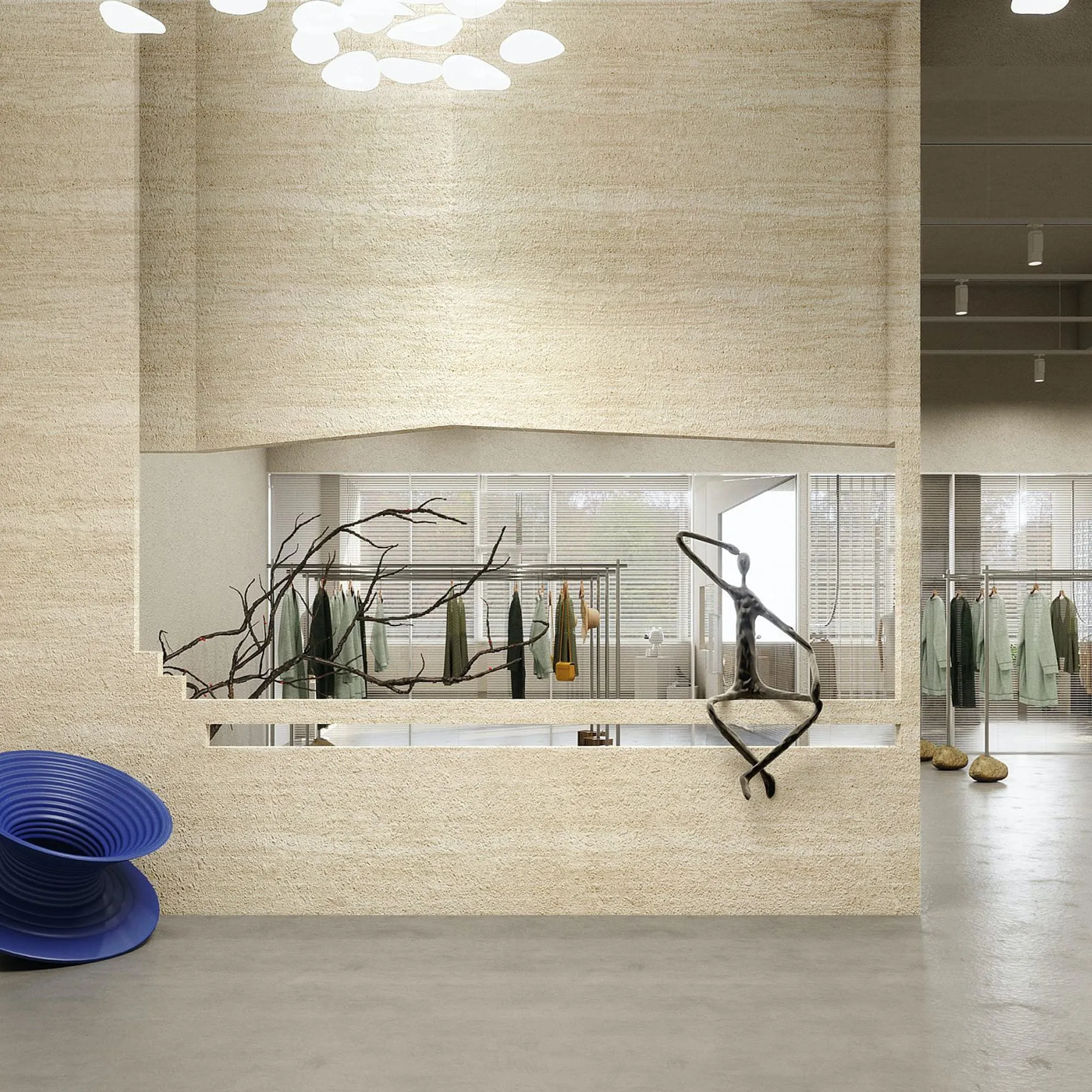
MCM Wood Line is a rockstar, but it's not the only player in the MCM insulation band. The MCM Big Slab Board Series, for example, is perfect for larger spaces like commercial buildings, warehouses, or high ceilings. These extra-large panels mean fewer seams, creating a continuous insulation barrier that keeps even expansive areas energy-efficient. Imagine a retail store with 20-foot ceilings—no more hot spots near the roof or cold drafts by the windows, just consistent comfort for shoppers and staff.
Then there's Wood Grain Board, which complements Wood Line with a range of wood-inspired textures—from weathered barn wood to smooth teak—all with the same insulation benefits. It's ideal for accent walls, ceilings, or outdoor spaces (yes, it's UV-resistant too!), proving that style and efficiency can coexist everywhere in your home.
Even MCM's stone-look options, like Travertine (Starry Green) or Lunar Peak Silvery, bring insulation to the table. These materials mimic the elegance of natural stone but without the weight or poor insulation of real stone. A modern kitchen with Lunar Peak Golden backsplash isn't just stunning—it's quietly keeping your kitchen cool when the oven's on, or warm on chilly mornings.
Take the Rodriguez family in Texas, for example. They renovated their 1970s home last year, swapping drafty wooden siding for MCM Wood Line. "Summer here is brutal—temperatures hit 100°F regularly," says Maria Rodriguez. "Before, our AC ran nonstop, and the upstairs was always 10 degrees hotter than the main floor. Now? The house stays cool all day, even with the AC set 5 degrees higher. Our electric bill dropped $50 a month, and the kids finally want to play in their upstairs rooms again."
Or consider architect James Chen, who used MCM Big Slab Board Series in a boutique hotel in Colorado. "The client wanted a rustic, mountain vibe but also needed to meet strict energy codes," he explains. "MCM Big Slab gave us the warm, natural look of stone with the insulation performance we needed. Guests rave about how cozy the rooms are in winter, and the hotel's energy costs are 28% lower than projected."
At the end of the day, building materials are more than just parts of a wall—they're investments in your quality of life, your finances, and the planet. MCM Wood Line checks all the boxes: it makes your home more comfortable, saves you money, reduces your environmental impact, and looks beautiful doing it. It's not just about insulation; it's about creating spaces that feel like home, work for your budget, and leave the world a little better than you found it.
So whether you're building a new home, renovating an old one, or just dreaming of a cozier space, remember: the right materials matter. MCM Wood Line isn't just keeping up with the times—it's leading the way, proving that you don't have to choose between beauty and efficiency. With MCM, you get both, wrapped up in a package that's built to last.
Recommend Products












