
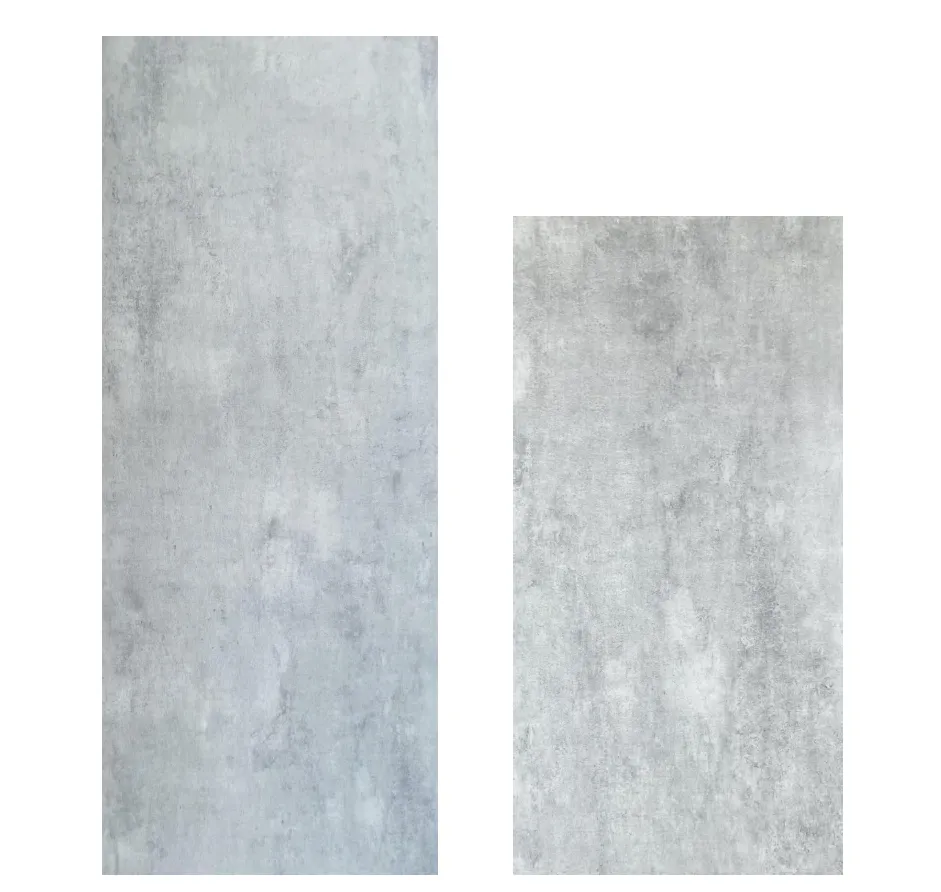
Walk into any space—whether it's a sunlit café with exposed brick walls, a sleek office tower with glass and steel, or a centuries-old library with stone archways—and you'll notice something fundamental: the materials that shape it aren't just there . They tell a story. They set a mood. They bridge function and feeling. For decades, architects and designers have danced with a familiar challenge: how to marry strength with soul, durability with beauty. Traditional building materials—marble that cracks under stress, concrete that feels cold and unyielding, stone that's heavy and hard to shape—often forced compromises. But what if there was a material that refused to choose? Enter Modified Cementitious Marble Concrete (MCM) boards: a revolution in building materials that's not just changing how we build, but how we experience the spaces we call home, work, and everything in between.
At its core, MCM is a love letter to both science and art. It starts with the humble cementitious matrix—the same stuff that's held up bridges and buildings for over a century—but reimagined. Engineers and material scientists didn't just tweak the formula; they collaborated with it. By infusing it with advanced fibers, modifying its chemical composition, and integrating cutting-edge manufacturing techniques like 3D printing, they created a material that's as tough as it is tender. It's the kind of innovation that makes you wonder: Why didn't we think of this sooner? But perhaps that's the nature of progress—sometimes, the most transformative ideas are the ones that blend the old and the new, the rigid and the flexible, the practical and the poetic.
Let's talk about marble, that timeless symbol of luxury. For centuries, it's adorned palaces, museums, and grand foyers. Its veined patterns are nature's artwork, each slab unique. But marble is also finicky. It's heavy—so heavy that installing large slabs requires cranes and reinforced structures. It's brittle—one wrong impact, and a crack can spiderweb across its surface, ruining the entire piece. And it's porous, staining easily if you spill a glass of red wine or forget a coaster. Then there's traditional concrete: strong, yes, but often dismissed as "industrial" or "cold." Its gray monotony can drain the warmth from a room, and while it's durable, it lacks the organic charm of stone or wood.
Wood, on the other hand, brings warmth and life to spaces. Its grains tell the story of years of growth, of sun and rain and wind. But wood warps, rots, and burns. In humid climates, it swells; in dry ones, it shrinks. It's a material that demands constant care, a high-maintenance companion in the quest for beauty. And then there's stone—natural stone, with its rough textures and earthy tones. It's durable, but again, weight is a problem. Try hanging a large stone slab on a curved wall, or using it to clad a lightweight modern structure. It's not just impractical; it's often impossible.
These limitations aren't just technical—they're emotional. A designer might dream of a curved wall wrapped in the soft beige of travertine, but traditional travertine is too rigid to bend. A homeowner might want the raw, honest look of fair-faced concrete in their living room, but worry it will make the space feel like a warehouse. An architect might envision a skyscraper with a facade that shimmers like marble but weighs half as much, reducing the building's carbon footprint. For too long, "no" was the answer. Until MCM arrived.
MCM boards are the result of asking a different question: What if we built a material that could do it all? The answer lies in its name: "modified cementitious" means the base is a cement-like mixture, but enhanced with polymers, fibers, and other additives that boost its strength and flexibility. "Marble concrete" hints at its aesthetic ambition—mimicking the look of natural stone, marble, wood, or even metal, but with the durability of concrete. And "board" speaks to its practicality: thin, lightweight sheets that are easy to transport, install, and shape.
But MCM isn't just a single product—it's a family. Walk through the MCM catalog, and you'll find series designed for every vision. There's the MCM Big Slab Board Series , which offers slabs up to 3 meters long, perfect for creating seamless, expansive surfaces that feel like they were carved from a single block of stone. Imagine a kitchen backsplash that runs from counter to ceiling without a single seam, or a bathroom wall where the pattern flows uninterrupted—no more grout lines breaking the illusion of grandeur. Then there's the MCM Flexible Stone technology, a game-changer for curved or irregular surfaces. Traditional stone would crack if you tried to bend it, but MCM flexible stone bends like a sheet of thick paper, conforming to arches, columns, and even rounded furniture pieces. It's the material that finally says, "Yes, you can have that curved fireplace surround you sketched."
A Designer's Dream: The Story of Lila's Curved Wall
Lila, an interior designer in Barcelona, recalls the moment she first used MCM flexible stone. "I was working on a renovation of a 1920s apartment with these beautiful arched doorways," she says. "The client wanted the living room wall to curve gently around the arch, clad in something that felt old-world but modern. Traditional travertine was too rigid—we tried samples, and they snapped when we bent them even slightly. Then I found MCM flexible stone in
travertine (beige)
. It had that warm, porous texture of natural travertine, but when we held it up to the curve, it just…
molded
to it. The client cried when she saw it. It wasn't just a wall anymore; it was a hug. That's the magic of MCM—it doesn't just build spaces; it
comforts
them."
Then there's the aesthetic variety. MCM doesn't just copy natural materials—it elevates them. Take wood grain board , for example. Traditional wood paneling can warp, fade, or attract termites, but MCM wood grain board captures every knot, every swirl, every imperfection that makes wood feel alive—without the upkeep. Run your hand over it, and you'll swear it's real wood; the texture is so precise, you can almost smell the forest. Or fair-faced concrete , a finish that celebrates the raw, unpolished beauty of concrete but with a smoother, more consistent surface. It's industrial chic without the industrial hassle—no worrying about cracks or stains, just the quiet confidence of a material that looks better with age.
Beauty is subjective, but strength is measurable. And MCM doesn't just look good—it performs. Let's talk numbers: traditional marble has a flexural strength of about 7-10 MPa (megapascals), which means it can bend only a little before breaking. Traditional concrete clocks in around 20-30 MPa. MCM? Thanks to its modified cementitious matrix and fiber reinforcement, it boasts flexural strengths of 40-50 MPa. That's more than double the strength of traditional concrete, and five times that of marble. What does that mean for you? A wall that can withstand the vibrations of a busy city street, a floor that won't crack under heavy furniture, a facade that resists the wear and tear of rain, snow, and UV rays.
But strength isn't just about resisting breakage—it's about longevity. MCM is designed to age gracefully. Unlike natural stone, which can etch or stain with time, MCM is non-porous (when sealed) and resistant to chemicals, mold, and mildew. A coffee spill on a marble countertop might leave a permanent mark; on an MCM polish concrete board, a quick wipe with a damp cloth is all it takes. And because MCM is made from inorganic materials, it doesn't fade in sunlight. That vibrant travertine (starry blue) accent wall in your sunroom? It'll look just as bright in 20 years as it did on day one.
| Feature | Traditional Marble | Traditional Concrete | MCM Boards |
|---|---|---|---|
| Weight (per sq.m) | 40-50 kg | 25-30 kg | 8-12 kg |
| Flexural Strength | 7-10 MPa | 20-30 MPa | 40-50 MPa |
| Flexibility | Brittle (no bending) | Rigid (minimal bending) | Flexible (bends up to 30° without breaking) |
| Aesthetic Variety | Limited (natural patterns only) | Monotonous (gray, unless stained) | Extensive (marble, wood, stone, metal, custom colors/patterns) |
| Installation Ease | Heavy; requires specialized labor | Heavy; requires formwork | Lightweight; can be cut with standard tools; adhesive installation |
| Maintenance | High (sealing, stain removal) | Medium (sealing, occasional patching) | Low (wipe clean; no sealing required for most finishes) |
MCM isn't just for high-end design projects—it's for anyone who wants more from their space. Let's explore how it's transforming different environments:
Your home is your sanctuary, and MCM understands that. In living rooms, wood grain board adds warmth without the worry of scratches from kids or pets. In kitchens, MCM big slabs in fair-faced concrete create countertops that are heat-resistant (no more worrying about hot pans) and stain-proof (goodbye, permanent coffee rings). Bathrooms benefit from MCM's moisture resistance—imagine a shower wall clad in travertine (beige) that looks like it belongs in a spa, but won't mold or mildew. Even outdoor spaces, like patios or pool surrounds, thrive with MCM; its UV resistance means the color won't fade, and its slip-resistant textures keep families safe.
Mark, a homeowner in Portland, replaced his outdated tile fireplace with MCM rough granite stone (medium grey) . "The old tile was chipped, and the grout was stained," he says. "I wanted something that felt rugged, like a mountain lodge, but didn't require the upkeep of real granite. MCM was perfect. It took two days to install—no heavy lifting, no mess. Now, when I sit by the fire, the stone feels warm to the touch, not cold like tile. It's become the heart of the house."
In commercial design, first impressions matter. Restaurants, hotels, and retail stores use MCM to create spaces that customers remember—and return to. A boutique in Tokyo uses MCM 3D Printing Series to create custom, geometric facades that change color with the light, drawing pedestrians in. A hotel chain in Bali uses bamboo mat board in its lobbies, evoking the island's natural beauty but with the durability to withstand thousands of guests' footsteps. Even offices are getting in on the action: foamed aluminium alloy board (vintage silver) adds a sleek, industrial edge to meeting rooms, while weaving (khaki) panels in breakout areas create a cozy, café-like vibe that encourages collaboration.
One of MCM's most meaningful applications is in historical renovations. Old buildings often have delicate structures that can't support heavy traditional materials, but they deserve to be restored with respect. In Rome, a team restoring a 17th-century church used MCM travertine (vintage gold) to replicate the original travertine columns. "The original columns were crumbling, and replacing them with real travertine would have added too much weight to the foundation," says Carlo, the lead architect. "MCM matched the color and texture perfectly, but at a third of the weight. Now, the church stands strong, and visitors can't tell the difference between the original stone and the MCM. That's preservation at its best—keeping history alive without sacrificing safety."
In a world increasingly focused on sustainability, MCM has another trick up its sleeve: it's eco-friendly. Traditional stone mining is resource-intensive, often leaving scars on landscapes. MCM, by contrast, uses recycled materials in its cementitious matrix, reducing the need for virgin resources. Its lightweight nature also cuts down on transportation emissions—trucks can carry more MCM boards per trip than traditional stone slabs, lowering carbon footprints. And because MCM is so durable, it reduces the need for frequent replacements, minimizing waste over time. It's building materials with a conscience—proof that strength and sustainability can go hand in hand.
From Desert to City: The Gobi Panel's Sustainable Story
The
Gobi Panel
, part of the MCM collection, takes sustainability a step further. Inspired by the textures of the Gobi Desert, it's made using recycled sand and minerals, giving new life to materials that would otherwise end up in landfills. "We wanted to create a panel that felt connected to the earth," says Mei, a materials engineer on the Gobi Panel team. "The Gobi Desert is a place of resilience—life finds a way there, even in harsh conditions. The Gobi Panel is the same: tough, beautiful, and born from what others discard. It's our small way of honoring the planet while building for the future."
As technology advances, so too will MCM. Researchers are already experimenting with self-healing MCM boards that repair small cracks on their own, using bacteria that produce limestone when exposed to water. Others are working on MCM panels embedded with solar cells, turning building facades into power generators. The possibilities are endless—and exciting. But perhaps the most promising thing about MCM isn't its future innovations; it's its present impact. It's a material that empowers creators to dream bigger, build smarter, and care more deeply about the spaces they design.
So, the next time you walk into a space that takes your breath away—a hotel lobby with walls that glow, a home with a fireplace that wraps around you, a historic building that feels both ancient and new—take a closer look. Chances are, you're looking at MCM. It's not just a building material; it's a storyteller. A problem-solver. A bridge between what was and what can be. And in a world that often asks us to choose between strength and beauty, MCM simply says: "Why not both?"
Because at the end of the day, the best buildings aren't just built—they're felt. And MCM? It's here to make sure every space feels like it was built for us.
Recommend Products












