
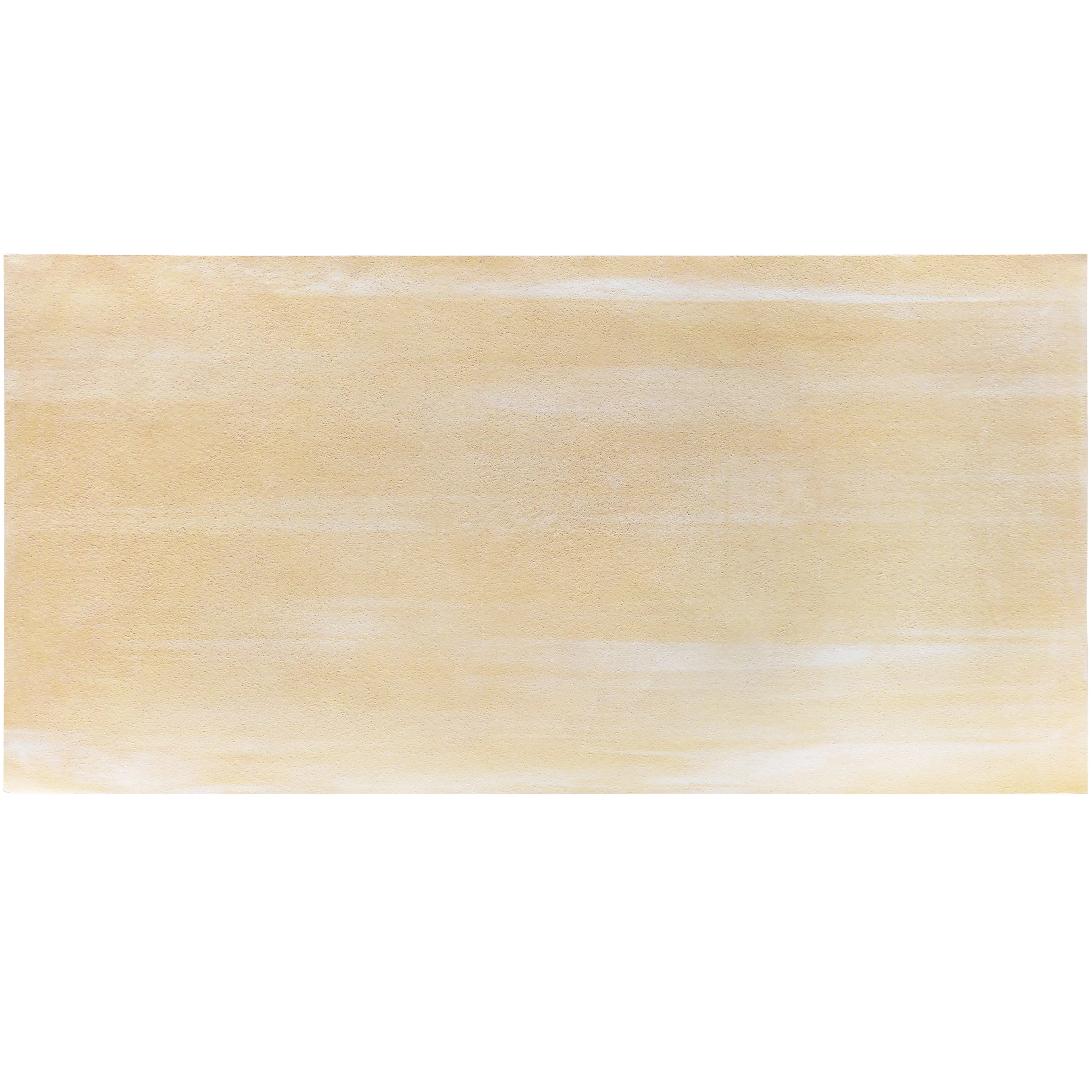
In the quiet moments of a morning, when sunlight spills through a window and touches a wall, have you ever paused to notice how the surface beneath that light feels? Not just looks—feels. Is it cold and unyielding, like a slab of untouched concrete? Or warm, almost alive, with texture that seems to breathe? Building materials are more than just structural elements; they're storytellers. They shape the way we experience space, the memories we attach to rooms, and even the moods we carry through our days. Today, we're diving into one such storyteller: Modified Cementitious Sandstone Cloude. It's a material that defies the rigid stereotypes of "cement-based" products, blending strength with softness, innovation with nature, and science with soul. Let's unpack its composition, understand what makes it unique, and explore how it dances with other materials—like MCM flexible stone, fair-faced concrete, and wood grain board—to create spaces that don't just exist, but resonate.
At first glance, you might mistake Sandstone Cloude for a natural stone pulled from a misty mountain quarry. Its surface ripples with subtle undulations, like the surface of a lake touched by a gentle breeze, and its color shifts—soft beiges, warm taupes, hints of gray—depending on the light. But look closer, and you'll realize this is no ordinary stone. Modified Cementitious Sandstone Cloude is a masterpiece of material engineering, born from the desire to marry the organic beauty of natural sandstone with the durability and versatility of modern cement technology. It's "modified" because it's not just cement and sand mixed together; it's a carefully crafted blend of aggregates, binders, and additives that transform a humble mixture into something that feels almost… alive.
Let's start with the basics: the core components. At its heart, Sandstone Cloude relies on a Portland cement base—strong, reliable, the backbone of construction for over a century. But here's where the magic begins: instead of using coarse, uniform sand, the creators of Sandstone Cloude source fine, irregularly shaped silica sand, some as fine as dust, others as small as a grain of table salt. This variety in particle size is what gives the material its "cloud-like" texture—no two areas feel exactly the same under your fingertips. Then there are the mineral aggregates: crushed limestone (beige) powder, which adds warmth to the color palette, and feldspar, which catches light and gives the surface a subtle, pearlescent glow. These aggregates aren't just fillers; they're intentional, chosen for how they interact with light and touch.
But what truly sets Sandstone Cloude apart is its additive package. Traditional cement can be brittle, prone to cracking under stress or temperature changes. To counteract this, the formula includes a polyvinyl alcohol (PVA) fiber additive—ultra-thin fibers, thinner than a human hair, that weave through the mixture like a hidden net. These fibers absorb stress, making the material flexible enough to bend slightly without breaking, a trait it shares with MCM flexible stone, another innovation in the world of modern cladding. There's also a water-repellent additive, derived from natural plant resins, that protects against moisture without sealing the surface completely—allowing the material to "breathe" and age gracefully, like a well-loved leather jacket.
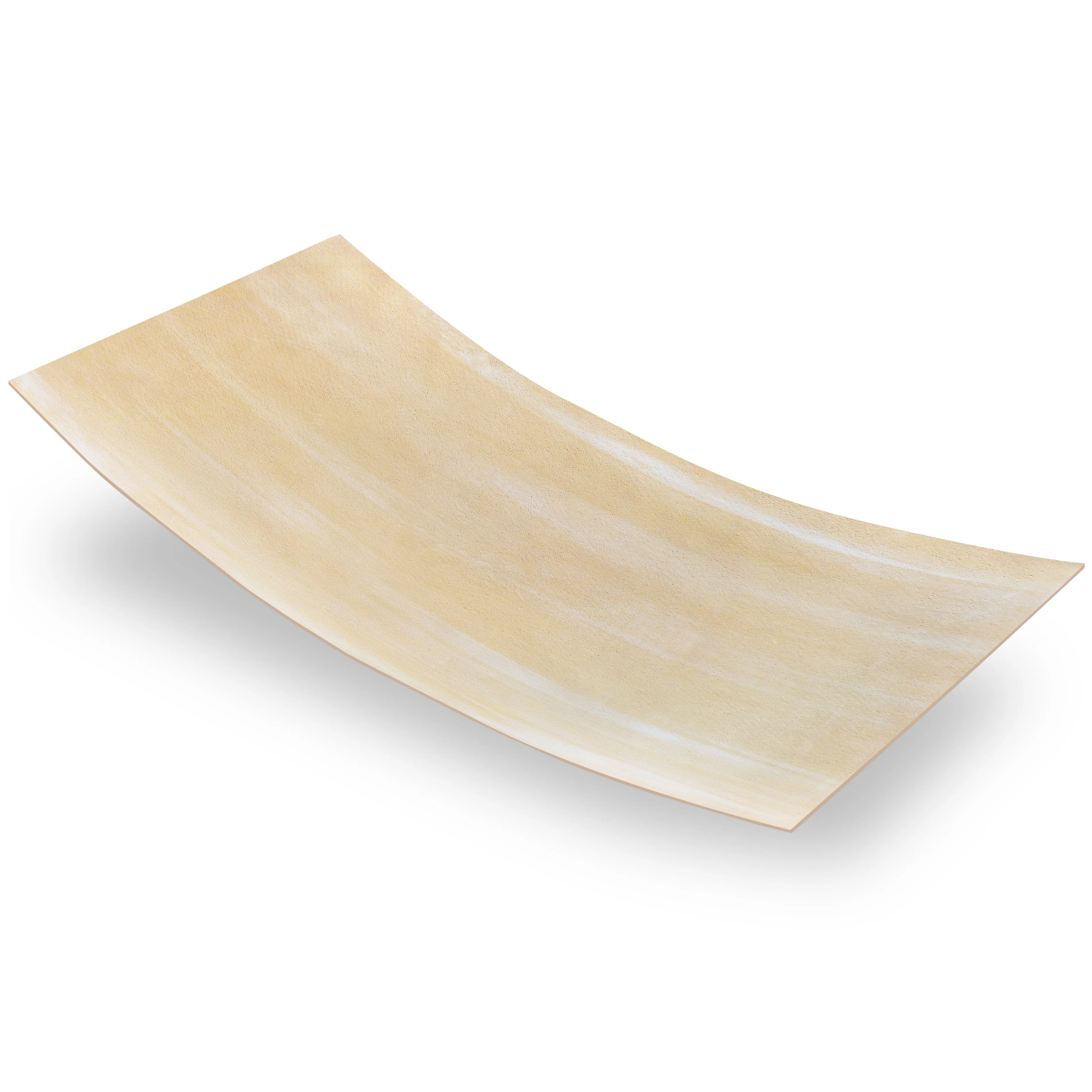
To truly appreciate Sandstone Cloude, it helps to see how it stands alongside its peers. Let's take a closer look at three materials it often shares the stage with: MCM flexible stone, fair-faced concrete, and wood grain board. Each has its own personality, its own strengths, and together, they create a symphony of texture in modern design.
| Material | Key Composition | Texture Profile | Primary Application | Emotional Tone |
|---|---|---|---|---|
| Modified Cementitious Sandstone Cloude | Portland cement, silica sand, limestone (beige) powder, PVA fibers, plant-based water repellent | Soft, undulating, matte with micro-textures; warm to the touch | Interior walls, feature facades, accent panels | Nostalgic, grounding, like a walk through a sunlit forest |
| MCM Flexible Stone | Natural stone particles, polymer resin binder, glass fiber mesh backing | Varied (depends on stone type); can mimic travertine, slate, or marble; thin and pliable | Curved surfaces, column cladding, lightweight exterior facades | Elegant, adaptable, like a chameleon that fits any design narrative |
| Fair-Faced Concrete | Portland cement, coarse aggregate (gravel), sand, minimal additives | Smooth but porous; reveals aggregate particles and formwork marks; cool to the touch | Industrial-style interiors, brutalist architecture, structural elements | Honest, raw, like a blank canvas waiting for stories |
| Wood Grain Board | Engineered wood fibers, resin binder, printed wood grain overlay | Smooth with simulated wood grain ridges; warm, with subtle give under pressure | Flooring, cabinetry, accent walls in residential spaces | Cozy, familiar, like the creak of an old wooden floorboard |
What's striking here is how Sandstone Cloude bridges the gap between these materials. It has the warmth of wood grain board but the durability of concrete; the organic texture of MCM flexible stone but a softer, more approachable feel. It's a mediator, in a way—able to complement the industrial edge of fair-faced concrete without clashing, or soften the sleekness of wood grain board without feeling out of place. Take, for example, a modern café designed with a blend of these materials: fair-faced concrete countertops for their no-nonsense durability, wood grain board paneling on the ceiling for warmth, MCM flexible stone (mimicking travertine) on the bar front for elegance, and Sandstone Cloude on the back wall. The Sandstone Cloude ties it all together, its neutral palette and tactile surface inviting customers to linger, to reach out and touch, to feel at home.
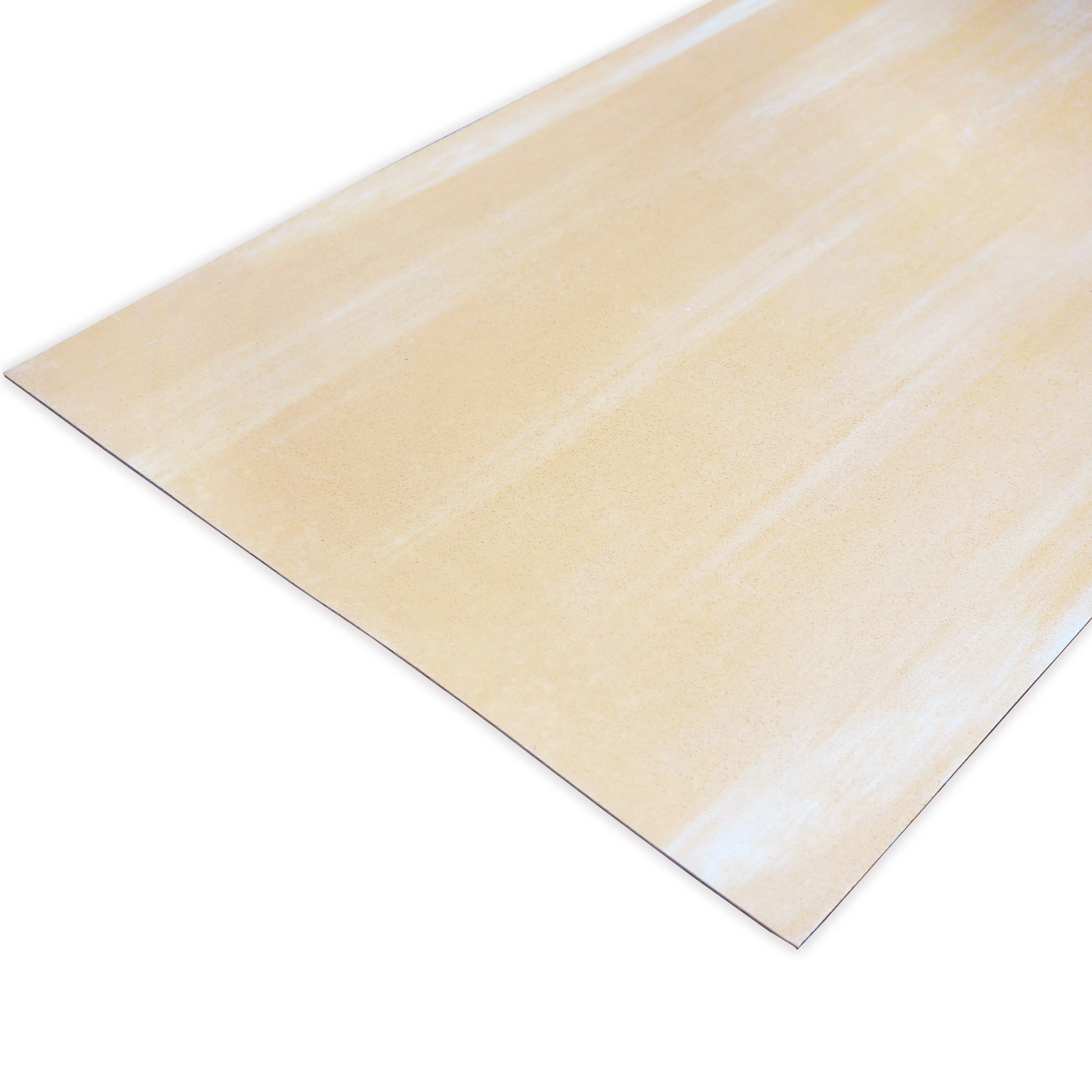
Creating Sandstone Cloude isn't just about mixing ingredients—it's about patience, precision, and a little bit of artistry. The process starts in a controlled lab, where technicians test batches of aggregates for consistency. A single batch of Sandstone Cloude might include sand from three different quarries: one for fine particles, one for medium, and one for the tiny, glittering feldspar flecks that add that subtle shimmer. These are blended in a giant mixer, not with brute force, but with a slow, tumbling motion that ensures every particle is coated evenly with the cement binder. Then, the PVA fibers are added, and the mixture is left to "rest" for 20 minutes—long enough for the fibers to disperse uniformly, but not so long that the cement starts to set.
Once the mixture is ready, it's poured into molds. But these aren't your standard rectangular molds. To achieve that "cloud-like" texture, the molds are lined with a special silicone mat that has a random, organic pattern—no two molds are identical. The mixture is tamped gently, not vibrated (which would compact the aggregates and kill the texture), and then left to cure for 48 hours in a humidity-controlled room. After curing, the panels are removed from the molds and sandblasted lightly with fine-grained sand. This step smooths any rough edges but preserves the surface texture, like brushing a watercolor painting to soften the lines without losing the detail.
The final step is the "aging" process. Sandstone Cloude is unique in that it's intentionally exposed to controlled cycles of heat and moisture for a week before it's considered ready. This mimics the natural weathering of stone, encouraging the formation of tiny calcium carbonate crystals on the surface. These crystals are what give the material its warm, earthy scent—like rain on dry soil—and its ability to change color slightly when wet. Spritz a Sandstone Cloude panel with water, and it deepens to a rich, honeyed beige; as it dries, it fades back to its original soft tone, like a memory lingering just out of reach.
In the heart of a bustling city, the Lunar Peak Gallery wanted a space that felt both modern and timeless, a backdrop that would let the art shine without competing with it. The designers chose to pair Sandstone Cloude with two bold materials: Lunar Peak Silvery (a sleek, metallic-finish stone) and foamed aluminium alloy board (vintage silver). The main walls are clad in Sandstone Cloude, their soft texture absorbing sound and creating a calm atmosphere. The accent walls feature Lunar Peak Silvery, its silvery sheen reflecting light and adding depth. The ceiling is lined with foamed aluminium alloy board (vintage silver), its matte metallic surface echoing the gallery's name and adding a touch of industrial chic.
Visitors often comment on how the space feels "balanced"—not too cold, not too warm. A curator noted, "Art can be intimidating, but the Sandstone Cloude walls make people relax. They lean against them, they trace the texture with their eyes, and suddenly, the art feels more accessible." It's a testament to how materials shape experience: Sandstone Cloude doesn't just hold up the roof; it creates a mood, a sense of ease, that makes the gallery more than a building—it becomes a place.
Emotional Impact: Calm, introspective, and subtly luxurious—like standing at dawn on a quiet mountain, where the world feels both vast and intimate.
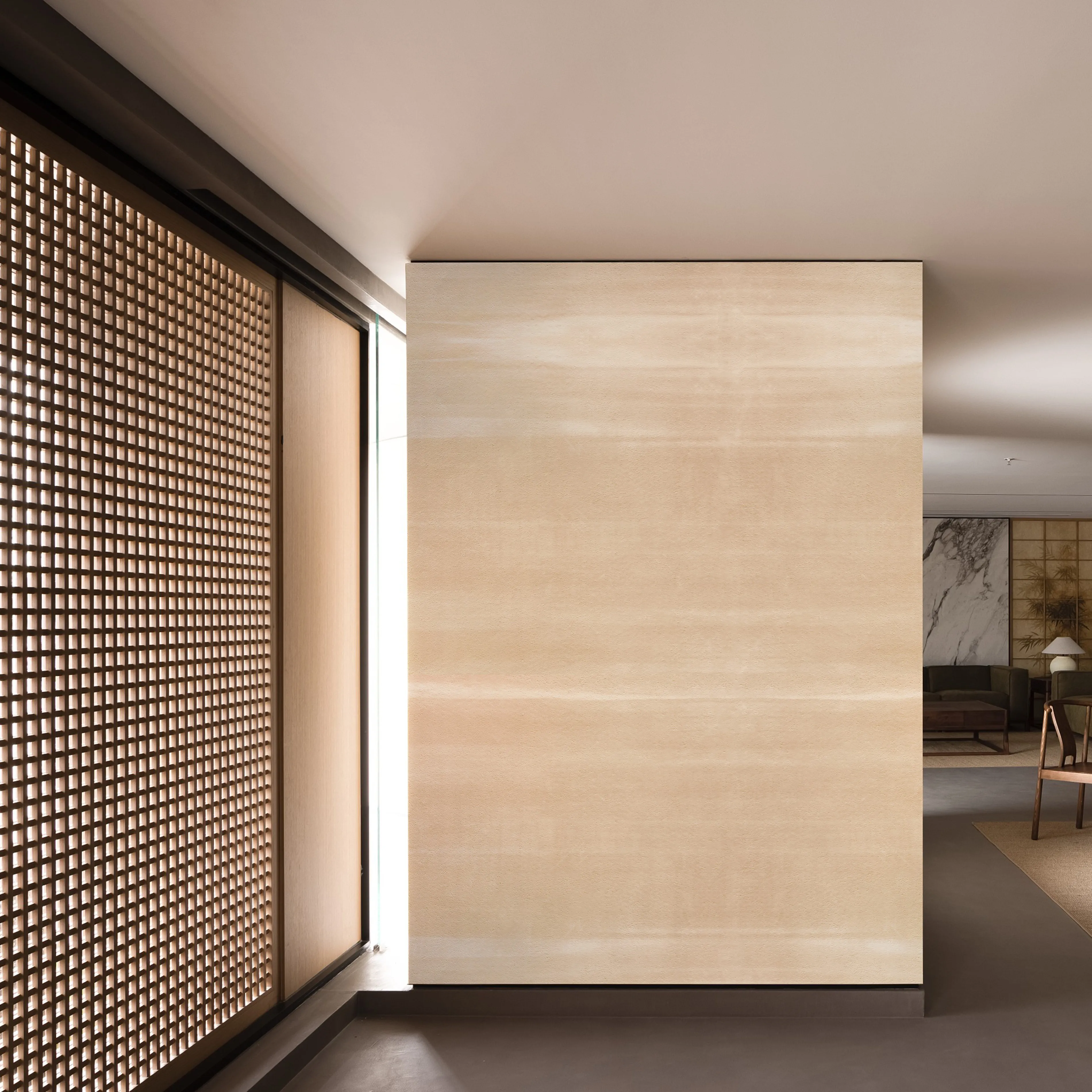
A material can be beautiful, but if it doesn't last, it's just a fleeting trend. Sandstone Cloude was designed to age gracefully, to get better with time. Thanks to that PVA fiber reinforcement, it's resistant to cracking from thermal expansion—perfect for regions with extreme temperature swings. The water-repellent additive means it won't absorb moisture and develop mold, even in humid climates. And because it's cement-based, it's fire-resistant, making it a safe choice for both residential and commercial spaces.
But what about sustainability? In a world where "green building" is no longer a buzzword but a necessity, Sandstone Cloude holds its own. The aggregates used are often byproducts of other mining operations—recycled, in a sense—reducing the need for new quarrying. The manufacturing process uses 30% less water than traditional concrete production, and the panels are lightweight (around 15kg per square meter), which reduces transportation emissions. Even the aging process is low-energy, relying on natural heat cycles rather than industrial dryers. And here's the best part: when a Sandstone Cloude panel reaches the end of its life (which, with proper care, could be 50+ years), it can be crushed and reused as aggregate in new concrete mixes. It's a closed-loop story, from cradle to cradle.
Let's circle back to that morning light we talked about earlier. Why does it matter that a wall feels warm, or has texture, or shifts color in the sun? Because humans are sensory beings. We don't just see spaces—we feel them. A room with smooth, cold surfaces might feel sleek, but it can also feel sterile, like a hospital waiting room. A room with rough, unyielding surfaces might feel industrial, but it can also feel unwelcoming. Sandstone Cloude hits that sweet spot: it's tactile without being overwhelming, warm without being cloying, present without demanding attention.
Consider the difference between walking into a room with fair-faced concrete walls versus Sandstone Cloude walls. Fair-faced concrete is honest, even noble in its raw simplicity, but it can feel like a statement: "This is modern. This is strong." Sandstone Cloude says something softer: "This is here for you." It's the difference between a handshake that's firm but brief, and a hug that lingers just a second longer. In a world that often feels rushed, where we're bombarded by screens and synthetic surfaces, materials like Sandstone Cloude ground us. They remind us of the natural world—the feel of sand between our toes, the texture of a stone picked up on a hike, the warmth of sunlight on skin.
This emotional resonance is why designers are increasingly turning to materials like Sandstone Cloude, MCM flexible stone, and wood grain board. They're not just building spaces—they're crafting experiences. A hotel lobby clad in Sandstone Cloude doesn't just impress guests with its beauty; it makes them feel cared for, like the designers thought about how they'd feel when they walked through the door. A home with Sandstone Cloude accent walls doesn't just look nice; it feels like a sanctuary, a place where the outside world fades, and comfort takes over.
As technology advances, so too does the potential of Sandstone Cloude. Imagine a version infused with tiny, energy-harvesting particles that absorb sunlight and power LED lights embedded in the wall—a functional, beautiful surface that lights up at night. Or a variant mixed with recycled glass aggregates, adding pops of color that catch the light like stained glass. The team behind Sandstone Cloude is already experimenting with these ideas, blending their original formula with cutting-edge materials to create even more versatile, sustainable options.
But even as it evolves, the core of Sandstone Cloude will remain the same: that commitment to humanity. It's a material designed not just for buildings, but for the people who live, work, and play in them. It's a reminder that in the age of AI and automation, there's still room for materials that feel… human. That invite touch, that tell stories, that make us pause and think, "This space was made for me."
So the next time you walk into a room and feel an sense of calm, or find yourself reaching out to touch a wall, take a closer look. It might just be Sandstone Cloude, doing what it does best: turning a house into a home, a building into a memory, and a space into a feeling.
Recommend Products












