
Morocco is a country where time seems to fold in on itself—where ancient medinas hum with the chatter of centuries, and modern skylines rise like silent sentinels beside sun-baked kasbahs. In this land of contrasts, architecture isn't just about building walls; it's about weaving stories into stone, metal, and texture. For designers and builders here, the challenge has always been balancing tradition with innovation—honoring the past while embracing materials that can withstand Morocco's harsh sun, sudden rains, and the weight of heritage. That's where COLORIA MCM steps in. Over the past five years, their flexible, durable, and visually striking materials have become a quiet revolution in Moroccan design, turning visionary ideas into tangible, breathtaking spaces. Today, we're diving into real projects, real voices, and the COLORIA products that are redefining what's possible in Moroccan architecture.
Nestled in the heart of Marrakech's medina, Riad El Aman had stood for over a century—its mud-brick walls bearing the scars of time, its courtyard once vibrant now fading. When architect Amina Boutaleb took on its restoration in 2023, her goal was clear: preserve its soul while making it functional for modern living. "The biggest challenge was the exterior walls," she recalls. "Traditional Moroccan stone is heavy, and the old structure couldn't support the weight of new additions. We needed something that looked authentic but was light enough to avoid damaging the original foundations."
Enter mcm flexible stone . "COLORIA's flexible stone was a revelation," Amina says. "We chose the travertine (starry blue) variant for the riad's outer façade. Its surface has these tiny, iridescent flecks that catch the Marrakech sun—like holding a piece of the night sky in your hand. But what really sold us was how easy it was to install. The team could cut it on-site to fit the riad's uneven walls, and it weighs a fraction of real travertine. Now, when guests walk through the alley and spot that blue glow, they stop and stare. It's like the riad is winking at the past while stepping into the future."
"Before COLORIA, I thought we'd have to compromise—either stick with crumbling stone or use something that felt fake. The flexible stone gave us both: authenticity and peace of mind. The starry blue travertine isn't just a material; it's become the riad's signature. I've had neighbors knocking on my door asking where we got it!" — Karim Benjelloun, owner of Riad El Aman
Casablanca is a city of contrasts: sleek high-rises rub shoulders with art deco gems, and bustling markets spill onto tree-lined boulevards. When entrepreneur Leila Hassan decided to open Café Sable in 2024, she wanted a space that felt both rooted in Moroccan warmth and unapologetically contemporary. "I wanted customers to walk in and think, 'This is Morocco, but not as I knew it,'" she explains. "The problem was finding materials that could bridge that gap—something that felt handcrafted but had a clean, modern edge."
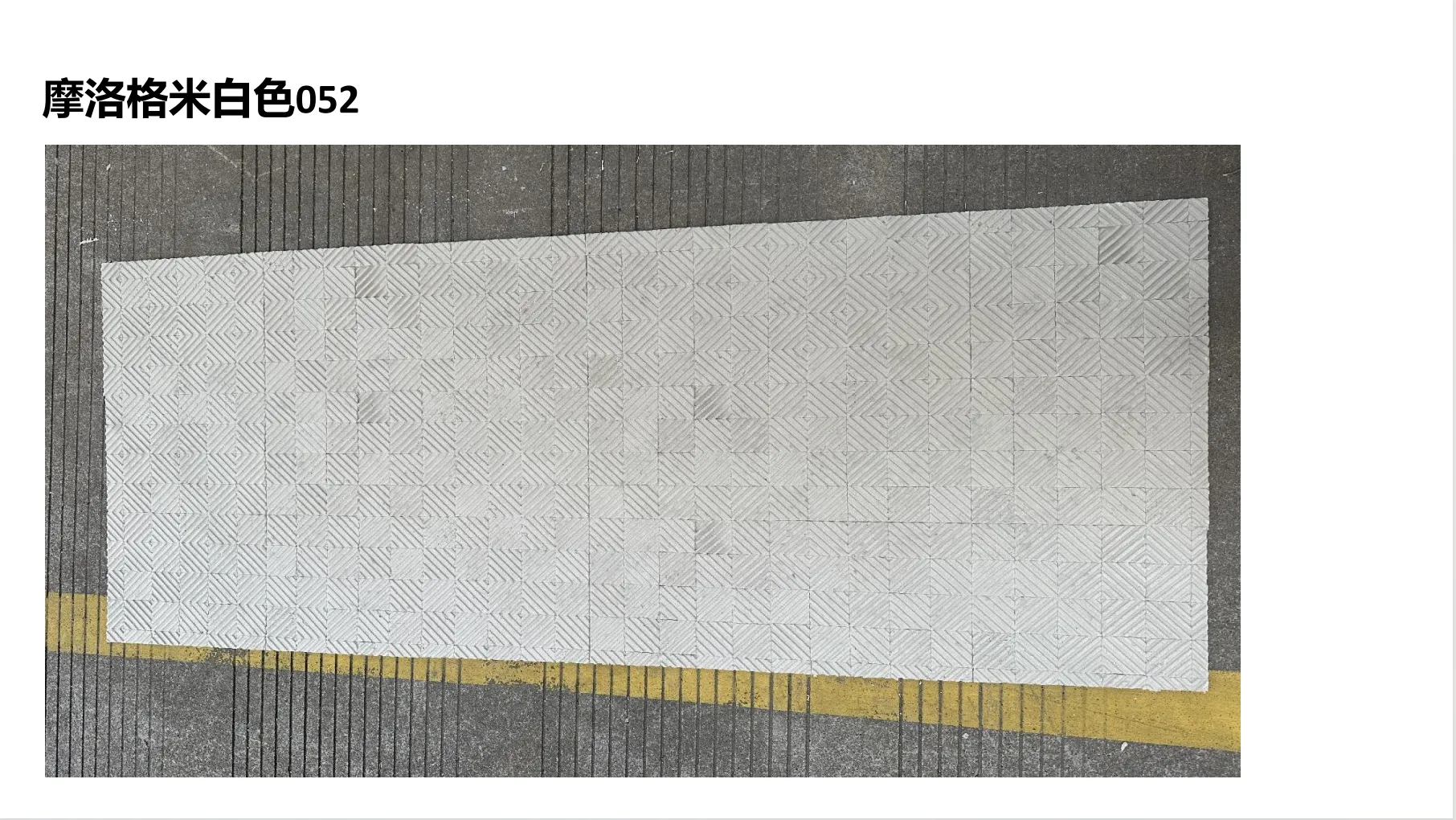
Her designer, Omar Khalid, suggested weaving (khaki) panels from COLORIA's 3D printing series. "Weaving panels are genius," Omar says. "They're made using 3D printing technology, so the texture is incredibly precise—each thread-like ridge is uniform, but the overall effect is soft, like a giant woven blanket. Leila wanted the café to feel cozy, like a friend's living room, but with enough sophistication to attract Casablanca's design-savvy crowd. The khaki color is warm without being overwhelming, and when the afternoon light filters through the windows, the shadows the panels cast on the walls look like rippling sand dunes. It's magic."
Leila adds, "Installation was a breeze. The panels are lightweight, so we didn't need to reinforce the walls, and they're surprisingly durable. We've had kids leaning against them, customers brushing past with coffee cups—no scratches, no fading. And the compliments? People ask if it's real woven fabric! I just smile and say, 'It's COLORIA magic.'"
"Café Sable's success isn't just about the coffee—it's about the vibe. The weaving panels set the tone. They make the space feel intimate, even when it's busy. I've had customers tell me they stayed an extra hour just because they loved looking at the walls. That's the power of good design, and COLORIA delivered that in spades." — Leila Hassan, owner of Café Sable
Jemaa El Fna, Marrakech's iconic public square, is a UNESCO World Heritage site and the beating heart of the city. By day, it's a marketplace; by night, a stage for storytellers, musicians, and food vendors. But by 2022, its aging infrastructure was showing signs of wear: cracked walkways, faded seating areas, and a lack of cohesion between its historic elements and modern needs. The Marrakech Municipal Council knew they needed a solution that could handle millions of footsteps annually while respecting the square's cultural significance.
Enter fair-faced concrete from COLORIA's epoch stone collection. "Fair-faced concrete is the unsung hero of public spaces," says civil engineer Fatima Zahra, who led the revitalization project. "It's raw, honest, and incredibly tough—but COLORIA's version takes it to another level. Their epoch stone fair-faced concrete has this subtle texture, like weathered stone, that blends seamlessly with Jemaa El Fna's centuries-old vibe. We used it for the new seating blocks and the pathways around the square. It doesn't stain, even with all the food stalls, and it stands up to the constant foot traffic. Plus, it ages beautifully—unlike some materials that look tired after a year, this concrete gains character. It's like the square itself: timeless."
The project also incorporated lunar peak golden accents for the information kiosks. "We wanted the kiosks to stand out but not clash," Fatima explains. "Lunar peak golden has this warm, metallic sheen that catches the sun during the day and glows under the square's lanterns at night. It's a nod to Morocco's traditional metalwork, but with a modern twist. Locals love it—they say it feels like the square is wearing a little bit of gold, just like the storytellers' costumes."
"Jemaa El Fna is more than a square—it's our identity. We couldn't risk using materials that would cheapen its heritage or fail under pressure. COLORIA's fair-faced concrete and lunar peak golden did the opposite: they elevated the space while honoring its past. Now, when I walk through the square, I see families sitting on those concrete blocks, laughing, and I think, 'This is how preservation should feel—alive.'" — Mohammed Ait Oufkir, Marrakech Municipal Council member
Agadir, with its long stretch of golden beaches and year-round sunshine, is Morocco's coastal gem. When Dar Al Hana Resort decided to expand its beachfront villas in 2023, they wanted a design that would complement the ocean views without competing with them. "Our guests come here for tranquility," says resort manager Nisrine Bennani. "The villas needed to feel like a seamless extension of the landscape—elegant, understated, and in harmony with the sea and sky."
Design firm Studio Nomad turned to travertine (starry blue) and boulder slab (vintage silver) from COLORIA's collection. "Starry blue travertine was a no-brainer for the villa exteriors," says lead designer Lina Karim. "Its soft blue-gray base is dotted with tiny, reflective flecks that mimic sunlight on water. From the beach, the villas look like they're glowing from within—subtle, not flashy. And the boulder slab in vintage silver? We used it for the outdoor terraces. It has this rough-hewn texture, like weathered rock, but the silver undertones add a touch of luxury. When the tide comes in and the waves crash nearby, the terrace stone looks like it's been kissed by the sea. It's breathtaking."
Nisrine adds, "Durability was key—Agadir's salty air can be tough on materials. COLORIA's travertine and boulder slab are resistant to corrosion and fading. A year later, they still look brand new. Our guests often comment on how the villas 'feel like they've always been here,' which is exactly what we wanted. It's not just about building a resort; it's about creating a home away from home, and COLORIA helped us do that."
"The villas at Dar Al Hana have become our most requested accommodation. Guests say the design makes them feel connected to the ocean, even when they're inside. The starry blue travertine and vintage silver boulder slab aren't just materials—they're part of the experience. COLORIA didn't just supply us with products; they helped us tell a story." — Nisrine Bennani, Dar Al Hana Resort Manager
| Product Name | Project Application | Key Client Feedback |
|---|---|---|
| mcm flexible stone (travertine, starry blue) | Riad El Aman façade restoration | "Lightweight yet authentic—our riad's new signature." |
| weaving (khaki) 3D printing series | Café Sable interior walls | "Soft, sand-dune shadows create an intimate vibe." |
| fair-faced concrete (epoch stone) | Jemaa El Fna public square pathways & seating | "Tough enough for millions of footsteps, timeless enough for heritage." |
| lunar peak golden | Jemaa El Fna information kiosks | "Warm gold glow honors tradition with modern flair." |
| boulder slab (vintage silver) | Dar Al Hana Resort beachfront terraces | "Rough texture with silver undertones—like sea-kissed rock." |
Morocco's architecture has always been a dialogue between history and innovation—a conversation spoken in mud bricks, zellige tiles, and now, in the flexible, durable, and stunning materials from COLORIA MCM. From the winding alleys of Marrakech's medina to the sun-drenched beaches of Agadir, these products aren't just building materials; they're tools for storytelling. They allow designers and builders to honor the past without being trapped by it, to create spaces that feel both familiar and fresh.
As Amina Boutaleb, the architect behind Riad El Aman, puts it: "Morocco's beauty lies in its ability to adapt. We don't discard our traditions—we wrap them in new ideas. COLORIA MCM gets that. Their products don't shout; they whisper, 'This is Morocco, reimagined.'"
Whether it's the starry blue travertine winking from a riad wall, the khaki weaving panels cocooning a café, or the fair-faced concrete grounding a historic square, COLORIA MCM has become part of Morocco's design narrative. And as more projects take shape—from boutique hotels in Fez to community centers in Rabat—one thing is clear: the future of Moroccan architecture is bright, flexible, and undeniably COLORIA.
Recommend Products












