
Where innovation meets heritage, and every panel tells a story of progress
Walk through the streets of Marrakech's medina at dusk, and you'll feel it—the pulse of a city where history and modernity dance in harmony. The terracotta rooftops glow under the setting sun, while just beyond the ancient walls, Casablanca's skyline rises, glass and steel reaching for the clouds. Morocco is a nation in flux: its cities are growing faster than ever, with urban populations projected to surge by 30% in the next decade. But this growth brings a challenge familiar to many developing nations: how to build forward without erasing the past, and how to construct sustainably without sacrificing beauty.
Traditional building materials—heavy stone, resource-intensive concrete—are no longer feasible. They strain local ecosystems, drive up construction costs, and often clash with Morocco's rich architectural heritage, where zellige tiles, carved wood, and earthy hues have defined spaces for centuries. Architects and developers here are crying out for something new: materials that honor the country's cultural identity while embracing eco-conscious innovation. Enter COLORIA MCM—a game-changer in the world of building materials, and a quiet revolution for Moroccan urban design.
COLORIA MCM isn't just a brand—it's a philosophy. Short for "Modified Composite Material," MCM panels are engineered to be lightweight, durable, and infinitely customizable, all while slashing environmental impact. Unlike traditional stone or concrete, which require extensive mining and energy-heavy production, COLORIA's panels are crafted using advanced composite technology, reducing carbon footprints by up to 60%. But what truly sets them apart? They don't just build spaces—they breathe life into them. Each series, from the earthy textures of travertine to the sleek modernity of foamed aluminium, is designed to tell a story, making buildings feel less like structures and more like living, evolving parts of the landscape.
In Morocco, where architecture is a language of culture, this matters. A mosque in Fez shouldn't feel like a glass office block in Dubai, and a boutique hotel in Chefchaouen—famous for its blue-washed streets—deserves materials that echo the Rif Mountains' misty hues. COLORIA MCM gets this. Its vast range of products isn't just about aesthetics; it's about giving designers the tools to create spaces that are rooted —in place, in history, and in purpose.
Let's dive into the heart of COLORIA MCM's offerings—the materials that are already transforming Morocco's urban landscape. These aren't just panels; they're bridges between tradition and innovation, each with a unique personality that speaks to different corners of Moroccan life.
Close your eyes and picture the date palm groves of the Draa Valley, where emerald leaves contrast with golden sand. That's the essence of travertine (starry green) . This series captures the organic, porous texture of natural travertine but with a twist: tiny, iridescent flecks that mimic the sparkle of dew on palm fronds at dawn. It's warm, earthy, and unapologetically Moroccan. In Rabat's new cultural center, architects used starry green travertine for the facade, creating a building that feels both ancient and alive—like it grew from the soil itself.
For the sleek, futuristic districts emerging on Casablanca's waterfront, lunar peak silvery is a revelation. Imagine the glow of the moon over the Atlantic, soft yet striking—that's the effect of this series. Its cool, metallic finish shimmers under sunlight but softens at night, making it perfect for hotels and tech hubs that want to stand out without feeling cold. A recent project in Tangier's tech park used lunar peak silvery panels for its main hall, and visitors often comment on how the space feels "otherworldly," as if the walls themselves are made of stardust.
Morocco's coastal cities—Agadir, Essaouira—face harsh salt winds and relentless sun. Traditional metal panels corrode quickly, but foamed aluminium alloy board (vintage silver) laughs in the face of the elements. Lightweight yet incredibly strong, this material has a matte, weathered finish that evokes the patina of old Moroccan lanterns or the aged brass of a medina's door handles. In Essaouira's new marina complex, vintage silver foamed aluminium wraps around the restaurant terraces, blending seamlessly with the city's historic fortress walls while standing up to years of sea spray.
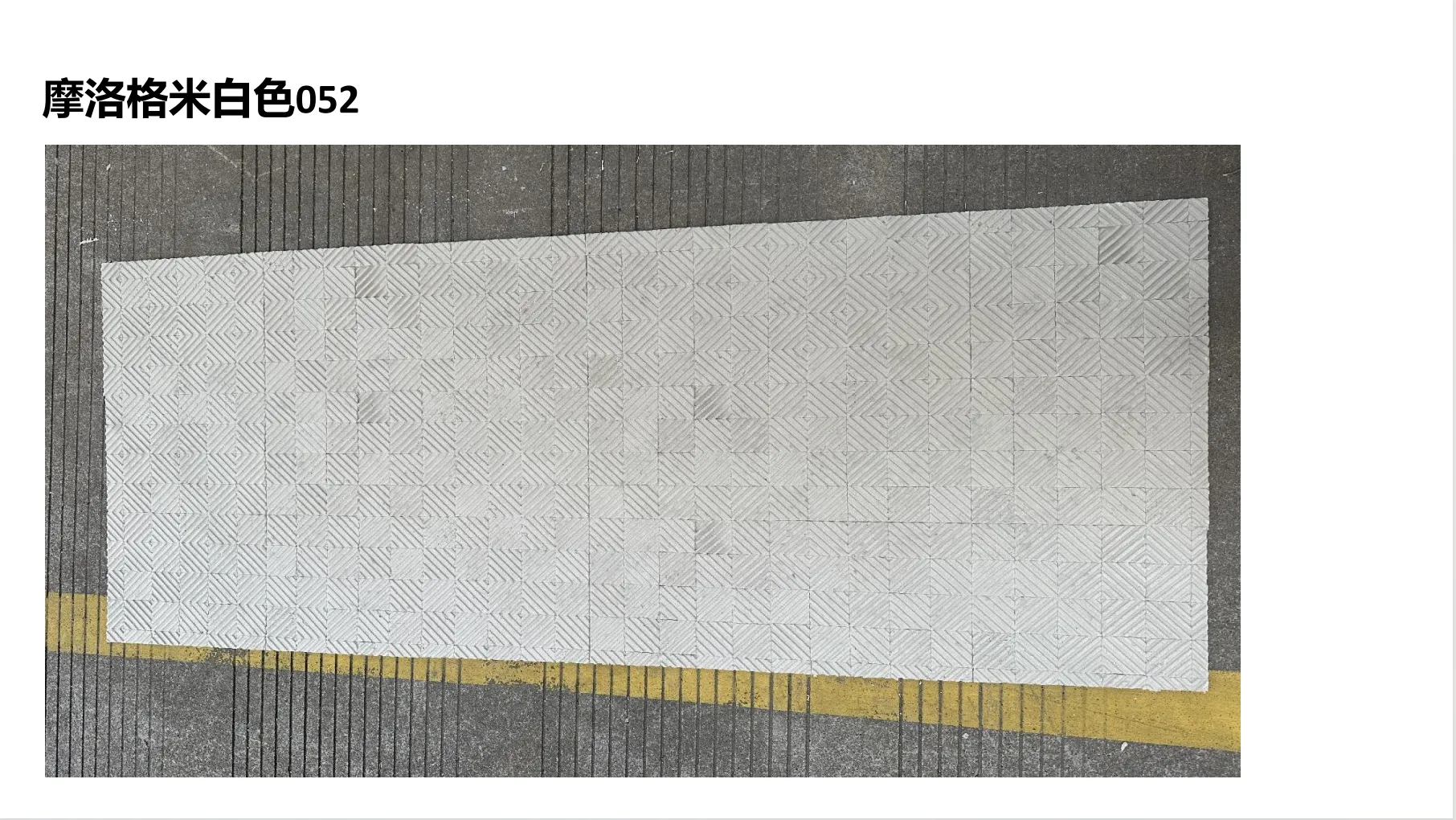
Concrete gets a bad rap for being cold and industrial, but fair-faced concrete redefines that. COLORIA's take on this classic material has a, almost tactile texture—like smoothed river stone—and a soft, off-white tone that complements Morocco's love for neutral palettes. In Marrakech's new eco-resort, fair-faced concrete panels line the poolside cabanas, creating a minimalist backdrop that lets the vibrant textiles and lush greenery take center stage. It's proof that simplicity can be deeply comforting.
Perhaps the most revolutionary of COLORIA's offerings, flexible stone cladding panels are the Swiss Army knife of building materials. Thin, lightweight, and bendable, they can conform to curved walls, arches, and even domes—perfect for Morocco's historic riads, where traditional architecture often features intricate, flowing shapes. A restoration project in Fes' medina used these panels to replicate the look of ancient sandstone on a crumbling mosque wall, saving time, money, and tons of quarried stone. Now, the mosque stands tall again, its beauty preserved for generations.
| Material | Sustainability Edge | Best For | Moroccan Inspiration |
|---|---|---|---|
| Travertine (Starry Green) | 60% less water used in production vs. natural stone | Cultural centers, heritage hotels | Draa Valley oases, palm grove dewdrops |
| Lunar Peak Silvery | 100% recyclable aluminium core | Tech hubs, waterfront developments | Atlantic moonlight, starlit desert skies |
| Foamed Aluminium (Vintage Silver) | Resistant to corrosion; 50-year lifespan | Coastal buildings, outdoor terraces | Aged medina lanterns, weathered brass door hardware |
| Fair-Faced Concrete | Low carbon footprint; locally sourced aggregates | Eco-resorts, minimalist homes | Traditional kasbah walls, smoothed river stone |
| Flexible Stone Cladding Panels | Reduces construction waste by 70% | Historic restorations, curved architecture | Riad arches, mosque domes, ancient medina walls |
Talk is cheap—what matters is impact. Let's look at three projects across Morocco where COLORIA MCM has already left its mark, proving that sustainable materials can elevate design, honor heritage, and drive progress.
Ouarzazate, the "Gateway to the Sahara," is a city where adobe kasbahs meet Hollywood film sets. When the local government decided to build a museum celebrating Berber culture, they wanted a building that would blend in with the desert landscape but still feel modern. Enter COLORIA MCM's travertine (starry green) and flexible stone cladding panels. The museum's exterior uses starry green travertine to echo the nearby Atlas Mountains' rare green valleys, while flexible panels wrap around its curved entrance, mimicking the shape of a traditional Berber tent. Inside, fair-faced concrete walls display ancient artifacts, their neutral tone letting the textiles and pottery shine. Visitors say the museum "feels like a Berber elder's home—warm, wise, and full of stories."
Agadir's beachfront is undergoing a renaissance, with new hotels aiming to attract eco-conscious travelers. The Azure Hotel wanted to stand out, so they turned to lunar peak silvery and foamed aluminium alloy board (vintage silver). The hotel's facade is a mix of silvery lunar peak panels (which reflect sunlight, keeping rooms cool) and vintage silver aluminium (resistant to the salty sea air). At night, LED lights behind the panels create a soft, blue glow that mirrors the ocean. Guests love it—not just for the sustainability (the hotel's energy bills are 40% lower than similar properties), but for the way the building "talks" to the sea. As one guest put it: "I wake up, look out my window, and the hotel and the ocean are like old friends, chatting in the morning light."
Casablanca's tech district needed a symbol of progress—something bold, modern, and unapologetically forward-thinking. The Innovation Hub's designers chose lunar peak silvery for the main tower and fair-faced concrete for the lower levels, creating a contrast that feels dynamic yet grounded. The silvery panels catch the city's famous "golden hour" light, turning the building into a beacon at dusk, while the concrete base nods to Morocco's industrial heritage. Startups and entrepreneurs who work here often say the space "inspires creativity"—and with good reason: the materials feel alive, changing with the light and the weather, just like the tech industry itself.
Morocco's cities are at a crossroads. They can grow haphazardly, sacrificing heritage for speed, or they can build with intention—choosing materials that honor the past while protecting the future. COLORIA MCM isn't just a supplier; it's a partner in this journey. Its products prove that sustainability and beauty don't have to be enemies. In fact, they're better together.
Imagine a future where Marrakech's new neighborhoods use flexible stone cladding to replicate the medina's intricate carvings, where Tangier's port buildings shine with lunar peak silvery panels that reduce energy use, and where Fez's historic walls are restored with materials that last for centuries without harming the earth. That future is already here, one COLORIA MCM panel at a time.
At the end of the day, buildings are more than just walls and roofs. They're the backdrop to our lives—the places we laugh, learn, and dream. COLORIA MCM understands this, and that's why its materials don't just build spaces—they nurture them. In Morocco, where every street has a story, COLORIA MCM is helping write the next chapter: one of sustainability, beauty, and pride in place.
Recommend Products












