
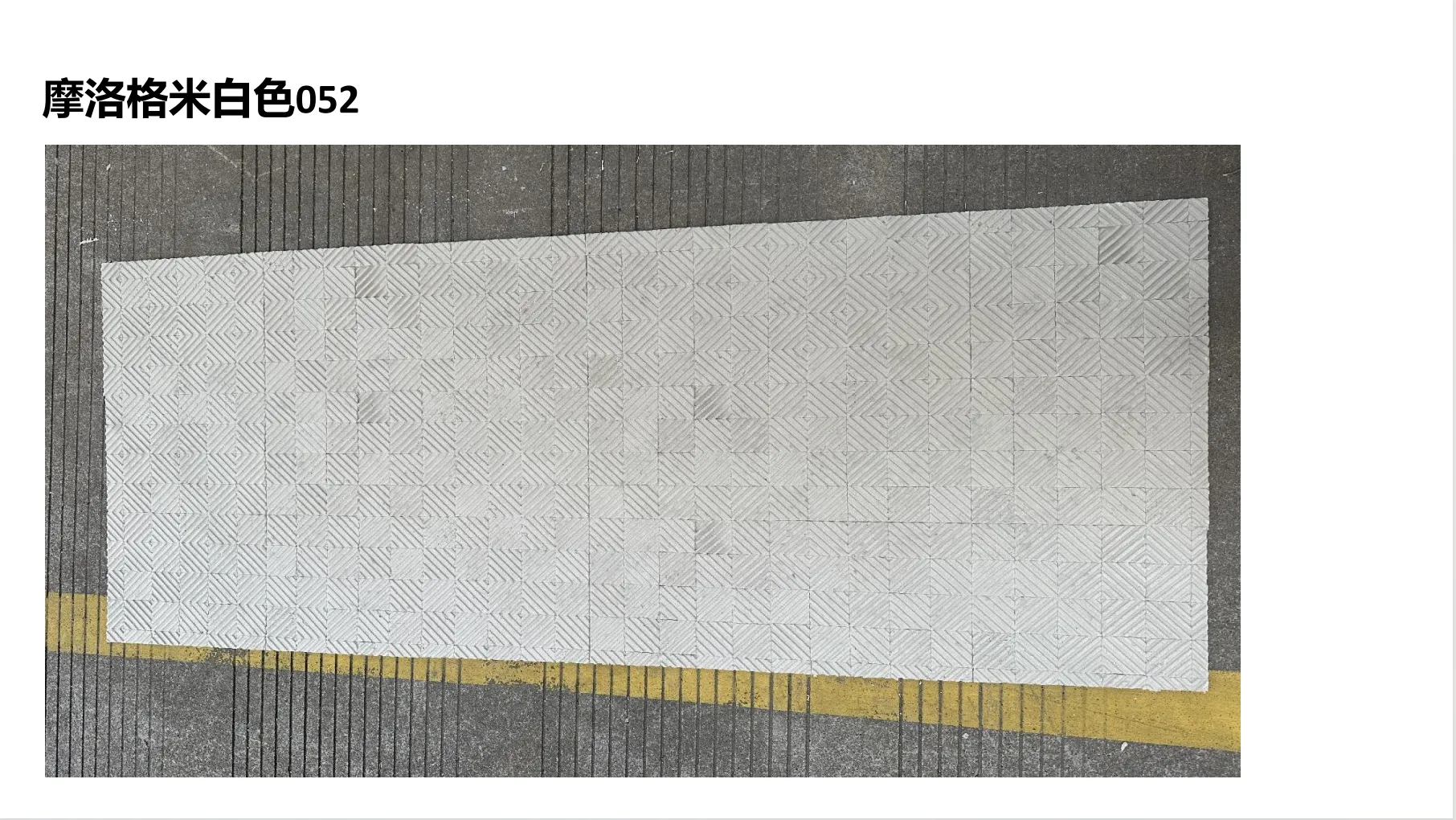
Morocco has always been a country where architecture whispers stories—of desert winds, vibrant markets, and the quiet elegance of riads tucked behind labyrinthine medinas. Its buildings are a tapestry of textures: sun-baked clay, hand-carved zellige tiles, and rough-hewn stone that has weathered centuries. But what happens when tradition meets innovation? That's the question COLORIA MCM set out to answer with their latest project in Marrakech, a bold endeavor that marries the country's timeless aesthetic with cutting-edge building materials. Today, we're diving into the real photos of this transformation, exploring how mcm flexible stone, large-format slabs, and a palette of unique finishes turned a once-modest structure into a showcase of cost-effective luxury.
Nestled in the historic Gueliz district, just steps from the bustling Jemaa el-Fnaa square, the project centered on a 19th-century riad in need of a modern revival. The client, a local hotelier with a passion for preserving Morocco's heritage while embracing sustainability, had a clear vision: create a space that felt both authentically Moroccan and refreshingly contemporary, without breaking the bank. Traditional restoration would have meant sourcing rare zellige tiles, transporting heavy natural stone from the Atlas Mountains, and enduring months of labor-intensive installation—costs that quickly spiraled into the six figures. Enter COLORIA MCM, with a promise: deliver the same visual impact, durability, and cultural resonance using their innovative modified composite materials, at a fraction of the time and cost.
"We wanted the riad to feel like it had always been there, but with a subtle 'wow' factor that made guests pause," says Amina Bennani, the lead architect on the project. "Traditional stone was beautiful, but it was also heavy, porous, and expensive to maintain in Marrakech's climate—hot, dry summers with sudden sandstorms, and occasional winter rains. COLORIA's materials checked every box: lightweight, weather-resistant, and customizable to match the earthy tones we loved."
The team's first hurdle? Ditching the mindset that "authentic" Moroccan architecture required traditional materials. "There's a misconception that modern composites can't capture the depth of natural stone or the warmth of handcrafted tile," explains Karim Touil, COLORIA MCM's regional project manager. "But when we brought samples of mcm flexible stone to the table—thin, bendable sheets that mimicked the texture of aged travertine—Amina and her team were stunned. You could wrap it around curved archways, cut it into intricate shapes, and it weighed 70% less than natural stone. That alone solved our biggest logistical problem: the riad's original walls couldn't support the weight of traditional cladding."
From there, the material selection became a collaborative dance between design and practicality. The team settled on five standout products from COLORIA's lineup, each chosen to address a specific challenge while enhancing the riad's unique character. Let's pull back the curtain on how they came to life.
Moroccan architecture is defined by its curves—arched doorways, domed ceilings, and sinuous courtyard walls that flow like desert dunes. Traditional stone, rigid and unforgiving, would have required dozens of small, pieced-together cuts to follow these shapes, leaving unsightly seams and weakening the structure over time. MCM flexible stone changed the game. "We used 4x8-foot sheets of flexible stone in a warm, sandy beige shade for the inner courtyard walls," Bennani recalls. "The installers rolled it over the curved surfaces like wallpaper—no chiseling, no grout lines, just a seamless finish that looked like it had been carved from a single block of stone. One worker even joked, 'It's like wrapping the riad in a hug.'"
In the real photos, this choice shines brightest in the riad's central courtyard. Morning light filters through a skylight, casting soft shadows over the flexible stone's textured surface—pockmarked with tiny, natural-looking indentations that mimic the weathered look of 100-year-old limestone. "Guests run their hands over it and can't believe it's not real stone," Bennani laughs. "That tactile quality was non-negotiable for us, and COLORIA nailed it."
The riad's street-facing facade was another puzzle. The client wanted it to stand out on the busy boulevard without clashing with neighboring historic buildings. Traditional stone facades, with their small, irregular pieces, would have felt cluttered; paint was too temporary. The solution? COLORIA's mcm big slab board series in a sleek, neutral tone. "These slabs are massive—up to 10 feet tall and 5 feet wide—and incredibly thin, so we could cover the entire facade with just 12 panels instead of hundreds of stone tiles," Touil explains. "The result? A clean, modern silhouette that still nods to Moroccan minimalism."
In one striking real photo, the facade glows under the golden hour sun, the big slabs reflecting light evenly across their surface. "You can't see a single joint," Touil points out. "Traditional stone would have required expansion gaps every few feet to prevent cracking in the heat, but MCM's big slabs are designed to expand and contract with temperature changes, so they stay tight and seamless. And because they're lightweight, we didn't need to reinforce the existing walls—saving weeks of structural work and thousands of dirhams."
No Moroccan riad is complete without color, and the team wanted something unexpected but rooted in local culture. "We drew inspiration from the night sky over the Sahara," Bennani says. "On clear nights, the stars are so bright they look like scattered gemstones. COLORIA's travertine (starry blue) captured that magic perfectly." The material—part of COLORIA's travertine series—features a deep, midnight blue base dotted with tiny, iridescent flecks that catch the light, mimicking starlight on stone.
They used it sparingly, as an accent: a curved niche above the main entrance, the backsplash in the open-air kitchen, and the risers of the staircase leading to the roof terrace. In the real photos, the starry blue travertine steals the show at dusk. "When the lanterns are lit, those flecks sparkle like someone sprinkled crushed sapphires into the stone," Bennani describes. "It's bold but not overwhelming—just enough to make you stop and say, 'What is that?' And when we tell guests it's MCM, they're floored. They assume it's a rare imported stone."
To balance the warmth of the flexible stone and starry blue accents, the team needed something with a cooler, more modern edge. Enter fair-faced concrete—a material often associated with industrial design, but here, softened by COLORIA's proprietary finish. "We used it for the riad's fireplace surround and the countertops in the guest suites," Touil says. "Traditional concrete can be porous and prone to staining, especially with Moroccan spices and oils, but COLORIA's version is sealed and scratch-resistant. It has this beautiful, matte texture that contrasts with the glossy starry blue travertine, creating a layered look that feels both old and new."
In the real photos, the fireplace is a focal point: fair-faced concrete in a soft gray hue, its surface marked with subtle, intentional "imperfections"—tiny air bubbles and slight color variations that mimic hand-poured concrete. "It's not perfectly smooth," Bennani notes. "That's the point. It feels handmade, like a craftsman spent days on it, even though it was installed in hours. Guests love gathering around it, running their fingers over the texture—it's surprisingly inviting for a 'cold' material."
To add warmth to the riad's interior spaces, the team turned to bamboo mat board—a material that blends the organic texture of woven bamboo with the durability of MCM. "We used it for the ceiling of the dining area and the sliding doors that open to the courtyard," Bennani explains. "Traditional bamboo mats are beautiful but fragile—they fray, fade, and attract pests in Marrakech's humidity. COLORIA's version is made from compressed bamboo fibers mixed with a weather-resistant resin, so it looks like the real thing but will last for decades without maintenance."
In the photos, the bamboo mat ceiling casts dappled shadows over the dining table as sunlight filters through, creating a cozy, intimate atmosphere. "It's like bringing a piece of the Moroccan countryside indoors," Bennani says. "The warm, golden-brown color complements the flexible stone walls, and the woven texture adds depth without overwhelming the space. Even the local carpenters were impressed—they'd never seen bamboo hold up this well in our climate."
At the end of the day, the client's biggest concern was cost. Would using innovative materials actually save money, or was this just a marketing pitch? The results spoke for themselves. Let's break it down with a side-by-side comparison of traditional materials vs. COLORIA MCM:
| Category | Traditional Materials | COLORIA MCM | Savings |
|---|---|---|---|
| Material Cost (per sq. ft.) | $45–$60 (natural stone + tile) | $20–$30 (MCM composites) | ~40–50% |
| Installation Time | 8 weeks (masonry + tiling) | 3 weeks (panel installation) | ~60% |
| Structural Reinforcement | Required (additional $15k) | Not required (lightweight materials) | $15k saved |
| 5-Year Maintenance Cost | $8k (sealing, repairs, replacement) | $1k (occasional cleaning) | ~87% |
| Total Project Cost | $180k | $92k | ~49% |
"The numbers speak for themselves," Touil says. "By choosing MCM, the client cut their total project cost nearly in half, finished two months early, and avoided the headache of structural work. And because MCM materials are so durable, they'll save even more over time—no repainting, no regrouting, no replacing cracked stone. It's cost-effective in the short term and the long term."
Now, let's step into the riad through the lens of the real photos—images that have since gone viral on architecture blogs and social media, captivating designers and travelers alike. The first photo greets you at the entrance: a wide shot of the facade, where mcm big slab board series panels in a warm, terracotta hue stretch from the ground to the roofline, interrupted only by the starry blue travertine niche above the door. The slabs are so seamless, you'd never guess they're man-made; their surface shimmers slightly in the sun, thanks to tiny mineral additives that mimic the luster of natural stone.
Inside, the courtyard photo is a study in texture: mcm flexible stone walls in sandy beige curve gently upward to meet a bamboo mat board ceiling, its woven pattern casting intricate shadows on the flagstone floor. A fountain trickles in the center, its basin made from fair-faced concrete that mirrors the sky. "Guests often take photos here at golden hour," Bennani says. "The light turns the flexible stone a honey color, and the bamboo mat ceiling glows like it's lit from within. It's serene but full of life."
Upstairs, a photo of the master suite showcases the fair-faced concrete countertops and the starry blue travertine backsplash, which catches the light from the balcony doors. "We paired the travertine with woven rugs and wooden furniture to keep it cozy," Bennani notes. "The contrast between the cool concrete and warm textiles is what makes the space feel balanced." And on the roof terrace, a wide-angle shot captures the riad's skyline view, with mcm big slabs blending seamlessly with neighboring buildings—proof that modern materials can honor tradition without sticking out like a sore thumb.
The COLORIA MCM project in Marrakech isn't just about a single riad—it's about redefining what's possible for architecture in Morocco and beyond. By blending mcm flexible stone, big slabs, starry blue travertine, fair-faced concrete, and bamboo mat board, the team proved that cost-effective materials can deliver luxury, durability, and soul. "We didn't just build a building," Touil reflects. "We built a conversation starter. Local architects are now reaching out, asking, 'How can we do this with our projects?' They're seeing that MCM isn't a replacement for tradition—it's a tool to preserve it, by making historic-style architecture accessible and sustainable for future generations."
As for the client? "We've had more bookings than ever," they say, requesting to remain anonymous. "Guests love the story behind the materials—how we honored Morocco's past while embracing the future. And when they hear we did it for half the cost of traditional restoration? They're even more impressed. COLORIA didn't just deliver a project—they delivered a vision."
In the end, the real photos tell the clearest story: a riad that feels both timeless and fresh, where every material has a purpose, and every texture invites touch. It's proof that when innovation meets heart, architecture becomes more than just a building—it becomes a legacy.
Recommend Products












