
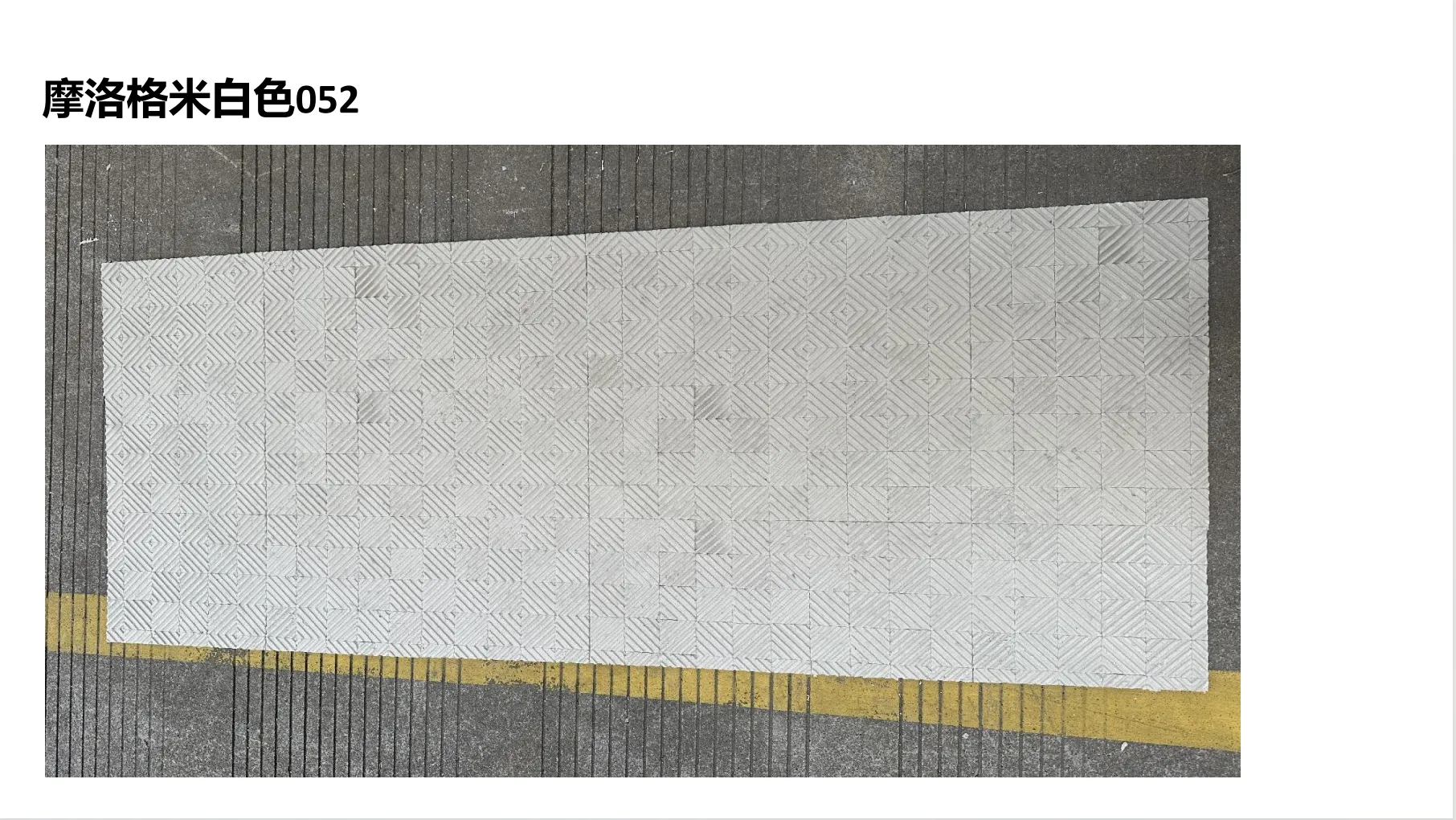
The sun dips low over Marrakech's medina, painting the sky in strokes of amber and violet. As the call to prayer echoes from the Koutoubia Mosque, I reach out to touch the wall of a nearby boutique hotel—a structure that seems to defy time. Its exterior, clad in a silvery, textured panel, feels cool to the touch despite hours of scorching sunlight. "That's lunar peak silvery ," says Amina, the hotel's architect, grinning. "We installed it five years ago, and it still looks like the day it arrived. No cracks, no fading—even after last winter's sandstorms."
Morocco is a land of contrasts: blistering Sahara heat that pushes 50°C (122°F) in summer, coastal humidity that clings to buildings in Essaouira, and sudden sandstorms that scour surfaces like sandpaper. For architects and builders here, choosing materials that can withstand such extremes isn't just a preference—it's a necessity. Enter COLORIA MCM's product line, a collection of modified composite materials designed to thrive where traditional stone, wood, or concrete would falter. From the bustling souks of Marrakech to the desert-edge towns of Merzouga, these materials aren't just surviving; they're redefining what's possible in Moroccan architecture.
To understand why durability matters in Morocco, consider a typical day in the Sahara. At noon, the desert sand can reach 80°C (176°F), baking building exteriors. By midnight, temperatures plummet to 10°C (50°F), causing materials to contract. Add in sandstorms—gusts up to 60 km/h (37 mph) carrying abrasive silica particles—and coastal salt spray that eats away at metal and stone, and you have a recipe for rapid material degradation.
"Traditional limestone here would crack within three years," Amina explains, gesturing to a neighboring building with flaking walls. "Wood warps, concrete fades, and even marble loses its sheen under constant UV radiation. Clients used to accept that buildings 'aged' quickly—until COLORIA MCM arrived."
Two hours from the nearest paved road, the Desert Rose Lodge perches on the edge of the Erg Chebbi dunes. Its exterior, wrapped in gobi panel , shimmers like a mirage against the golden sand. "We chose gobi panel because it's inspired by the Gobi Desert's own resilience," says lodge owner Karim. "Five years ago, we replaced our old concrete walls after they crumbled from thermal shock. Now, even after summer sandstorms that used to strip paint, the panels stay intact."
What makes gobi panel unique? Its microcellular structure, engineered to flex with temperature changes (expanding in heat, contracting in cold) without cracking. The surface, embedded with ceramic particles, resists abrasion—critical in a region where sand acts like sandpaper. "Last year, a storm dropped 20 cm of sand on the roof," Karim recalls. "We hosed down the panels, and they looked brand-new. No scratches, no discoloration."
Back in Marrakech, the Riad Azur stands out in the maze of terracotta rooftops. Its facade, clad in lunar peak silvery , glows softly under the midday sun. "We wanted something that would keep the riad cool without sacrificing style," says architect Leila. "Traditional red clay tiles absorb heat, making interiors swelter. Lunar peak silvery reflects 60% of solar radiation—our guests say rooms are 5°C cooler than neighboring riads."
The secret lies in the panel's metallic oxide coating, which mimics the moon's reflective properties. Unlike aluminum, which fades and pits in Moroccan humidity, lunar peak silvery's coating is UV-stabilized, preventing chalking or discoloration. "We tested samples in our lab for 1,000 hours under simulated Moroccan sunlight," Leila adds. "The color retention was 98%—unheard of for traditional metals."
| Material | Climate Resistance | Maintenance Needs | 5-Year Aesthetic Retention |
|---|---|---|---|
| Traditional Limestone | Cracks in thermal shock; stains easily | Sealing every 6 months | 50-60% |
| Concrete | Fades; spalls in freeze-thaw | Repainting every 1-2 years | 40-50% |
| Lunar Peak Silvery | Heat-reflective; UV-stable | Annual pressure wash | 95%+ |
| Gobi Panel | Abrasion-resistant; thermal-flexible | Yearly hose-down | 98%+ |
On Morocco's Atlantic coast, Essaouira's Café de la Mer faces relentless salt spray and humidity. Its outdoor patio walls, clad in travertine (starry blue) , remain vibrant despite years of exposure. "Saltwater used to eat through our marble walls, leaving pockmarks," says owner Fatima. "Now, the starry blue travertine repels moisture—even after storms that flood the patio."
Travertine (starry blue) owes its resilience to a nano-sealant that fills its natural pores, blocking salt and water absorption. The "starry" pattern—embedded glass particles—resists fading, even under coastal UV rays. "Last summer, a tourist spilled red wine on the wall," Fatima laughs. "I wiped it with a damp cloth, and there was no stain. With marble, that would've been permanent."
Casablanca's Modern Art Museum is a study in contrasts: sleek lines of fair-faced concrete and textured epoch stone blend with the city's colonial architecture. "We needed materials that could handle pollution, foot traffic, and the occasional downpour," says museum director Nour. "Fair-faced concrete here doesn't just look raw and industrial—it's tougher than traditional concrete."
COLORIA's fair-faced concrete includes fibers that reduce shrinkage cracks, a common issue in Casablanca's humid summers. Epoch stone, with its fossilized shell texture, is treated with a water-repellent coating that prevents graffiti from adhering. "Last year, a vandal spray-painted the epoch stone wall," Nour recalls. "We used a pressure washer, and the paint came off without damaging the texture. Try that with natural stone!"
In Morocco, durability isn't enough—buildings must tell stories. COLORIA's materials don't just survive; they evolve gracefully. Take travertine (starry blue) in Essaouira: the glass "stars" catch the coastal light, shifting from deep blue at dawn to turquoise at sunset. In Marrakech, lunar peak silvery panels mirror the changing sky, from rose-pink at sunrise to indigo at dusk.
"Moroccans value beauty as much as function," Amina says. "COLORIA gets that. Their materials don't just 'last'—they get more beautiful with time. The gobi panel in Merzouga has developed a subtle patina that blends with the dunes, like it's always been there."
As the moon rises over Marrakech, casting silver light on the Riad Azur's lunar peak silvery facade, it's clear: COLORIA MCM has redefined durability in Morocco. From the Sahara's edge to the Atlantic coast, their materials—gobi panel, lunar peak silvery, travertine (starry blue), and more—prove that beauty and resilience can coexist.
"We don't build for today," Karim says, gazing at the gobi panel walls of his lodge. "We build for our children. With COLORIA, I know these walls will still be standing when my grandson takes over the lodge."
In a land where the climate tests even the strongest materials, COLORIA MCM isn't just a supplier—it's a partner in building Morocco's future. And in every real photo, every weathered (yet unbroken) panel, that partnership shines through.
Recommend Products












