
Morocco is a country where architecture tells stories—stories of sunlit courtyards, intricate zellige tiles, and walls that seem to breathe with the weight of centuries. Walk through the medinas of Marrakech or the coastal towns of Essaouira, and you'll feel it: the materials that shape these spaces aren't just building blocks. They're part of the culture, the climate, the very soul of the place. But what happens when tradition meets innovation? When the need for durability, sustainability, and modern design collides with the desire to honor the past? That's where COLORIA's MCM (Modified Composite Material) series steps in—and today, we're diving deep into how it stacks up against the traditional cladding materials that have defined Moroccan architecture for generations.
To understand the stakes, let's start with a truth all Moroccan architects and homeowners know: your choice of cladding isn't just about looks. It's about survival. Morocco's climate is a study in extremes—scorching summers with temperatures soaring above 40°C, winters that can bring sudden rains, and the relentless, abrasive winds off the Sahara that eat away at less resilient materials. Traditional cladding materials like natural stone, brick, and even wood have long been the go-to, but they come with trade-offs. Heavy stone requires reinforced structures, brick fades under the sun, and wood? In Morocco's humidity, it's a magnet for termites and rot.
But beyond practicality, there's emotion. A riad's walls, clad in warm, earthy stone, feel like a hug. The rough texture of a centuries-old kasbah wall whispers of the hands that built it. These materials aren't just used —they're lived with . So when COLORIA introduced its MCM series to Morocco, the question wasn't just "Does it work?" It was "Does it feel right?"
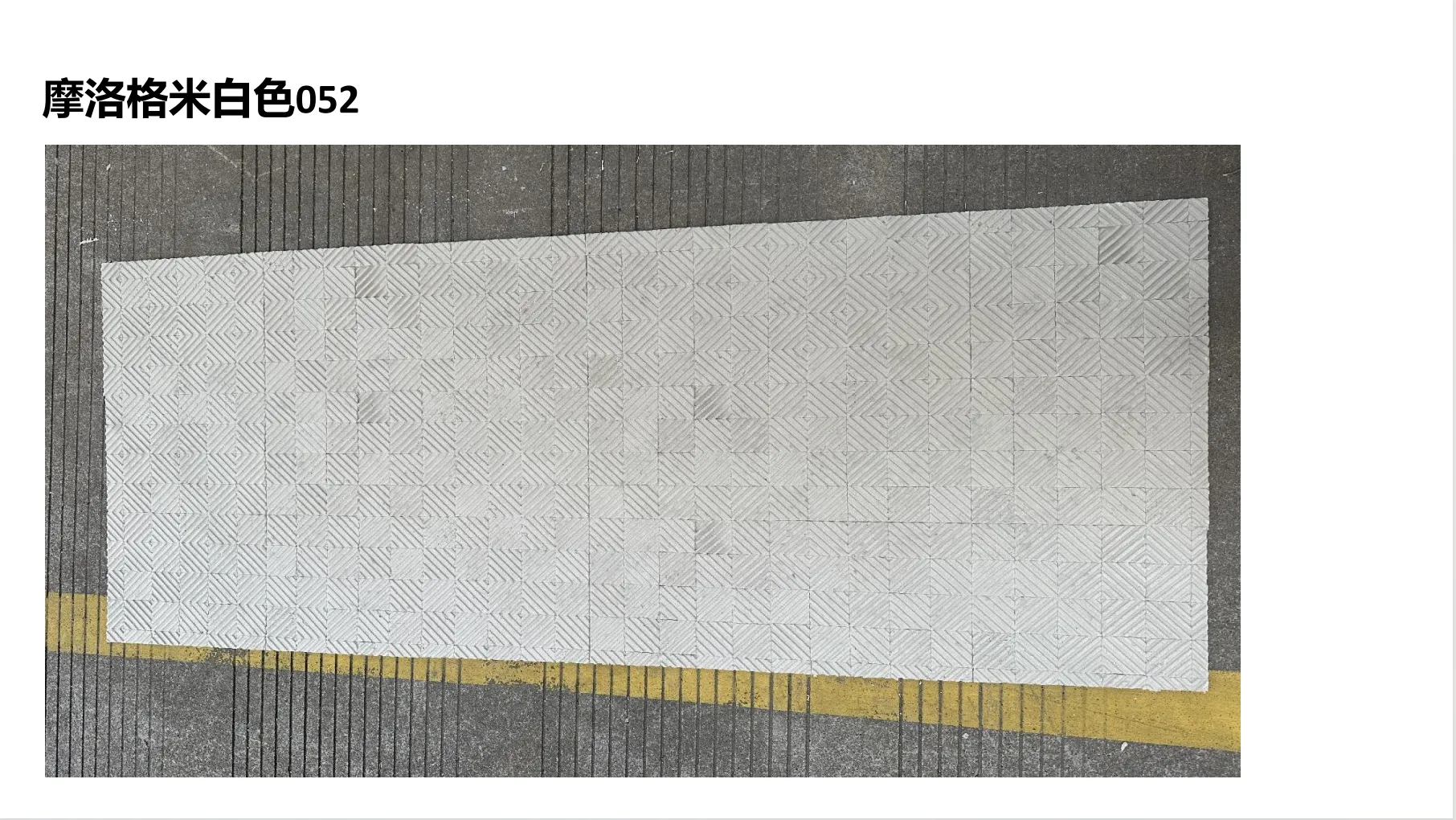
COLORIA's MCM line isn't just a new material—it's a love letter to the idea that innovation shouldn't erase tradition. Let's break down what makes these products stand out, starting with the stars of the show for Moroccan applications:
Then there's foamed aluminium alloy board (vintage gold) , a standout for modern Moroccan spaces. Picture a café in Casablanca's new waterfront district: floor-to-ceiling windows, sleek furniture, and walls clad in this warm, metallic gold. It catches the afternoon sun like a mirror, but unlike real gold leaf (which fades and scratches), this alloy resists corrosion from salt air and requires zero polishing. "We wanted something that felt luxurious but didn't demand constant care," said the café owner. "Vintage gold MCM gives us the glow of Moroccan lanterns without the hassle."
For those craving the look of natural travertine—with a twist— travertine (starry blue) is a game-changer. Traditional travertine in Morocco is often beige or cream, blending into the desert landscape. Starry blue, with its subtle glittering flecks, evokes the night skies over the Atlas Mountains. It's been a hit in boutique hotels in Chefchaouen, the "Blue City," where it complements the town's iconic blue walls but adds a modern, almost celestial touch. One designer joked, "Now guests take photos of the walls as much as the views."
rammed earth board (gradient) is another crowd-pleaser, especially for restoring historic riads. Traditional rammed earth—layers of compressed soil—has a rich, earthy texture, but it's prone to cracking in humidity. COLORIA's gradient version mimics that layered look (think soft terracotta fading to sand) but with a reinforced core that resists moisture. In Marrakech, a riad owner used it to restore a crumbling wall in the inner courtyard. "It looks exactly like the original 18th-century rammed earth," she said, "but when the winter rains came, I didn't panic. No cracks, no leaks—just the same warm, lived-in feel."
And let's not forget fair-faced concrete , a minimalist's dream. In a country where bold patterns and colors reign, sometimes less is more. Fair-faced concrete (unpainted, with visible texture) has become a favorite for modern riads and art galleries in Tangier. It provides a neutral backdrop for zellige tile accents and wooden furniture, but unlike traditional concrete (which can crack in temperature swings), COLORIA's version includes fiber reinforcement that bends without breaking. "It's like concrete with a memory," one builder explained. "It takes the heat, the cold, and keeps its shape."
To be clear: traditional cladding materials in Morocco aren't going anywhere—and they shouldn't. Let's honor their legacy before we compare. Natural stone (like the local limestone and travertine) has been used for millennia, and for good reason. It's fireproof, it ages beautifully (that "patina" architects love), and it's locally sourced, supporting Moroccan quarries. Brick, too, has its charm—affordable, easy to stack, and when painted in bold Moroccan reds or blues, it becomes art. Even wood, though tricky, adds warmth to interiors, especially in mountain towns like Ifrane where winters are cooler.
But here's the reality check: traditional materials come with heavy costs—literally and figuratively. Natural stone weighs up to 200kg per square meter, requiring thick, expensive foundations. In a country where many historic buildings have shallow, centuries-old foundations, adding that weight risks structural damage. Brick fades within 5–7 years under Morocco's sun, meaning repainting every few years. And wood? A 2023 survey of Moroccan homeowners found that 68% had dealt with termite infestations in wooden cladding, costing an average of 15,000 Moroccan dirhams ($1,500) per repair.
Then there's sustainability. Traditional stone mining can be destructive to local ecosystems, and brick production releases high levels of CO2. For architects and homeowners increasingly focused on eco-friendly builds, these are hard pills to swallow.
To really see the difference, let's put COLORIA MCM and traditional materials head-to-head. The table below compares key factors that matter most to Moroccan builders, from durability to design flexibility:
| Feature | COLORIA MCM (e.g., flexible stone, vintage gold alloy, starry blue travertine) | Traditional Cladding (e.g., natural stone, brick, wood) |
|---|---|---|
| Weight | 6–12kg per square meter (light enough for retrofits) | 50–200kg per square meter (requires reinforced foundations) |
| Durability | Resists UV fading, moisture, and termites; 50+ year lifespan | Stone: durable but cracks under stress; Brick: fades in 5–7 years; Wood: prone to rot/termites (10–15 year lifespan) |
| Installation | Lightweight, easy to cut on-site; can be installed by 2–3 people | Heavy, requires specialized labor; stone may need custom cutting |
| Design Flexibility | Flexible, comes in 100+ colors/textures (e.g., gradient rammed earth, starry blue travertine) | Limited by natural availability; custom colors require painting (which fades) |
| Sustainability | Recyclable core, low CO2 production, lightweight (reduces transport emissions) | Stone mining impacts ecosystems; brick production high in CO2 |
| Cost Over Time | Higher upfront cost, but minimal maintenance (no repainting, repairs) | Lower upfront cost, but high long-term costs (repairs, repainting, replacement) |
The numbers tell a clear story: MCM wins on practicality. But what about that emotional "feel"? Let's turn to real Moroccan spaces where these materials coexist.
Riad Dar al-Salam, Marrakech : This 19th-century riad was in ruins when architect Amina Benhima took on the renovation. The original walls were clad in crumbling limestone, and the curved archways were structurally unsound. "We couldn't save the original stone—it was too heavy, and the foundation was failing," Amina recalls. "But the owner refused to lose that 'old world' feel." Her solution? rammed earth board (gradient) for the main walls and mcm flexible stone for the archways. "The gradient board mimics the original earthy tones, and the flexible stone wraps the arches like the old craftsmen would have wanted," she says. Today, the riad is a boutique hotel, and guests often comment on how "authentic" it feels—unaware they're admiring 21st-century innovation.
Café Azure, Essaouira : Essaouira's coastal location means salt air and strong winds—tough on any material. Café owner Karim wanted a modern look that wouldn't fade. He chose foamed aluminium alloy board (vintage gold) for the exterior walls and travertine (starry blue) for the interior accent wall. "The vintage gold catches the ocean light, and the starry blue feels like looking up at night while you sip mint tea," Karim says. "We've had it up for three years, and it still looks brand new. No rust, no fading—just that same warm glow."
Art Gallery 1954, Tangier : For a gallery showcasing contemporary Moroccan art, curator Leila needed a backdrop that wouldn't compete with the pieces. She opted for fair-faced concrete walls. "Traditional concrete would have cracked in Tangier's humidity, but COLORIA's version has held up perfectly," she notes. "It's minimal, but it has this subtle texture that makes the art pop. Plus, when we hosted an outdoor exhibition during a sudden rainstorm? The walls didn't absorb a drop. No warping, no stains—just concrete being better than I ever thought it could be."
After spending time with architects, builders, and homeowners across Morocco, one thing is clear: COLORIA MCM isn't here to replace traditional cladding materials. It's here to save them. By offering the look and feel of stone, brick, and earth without the weight, cost, or maintenance headaches, MCM lets Moroccans keep the soul of their architecture while building for the future.
Think of it this way: when a riad uses rammed earth board (gradient) , it's not abandoning the past—it's ensuring that past survives for another century. When a café chooses starry blue travertine , it's adding a new chapter to Morocco's story of beautiful, resilient spaces. These materials don't just cover walls—they protect stories.
So, to the architects, the homeowners, the dreamers in Morocco: the next time you touch a wall, ask yourself what it's made of. Is it heavy with history, but struggling to keep up? Or is it light, strong, and ready to carry that history forward? With COLORIA MCM, the answer can be both.
Here's to walls that breathe, that bend, that shine—and that tell Morocco's story for generations to come.
Recommend Products












