
Walls are more than just structural elements—they're the canvas of a space, setting the mood, telling stories, and shaping how we experience architecture. For decades, designers and architects have grappled with a familiar challenge: how to turn ordinary walls into extraordinary works of art without sacrificing practicality, sustainability, or budget. Traditional materials like natural stone, ceramic tiles, or concrete often come with trade-offs—they're heavy, hard to customize, or damaging to the environment. But what if there was a way to merge artistry, technology, and eco-consciousness into a single solution? Enter COLORIA GROUP's MCM 3D Printing Series, and in particular, its showstopping Mosaic Travertine line. This isn't just building material; it's a revolution in how we think about wall design.
Imagine walking into a boutique hotel lobby where the walls don't just exist—they breathe . The surface ripples with intricate patterns that mimic the flow of a river, accented by flecks of gold that catch the light like sunlight on water. Run your hand along it, and instead of the cold, rough texture of traditional stone, you feel a warm, slightly yielding surface that bends gently under your touch. This isn't a fantasy—it's the reality of what Mosaic Travertine from COLORIA's MCM 3D Printing Series can create. By combining cutting-edge 3D printing technology with the timeless beauty of travertine, COLORIA has unlocked a new world of possibilities for architects, designers, and anyone who believes walls deserve to be more than just backdrops.
At the heart of this innovation is 3D printing—a technology that's already transformed industries from healthcare to aerospace, and now, construction. But COLORIA isn't just using 3D printing; they're reimagining it for architectural design. Unlike traditional 3D printers that extrude plastic or metal, COLORIA's MCM 3D Printing Series uses modified cementitious material (MCM), a blend of cement, natural minerals, and eco-friendly additives that's both lightweight and incredibly durable. This means the printers can create complex, organic shapes that would be impossible with molds or manual carving—think swirling mosaics, geometric patterns with razor-sharp precision, or even abstract art pieces that look like they were chiseled by nature itself.
What truly sets this series apart is its commitment to customization. Designers aren't limited to pre-made templates or standard sizes. Want a wall that replicates the texture of ancient Roman ruins but with a modern twist? Or a pattern inspired by the night sky, with tiny "stars" embedded in the travertine? The 3D printers can bring those visions to life, down to the smallest detail. "We had a client who wanted their restaurant wall to tell the story of their family's journey—from a small village in Italy to opening a business in Dubai," says Maria Gonzalez, a senior designer at a global architecture firm that specializes in hospitality projects. "With traditional stone, we would have had to compromise on the details or blow the budget. But with COLORIA's 3D printing, we printed each 'chapter' as a mosaic tile: wheat fields, olive groves, the Dubai skyline. The result? A wall that's not just beautiful, but deeply personal. Guests stop and take photos of it every day."
Why MCM Matters Here: Traditional 3D printing materials often lack the strength or aesthetic appeal needed for high-traffic areas. MCM changes that. It's fire-resistant, water-proof, and can withstand extreme temperatures—making it perfect for both interior and exterior walls. Plus, because it's made with recycled materials (up to 30% of the mix is reclaimed stone dust and cement), it's a sustainable choice that doesn't compromise on performance.
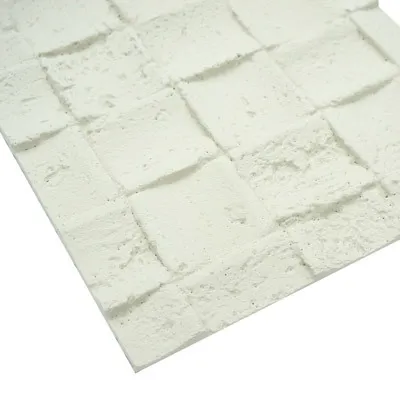
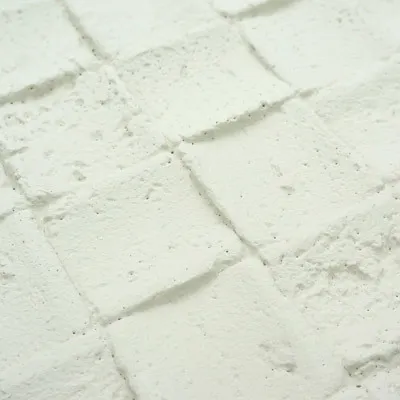
Travertine has been a favorite in architecture for centuries, prized for its warm, earthy tones and unique veining. From the Colosseum in Rome to modern luxury homes, it adds a sense of timelessness and elegance. But traditional travertine has its flaws: it's heavy (which makes installation tricky and expensive), porous (so it stains easily), and mining it can be harmful to the environment. COLORIA's Mosaic Travertine solves all these issues—while amplifying the stone's natural beauty.
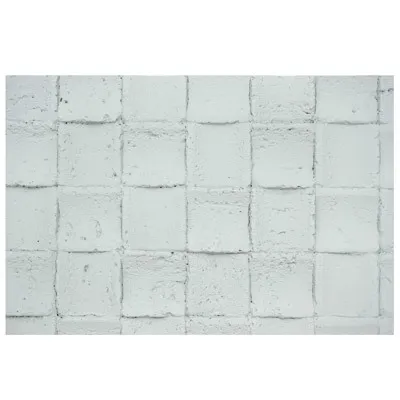
First, the aesthetics. Mosaic Travertine from the MCM 3D Printing Series isn't just a copy of natural travertine—it's an enhancement. The 3D printing process allows for precise control over the stone's texture, color, and pattern. Want the classic "honeycomb" pores of travertine but in a vibrant shade of terracotta? Done. Prefer a smoother finish with subtle gold veining that shimmers when hit by light? No problem. The line includes stunning variants like Starry Green —travertine with tiny, iridescent green flecks that look like stars scattered across a night sky—and Vintage Gold , which has the warm, aged glow of travertine that's been weathered by time, but without the maintenance headaches.
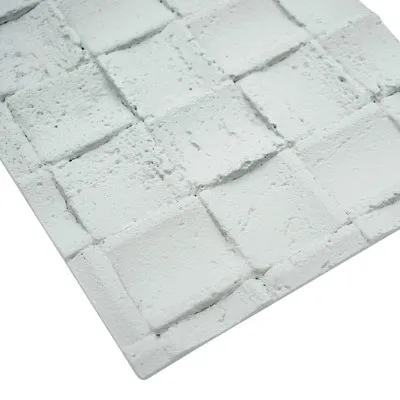
Then there's the texture. Traditional travertine is often rough and uneven, which can be beautiful but impractical for spaces like hospitals or schools where hygiene is key. COLORIA's MCM version lets designers choose the texture: from ultra-smooth (perfect for modern, minimalist spaces) to intentionally "rough" (to mimic the look of hand-chiseled stone). And because it's printed in layers, the material has a subtle depth that traditional stone can't match. "I used the Starry Blue Mosaic Travertine in a children's library," says David Chen, an interior designer based in Singapore. "The walls have this soft, blue-gray base with little silver 'stars' that glow under the lights. The kids call it the 'Story Sky Wall'—they'll sit against it and point out constellations. It's turned a simple reading corner into a magical space."
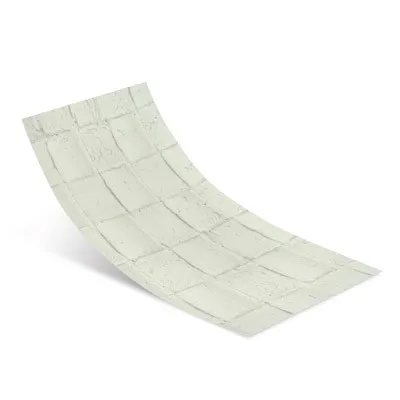
Even the most beautiful material is useless if it's a nightmare to install. That's where COLORIA's MCM Flexible Stone technology comes into play—and it's a game-changer. Unlike traditional stone slabs, which are heavy and rigid, MCM Flexible Stone is thin (as little as 3mm thick) and bendable, making it easy to transport, handle, and install. "We installed a 500-square-meter wall in a shopping mall using Mosaic Travertine and Flexible Stone panels," says Carlos Mendez, a construction manager with over 20 years of experience. "With traditional travertine, that would have taken a team of 10 workers two weeks. With Flexible Stone? Six workers, four days. And we didn't need heavy machinery—just basic tools and a little training. The panels cut like butter, and they adhere directly to the wall with a special adhesive. No mortar, no mess, no stress."
This flexibility also means the material can be used on curved or irregular surfaces—a problem that often stumps designers working with traditional stone. Imagine a circular lobby with walls that curve gently upward, clad in Mosaic Travertine tiles that flow seamlessly, no gaps or awkward seams. Or a retail store with a feature wall that juts out in waves, each "wave" covered in the same travertine pattern, creating a sense of movement. "I once had a client who wanted a wall shaped like a giant seashell," laughs Gonzalez. "With traditional stone, I would have had to say no. With Flexible Stone, we printed panels that curved exactly to the shell's contours. The result was breathtaking—like the wall itself was alive."
| Feature | Traditional Travertine | MCM Mosaic Travertine (Flexible Stone) |
|---|---|---|
| Weight | Heavy (20-30 kg/m²) | Lightweight (3-5 kg/m²) |
| Installation Time | Slow (requires mortar, cutting, sealing) | Fast (peel-and-stick or simple adhesive) |
| Customization | Limited (pre-cut sizes, fixed patterns) | Unlimited (3D-printed to design specs) |
| Durability | Porous (stains easily), prone to cracking | Non-porous, water-resistant, impact-resistant |
| Environmental Impact | High (quarrying, transportation emissions) | Low (recycled materials, local production) |
Great wall art isn't about one material—it's about how materials work together. COLORIA's MCM 3D Printing Series plays well with others, and designers are having a field day combining Mosaic Travertine with other lines to create layered, dynamic spaces. One popular pairing is Mosaic Travertine with the Lunar Peak series—especially Lunar Peak Golden. Imagine a restaurant wall where Mosaic Travertine (in a soft beige) forms the base, and Lunar Peak Golden panels (with their metallic, moon-like sheen) are used as accents: a strip here, a geometric shape there. The contrast between the warm, earthy travertine and the cool, reflective gold creates a space that feels both grounded and luxurious.
Another standout combination is Mosaic Travertine with Foamed Aluminium Alloy Board (Vintage Silver) . The industrial-chic look of the aluminum—lightweight, with a matte, brushed finish—pairs beautifully with the organic texture of travertine. "We used this combo in a tech startup's office," says Chen. "The main wall is Mosaic Travertine in Starry Gray, and we added Foamed Aluminium Alloy strips in Vintage Silver to represent circuit boards. It's a nod to the company's tech roots, but the travertine keeps it from feeling too cold. Employees say it's their favorite spot to brainstorm—something about the mix of natural and industrial makes the space feel creative."
For those who love bold, modern design, mixing Mosaic Travertine with Rust Mosaic Stone is a winning choice. The rich, reddish-brown tones of the rust mosaic add warmth and energy, while the travertine balances it with calm, neutral vibes. "I used this in a wine bar," Gonzalez explains. "The back bar wall is a mosaic of Rust Mosaic Stone and Mosaic Travertine (in a creamy beige). It looks like a landscape—like the rolling hills of Tuscany at sunset. Customers say it makes the wine taste better. I'm not sure about that, but it definitely makes the bar feel like a destination."
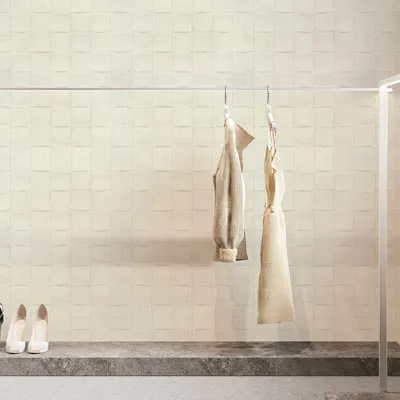
Talk is cheap—results matter. And COLORIA's MCM 3D Printing Series, with Mosaic Travertine, has already left its mark on some stunning projects around the world. Take the Azure Hotel in Riyadh, Saudi Arabia, where the lobby features a 20-meter-long wall printed with Mosaic Travertine (Starry Green) and 3D-printed wave patterns. The design was inspired by the Red Sea, with the travertine representing the ocean floor and the waves symbolizing the tides. "Guests often stand in front of it for minutes, just staring," says the hotel's general manager. "It's become a spot on social media. We've even had couples ask to take wedding photos there."
Then there's the GreenWave Office Park in Dubai, where the exterior walls are clad in Mosaic Travertine (Vintage Beige) and Flexible Stone panels. The developers wanted a building that would stand out in Dubai's skyline but still blend with the desert landscape. The solution? 3D-printed panels that mimic the texture of sand dunes, with Mosaic Travertine adding subtle color variation. "The building changes with the light," says the project architect. "At sunrise, the travertine glows pink; at noon, it's a soft gold; at sunset, it turns warm orange. It's like the building is alive with the desert's colors."
In today's world, beauty can't come at the expense of the planet—and COLORIA gets that. The MCM 3D Printing Series is designed with sustainability in mind, from the materials used to the manufacturing process. MCM itself is a low-carbon material: it requires less energy to produce than traditional cement, and because it's lightweight, transporting it generates fewer emissions. The 3D printing process also minimizes waste—unlike traditional stone cutting, which can waste up to 40% of the raw material, 3D printing uses only what's needed.
But COLORIA doesn't stop there. The company sources its raw materials locally whenever possible, reducing transportation miles, and it's committed to carbon neutrality by 2030. "We had a client who was building a LEED Platinum-certified community center," says Mendez. "They were strict about every detail—from the solar panels to the building materials. MCM Mosaic Travertine checked all the boxes: low VOC emissions, recycled content, and it contributed points toward their LEED certification. Plus, the design team loved it, so it was a win-win."
Sustainability also means longevity. MCM materials are built to last—resistant to fading, cracking, and water damage—so walls won't need to be replaced or repaired every few years. "I installed Mosaic Travertine in a beach house five years ago," Gonzalez recalls. "It's on the exterior, facing the ocean. Saltwater, strong winds, intense sun—you name it. Last month, I visited, and the walls look as good as the day we installed them. Traditional stone would have eroded by now. That's sustainability in action."
At the end of the day, choosing building materials is about more than specs and budgets—it's about vision. It's about creating spaces that inspire, comfort, and connect us. Traditional materials can't always deliver that. But COLORIA's Mosaic Travertine MCM 3D Printing Series can. It's a material that bends to your creativity, not the other way around. It's beautiful, practical, and kind to the planet. And it's changing the way we think about walls—from necessary structures to works of art.
Whether you're designing a luxury hotel, a cozy café, a modern office, or your own home, this series offers something no other material can: the freedom to dream big, without compromise. So why settle for ordinary walls? With Mosaic Travertine and COLORIA's MCM 3D Printing Series, your walls can tell stories, evoke emotions, and leave a lasting impression. After all, great architecture isn't just about buildings—it's about the experiences they create. And with these materials, those experiences are sure to be unforgettable.
Recommend Products












