
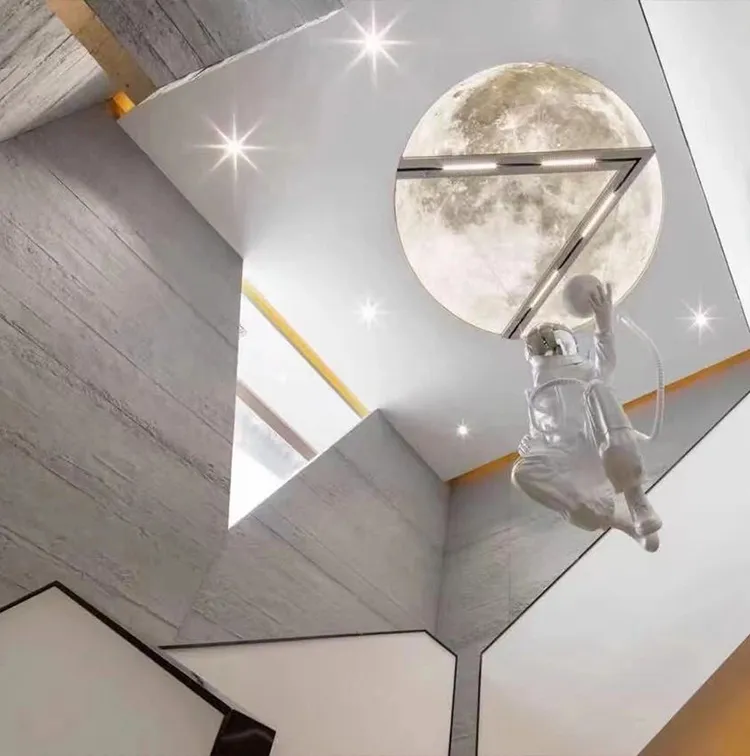
Where technology meets storytelling—how 3D printed cement transforms brand identity into tangible architecture
Walk into any modern corporate headquarters, and you'll notice more than just desks and meeting rooms. Today's workspaces are silent storytellers, weaving a brand's values, history, and personality into every corner. From the lobby's first impression to the boardroom's subtle details, these spaces don't just house teams—they define them. But how do you turn a brand's logo, a symbol often confined to business cards and websites, into something that commands a wall, sparks conversation, and stands the test of time? Enter MS Cement Board 3D Printing—a revolutionary blend of material science and artistic precision that's redefining how companies wear their identity on their sleeves (or rather, their walls).
In an era where "customization" has become a buzzword, 3D printing in architecture isn't just about novelty—it's about possibility. Traditional methods of adding brand elements to buildings, like carved stone or painted murals, often come with trade-offs: high costs, long lead times, or limited design flexibility. A logo with intricate details? You might have to simplify it. A large-scale installation? Prepare for weeks of labor. But 3D printing changes the game. By layering material—often cement, concrete, or specialized composites—layer by layer, it lets architects and designers translate digital concepts directly into physical form, with minimal compromise. And when paired with MS Cement Board, a material engineered for durability and beauty, the result is nothing short of transformative.
At first glance, cement might sound utilitarian—something you'd find in sidewalks, not statement walls. But MS Cement Board isn't your average building material. Imagine a substance that marries the raw, organic texture of traditional concrete with the precision of modern engineering. It's lightweight yet surprisingly strong, resistant to moisture and fire, and—most importantly for designers— incredibly moldable. Unlike rigid stone or brittle plaster, MS Cement Board bends to the will of 3D printers, capturing fine lines, bold curves, and even textural nuances that make a logo feel less like a sticker and more like a piece of art.
What sets MS Cement Board apart is its composition: a blend of high-grade cement, reinforcing fibers, and proprietary additives that reduce shrinkage and enhance workability. This means that when it's 3D printed, it doesn't crack under the stress of layer adhesion, and it retains its shape and detail over decades. For corporate spaces, where longevity and low maintenance are non-negotiable, this isn't just a perk—it's a requirement.
So, how does a 2D logo on a screen become a 3D masterpiece on a lobby wall? The process starts with collaboration. Designers, engineers, and brand managers work together to refine the logo's digital blueprint, ensuring that every curve, font, and spacing translates seamlessly to a large-scale installation. With MS Cement Board 3D printing, there's no need to "dumb down" the design—even the most intricate logos, with their tiny serifs or gradient effects, can be reproduced with accuracy.
Once the digital model is finalized, the 3D printer takes over. Using a specialized nozzle, it deposits layers of MS Cement Board mixture with pinpoint precision, building up the logo from the ground up. The result? A tactile, three-dimensional piece that invites touch and attention. Unlike flat paint or vinyl decals, which can fade or peel, a 3D printed MS Cement Board logo has depth—it casts shadows as the light shifts, creating a dynamic, ever-changing display that feels alive.
Take XYZ Tech, a fast-growing software company with a brand identity rooted in innovation and connectivity. When they moved into their new headquarters in 2024, they wanted their lobby to reflect their ethos: forward-thinking, yet grounded. Their logo, a stylized "X" intertwined with a circuit-like thread, was the perfect candidate for 3D printing—but they needed it to feel less like a corporate symbol and more like a conversation starter.
Working with a team of 3D printing specialists, XYZ Tech opted for a 12-foot-wide MS Cement Board installation. The logo, rendered in a matte finish with subtle texture, was paired with wood grain board panels on either side, creating a warm contrast between industrial precision and natural warmth. The result? A lobby wall that doesn't just show the logo—it embodies the brand: strong, innovative, and human-centered.
"We wanted visitors to walk in and think, 'This is who XYZ Tech is,'" says Maria Gonzalez, the company's Chief Brand Officer. "The 3D printed logo does that. It's not just on the wall—it's part of the wall. Employees pass by it every day, and it's become a point of pride. Clients ask about it in meetings. It's more than a design choice; it's a statement."
To truly appreciate MS Cement Board 3D printing, it helps to compare it to traditional methods of logo integration. Let's break down the advantages:
| Feature | Traditional Methods (Carved Stone/Painted Murals) | MS Cement Board 3D Printing |
|---|---|---|
| Design Flexibility | Limited by tooling; intricate details often simplified | Full digital precision; no detail too small |
| Lead Time | 4–6 weeks (carving) or 2–3 weeks (murals) | 1–2 weeks from design to installation |
| Durability | High (stone) but prone to chipping; low (paint) with fading | Resistant to moisture, fire, and impact; lasts 50+ years |
| Cost | High (stone carving) due to labor; moderate (murals) but recurring touch-ups | Competitive upfront cost; minimal maintenance |
| Sustainability | High waste (stone offcuts); toxic paints possible | Minimal material waste; eco-friendly additives |
The table tells a clear story: MS Cement Board 3D printing isn't just better—it's smarter. For companies looking to invest in their space long-term, it's a choice that pays dividends in both aesthetics and practicality.
While MS Cement Board is the star of the show, its true power shines when paired with other premium materials. Take, for example, travertine (vintage silver) —a stone with a weathered, metallic sheen that adds a touch of elegance to any space. Imagine a 3D printed MS Cement Board logo in matte black, set against a backdrop of travertine vintage silver panels. The contrast of textures—rough cement and smooth, iridescent stone—creates visual drama that's hard to ignore.
Or consider wood grain board , as in the XYZ Tech case study. The natural, organic pattern of wood softens the industrial edge of cement, making the logo feel approachable and warm. It's a combination that works especially well for brands aiming to balance innovation with humanity—think tech companies, creative agencies, or sustainable startups.
For a more futuristic vibe, designers are experimenting with foamed aluminium alloy board (vintage gold) alongside MS Cement Board. The lightweight, metallic surface of the aluminium complements the cement's earthiness, creating a look that's both modern and timeless. It's a pairing that's been turning heads in financial firms and luxury retail spaces, where sophistication is key.
At the end of the day, architecture is about people. A 3D printed MS Cement Board logo isn't just a design element—it's a catalyst for connection. Employees feel a stronger sense of belonging when they see their company's identity celebrated in such a tangible way. Visitors, whether clients or candidates, walk away with a memorable impression of the brand's attention to detail and forward thinking. It's the difference between saying "we're innovative" and showing it—through a wall that took weeks to craft, not just hours to paint.
Consider a scenario: A new hire walks into the lobby on their first day. They're nervous, excited, unsure of what to expect. Then they see the logo—bold, textured, impossible to ignore. In that moment, they don't just join a company; they join a story. That's the power of architecture as storytelling, and MS Cement Board 3D printing is its newest, most compelling chapter.
As technology advances, the possibilities for MS Cement Board 3D printing are only expanding. Imagine logos that light up from within, thanks to embedded LED layers. Or interactive installations that change color based on the time of day. Already, designers are experimenting with gradient textures—blending shades of cement to mimic natural stone like travertine (starry blue) or lunar peak silvery —adding even more depth to 3D printed pieces.
And it's not just about logos. From accent walls and room dividers to custom furniture and outdoor signage, MS Cement Board 3D printing is poised to become a staple in commercial design. It's a material that adapts to a brand's needs, whether that's a minimalist logo for a modern startup or an ornate crest for a heritage company.
In a world of fleeting digital impressions, physical spaces still hold unmatched power. They're where memories are made, relationships are built, and brands are brought to life. MS Cement Board 3D printing isn't just a tool for architects—it's a storyteller's best friend. It turns logos from flat symbols into three-dimensional narratives, reminding everyone who walks through the door: This is who we are. This is what we stand for.
So the next time you think about your corporate space, ask yourself: Is our brand just in the walls, or is it part of them? With MS Cement Board 3D printing, the answer can be both—beautifully, boldly, and unforgettably.
Recommend Products












