
There's a quiet magic in the materials that shape our spaces. They don't just fill rooms—they set moods, spark memories, and even change how we move through a building. Think about the last time a wall made you pause, or a countertop made you run your hand across its surface without thinking. That's the power of intentional material choice. In the world of modern architecture, few materials balance tradition and innovation as gracefully as MS Travertino, especially when paired with the game-changing possibilities of 3D printing. This isn't just about "building materials"—it's about crafting experiences that stick with you, turning houses into homes and buildings into stories.
Travertine has been a staple in design for millennia, from the grand columns of Rome to the sunlit patios of Tuscany. Its appeal lies in its duality: it's sturdy enough to stand the test of time, yet soft enough to feel approachable, with natural veining that makes every slab one-of-a-kind. But MS Travertino isn't content to rest on that legacy. It's a material reimagined—infused with modern engineering to be lighter, more versatile, and ready to meet the demands of today's boldest designs. And when you add 3D printing to the mix? Suddenly, the only limit is imagination.
To understand MS Travertino, you first have to appreciate the beauty of its origins. Travertine forms in hot springs, where mineral-rich water cools and deposits layers of calcium carbonate over centuries. The result is a stone with a porous, almost honeycombed texture—think of it as nature's own 3D art, with tiny pockets and channels that tell the story of its formation. MS Travertino honors this heritage but enhances it: through careful processing, it retains that beloved natural texture while gaining flexible stone properties that make it adaptable to modern needs.
What does "flexible" mean here? Imagine a stone that can bend gently around a curved wall, or be shaped into a wave-like facade without cracking. Traditional travertine, while durable, is rigid—great for flat surfaces but limiting for dynamic designs. MS Travertino's flexibility changes the game. It's lightweight, too, which eases installation and reduces structural stress on buildings. But don't mistake flexibility for fragility: this is a material built to last, with resistance to wear, moisture, and even fire. It's the best of both worlds: the soul of natural stone, with the practicality of cutting-edge materials.
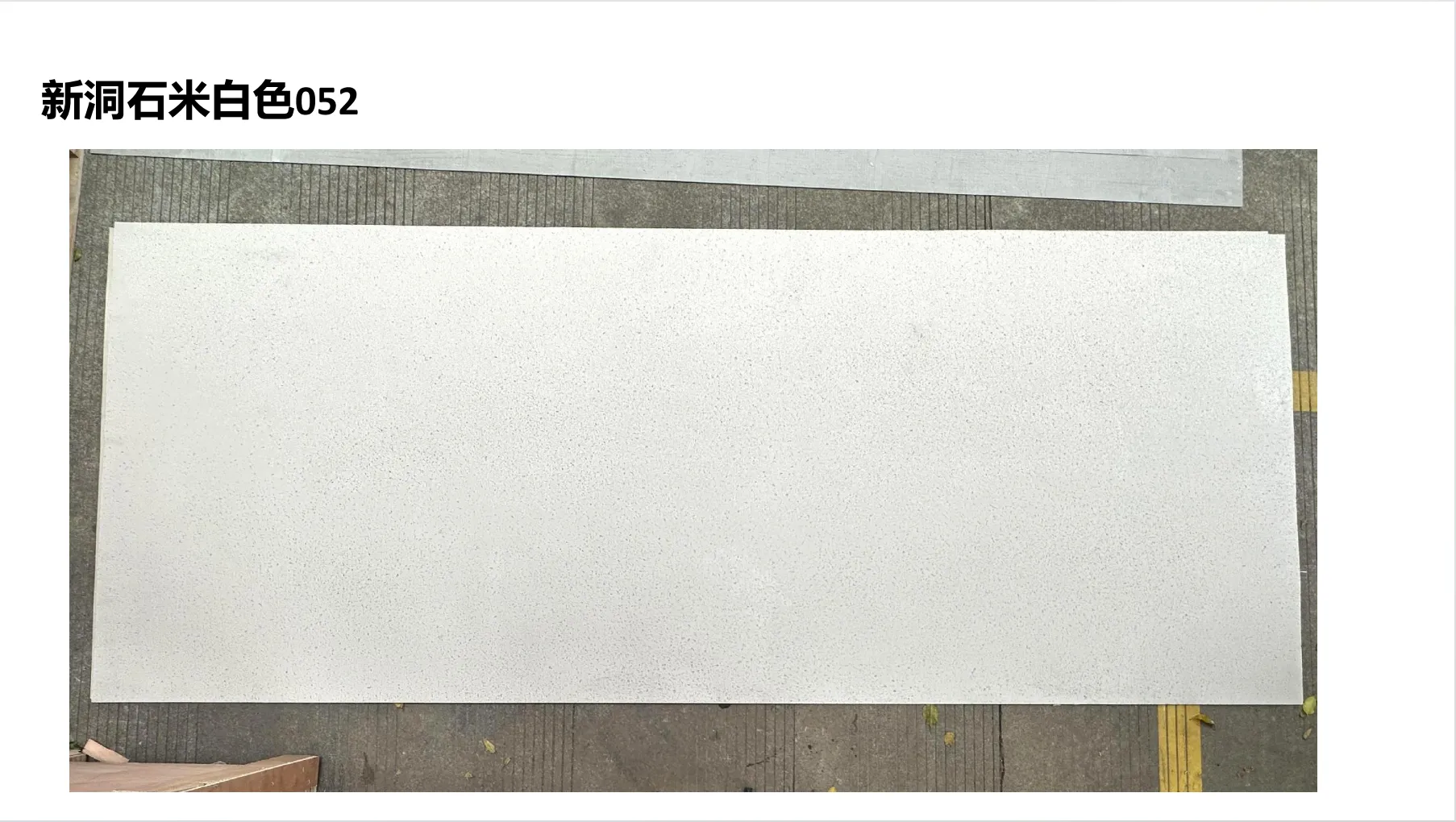
Then there's the big slab board series —a collection that proves size matters, but in the most elegant way. These large-format slabs (some spanning over 3 meters) minimize seams, creating a seamless expanse that makes rooms feel larger and more cohesive. In a world where "less is more" dominates design trends, a big slab of MS Travertino becomes a statement of quiet confidence. No busy patterns, no clashing colors—just the stone's natural beauty, amplified by its scale. It's the kind of choice that turns a bathroom wall into a work of art or a kitchen backsplash into a focal point that never feels overwhelming.
3D printing isn't just a buzzword in architecture—it's a revolution. For MS Travertino, it's the bridge between "what's possible" and "what's extraordinary." Traditional stone cutting is precise, but it's limited by the tools: straight lines, standard shapes, and a lot of material waste. 3D printing changes that. Layer by layer, it builds up designs with pinpoint accuracy, creating textures and forms that would take master craftsmen weeks to carve by hand. The 3D printing series for MS Travertino isn't just about speed—it's about unlocking creativity.
Imagine a wall panel that mimics the undulating surface of a desert dune, with ridges and valleys so precise they cast shadows that shift with the sun. Or a ceiling tile that looks like a cluster of pebbles, each one uniquely shaped but fitting together perfectly. With 3D printing, these aren't just concepts—they're realities. The technology allows designers to experiment with organic shapes, intricate patterns, and custom textures, all while using exactly the amount of material needed (hello, sustainability!). It's a win-win: more design freedom, less waste, and results that look like they were crafted by nature itself.
One of the most exciting aspects of 3D printed MS Travertino is its adaptability. Whether you're designing a tiny home office or a sprawling commercial complex, the material scales effortlessly. A boutique café might opt for small, 3D-printed wave panels to add whimsy to its walls, while a luxury hotel could use the same technology to create a towering facade that ripples like water. And because each piece is printed to order, customization is endless—no more settling for "close enough." Want a wall that spells out a meaningful word in subtle texture? Done. Dream of a backsplash that mirrors the constellations of your birth month? Possible. 3D printing turns "I wish" into "I will."
What truly makes MS Travertino stand out is its ability to transform—literally. With a range of variants, it can shift from earthy and grounded to ethereal and otherworldly, all while retaining that core travertine charm. Let's dive into a few that have designers and homeowners alike buzzing.
Take travertine (starry green) —a variant that feels like a secret garden hidden in stone. Its base is a soft, mossy green, but tiny, iridescent particles are embedded throughout, catching light like dewdrops on leaves or stars twinkling through trees. Run your hand over it, and you'll feel the stone's natural porosity, with subtle indentations that add depth. It's the kind of material that turns a home office into a retreat; imagine working at a desk, glancing up, and feeling like you're surrounded by a forest at dusk. In a child's room, it becomes a wall of "magic stones," sparking stories about fairies and adventures. It's not just a surface—it's a conversation starter.
Then there's the lunar peak silvery line—a nod to the quiet grandeur of the moon. Unlike harsh metallic finishes, this travertine has a soft, diffused shimmer, like moonlight on water. It's subtle enough to feel calm, but striking enough to draw the eye. Pair it with 3D-printed wave panels , and you've got a bathroom that feels like a spa on the moon: walls that flow like lunar seas, catching the glow of overhead lights to create a space that's equal parts relaxing and awe-inspiring. It's also surprisingly versatile—use it in a modern living room with black leather furniture for contrast, or in a coastal home to echo the silver of ocean waves at night.
And let's not overlook the classics, like travertine (beige) —a warm, neutral base that proves simplicity never goes out of style. What makes MS Travertino's take special? The 3D printing options. Instead of a plain slab, you could have a beige travertine panel with 3D-printed "thread" patterns—delicate lines that add texture without overwhelming the space. It's the perfect choice for someone who loves the warmth of natural stone but wants a hint of modern flair. In a bedroom, it softens the space; in a hallway, it guides the eye gently from room to room. It's the chameleon of the collection—quietly adapting to its surroundings, but always elevating them.
| Variant Name | Key Features | Ideal Applications | Visual Appeal |
|---|---|---|---|
| Travertine (Starry Green) | Mossy green base with iridescent flecks; porous, natural texture; 3D printable for custom patterns | Home offices, children's rooms, boutique cafes, accent walls | Evokes calm and wonder, like a forest at dusk; pairs beautifully with warm wood and soft, yellow lighting |
| Lunar Peak Silvery | Soft silver shimmer; smooth, slightly polished finish; flexible for curved surfaces | Bathrooms, modern living rooms, coastal homes, hotel lobbies | Mimics moonlight on water; creates a serene, upscale vibe; contrasts stunningly with black or navy accents |
| 3D Printed Wave Panel | Undulating, organic shape; lightweight; compatible with most MS Travertino variants | Feature walls, ceilings, facades, restaurant backdrops | Adds movement and depth; casts dynamic shadows with changing light; feels both modern and natural |
| Big Slab Board (Beige Travertine) | Large-format (up to 3m), seamless slabs; warm beige tone; minimal seams | Kitchen countertops, bathroom walls, open-concept living spaces | Creates a sense of spaciousness; highlights travertine's natural veining; timeless and versatile |
| Flexible Stone (Thread Pattern) | Bendable, lightweight; 3D-printed delicate thread texture; available in multiple base colors | Curved walls, furniture accents, headboards, retail displays | Subtle texture adds interest without clutter; feels artisanal and handcrafted |
It's one thing to talk about materials in theory—but seeing them in action is where the magic happens. Take the case of a small bed-and-breakfast in the Italian countryside, which recently renovated its lobby using MS Travertino's big slab beige travertine with 3D-printed wave panels. The result? A space that feels both rooted in the region's stone heritage and refreshingly modern. Guests often comment on how the walls "feel alive" as sunlight moves across them, turning the lobby into a different space every hour. It's not just a lobby anymore—it's a destination within the destination.
Closer to home, a family in Portland transformed their home office with travertine (starry green) 3D-printed panels. The walls, printed with a subtle "constellation" pattern, have become a hit with their two young kids, who love pointing out "new stars" each morning. But it's the parents who rave most: "It used to be a boring room we avoided," they said. "Now, we fight over who gets to work in there. It's calming, but it also makes us feel creative—like we're working under the stars." That's the power of a material that connects emotionally, not just aesthetically.
Even commercial spaces are getting in on the trend. A boutique clothing store in Tokyo opted for lunar peak silvery flexible stone for its facade. The material bends gently around the building's curved corners, and its silvery finish catches the city lights at night, turning the store into a glowing beacon. "We wanted something that felt luxurious but not intimidating," the owner explained. "The stone feels expensive, but in a warm way—like you're stepping into a friend's stylish home, not a stuffy shop." Sales have reportedly risen since the renovation, with customers lingering longer to take in the "beautiful walls."
Great design isn't just about what you see—it's about what you feel, hear, and even smell. MS Travertino 3D printed designs excel here, engaging all the senses to create a fully immersive experience. Let's start with touch: run your hand over a 3D-printed wave panel, and you'll feel the ridges and valleys, each one smooth but distinct. It's a tactile reminder that this isn't a flat, lifeless surface—it's a texture with depth, a material that invites interaction. In a world dominated by screens, that physical connection matters.
Sound, too, plays a role. Travertine's porous nature absorbs noise, softening echoes in large rooms. Imagine a restaurant with MS Travertino walls: instead of a loud, chaotic space, conversations feel intimate, and laughter doesn't bounce off the walls. It's a subtle detail, but one that changes how people experience the space. "We used to have customers complaining about noise," said a restaurant owner who renovated with big slab travertine. "Now, they stay longer, and we get more repeat business. They say it 'feels cozy,' even though the space is large."
And then there's light. MS Travertino's variants interact with light in unique ways: starry green shimmers when hit by direct sunlight, lunar peak silvery glows under warm bulbs, and beige travertine softens harsh overhead lighting. A 3D-printed thread pattern can cast delicate shadows on the floor, turning a static room into one that shifts with the day. It's like having a living, breathing space—one that changes not just with the seasons, but with the hour.
In today's world, "beautiful" isn't enough—it has to be responsible, too. MS Travertino checks that box with ease. First, there's the material itself: travertine is a natural stone, quarried with minimal environmental impact when sourced responsibly. But the real sustainability win comes from 3D printing. Traditional stone cutting can waste up to 30% of the material; 3D printing, by contrast, uses only what's needed, slashing waste. Add in the flexible stone's lightweight nature, which reduces transportation emissions, and you've got a material that's kind to both the planet and your conscience.
Durability matters, too. A well-made MS Travertino surface can last decades, reducing the need for frequent replacements. "We chose it for our home because we wanted something that would grow with our family," said a homeowner in Colorado. "No need to redo the kitchen backsplash in five years—this will still look great when our kids go to college." That longevity is a sustainability superpower: less waste, less energy spent on replacements, and a space that ages gracefully.
At the end of the day, MS Travertino 3D printed designs are more than just "architectural accents"—they're storytellers. They tell the story of tradition, reimagined. Of technology, used to enhance, not replace, nature's beauty. Of spaces that don't just function, but feel. Whether it's the starry green walls of a home office, the lunar peak silvery facade of a boutique, or the seamless expanse of a big slab in a lobby, these materials have a way of turning "ordinary" into "unforgettable."
As we look to the future of architecture, it's clear that materials like MS Travertino will lead the way—not because they're the newest or the flashiest, but because they're human-centered. They understand that we don't just live in spaces—we connect with them. And in a world that often feels rushed and disconnected, that connection might be the most valuable design feature of all.
So the next time you walk into a room and feel that unspoken connection, take a closer look. Chances are, it's not by accident. It's the work of materials that care—about design, about sustainability, and about the people who call those spaces home.
Recommend Products












