
Step into a modern architectural studio, and you'll likely find designers hunched over glowing screens, their fingers dancing across keyboards as they shape something extraordinary—a vision that will soon leap from the digital realm into the physical world. This is where the journey of MS Travertino 3D Printing Series begins: not with hammers and chisels, but with code, creativity, and a deep respect for the natural beauty of stone. For architects, interior designers, and builders, this process isn't just about manufacturing materials—it's about breathing life into spaces, blending innovation with the timeless allure of textures that feel like they've been carved by time itself.
Imagine running your hand over a wall panel that looks like it was quarried from a sun-baked Italian hillside, yet it was printed layer by layer in a controlled workshop. That's the magic of flexible stone technology, a cornerstone of the MCM 3D Printing Series. It marries the durability of traditional stone with the adaptability of modern materials, allowing for shapes and designs that once seemed impossible. Today, we're pulling back the curtain on this journey—from the first digital sketch to the final installation—with a focus on one of the most sought-after finishes: travertine (vintage silver) . Along the way, we'll explore the craftsmanship, the challenges, and the quiet moments of pride that make each panel more than just a building material.
The story starts in the digital design studio, where designers and engineers collaborate like modern-day alchemists. Here, a client's vision—say, a hotel lobby that evokes both luxury and warmth—meets cutting-edge software. The first step? Translating abstract concepts into precise 3D models. Using tools like AutoCAD and Rhino, the team maps out every curve, groove, and texture, ensuring the final product will fit seamlessly into the project's dimensions and aesthetic.
"It's not just about making something look good on screen," says Maria, a senior designer with 15 years in architectural visualization. "We have to think about how the light will hit the panel at different times of day, how it will interact with other materials like wood or metal, and even how people will touch it. Travertine (vintage silver) has this unique matte sheen that catches light softly—too much gloss, and it feels artificial; too flat, and it loses that 'vintage' charm. We tweak the digital texture maps for weeks to get that balance right."
Once the 3D model is finalized, it's time to prepare the "blueprint" for the 3D printer. This involves slicing the model into thousands of thin layers, each just 0.1mm thick, and programming the printer to deposit the flexible stone material with pinpoint accuracy. It's a bit like baking a cake with a recipe that requires exact measurements—one miscalculation, and the texture could end up too porous, or the panel might not bend as intended. "We run hundreds of simulations before hitting 'print'," explains Raj, a lead engineer. "We test for stress points, flexibility, even how the material will age over time. Clients don't just want a panel that looks good today—they want it to look good in 20 years."
While the digital design phase is all about precision, the material preparation phase is where art meets chemistry. Flexible stone, the star of the MCM 3D Printing Series, isn't your average construction material. It's a composite of natural stone aggregates (like crushed travertine), polymer binders, and additives that give it flexibility without sacrificing strength. For travertine (vintage silver), the process starts with sourcing high-quality travertine fragments—often from quarries in Turkey and Italy, where the stone is known for its warm, honeycomb-like pores.
"We sift through tons of raw travertine to find the right particles," says Ahmed, who oversees material sourcing. "The vintage silver finish requires a specific blend of light and dark aggregates—too many dark specks, and it looks muddy; too few, and it loses depth. It's like mixing paint, but with rocks." Once sorted, the aggregates are ground into a fine powder, then mixed with the polymer binder in a giant mixer that resembles a concrete truck. The result? A thick, malleable paste that's loaded into cartridges, ready for the 3D printer.
What makes this paste "flexible"? The polymer binder acts like a microscopic scaffold, holding the stone particles together while allowing the material to bend up to 30 degrees without cracking. This is a game-changer for architects who want curved walls or custom-shaped facades. "Traditional stone is rigid—you cut it, and that's it," Ahmed adds. "Flexible stone lets you wrap it around columns, create undulating feature walls, or even use it for furniture. It's stone, but with the adaptability of fabric."
The 3D printing workshop is a symphony of soft hums and rhythmic clicks. Rows of industrial-grade printers stand like silent sentinels, their nozzles moving with the precision of a watchmaker. Each printer is calibrated to handle the flexible stone paste, which has the consistency of thick toothpaste. As the nozzle glides back and forth, it deposits layer upon layer of material, building up the panel from the bottom up.
For travertine (vintage silver) panels, the printing process takes anywhere from 4 to 8 hours, depending on the size and complexity. "We can't rush it," says Li Wei, a printer operator with a knack for troubleshooting. "If the layer is too thin, it might dry out before the next layer is added; too thick, and it could sag. We monitor the temperature and humidity in the room constantly—even a 2-degree drop can affect the curing time." Li Wei points to a printer in action: the nozzle pauses briefly, then resumes, leaving a tiny indentation that mimics the natural pores of travertine. "That's the digital texture map at work," he explains. "We program those pores in the design phase, so the printer knows exactly where to leave gaps. It's like the stone is 'remembering' its natural form."
Watching a panel emerge from the printer is a surprisingly emotional experience. What starts as a flat bed of material slowly transforms into something with depth and character—each layer adding to the story. "I still get chills when I see the first few layers take shape," admits Sarah, a quality control inspector who's been with the company for 8 years. "It's like watching a sculpture grow. You start to see the vintage silver hue come through as the layers stack, and you think, 'That's going to make someone's space feel special.'"
Once printed, the panel isn't ready for installation yet. It needs to cure for 24–48 hours in a climate-controlled room, where the polymer binder hardens and the stone particles bond together. After curing, the real artistry begins: hand-finishing. A team of artisans uses fine-grit sandpaper to smooth any rough edges, then applies a special sealant that enhances the vintage silver finish. "This step is all about nuance," says Carlos, who leads the finishing team. "Travertine (vintage silver) isn't just a color—it's a feeling. We want it to look like it's been weathered gently over time, not brand-new. So we'll sometimes use a soft brush to highlight the pores, or a damp cloth to darken certain areas, creating that 'lived-in' look."
The sealant also plays a crucial role in durability. It protects the panel from stains, moisture, and UV rays, ensuring that the vintage silver hue won't fade or yellow over time. "We test our sealants rigorously," Carlos adds. "We'll pour coffee, wine, even motor oil on sample panels and let them sit for days. If the sealant holds, we use it. Clients trust us to deliver materials that last, and that trust isn't something we take lightly."
Finally, each panel is labeled with a unique QR code that links to its digital "birth certificate"—a record of its design specs, material batch, and quality checks. It's a small detail, but it speaks to the transparency of the process. "We want clients to know exactly where their panel came from," says Raj, the engineer. "It's not just a piece of stone—it's a product of care, from the first digital sketch to the final polish."
Before a panel leaves the workshop, it undergoes a battery of tests. Sarah and her team check for everything from thickness consistency to color uniformity. "We'll measure the panel at 10 different points to ensure it's within 0.5mm of the design specs," she explains. "For travertine (vintage silver), we also compare it to a master sample under different lighting conditions—natural daylight, warm incandescent, cool LED—to make sure the color doesn't shift dramatically."
Flexibility is another key test. A panel is clamped at both ends and bent to a 30-degree angle; if it cracks or splinters, it's rejected. "We also do a 'scratch test' with a metal tool," Sarah adds. "The surface should resist light scratches, just like natural travertine. If it fails, we go back to the material mix and figure out what went wrong. There's no cutting corners here."
One of the most heartening parts of quality control? When a panel passes all tests, and the team gathers around to admire it. "We'll take photos—'real photos,' not just stock images—and send them to the client," Sarah says. "Their reactions are everything. Last month, a designer sent us a video of her client crying when she saw the vintage silver panels installed in her restaurant. That's why we do this. It's not about the materials; it's about the moments they create."
The final chapter of the journey is installation, where the panel leaves the workshop and becomes part of a space. Thanks to flexible stone's lightweight nature (it's up to 70% lighter than natural travertine), installation is faster and safer than traditional stone. A two-person crew can install up to 50 square meters in a day, using simple adhesives or mechanical fasteners.
"Installing these panels is like putting together a puzzle where every piece fits perfectly," says Mike, a contractor who specializes in MCM materials. "The digital design ensures that each panel aligns with the next, so the texture flows seamlessly. And because they're flexible, you don't have to worry about them cracking during transport or installation. I've worked with natural stone for 20 years, and this stuff is a game-changer for tight deadlines and complex designs."
For the client—a hotel owner, a homeowner, a restaurant manager—the moment the last panel is installed is surreal. "You've seen the 3D renderings, the samples, the real photos," says Elena, who recently renovated her boutique hotel with travertine (vintage silver) panels. "But nothing prepares you for walking into the space and seeing it all come together. The panels have this warmth to them, like they've been part of the building forever. Our guests keep asking where we 'found' such beautiful stone, and we love telling them it was printed. It starts conversations about innovation and sustainability, which is exactly what we wanted."
With so many finishes available in the MCM 3D Printing Series—from lunar peak silvery to gobi panel—why does travertine (vintage silver) stand out? It's all about versatility. The soft, metallic sheen pairs equally well with modern minimalist designs and rustic, industrial spaces. It adds depth without overwhelming, and it complements a wide range of colors: deep blues, warm woods, crisp whites, and even bold reds.
To better understand its appeal, let's compare travertine (vintage silver) with other popular travertine finishes in the series:
| Travertine Finish | Visual Characteristic | Ideal Use Case | Emotional Vibe |
|---|---|---|---|
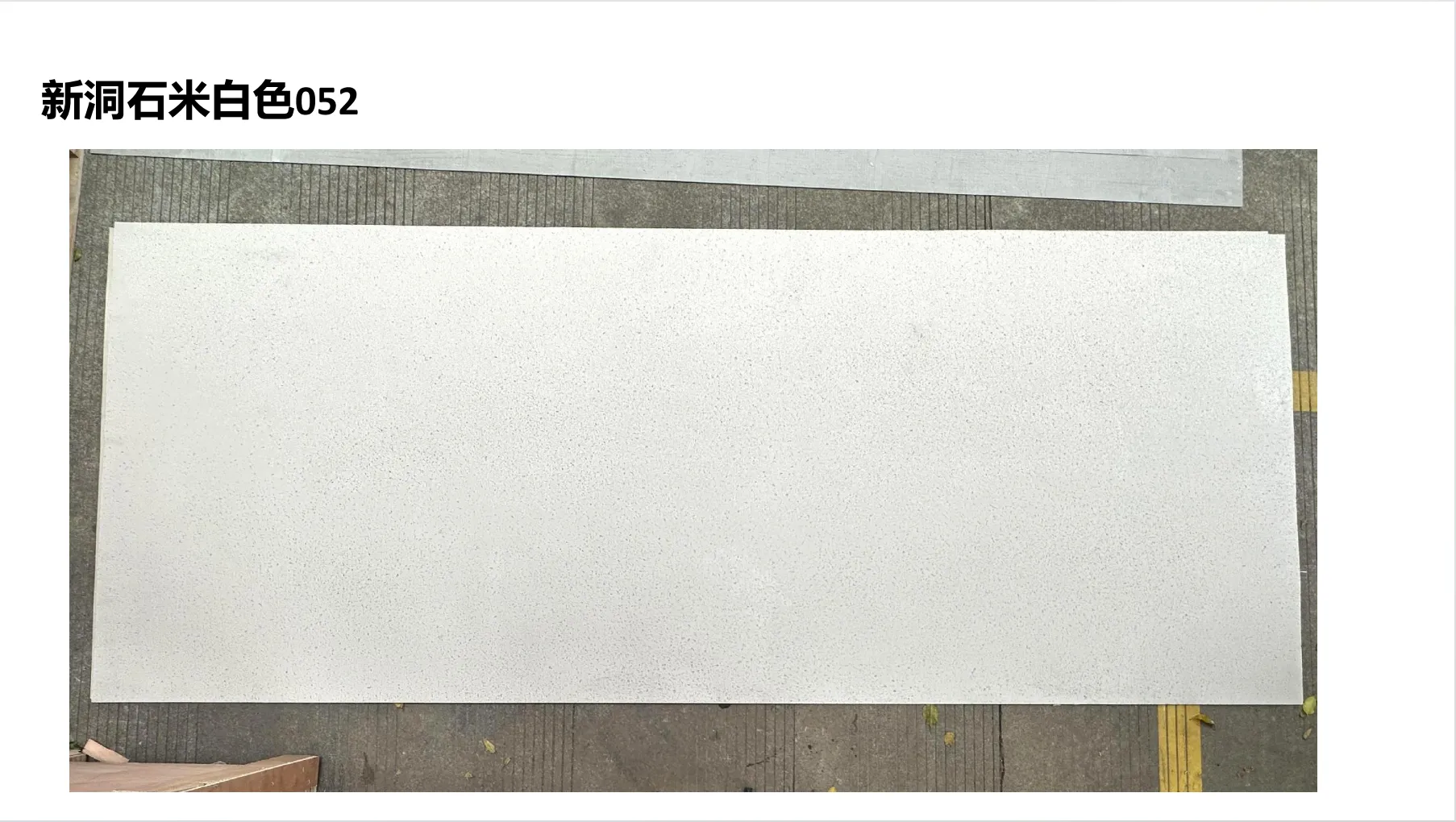
| Travertine (Vintage Silver) | Matte silver base with subtle gray and beige undertones; fine pores for texture. | Hotel lobbies, office reception areas, high-end retail. | Elegant, timeless, understated luxury. |
| Travertine (Starry Green) | Deep green base with flecks of gold and black, mimicking night skies. | Restaurants, bars, accent walls in modern homes. | Dramatic, adventurous, nature-inspired. |
| Travertine (Vintage Gold) | Warm gold hue with honey-colored pores; more reflective than silver. | Wedding venues, luxury spas, residential living rooms. | Opulent, cozy, sunlit warmth. |
| Travertine (Starry Red) | Vibrant red base with metallic flecks; bold and eye-catching. | Statement walls, art galleries, boutique hotels. | Passionate, energetic, artistic. |
"Vintage silver has this chameleon-like quality," says Maria, the designer. "In a bright room, it looks fresh and modern; in a dimly lit space, it feels cozy and intimate. It's like having two materials in one. Plus, it's incredibly forgiving—fingerprints and minor scratches are less noticeable than on high-gloss finishes, which is a big plus for high-traffic areas."
As technology advances, the possibilities for the MCM 3D Printing Series are endless. The team is already experimenting with 4D printing, where panels can change shape in response to temperature or humidity, and incorporating recycled materials into the flexible stone mix to reduce environmental impact. "Sustainability is no longer a trend—it's a necessity," says Raj. "We're working on using 80% recycled stone aggregates in our mixes without compromising quality. The goal is to create materials that are not just innovative, but also kind to the planet."
But at the heart of it all, the process remains deeply human. "Machines can print the panels, but it's the people who infuse them with soul," says Sarah, the quality control inspector. "Every designer who tweaks a texture map, every artisan who hand-finishes a panel, every installer who ensures a perfect fit—they're all part of the story. That's what makes the MCM 3D Printing Series special. It's not just about building materials; it's about building connections—between people, spaces, and the natural world."
So the next time you walk into a space adorned with flexible stone panels, take a moment to appreciate the journey. Behind that travertine (vintage silver) wall is a team of dreamers and doers, who turned a digital idea into something tangible, something that makes you feel at home. That's the power of innovation when it's rooted in humanity—and it's why the MCM 3D Printing Series isn't just shaping buildings; it's shaping how we experience the world around us.
Recommend Products












