
In the world of architecture, the exterior of a building is more than just a protective layer—it's the first conversation starter, the silent storyteller of a structure's identity. Today's designers and homeowners aren't just looking for cladding that "works"; they want materials that breathe personality into walls, that balance bold aesthetics with the quiet resilience needed to stand up to rain, wind, and time. Enter the MS Travertino Big Slab Board —a name that's been buzzing in design circles not just for its beauty, but for how it redefines what exterior cladding can be. Let's dive into why this material, paired with innovations like 3D printing series and flexible stone , is turning heads and transforming facades around the globe.
Talk to any architect who's worked with traditional travertine or stone cladding, and you'll hear the same sighs: heavy slabs that require cranes to install, seams that break up the visual flow, and a frustrating lack of flexibility when trying to curve or contour a design. "We'd fall in love with a natural stone's texture, but then realize it couldn't wrap around a rounded wall without cracking," says Maria Gonzalez, a principal designer at a boutique firm in Barcelona. "Or we'd spend weeks sourcing large-format slabs, only to have them arrive with hairline fractures from transportation." Sound familiar? For years, the industry has been stuck in a loop: choosing between beauty and practicality, between uniqueness and ease of use.
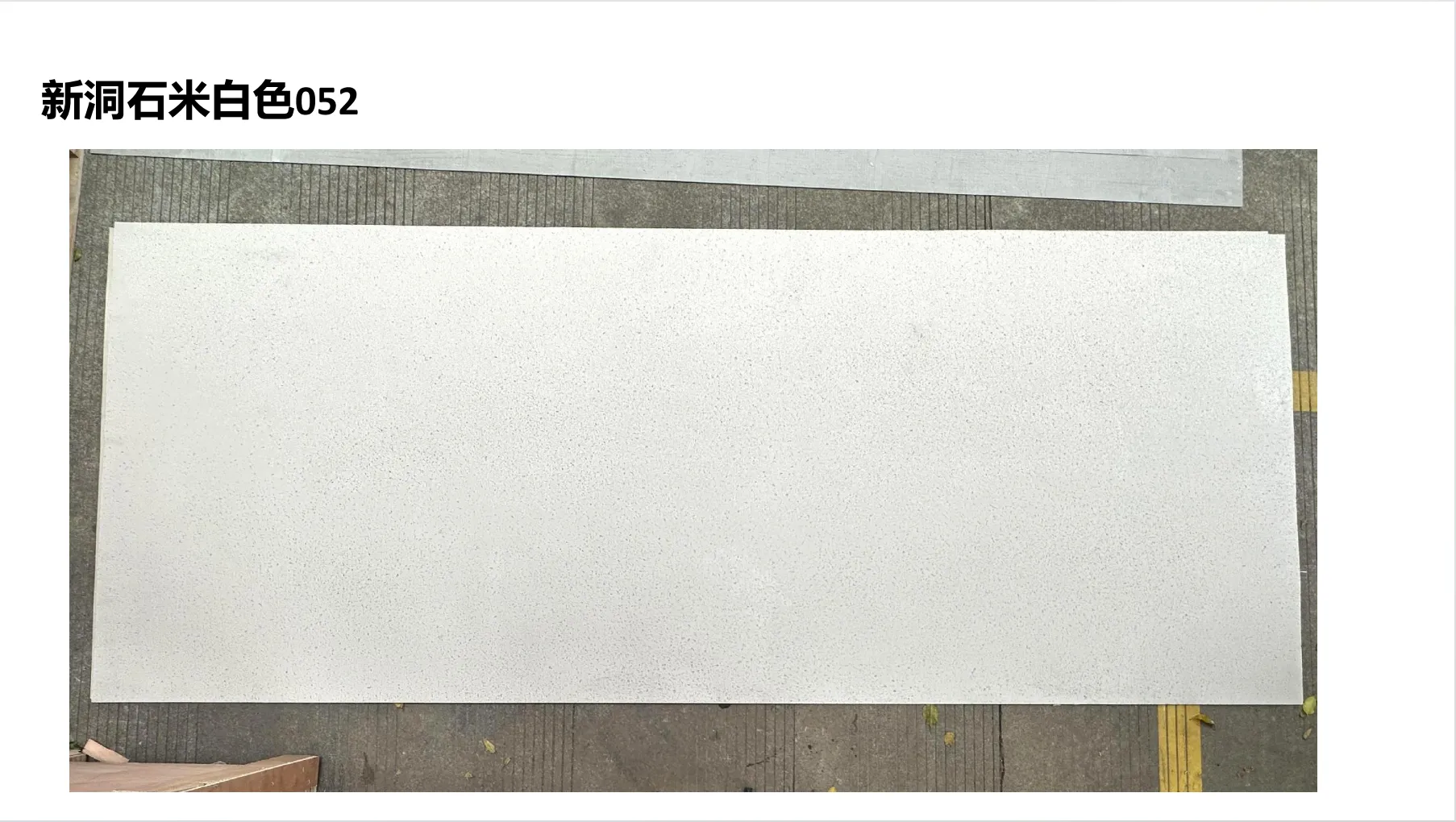
Imagine (oops, scratch that— experience ) walking up to a building and being stopped in your tracks by a wall that looks like a single, unbroken sheet of travertine, its surface rippling with the soft, organic texture of natural stone but stretched across 6-meter panels without a single unsightly seam. That's the first impression of the MS Travertino Big Slab Board. What makes it different? Let's start with the basics: size. These slabs come in generous dimensions—up to 1200x2400mm—meaning fewer joints, a cleaner line, and that coveted "seamless" look that makes a building feel cohesive, almost sculptural.
But size is just the beginning. Take the travertine (starry green) variant, for example. Run your hand over it, and you'll notice tiny, iridescent flecks that catch the light like distant stars—hence the "starry" name. It's not just a color; it's an effect, one that shifts with the time of day: warm and golden at sunrise, cool and mysterious at dusk. "We used starry green on a coastal villa project last year," recalls James Chen, a contractor in Sydney. "The client wanted the building to blend with the ocean views, and this material did exactly that—during the day, it mirrored the sea's green hues; at night, the starry flecks looked like reflections of the sky. They called it 'magic,' but honestly? It's just good engineering."
Here's where the flexible stone technology comes into play—and it's a game-changer. Traditional stone is rigid; bend it even a little, and it snaps. But MS Travertino's core is reinforced with a lightweight, high-tensile backing that lets the slab flex up to 30 degrees without cracking. Think about what that means for design: curved walls, sloped facades, even undulating surfaces that mimic natural landforms. "We recently completed a community center with a sweeping, wave-like exterior," says Ana Patel, an architect in Mumbai. "With traditional stone, we would have needed to cut hundreds of small, wedge-shaped pieces to create that curve, leading to visible seams and a choppy finish. With MS Travertino's flexible stone, we bent the slabs on-site to follow the curve—installation took half the time, and the result? A wall that looks like it was carved from a single block, not assembled from pieces."
Lightweight is another win. Weighing in at just 22kg per square meter (compared to 50kg+ for natural travertine slabs), these boards are easier to transport, safer to install (no need for heavy lifting equipment on every floor), and gentler on a building's structural load. "On a high-rise project, every kilogram counts," notes structural engineer Rajiv Mehta. "Using MS Travertino reduced the cladding weight by 50%, which meant we could slim down the support beams slightly—saving on materials and giving the design team more floor space. It's a ripple effect: better cladding leads to better engineering leads to a better building."
If flexible stone handles the "how" of installation, the 3D printing series handles the "what if?" of design. MS isn't just manufacturing slabs—they're printing texture, detail, and custom patterns directly onto the surface with pinpoint precision. Want a board that mimics the look of hand-chiseled stone, complete with deep, irregular grooves? 3D printing makes it possible, without the cost of handcrafting. Prefer a subtle, geometric pattern that repeats across the facade, creating a rhythmic visual effect? The 3D printers can replicate it exactly, panel after panel, ensuring consistency that's impossible with natural stone's variability.
"We worked with a restaurant client who wanted their exterior to tell a story," says interior designer Lila Torres. "They're a family-owned spot with roots in a small Italian village, so we used the 3D printing series to etch tiny, repeating motifs of olive branches and wheat into the MS Travertino slabs. It's subtle—you have to get close to notice—but it adds this layer of intimacy, like the building is whispering its history. The client teared up when they saw it. That's the power of combining technology with heart."
| Feature | MS Travertino Big Slab Board | Traditional Travertine Slabs |
|---|---|---|
| Weight per m² | 22kg (lightweight, easy to handle) | 50-60kg (requires heavy machinery) |
| Maximum Panel Size | 1200x2400mm (seamless look) | 600x1200mm (more joints, fragmented appearance) |
| Flexibility | Bends up to 30° without cracking (curved designs possible) | Rigid; prone to breaking under stress |
| Installation Time | 30% faster (lightweight, fewer cuts needed) | Longer (heavy lifting, precise alignment required) |
| Custom Texture Options | Unlimited (3D printing series for unique patterns) | Limited to natural stone's inherent texture |
| Weather Resistance | UV-stable, moisture-resistant (ideal for harsh climates) | Prone to staining, may fade over time |
Great design is about balance, and MS Travertino plays well with others—especially fair-faced concrete . There's something inherently harmonious about the warmth of travertine and the cool, understated elegance of fair-faced concrete. Together, they create a palette that's both modern and timeless, industrial and organic. "We used MS Travertino (starry green) and fair-faced concrete in alternating panels on a tech startup's headquarters," says designer Marcus Lee. "The concrete adds a raw, minimalist edge, while the travertine softens it, adding depth. Employees say it feels like working in a space that's 'grounded but inspired'—exactly what the client wanted."
Fair-faced concrete's neutral tone also lets the travertine's colors shine. For example, the starry red variant pops against a light grey concrete backdrop, creating a bold, energetic facade—perfect for a retail space or cultural center. Meanwhile, the travertine (beige) blends seamlessly with warm-toned concrete, evoking a sense of calm that's ideal for healthcare facilities or residential buildings. It's not just about mixing materials; it's about creating a dialogue between them.
Let's get specific. What does MS Travertino Big Slab Board look like in action? Take the "Starry Green Villa" in Bali: a private home perched on a hillside, its exterior clad in 1200x2400mm starry green slabs. From the valley below, the building glows like a jewel, its seamless panels reflecting the surrounding jungle. "The owner wanted privacy without feeling closed off," says the project's architect. "The starry green is translucent enough that light filters through slightly, so the interior feels bright, but from the outside, it's opaque. Plus, the flexible stone allowed us to wrap the cladding around the home's curved balcony edges—something we couldn't have done with traditional stone. The result? A home that feels like it's part of the landscape, not just sitting on it."
Then there's the "Urban Canvas" commercial complex in Tokyo, where the 3D printing series took center stage. The design team used 3D-printed linear patterns on MS Travertino (vintage silver) slabs, creating a facade that looks like a giant, abstract painting. "We wanted the building to stand out in Tokyo's skyline but not scream for attention," explains the lead designer. "The 3D-printed lines catch the light differently throughout the day—sharp and angular at noon, soft and diffused at sunset. It's dynamic, like the building is alive. Tenants love it; foot traffic has increased because people stop to take photos. Who knew cladding could be a marketing tool?"
Let's be honest: no single material is perfect for every project. But if you're craving a cladding that combines the beauty of natural travertine with the practicality of modern engineering, that lets you dream big with designs while keeping installation and maintenance manageable, then this might be your answer. It's not just for high-end projects, either. "We used it on a mid-rise apartment building last year," says developer Sarah Johnson. "Tenants were tired of the generic, 'cookie-cutter' exteriors in the area. By choosing MS Travertino (beige) with subtle 3D-printed wood grain, we gave the building a warm, residential feel—something the residents are proud of. Plus, the reduced installation time meant we finished the project two months early, saving on labor costs. It's a win-win."
At the end of the day, materials like MS Travertino Big Slab Board, flexible stone, and 3D printing series aren't just products—they're a shift in mindset. They're about empowering designers to stop compromising, to create buildings that are as functional as they are beautiful, as unique as they are durable. They're about proving that "natural" and "technological" don't have to be opposites; in fact, when they work together, they can create something truly extraordinary.
So, the next time you look at a building's exterior, take a closer look. Is it telling a story? Does it feel intentional, cohesive, alive? If not, maybe it's time to introduce it to MS Travertino. After all, great architecture isn't just about walls and windows—it's about how those walls make you feel. And with the right cladding, that feeling can be nothing short of magical.
Recommend Products












