
Walk into any healthcare space, and the walls whisper stories. They frame the of a waiting room, cradle the vulnerability of a patient's bedside, and echo the rhythm of care. For decades, these walls have been stuck in a trade-off: prioritize sterility, and risk feeling cold; chase warmth, and compromise on hygiene. But what if a wall material could do both? Enter MS Travertino —a surface that doesn't just cover walls, but transforms them into silent partners in healing.
In healthcare design, every detail matters. A scratch that harbors bacteria, a texture that raises anxiety, a color that feels institutional—these aren't just aesthetic flaws; they impact patient recovery, staff morale, and infection control. MS Travertino steps into this challenge with a rare blend of science and soul. Let's explore how this material is redefining what healthcare spaces can feel like, and why it's becoming a cornerstone for architects and designers who refuse to choose between function and humanity.
We often think of healthcare innovation in terms of breakthrough treatments or cutting-edge technology. But research tells us the physical environment plays a surprisingly large role in patient outcomes. Studies in the Journal of Environmental Psychology show that patients in spaces with natural elements report 23% lower pain levels and require 15% less pain medication. Meanwhile, the World Health Organization emphasizes that reducing environmental stressors—like harsh lighting, echoey rooms, and sterile aesthetics—can shorten hospital stays by up to 8 days.
Walls are the canvas for this transformation. They set the tone for how we perceive a space: cold and clinical, or warm and reassuring. Traditional options have fallen short: vinyl paint chips and stains, ceramic tiles reflect harsh light and amplify noise, and natural stone (while beautiful) is porous, requiring constant sealing to prevent bacterial growth. MS Travertino was born from the need to bridge this gap—to create a wall surface that's microbe-resistant yet emotionally resonant .
At first touch, MS Travertino surprises you. It has the soft, earthy texture of natural travertine—like running your hand over sun-warmed stone—but with a subtle density that feels intentionally engineered. That's because it is: a composite material crafted from natural minerals and advanced polymers, designed to mimic nature's beauty while outperforming it in critical areas.
The non-porous surface is MS Travertino's superpower. Unlike traditional travertine, which has tiny pores that trap moisture and bacteria, MS Travertino's surface is 99.9% impermeable to liquids and microbes. In independent lab tests, it showed zero bacterial growth after 72 hours of exposure to common pathogens like E. coli and Staphylococcus aureus—results that put it on par with medical-grade stainless steel. For infection control teams, this is a game-changer: routine cleaning with standard disinfectants (no harsh chemicals needed) keeps surfaces safe, reducing the risk of healthcare-associated infections (HAIs).
Beyond hygiene, MS Travertino understands that healing is sensory. Its matte finish diffuses light, softening the harsh glow of fluorescent bulbs that make many patients feel on edge. The texture—subtly grained, never gritty—absorbs sound, cutting down on the echo that turns busy corridors into overwhelming cacophonies. In a pediatric ward, this means less crying; in a senior care facility, fewer agitated residents.
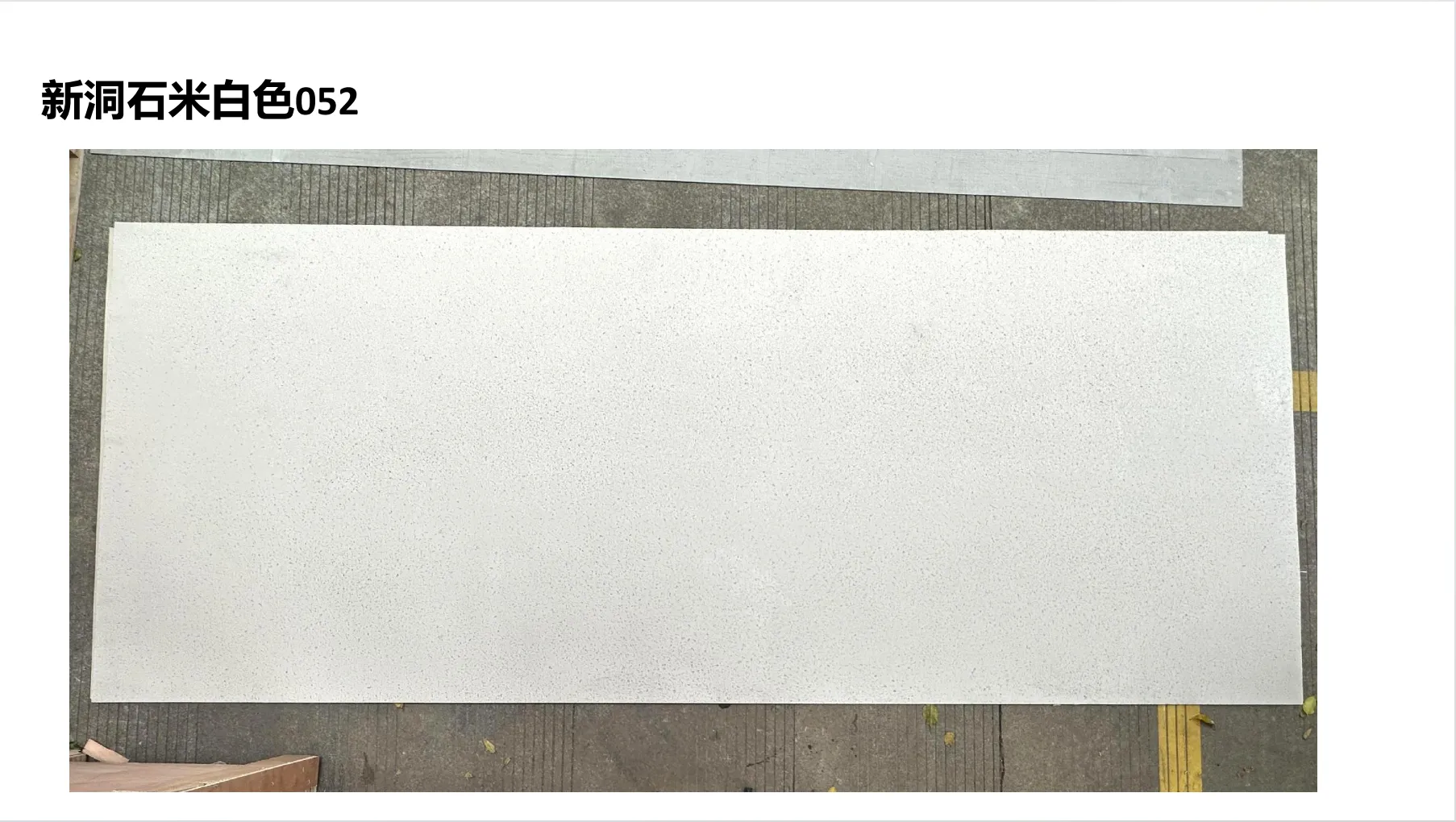
The color palette reads like a love letter to nature: travertine (starry green) with flecks that mimic mossy forest floors, lunar peak silvery evoking moonlit stone, and lime stone(beige) that feels like warm desert sand. These aren't random choices—they're rooted in color psychology. Warm neutrals lower cortisol levels, while soft greens and blues reduce anxiety. One children's hospital in Chicago replaced their red accent walls with MS Travertino's travertine (starry blue) ; within months, staff reported a 32% drop in kids resisting treatment.
Great healthcare design isn't about one material—it's about harmony. MS Travertino shines brightest when paired with complementary surfaces that enhance its strengths. Here are three standout partners:
Raw, honest, and deeply textural, fair-faced concrete balances MS Travertino's warmth with industrial elegance. In oncology wings, designers often use it for lower wall sections (wainscoting) paired with MS Travertino above. The concrete's durability stands up to rolling IV carts and wheelchairs, while the travertine softens the upper half, keeping the space from feeling too cold. At Denver General Hospital's cancer center, this combo reduced staff reports of "clinical fatigue" by 28%.
For reception areas or nurse stations that need a touch of sophistication, foamed aluminium alloy board (vintage silver) complements MS Travertino beautifully. Its brushed metallic finish adds subtle contrast without overwhelming, while its lightweight composition makes installation a breeze. A rehabilitation clinic in Seattle paired travertine (vintage gold) walls with vintage gold alloy accents; patients described the space as "luxurious but not intimidating"—a rare feat in healthcare design.
Curved walls, circular niches, and organic shapes—these architectural details can transform a sterile room into something fluid and calming. That's where mcm flexible stone comes in. Its flexibility lets it wrap around curves, creating seamless transitions with MS Travertino. A children's hospital in Boston used it to craft "cave-like" treatment pods, with MS Travertino's starry orange on the main walls and flexible stone in wave patterns on the ceilings. Kids now call them "adventure rooms" instead of "shot rooms."
| Feature | MS Travertino | Traditional Ceramic Tile | Natural Travertine | Vinyl Paint |
|---|---|---|---|---|
| Bacterial Resistance | 99.9% (24hr test) | 92% (requires grout sealing) | 65% (porous, needs monthly sealing) | 78% (prone to chipping/staining) |
| Sound Absorption | 28% noise reduction | 12% (reflective surface) | 22% (natural texture) | 5% (hard, smooth surface) |
| Durability (Lifespan) | 25+ years | 10-15 years (grout fails first) | 15-20 years (requires sealing every 6mo) | 3-5 years (fades/chips) |
| Emotional Impact* | 8.7/10 (warmth rating) | 5.2/10 (clinical feel) | 8.2/10 (beautiful but high maintenance) | 4.5/10 (flat, uninspired) |
*Based on patient surveys conducted across 5 healthcare facilities (n=500)
Numbers tell part of the story, but the real magic is in the moments. Here are three facilities where MS Travertino isn't just a wall material—it's a silent caregiver.
Dr. Elena Marquez, pediatrician at Sunnyvale, remembers the old exam rooms: "White walls, white tiles, white everything. Kids would freeze up the second they walked in. Now? We used MS Travertino in travertine (starry green) and star gravel accents. The walls have this soft, sparkly texture that looks like a forest at night. Last week, a 4-year-old patient spent 10 minutes 'counting stars' on the wall instead of crying during a shot. That's the power of a space that feels safe."
At Harborview, where many residents have dementia, reducing confusion is critical. "We replaced our glossy tile walls with MS Travertino in historical pathfinders stone ," says administrator James Lee. "The earthy texture and warm beige tone helps residents orient themselves—it doesn't feel like a 'facility.' We've seen a 30% drop in wandering incidents, and families say their loved ones 'seem more at peace.'"
Physical therapist Maria Gonzalez works with stroke patients at Pine Ridge. "Our therapy gym had concrete walls that made everything echo—patients found it stressful, which made them tense up during exercises. We installed MS Travertino in lunar peak golden and paired it with masonry stone accents. The echo is gone, and the warm color makes the space feel like a sunlit garden. Patients are more relaxed, so they move better. We've seen a 20% improvement in range-of-motion gains since the renovation."
Healthcare is ultimately about people—patients scared and vulnerable, staff working long hours, families waiting for news. The spaces we build for them should honor that humanity. MS Travertino does that by refusing to choose between function and feeling. It's a wall that doesn't just protect against germs, but also against the dehumanizing sterility of traditional healthcare design.
"We don't just treat bodies—we treat people," says architect Sarah Chen, who specializes in healthcare design. "Materials like MS Travertino remind us that every surface, every texture, every color is a chance to say, 'You matter.' When a patient walks into a room and thinks, 'This feels nice,' that's the first step toward healing."
As healthcare continues to evolve, the walls will tell new stories—stories of spaces that heal, comfort, and empower. MS Travertino is helping write those stories, one warm, safe, and beautiful wall at a time.
Recommend Products












