
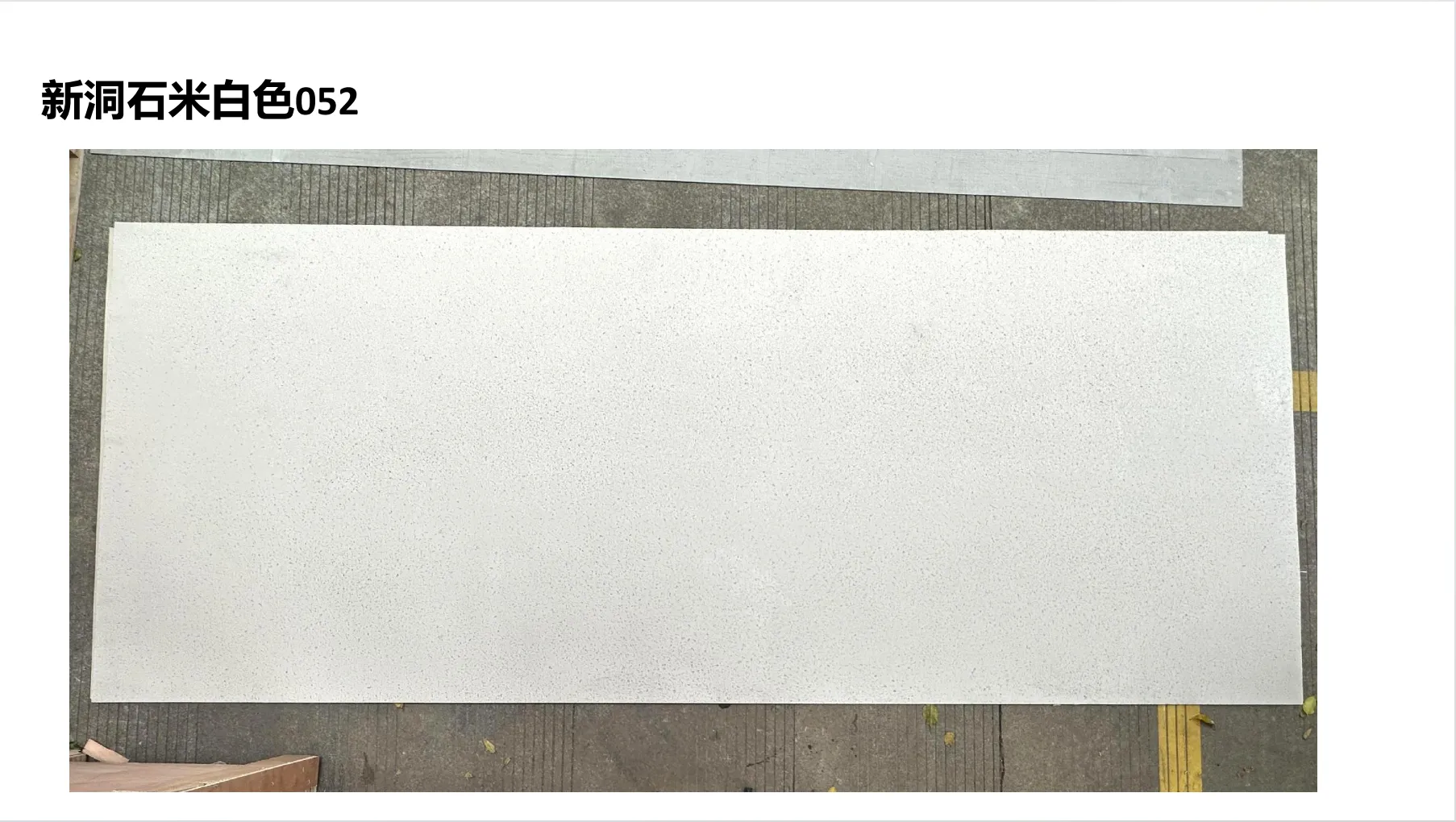
If you've ever walked a construction site mid-project, you know the energy in the air—excitement tangled with urgency, crews rushing to meet deadlines, architects fretting over delays, and clients checking their watches. In an industry where "on time" often feels like a moving target, fast-track construction has become less of a buzzword and more of a survival skill. But here's the thing: speed shouldn't mean sacrificing quality, aesthetics, or durability. That's where the MS Travertino Project Board steps in—a material that's quietly revolutionizing how teams turn tight schedules into finished projects, one panel at a time. And if you've seen the real photos of its installations? They don't just tell a story of speed—they tell a story of possibility .
Let's start with the obvious: construction timelines are getting shorter. Whether it's a commercial high-rise needing to open before the busy season, a boutique hotel racing to catch tourism waves, or a residential complex promising move-in dates to eager buyers, the pressure is relentless. The problem? Traditional building materials weren't designed for this pace. Heavy stone slabs require cranes and extra labor. Custom concrete pours demand curing time. Delicate tiles crack under rushed handling. Even "quick-install" options often come with hidden costs—like frequent repairs or compromised design flexibility.
I spoke with Maria Gonzalez, a project manager with 15 years in commercial construction, who summed it up: "We once had a retail project where the client wanted a marble facade. The slabs were beautiful, but each one weighed 200+ pounds. We needed three workers per slab, plus a crane on-site for a week. By the time we factored in weather delays and a cracked slab that needed replacement, we were two weeks behind before we even started the interior. That's when I started hunting for alternatives."
Enter the MS Travertino Project Board—a line of modified composite material panels that's redefining what "fast-track" can look like. It's not just about being quick; it's about being smart quick. And to understand why, we need to dive into what makes this material tick.
At first glance, you might mistake MS Travertino Project Board for natural travertine. Its surface mimics the subtle veining, warm tones, and organic texture of the real stone—right down to the tiny pits and crevices that give travertine its timeless charm. But look closer, and you'll realize it's a marvel of modern engineering. Made from a blend of natural minerals and high-strength polymers, it's part of the broader family of MCM flexible stone—a category known for its lightweight, bendable properties that make installation a breeze.
"It's like holding a stone panel that weighs as much as a thick cardboard box," laughs Jake Patel, a site supervisor who recently used the material on a restaurant renovation. "We had two guys carrying 10-foot panels up a narrow staircase—something we'd never attempt with natural stone. No cranes, no back strain, no delays. That alone shaved three days off our facade timeline."
But the benefits go beyond weight. Unlike natural stone, which can vary in thickness and strength, MS Travertino Project Board is prefabricated to exact specifications. Each panel is uniform in size, density, and finish, so there's no guesswork during installation. And because it's a modified composite, it's resistant to moisture, UV rays, and temperature fluctuations—problems that often plague traditional materials in fast-track projects.
Let's talk logistics—the unsung hero of fast-track construction. Traditional stone or concrete panels often require on-site cutting, trimming, and adjusting. That means dust, noise, and extra labor hours. MS Travertino Project Board, though? It arrives pre-cut, pre-finished, and ready to install. Thanks to its lightweight flexible stone sheets (some as thin as 4mm), crews can handle panels by hand, eliminating the need for heavy machinery. And because the material is flexible (yet surprisingly tough), it adapts to uneven surfaces without cracking—a game-changer for older buildings or sites with less-than-perfect substrates.
Take the example of the Riverfront Mall expansion in Austin, Texas. The project called for a 12,000-square-foot exterior facade that needed to match the existing travertine look but be installed in just 10 days. The general contractor initially considered natural travertine but quickly realized the timeline was impossible. Then they discovered MS Travertino Project Board. "We ordered the panels on Monday, they arrived by Wednesday, and by Friday, half the facade was up," said Tom Harris, the site foreman. "The real photos of the finished facade? The client couldn't tell the difference between the new panels and the original stone. And we finished a full week early."
But don't just take Tom's word for it. Let's compare the numbers. Below is a breakdown of installation times for a 5,000-square-foot facade using traditional materials versus MS Travertino Project Board, based on industry data and real project reports:
| Material | Installation Time (5,000 sq ft) | Labor Required | Special Equipment Needed | Waste/Replacement Rate |
|---|---|---|---|---|
| Natural Travertine Slabs | 3–4 weeks | 6–8 workers | Crane, wet saw, lifting harnesses | 8–12% (due to cracking, chipping) |
| Traditional Concrete Panels | 2–3 weeks | 4–5 workers | Forklift, concrete mixer | 5–7% |
| MS Travertino Project Board | 5–7 days | 2–3 workers | Basic hand tools, adhesive gun | < 2% (minimal waste) |
*Data sourced from 2024 Construction Efficiency Report, National Association of Builders.
Critics might wonder: If it's lightweight and quick to install, is it durable enough for long-term use? The short answer: yes. MS Travertino Project Board is engineered to withstand the elements. Its modified composite core resists water absorption, so it won't warp or stain in rainy climates. It's UV-stable, meaning it won't fade under harsh sunlight. And unlike some synthetic materials, it doesn't crack in extreme temperatures—making it suitable for everything from desert heat to freezing winters.
Consider the case of the Mountain View Resort in Colorado, which used MS Travertino Project Board for its exterior cladding in 2022. The resort sits at 8,000 feet, where temperatures swing from 90°F in summer to -20°F in winter, with heavy snowfall. Two years later, the panels still look brand-new. "We did an inspection last month, and there's zero signs of fading, chipping, or water damage," said Elena Rodriguez, the resort's facilities manager. "The real photos we took last week? They look identical to the day we installed them. For a fast-track project, that's unheard of."
And it's not just about durability—it's about design flexibility. MS Travertino Project Board comes in a range of finishes, from polished to rustic, and colors that mimic natural travertine (think warm beiges, soft grays, and even the eye-catching starry red and starry blue variants). This means architects don't have to compromise on aesthetics to meet deadlines. For the downtown boutique hotel "The Luna," the design team wanted a facade that blended modern sleekness with a touch of old-world charm. They opted for MS Travertino Project Board in "vintage gold" paired with fair-faced concrete accents. The result? A facade that looks like it took months to craft, installed in just three weeks. "The real photos of the hotel's exterior went viral on design blogs," said lead architect Lila Chen. "People couldn't believe we pulled that off in under a month."
While facades are a common use case, MS Travertino Project Board's versatility makes it a star in other areas of fast-track construction, too. Interior walls, feature panels, even flooring—this material does it all. Take the "Tech Hub West" office project in Seattle, which needed 20,000 square feet of interior accent walls finished in six weeks. The design called for a mix of textures, including wood grain and stone. The contractor used MS Travertino Project Board in "light grey" for the stone sections and paired it with 3D art concrete board for the geometric accents. "The 3D art concrete board added depth, and the travertine panels brought warmth," said project designer Mark Lee. "We installed both materials side by side—no delays, no hiccups. The real photos of the lobby? It feels like a space that took six months, not six weeks."
Another area where MS Travertino shines is in renovation projects, where preserving the original structure while updating the look is key. The "Heritage Lofts" in Chicago, a 1920s warehouse converted into luxury apartments, needed to retain its industrial charm but add modern durability. The team used MS Travertino Project Board in "rough granite stone (medium grey)" for the accent walls, pairing it with reclaimed wood beams. "The panels were so lightweight, we could install them without reinforcing the old brick walls," said Sarah Martinez, the renovation lead. "And the rough granite finish? It looks exactly like the original stonework, but it's resistant to the moisture that used to plague the building. We finished the entire interior in two months—half the projected time."
Here's a little secret about construction clients: they're visual people. They need to see what they're getting, especially when you're promising a fast turnaround. That's where real photos of MS Travertino Project Board installations become invaluable. Unlike generic stock images, these photos show actual projects, real sites, and finished results that speak for themselves. "I had a client who was skeptical about using a 'composite' material," said John Reeves, a contractor in Miami. "I showed them real photos of a restaurant we'd done with MS Travertino—close-ups of the texture, wide shots of the facade, even photos of the installation process. By the end, they were sold. They could see the quality, and they could see that we weren't cutting corners."
These real photos also help with stakeholder buy-in. When architects present designs to clients, having images of similar projects using MS Travertino Project Board makes the vision tangible. When contractors pitch to developers, showing finished projects that met tight deadlines builds credibility. It's not just about selling a product—it's about selling peace of mind. "In fast-track construction, trust is everything," Maria Gonzalez told me earlier. "If the client trusts that the material will look good and last, they're more likely to sign off on the timeline. Real photos bridge that trust gap."
These days, fast-track construction can't ignore sustainability. Clients, regulators, and even consumers are demanding greener building practices. The good news? MS Travertino Project Board checks that box, too. Its manufacturing process uses recycled materials, and because it's lightweight, it reduces transportation emissions (fewer trucks needed to haul panels). Its durability also means less replacement over time, cutting down on waste. Compare that to traditional stone mining, which can be resource-intensive, or concrete production, which has a high carbon footprint. For the "EcoVillage" housing development in Portland, which aimed for LEED Platinum certification, MS Travertino Project Board was a no-brainer. "We needed a material that was fast to install, aesthetically pleasing, and eco-friendly," said project manager Kelsey Wong. "MS Travertino delivered on all three. The real photos of the village's exterior even highlight how the panels blend with the natural surroundings—no harsh chemicals, no waste, just clean, sustainable design."
So, what does the future hold for fast-track construction? If MS Travertino Project Board is any indication, it's a future where speed, quality, and design coexist. As more contractors, architects, and clients experience the benefits—faster timelines, lower labor costs, stunning aesthetics—materials like this will become the norm, not the exception. And with innovations like new finishes (hello, starry orange and starry blue travertine!) and even more lightweight options, the possibilities are endless.
Tom Harris, the site foreman from the Riverfront Mall project, put it best: "I used to dread fast-track projects. Now? I look forward to them—because I know we have the tools to deliver. MS Travertino Project Board isn't just a material; it's a partner in getting the job done right, on time, and on budget. And the real photos? They're proof that we're not just building faster—we're building better."
In a world that moves at breakneck speed, the construction industry can't afford to be left behind. But "fast-track" shouldn't mean cutting corners or settling for less. MS Travertino Project Board shows us that it's possible to build quickly and beautifully, durably and sustainably. It's a material that understands the urgency of deadlines but never loses sight of the end goal: creating spaces that people love, for years to come.
So, the next time you're staring down a tight construction timeline, remember: the solution might be lighter, more flexible, and more stunning than you think. And if you need a little inspiration? Just look at the real photos. They'll tell you everything you need to know.
Recommend Products












