
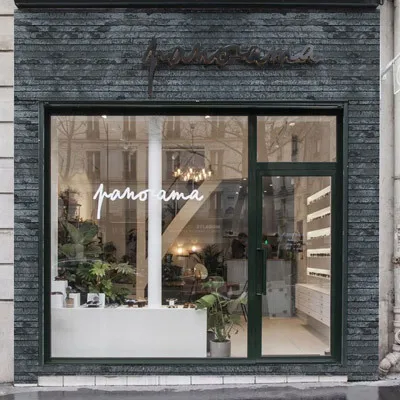
Walk down any city street, and you'll notice that buildings don't just exist —they speak . The texture of a facade, the sheen of a wall, the pattern of a panel—these elements weave together to tell stories of culture, era, and intention. For decades, architects and designers have leaned on traditional materials like marble, granite, and concrete to craft these narratives, but today, a new chapter is being written: one where Muretto Stone and 3D printing technology converge to redefine what's possible in construction and design. This isn't just about building materials—it's about unlocking creativity, sustainability, and personalization in ways we've only begun to imagine.
Muretto Stone, a standout in the world of modified composite materials (MCM), has long been celebrated for its flexibility, durability, and aesthetic versatility. But when paired with 3D printing, it transforms from a reliable building block into a canvas for innovation. In this article, we'll dive into the groundbreaking advancements driving this partnership, explore how it's reshaping the industry, and imagine the spaces of tomorrow that will rise from this technology.
To understand the significance of Muretto Stone 3D printing, let's take a quick trip down memory lane. Traditional stone—think quarried marble or solid granite—has undeniable beauty, but it comes with steep trade-offs. It's heavy, making transportation and installation costly; it's brittle, limiting the shapes it can take; and it's resource-intensive, often requiring massive energy and water to extract and process. Concrete, while versatile, can feel cold and impersonal, lacking the warmth that natural stone brings.
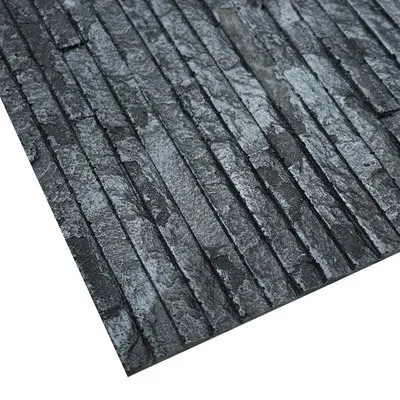
Enter Muretto Stone. Developed as part of the broader MCM family, it's a game-changer from the start. Composed of natural minerals, polymers, and reinforcing fibers, Muretto Stone is lightweight (up to 80% lighter than natural stone), flexible (able to bend without cracking), and resilient (resistant to weather, fire, and impact). It mimics the look and feel of natural stone—from the rough-hewn charm of rough granite stone to the smooth elegance of marble veil white —but with none of the logistical headaches. For years, it's been a favorite for exterior cladding, interior accent walls, and custom facades. But 3D printing is taking these benefits and supercharging them.
3D printing, or additive manufacturing, works by layering materials to build objects from the ground up—no molds, no cutting, no waste. When applied to Muretto Stone, this technology allows for precision that traditional manufacturing can't match. Imagine crafting a wall panel with the organic texture of gobi panel or the geometric precision of line stone board —all in a fraction of the time, with zero material waste. It's not just about efficiency; it's about design freedom.
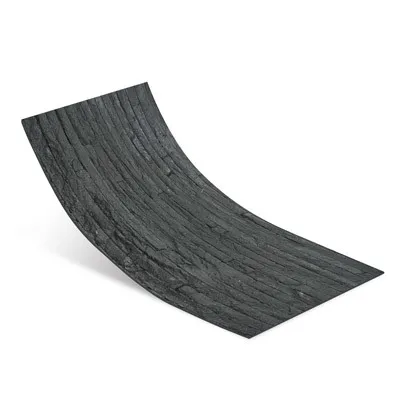
The magic of Muretto Stone 3D printing lies in three key innovations: material science, design flexibility, and sustainability. Let's break them down.
At the heart of Muretto Stone 3D printing is a relentless focus on material innovation. Traditional Muretto Stone is already a marvel of engineering, but 3D printing demands even more: materials that flow smoothly through a printer nozzle, cure quickly, and maintain structural integrity. Engineers have risen to the challenge by developing specialized MCM blends optimized for additive manufacturing.
Take mcm flexible stone , for example. In its 3D printable form, it's infused with microfibers that enhance layer adhesion, ensuring printed structures are strong enough to withstand the elements. It can also be mixed with additives to achieve specific effects: adding metallic particles for a foamed aluminium alloy board (vintage gold) sheen, incorporating recycled aggregates for a gravel omani stone texture, or even embedding thread patterns for a tactile, woven look. These blends aren't just functional—they're expressive, allowing designers to mimic everything from the starry sparkle of travertine (starry blue) to the earthy warmth of lime stone(beige) .
Another breakthrough is the integration of complementary materials. For instance, 3D printed Muretto Stone panels can be reinforced with foamed aluminium alloy board cores, adding strength without weight. Or combined with fair-faced concrete for a raw, industrial aesthetic that still feels refined. This hybrid approach opens up a world of possibilities, blending the best of Muretto Stone with other durable, sustainable materials.
If there's one phrase that sums up 3D printing's impact on design, it's "no more straight lines—unless you want them." Traditional manufacturing methods, like cutting stone with saws or casting concrete in molds, are limited by geometry. You can create squares, rectangles, and simple curves, but complex shapes? They're either impossible or prohibitively expensive. 3D printing shatters those limits.
With Muretto Stone 3D printing, designers can now craft panels with wave panel undulations that mimic ocean swells, semicircle board motifs that soften architectural edges, or even intricate mosaic travertine patterns that would take artisans weeks to lay by hand. Imagine a hotel lobby with a feature wall printed in the shape of a mountain range, using lunar peak silvery and lunar peak black Muretto Stone to create shadow and depth. Or a restaurant facade with gobi panel textures that shift in the sunlight, printed with precise gradients of color and texture.
Customization is another area where this technology shines. Homeowners, for example, can now order boulder slab countertops with embedded star gravel accents, or wood grain board wall panels that match the exact tone of their hardwood floors. Businesses can brand their spaces with logos or patterns printed directly into Muretto Stone cladding—no need for separate signage. This level of personalization turns buildings into unique expressions of identity, not just generic structures.
In an era where sustainability is no longer optional, Muretto Stone 3D printing delivers on multiple fronts. Let's start with waste reduction. Traditional stone cutting generates up to 30% waste material—imagine a slab of marble being carved into a countertop, with most of the stone ending up in a landfill. 3D printing, by contrast, is additive: it builds objects layer by layer, using only the material needed. For Muretto Stone, this means near-zero waste, a huge win for the environment.
Then there's energy efficiency. Quarrying and processing natural stone require massive amounts of energy—from powering heavy machinery to heating kilns. Muretto Stone production, already more efficient, becomes even greener with 3D printing. Printers use electricity (which can come from renewable sources) and operate at lower temperatures than traditional manufacturing, cutting carbon footprints significantly. Plus, Muretto Stone itself is often made with recycled materials, and its lightweight nature reduces transportation emissions—trucks can carry more panels per trip, lowering fuel use.
Durability plays a role too. Muretto Stone's resistance to weathering and decay means buildings require less maintenance and fewer replacements over time, reducing the lifecycle environmental impact. When paired with sustainable complementary materials like foamed aluminium alloy board (vintage silver) —which is 100% recyclable—3D printed Muretto Stone becomes a cornerstone of green building materials for the future.
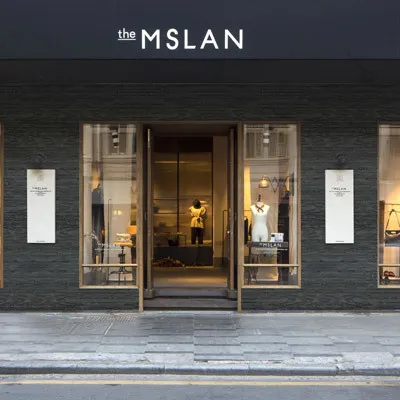
Innovations are exciting, but what do they mean for the real world? Let's explore the practical applications where Muretto Stone 3D printing is already making waves—and where it's headed next.
The exterior of a building is its first impression, and Muretto Stone 3D printing is helping architects make unforgettable ones. Take, for example, the recent renovation of a historic downtown theater. The design team wanted to honor the building's 1920s heritage while adding a modern twist. Using 3D printed Muretto Stone panels in historical pathfinders stone texture, they recreated the theater's original facade details—ornate moldings, intricate carvings—at a fraction of the cost and time of traditional stonework. The panels were lightweight enough to install without reinforcing the building's structure, and the result? A facade that feels both timeless and fresh.
For modern skyscrapers, the benefits are even clearer. The lightweight nature of 3D printed Muretto Stone reduces the load on a building's foundation, allowing for taller, more slender designs. Imagine a tower clad in lunar peak golden panels that catch the sun, their surfaces printed with subtle thread patterns that create a dynamic, ever-changing appearance as light shifts. Or a commercial complex with a facade that combines boulder slab (vintage black) and fair-faced concrete , 3D printed to create depth and shadow—all while using 50% less material than traditional cladding.
Even small businesses are getting in on the action. A coastal café in California recently opted for 3D printed Muretto Stone wave panel cladding, its undulating shape echoing the nearby ocean. The panels, printed in travertine (starry orange) , not only look stunning but are also resistant to saltwater corrosion—a must for beachside locations. It's a perfect example of form meeting function, made possible by 3D printing.
While exteriors grab attention, interiors are where we live, work, and connect. Muretto Stone 3D printing is transforming these spaces into reflections of personal style, whether you prefer industrial chic, bohemian warmth, or minimalist elegance.
Consider the kitchen, often called the heart of the home. Traditional countertops are limited to standard shapes and finishes, but with 3D printing, the possibilities are endless. A homeowner in Colorado wanted a countertop that felt like a piece of the Rocky Mountains—so they opted for a boulder slab (vintage silver) design, 3D printed with embedded star gravel and subtle wood line accents. The result is a surface that's both durable (resistant to scratches and heat) and deeply personal, telling the story of their love for the outdoors.
Bathrooms, too, are getting a makeover. Imagine a shower wall printed with stream limestone(claybank) texture, its layers mimicking the look of water-worn stone, or a backsplash in travertine (starry red) that adds a pop of color without overwhelming the space. Even fireplaces are being reimagined: a family in Oregon replaced their old brick fireplace with a 3D printed Muretto Stone surround in rust board granite , complete with semicircle board detailing that softens the edges and adds a modern touch.
Commercial interiors are benefiting too. A co-working space in New York used 3D printed Muretto Stone weaving (khaki) panels to divide work areas, creating a warm, natural barrier that feels open and inviting. The panels, lightweight and easy to install, were printed in just a week, allowing the space to open on schedule. It's a far cry from the cold, sterile cubicles of the past—proof that materials can shape how we feel in a space.
Some of the most powerful applications of Muretto Stone 3D printing are in spaces that serve the community: museums, libraries, parks, and cultural centers. These are places that need to inspire, educate, and connect people—and the right materials can amplify that mission.
Take the proposed "Museum of Natural Wonders" in Arizona, set to open in 2026. The design features a central hall with a ceiling printed to look like a starry sky, using travertine (starry blue) and lunar peak black Muretto Stone. The panels, printed in sections and assembled on-site, will create the illusion of being under the night sky, with constellations embedded in the stone via 3D printed indentations. It's a experience that merges art, science, and technology—all made possible by the precision of 3D printing.
Public parks are another area where this technology shines. A recent project in Chicago transformed an abandoned lot into a community garden with 3D printed Muretto Stone benches and planters. The benches, printed in lime stone(beige) with wood grain board accents, blend seamlessly with the garden's natural surroundings, while the planters—shaped like gobi panel formations—pay homage to the city's diverse cultural heritage. Best of all, the materials are weather-resistant, ensuring the space will thrive for years to come.
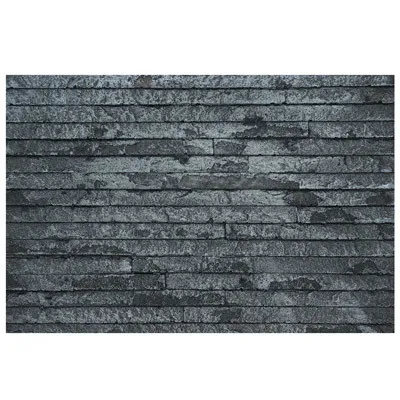
Still on the fence about whether 3D printed Muretto Stone is worth the hype? Let's break down the differences between traditional manufacturing and 3D printing in a side-by-side comparison:
| Feature | Traditional Muretto Stone Manufacturing | 3D Printed Muretto Stone |
|---|---|---|
| Production Time | Weeks to months (molds, cutting, assembly) | Days to weeks (layer-by-layer printing, minimal post-processing) |
| Design Complexity | Limited to simple shapes; complex designs require custom molds (expensive) | Virtually unlimited: curves, gradients, textures, and intricate patterns at no extra cost |
| Material Waste | High (up to 30% of raw material discarded) | Near-zero (only material needed for the design is used) |
| Cost Efficiency | High labor and material costs for custom designs | Lower long-term costs (faster production, less waste, reduced labor) |
| Sustainability | Moderate (Muretto Stone itself is eco-friendly, but manufacturing is energy-heavy) | High (reduced energy use, minimal waste, recyclable materials) |
| Customization | Limited (mass-produced designs; small batches are costly) | Unlimited (one-of-a-kind designs, personalized textures, and colors) |
The verdict? 3D printing doesn't just improve on traditional methods—it redefines the playing field. For architects, designers, and homeowners, this means more creativity, less waste, and faster results. For the planet, it means greener buildings and a more sustainable future.
As exciting as the current innovations are, we're only at the beginning of what Muretto Stone 3D printing can achieve. Here are a few trends to watch in the coming years:
1. Smart Materials Integration : Imagine Muretto Stone panels embedded with sensors that monitor temperature, humidity, or structural stress—all printed directly into the material. Or panels that change color in response to light, using photochromic additives. This could revolutionize building management, making spaces safer and more energy-efficient.
2. On-Site Printing : Currently, most 3D printing happens in factories, with panels shipped to construction sites. But mobile 3D printers are on the horizon, allowing for on-site printing of large structures like walls or even entire facades. This would eliminate transportation costs and delays, making construction faster and more flexible.
3. Biodegradable Blends : Researchers are experimenting with adding biodegradable polymers to Muretto Stone formulations, creating materials that can break down naturally at the end of their lifecycle. This would take sustainability to the next level, aligning with the circular economy model.
4. AI-Driven Design : Pairing 3D printing with artificial intelligence could allow designers to input a few parameters (style, budget, location) and receive optimized Muretto Stone designs in minutes. AI could even suggest texture combinations—like travertine (vintage gold) with foamed aluminium alloy board (vintage silver) —that humans might not think of, pushing creativity further.
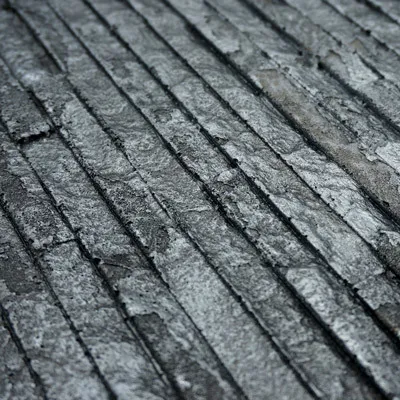
Muretto Stone 3D printing isn't just a technological advancement—it's a shift in how we think about building and design. It's about moving beyond the limitations of the past and embracing a future where every space, from the smallest home to the tallest skyscraper, can be a reflection of creativity, sustainability, and personality.
Whether you're an architect dreaming of a building that seems to defy gravity, a homeowner wanting a kitchen that feels uniquely yours, or a community leader hoping to create a public space that inspires, this technology offers something for everyone. It's a reminder that the materials we build with aren't just tools—they're storytellers. And with Muretto Stone and 3D printing, the stories we can tell are more vivid, more personal, and more sustainable than ever before.
So the next time you walk down that city street, take a closer look. The buildings around you might soon be speaking a new language—one written in layers of Muretto Stone, printed to perfection, and designed to last for generations. The future of construction is here, and it's more exciting than we ever imagined.
Recommend Products












