
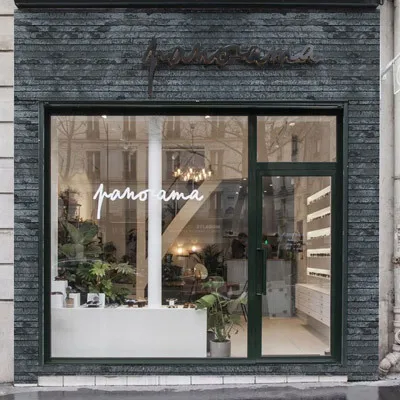
In the quiet hum of a city morning, when sunlight spills over rooftops and casts long shadows on sidewalks, there's a building that catches your eye. It's not the tallest or the flashiest—but something about its exterior feels different. As you step closer, you realize it's the facade: a smooth, continuous expanse of stone that looks both ancient and utterly modern, as if it was carved from a single block of earth. That's the magic of Muretto Stone Big Slab. In a world where architecture often prioritizes function over feeling, this material reminds us that the spaces we inhabit are more than just structures—they're stories told in texture, color, and light.
Facades are the first impression of a building. They shape how we feel about a space before we even step inside. A cold, sterile exterior might make us feel unwelcome; a cluttered, mismatched one can feel chaotic. But a well-chosen facade? It invites us in. It says, "This place was made with care." For architects and designers, the challenge lies in balancing aesthetics with practicality: How do you create something beautiful that also stands up to rain, wind, and time? How do you blend modern minimalism with the warmth of natural materials? Enter Muretto Stone Big Slab—a material that doesn't just answer these questions; it redefines what's possible.
Let's start with the basics: What is Muretto Stone Big Slab? At its core, it's a engineered stone facade material designed for large-scale applications. But that's like calling a symphony "a bunch of notes"—it misses the nuance. Muretto Stone is crafted to mimic the organic texture of natural stone, but with the precision and consistency of modern manufacturing. And the "Big Slab" part? That's where the seamless magic happens. Traditional stone facades often use small tiles or panels, leaving gaps that disrupt the visual flow. Muretto's large-format slabs—some as wide as 1.2 meters and tall as 3 meters—reduce those gaps to almost nothing, creating a surface that feels like a single, unbroken canvas.
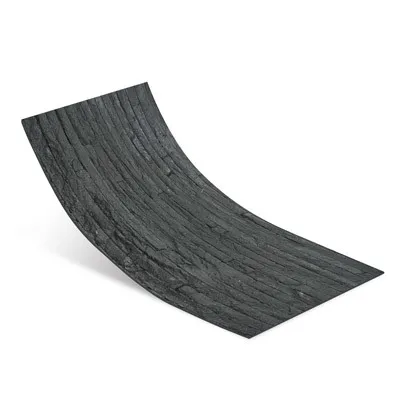
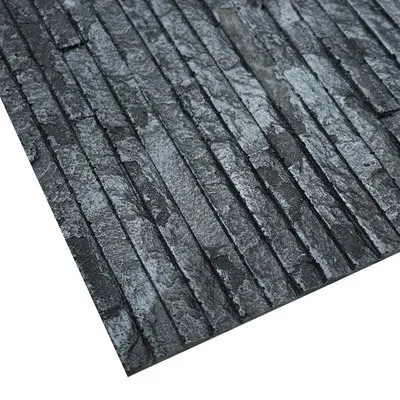
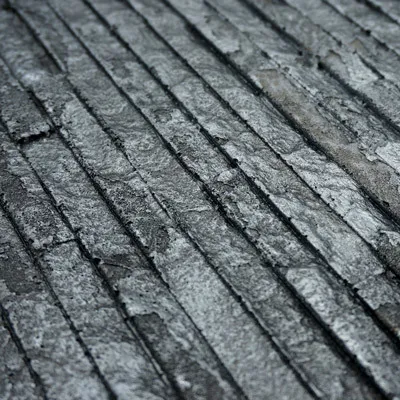
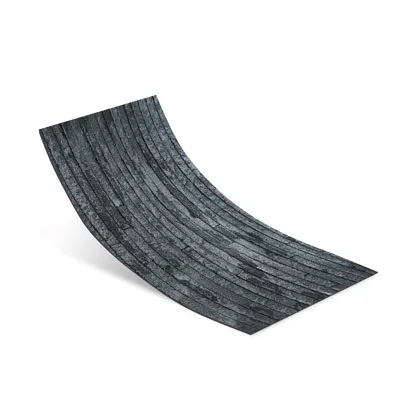
One of the first things you notice about Muretto Stone is its versatility. It doesn't force you into a single aesthetic—instead, it adapts to your vision. Let's take a closer look at its most popular variants: Muretto stone (light grey) , Muretto stone (dark grey) , and Muretto stone (beige) . Each has its own personality, its own way of speaking to a space.
| Variant | Aesthetic Vibe | Best For | Texture Notes |
|---|---|---|---|
| Light Grey | Soft, airy, and versatile—like morning fog over stone. | Residential buildings, boutique hotels, spaces needing calm. | Subtle grain, almost powdery to the touch; reflects light gently. |
| Dark Grey | Bold, modern, and dramatic—think storm clouds meeting mountain peaks. | Corporate offices, art galleries, statement facades. | Deeper, more pronounced texture; absorbs light to create depth. |
| Beige | Warm, earthy, and inviting—like sun-baked clay or desert sand. | Community centers, cafes, homes wanting a "lived-in" feel. | Sandy, granular finish; feels familiar, like stone you'd find on a hiking trail. |
I remember visiting a small bed-and-breakfast in the countryside last year. Its facade was clad in Muretto beige, and as I approached, I was struck by how it seemed to glow in the afternoon sun. The stone wasn't shiny or polished—it had a matte, almost tactile quality that made me want to reach out and touch it. Inside, the owner told me guests often commented on how "homey" the exterior felt, even before they walked through the door. That's the power of Muretto beige: it doesn't just look warm; it feels warm, like a hug from the building itself.
Then there's the dark grey variant, which I encountered on a recent trip to a design museum in the city. The building was a sleek, angular structure, and the dark Muretto slabs gave it a sense of gravitas—like a monolith standing guard over the street. What surprised me, though, was how it softened at dusk. As the sun set, the stone seemed to shift from charcoal to deep blue, reflecting the sky above. It wasn't cold or intimidating; it was dynamic, alive. That's the thing about Muretto: it interacts with its environment. It doesn't just sit there—it changes, evolves, and tells a new story with every hour of the day.
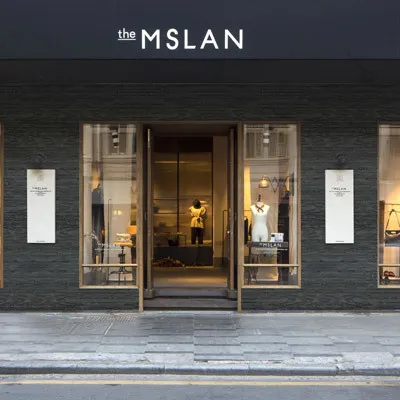
A pretty facade is nice, but a pretty facade that lasts? That's the real win. Muretto Stone Big Slab doesn't just excel in aesthetics—it's a workhorse, too. Let's break down why architects and builders are falling in love with it.
Traditional stone facades rely on grout lines to hold small tiles together. Over time, those lines crack, collect dirt, or grow mold—turning a once-beautiful exterior into a maintenance nightmare. Muretto's big slabs eliminate most of those lines. With fewer gaps, there's less space for water to seep in, less dirt to accumulate, and less upkeep required. Imagine owning a building and not having to schedule annual grout cleaning or repairs. That's the reality with Muretto. It's a material that ages gracefully, not grudgingly.
Muretto Stone is engineered to withstand the elements. Rain, snow, UV rays, even extreme temperatures—this stone doesn't flinch. I spoke with a contractor in a coastal town who used Muretto dark grey on a beachfront restaurant. "We get salt spray, high winds, everything," he told me. "After two years, that facade still looks brand new. No fading, no cracks, just that same deep, rich color." Compare that to materials like fair-faced concrete —which, while durable, can develop hairline cracks over time, or stain easily if not sealed regularly. Muretto's resilience means it's not just a pretty face; it's a long-term investment.
Ever walked into a building on a hot day and immediately felt cooler? Chances are, the facade had something to do with it. Muretto Stone has natural thermal insulation properties, thanks to its density and texture. It acts as a barrier, keeping heat out in summer and warmth in during winter. That means lower energy bills for heating and cooling—a win for both building owners and the planet. In a world where sustainability is no longer optional, Muretto checks that box, too.
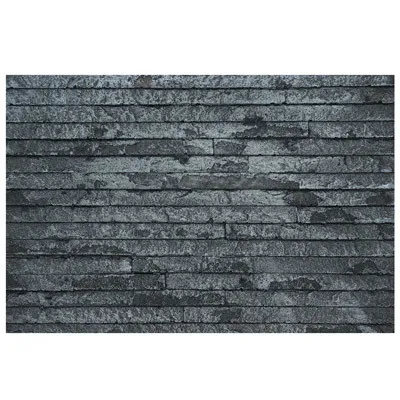
To truly appreciate Muretto, it helps to see how it stands next to other popular facade materials. Let's take two common options: fair-faced concrete and foamed aluminium alloy board (vintage silver) .
Fair-faced concrete is the darling of industrial-chic design. It's raw, minimalist, and has that "less is more" appeal. But here's the catch: it's cold. Literally and figuratively. Concrete absorbs and radiates heat, making buildings feel like caves in winter. It also lacks texture—most fair-faced concrete is smooth, which can look flat and lifeless in certain lights. Muretto, by contrast, has warmth. Its organic texture traps light, creating shadows and depth that concrete can't match. It's like comparing a black-and-white photo to a full-color landscape—both have their place, but one feels more alive.
Then there's foamed aluminium alloy board (vintage silver)—sleek, metallic, and ultra-modern. It's lightweight, easy to install, and has that futuristic sheen. But for all its flash, it can feel sterile. Imagine a building wrapped in vintage silver aluminium: it might look cool, but would you want to linger outside it? Muretto bridges the gap between modernity and warmth. It has the clean lines of aluminium but the earthy soul of stone. It says, "We're forward-thinking, but we haven't forgotten where we came from."
Muretto Stone Big Slab isn't just for museums or luxury hotels. It's a chameleon, adapting to any space that needs a touch of elegance and durability. Let's explore a few scenarios where it truly shines.
Imagine coming home to a building that feels like a retreat, not just a place to sleep. A residential complex in Barcelona used Muretto beige for its exterior, and the result is stunning. The warm, earthy tones blend with the surrounding trees and gardens, making the building feel like part of the landscape. Residents often comment on how "peaceful" the neighborhood feels—something the architects attribute to the stone's calming effect. "People don't just live here," one resident told me. "They relax here. The building itself helps with that."
A tech startup in Berlin wanted its office to feel innovative but not sterile. They chose Muretto dark grey for the facade, and it's a knockout. The deep, moody color pairs perfectly with the building's glass windows, creating a balance of solidity and transparency. "We wanted to show that we're serious about our work, but also that we value creativity," the company's CEO explained. "The dark grey Muretto does that—it's bold but not intimidating. Clients walk in and immediately get a sense of who we are."
Public libraries, community centers, and parks need facades that feel inclusive. Muretto light grey is ideal here. A new community library in Portland, Oregon, used light grey Muretto for its exterior, and the feedback has been overwhelming. "Kids love it," the head librarian said. "They run their hands along the walls, they point out the texture. It's like the building is inviting them to explore. And adults? They say it feels 'serene,' like a place where they can slow down. That's exactly what a library should be."
In an era of climate change, every building decision matters. Muretto Stone Big Slab isn't just a pretty face—it's a responsible choice, too. Here's why:
I recently attended a sustainability conference where an architect put it best: "The greenest building material isn't the one with the lowest carbon footprint on day one. It's the one that doesn't need to be replaced for decades. Muretto checks that box. It's not just sustainable—it's enduring ."
Buildings shape our lives. They're where we work, where we play, where we make memories. Muretto Stone Big Slab understands that. It's not just a facade material—it's a partner in creating spaces that feel human. Whether it's the warm embrace of beige, the bold confidence of dark grey, or the soft neutrality of light grey, Muretto doesn't just cover buildings. It complements them. It turns houses into homes, offices into communities, and public spaces into gathering places.
So the next time you walk down the street, take a moment to look up. Notice the facades, the textures, the colors. And if you happen to spot a building that makes you pause—a building that feels both modern and timeless, bold and welcoming—chances are, it's wrapped in Muretto Stone Big Slab. Because in the end, the best architecture isn't just about what we see. It's about what we feel. And Muretto? It makes us feel right at home.
Recommend Products












