
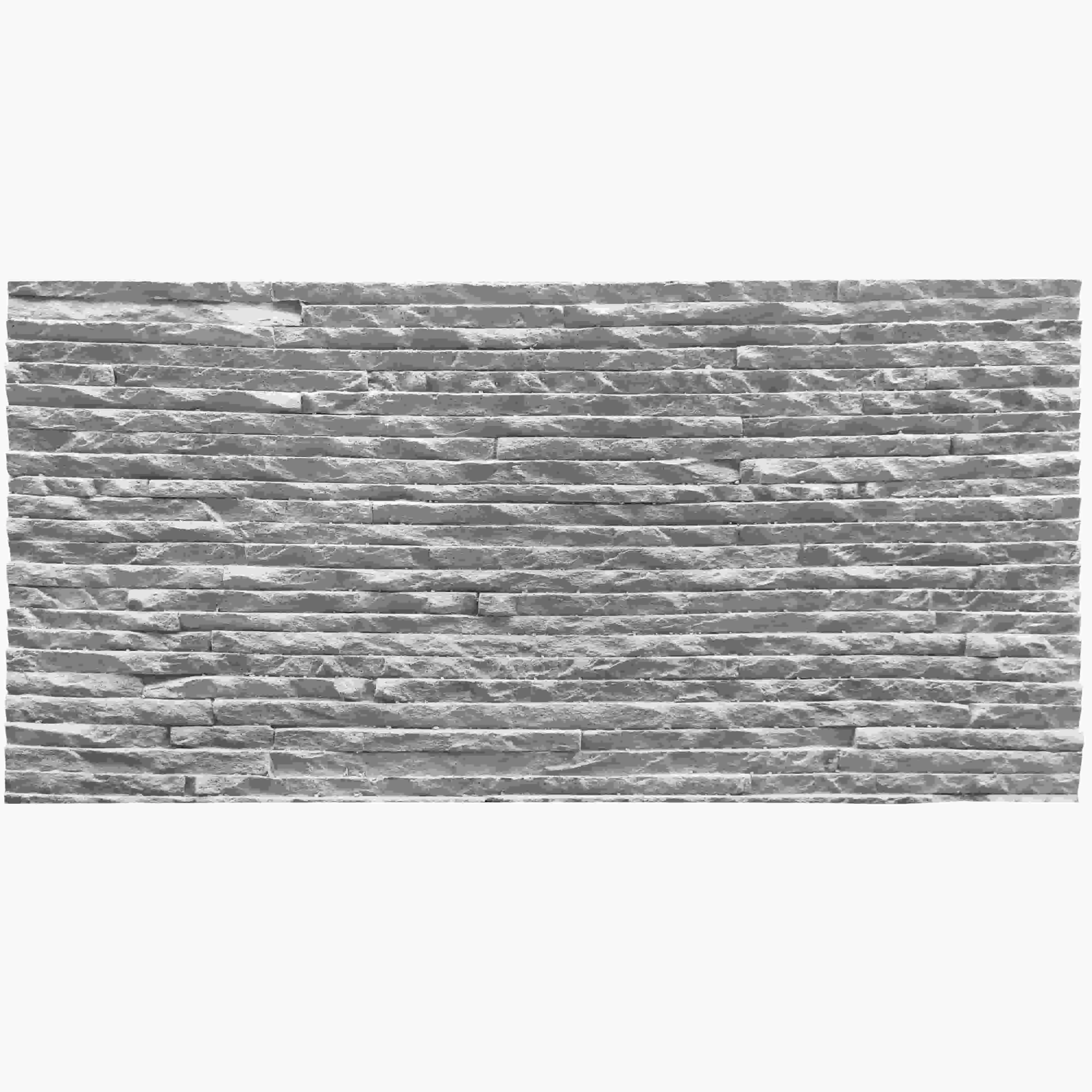
Walk into any modern architectural space today, and you'll likely notice something subtle yet powerful: the materials shaping the walls, floors, and facades aren't just there to serve a functional purpose. They're telling a story. They're setting a mood. They're making us feel something—whether it's the warmth of a cozy café, the calm of a minimalist home, or the grandeur of a public library. In a world where buildings often feel cold and impersonal, the right building material can be the difference between a space that "exists" and one that "lives." That's where Muretto Stone (Light Grey) comes in—a product that doesn't just cover surfaces, but transforms them into something deeply human.
But before we dive into what makes this light grey beauty so special, let's take a step back. For decades, architects and designers have grappled with a familiar trade-off: durability vs. beauty, practicality vs. personality. Traditional materials like concrete were strong but sterile; natural stone was stunning but heavy and unforgiving. Then came MCM—Modified Composite Material—a category of building materials that promised to rewrite the rules. MCM products, from flexible stone panels to large-format slabs, have redefined what's possible in construction. And within this innovative family, Muretto Stone (Light Grey) stands out as a quiet revolutionary. It's not the flashiest option in the MCM lineup, nor the most experimental. But sometimes, the most impactful innovations are the ones that balance tradition and modernity so seamlessly, you barely notice they're innovations at all.
Let's start with the basics. Muretto Stone isn't a "natural" stone in the traditional sense—you won't find it quarried from a mountainside in Italy or a desert in Morocco. Instead, it's a carefully engineered composite material, part of the broader MCM family that includes products like MCM flexible stone and the MCM big slab board series. But don't let the "composite" label fool you: this isn't some cheap imitation of natural stone. If anything, it's a love letter to natural stone—taking all the best parts (the texture, the depth, the organic beauty) and leaving behind the drawbacks (the weight, the brittleness, the high maintenance).
Specifically, Muretto Stone (Light Grey) is a variant of Muretto Stone, a line known for its understated elegance and versatility. The "light grey" hue is where its magic truly begins. It's not a flat, industrial grey that makes spaces feel like warehouses. Nor is it a cool, blue-tinged grey that can read as cold. Instead, it's a warm, soft grey—think of the color of morning mist over a quiet lake, or the smooth surface of a pebble polished by years in a stream. It has depth: up close, you'll notice subtle variations in tone, tiny flecks of off-white and beige that mimic the complexity of natural stone. From a distance, it exudes calm—a neutral backdrop that lets other elements in a space (art, furniture, people) shine, without fading into the background itself.
But Muretto Stone (Light Grey) isn't just about looks. It's about solving real problems for designers and builders. Imagine an architect tasked with cladding a curved facade on a boutique hotel. Traditional stone slabs would crack under the pressure of bending; heavy concrete panels would require expensive structural support. Muretto Stone (Light Grey), though? It bends. It adapts. It works with the building, not against it. That's the MCM promise in action—and Muretto Stone (Light Grey) delivers it with style.
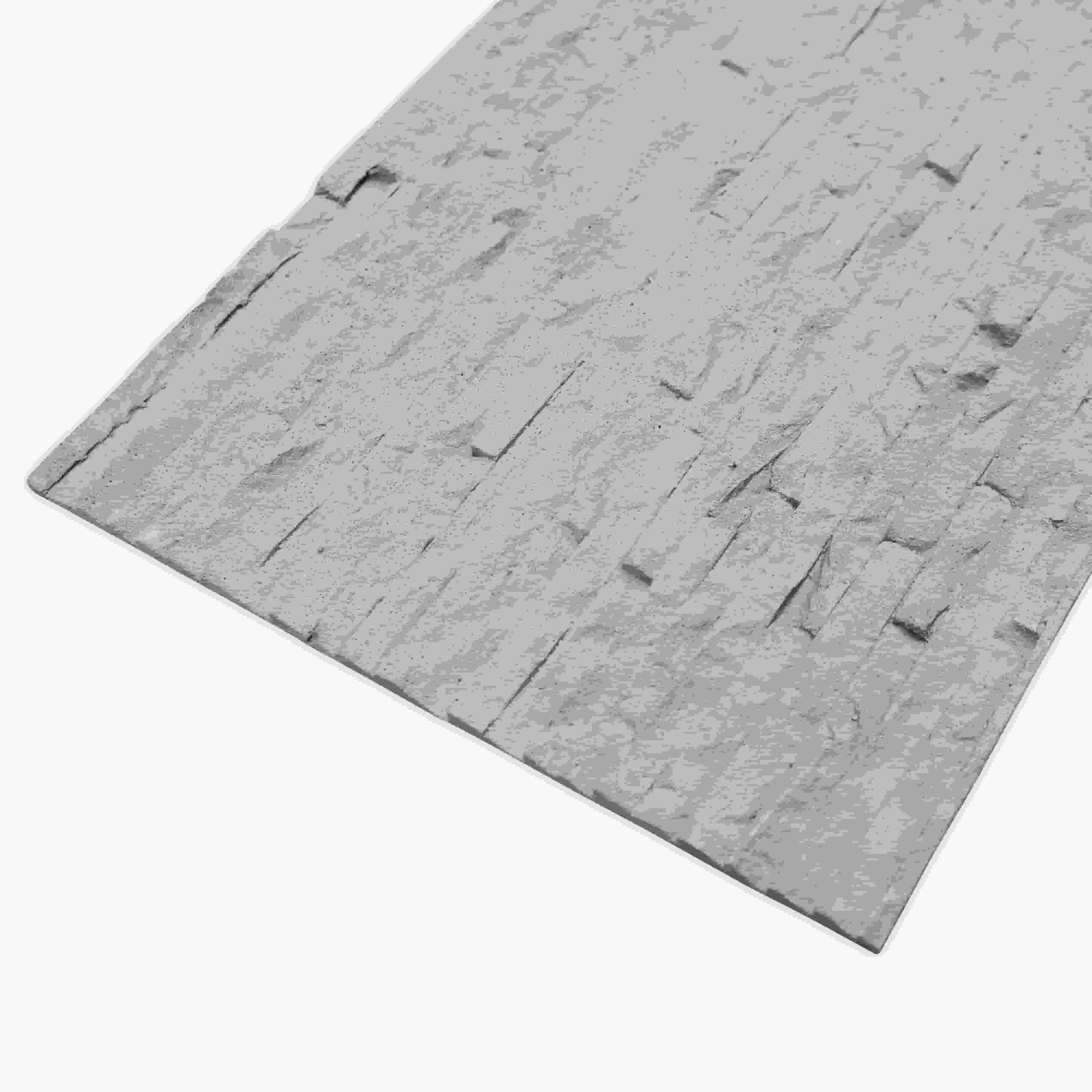
To truly understand what makes Muretto Stone (Light Grey) unique, we need to peek under the hood—into its composition. This isn't a random mix of chemicals and aggregates. Every ingredient is chosen with intention, every step of the manufacturing process designed to balance strength, flexibility, and beauty. Let's break it down, layer by layer.
At its heart, Muretto Stone (Light Grey) is a blend of three key components: natural stone aggregates, polymer binders, and mineral pigments. Let's start with the aggregates. Unlike some composite materials that skimp on quality, Muretto Stone uses high-grade natural stone particles—think crushed marble, granite, and limestone—sourced from sustainable quarries. These aggregates give the material its authentic texture and depth; run your hand over a Muretto panel, and you'll feel the subtle grit of real stone, not the plastic-y smoothness of a cheap imitation.
Next, the polymer binders. These are the "glue" that holds everything together, but they're far more sophisticated than your average adhesive. MCM manufacturers use advanced polymer resins that are both flexible and strong—think of them as the material's "muscles." They allow the panel to bend without breaking (a key feature of MCM flexible stone) while also resisting impact, moisture, and UV rays. This is why Muretto Stone (Light Grey) can handle the harsh sun of a desert climate or the driving rain of a coastal town without fading or warping.
Then there's the color: that signature light grey. Unlike paints or dyes that sit on the surface, Muretto Stone's color comes from mineral pigments mixed directly into the composite. These pigments are fade-resistant and earthy, which is why the light grey hue feels so natural. It's not a "printed" color; it's part of the material itself. This means that even if the panel gets scratched or chipped (though it's surprisingly resistant to that), the color underneath will match the surface—no ugly patches or discoloration.
What really sets Muretto Stone (Light Grey) apart is how these ingredients come together. The manufacturing process is a careful dance of precision and creativity. First, the stone aggregates are sorted by size—coarse particles for texture, fine particles for smoothness—to create that characteristic "lived-in" look. Then, they're mixed with the polymer binders and pigments in exact proportions, ensuring consistency across every panel. Some MCM products even use 3D printing technology to layer the material, adding depth and complexity to the texture—though Muretto Stone (Light Grey) leans more on traditional compression molding for its classic, understated finish.
Once mixed, the material is pressed into thin panels (typically 4-6mm thick, though thicker options exist for high-traffic areas) and cured under controlled heat and pressure. This curing process strengthens the polymer binders, turning the mixture into a rigid-yet-flexible sheet that's both lightweight and durable. The result? A panel that weighs a fraction of natural stone (about 80% lighter, in fact) but offers comparable strength. For builders, this means easier transportation, simpler installation, and lower structural costs—all without sacrificing quality.
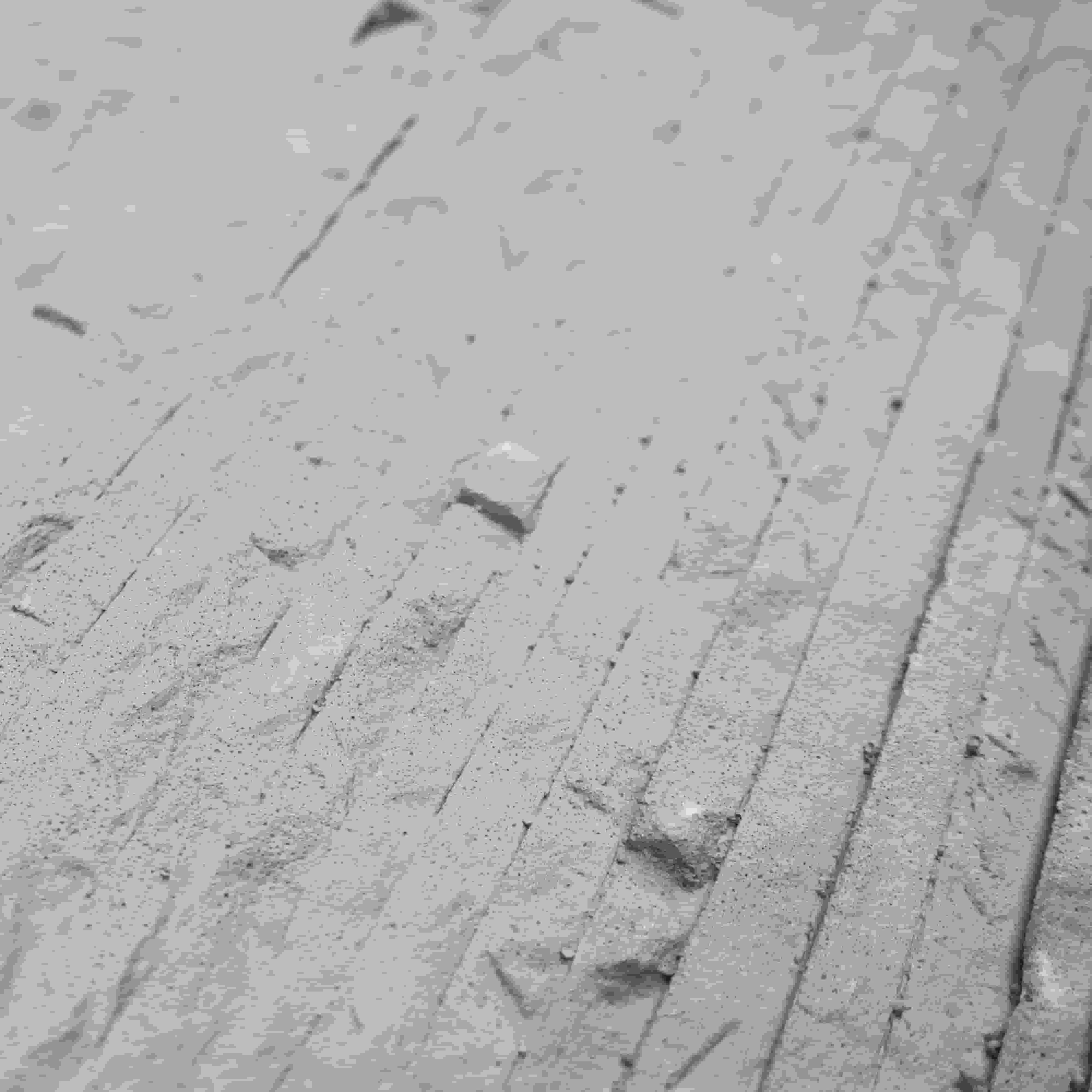
So, we know the composition is solid—but what does that translate to in real-world use? Let's break down the features that make Muretto Stone (Light Grey) a favorite among architects, designers, and homeowners alike.
Let's talk about that flexibility again, because it's a game-changer. Traditional stone is rigid; if you try to bend it, it cracks. Muretto Stone (Light Grey), though, can flex up to 30 degrees without sustaining damage. This might not sound like much, but in construction, it opens up a world of possibilities. Imagine cladding a curved wall in a modern home, or adding a textured facade to a building with organic, flowing lines. With Muretto Stone, you don't have to limit yourself to flat surfaces. It adapts to the design, not the other way around.
Take, for example, a recent project in Barcelona: a boutique hotel with a facade that curves gently like a wave. The architect originally planned to use natural limestone, but the weight and rigidity made the curved sections impossible. Enter Muretto Stone (Light Grey). The panels were cut to size, bent to match the curve of the facade, and installed in days—no heavy machinery, no structural reinforcements. The result? A facade that looks like it's carved from a single block of stone, but with the lightness and adaptability of a modern material. That's the power of MCM flexible stone technology at work.
Flexibility is great, but what good is a material that looks beautiful for a year and then falls apart? Muretto Stone (Light Grey) doesn't just look good—it stays good. Let's run through the durability checklist: moisture resistance? Check. UV resistance? Check. Impact resistance? Check. Stain resistance? Double check.
Think about a busy restaurant kitchen, where walls are constantly splashed with oil, water, and food. Or a high-traffic hallway in a school, where kids are running, dragging backpacks, and occasionally bumping into walls. Muretto Stone (Light Grey) can handle all of that. Its non-porous surface repels liquids, so spills wipe away with a damp cloth. Its tough polymer binders resist dents and scratches, even from heavy furniture or dropped tools. And because the color is integrated into the material, it won't fade in the sun—so that light grey hue will look just as fresh in 10 years as it did on day one.
One homeowner in Seattle put this to the test: they installed Muretto Stone (Light Grey) in their mudroom, where kids track in rain, snow, and dirt daily. Five years later, the walls still look brand new. "I was worried it would get stained or scuffed," they told me, "but it's held up better than the natural stone in our kitchen. And it was so much easier to install!"
Light grey is often dismissed as "boring," but Muretto Stone (Light Grey) proves that neutral can be anything but. Its beauty lies in its adaptability—it pairs seamlessly with almost any design style, making it a chameleon of the building world.
Want a rustic farmhouse look? Pair Muretto Stone (Light Grey) with wooden beams and warm lighting, and suddenly you've got a cozy, cabin-like vibe. Going for industrial chic? Combine it with metal accents and exposed brick, and it takes on an edgy, urban feel. Minimalist? Let it shine on its own, with clean lines and soft shadows, and it becomes a study in calm. Even in bold, maximalist spaces, it acts as a grounding element, preventing the room from feeling overwhelming.
Part of this versatility comes from the texture. Muretto Stone (Light Grey) isn't smooth like glass or polished marble; it has a subtle, matte finish with tiny indentations and variations that catch the light. In the morning, when sunlight streams in, it glows with a soft, warm undertone. In the evening, under artificial light, it cools down, adding depth to the space. This play of light and shadow makes it dynamic, not static—perfect for spaces that need to evolve with the time of day.
Let's talk logistics. Natural stone is heavy—so heavy that installing it often requires cranes, specialized labor, and reinforced structures. Muretto Stone (Light Grey), by contrast, weighs just 6-8 kg per square meter. That's lighter than drywall, for context. For builders, this means: no cranes needed, no extra structural support, and installation that can be done by a small team in a fraction of the time.
Installation is straightforward, too. The panels come in large sheets (up to 1200x2400mm in the MCM big slab board series, though Muretto Stone (Light Grey) is also available in smaller, more manageable sizes) that can be cut with standard tools (a circular saw or jigsaw works fine). They're then glued directly to the substrate (wall, floor, ceiling) using a high-strength adhesive, eliminating the need for mortar or grout (though some designers opt for thin grout lines for a more traditional stone look). For DIY enthusiasts, this is a huge plus—you don't need to be a professional mason to get professional results.
One contractor I spoke to summed it up: "We used Muretto Stone (Light Grey) on a restaurant renovation last year. The old facade was covered in natural limestone, and removing it took a week. Installing the Muretto panels? Two days. And the client saved over $10,000 on labor and structural costs. They were blown away."
In today's world, sustainability isn't just a "nice-to-have"—it's a necessity. And Muretto Stone (Light Grey) delivers here, too. Let's start with the raw materials: the stone aggregates are often sourced from waste products of natural stone quarries (leftover pieces that would otherwise be discarded), reducing the need for new mining. The polymer binders are low-VOC (volatile organic compounds), meaning they don't release harmful chemicals into the air during installation or use. And because the panels are lightweight, transportation requires less fuel, cutting down on carbon emissions.
Then there's longevity. A Muretto Stone (Light Grey) panel can last 20-30 years with minimal maintenance, which means less frequent replacement and less waste. When it does reach the end of its life, many MCM products are recyclable—though, honestly, you'll probably be replacing the building before you need to replace the panels.
Compare that to traditional materials like fair-faced concrete, which requires massive amounts of energy to produce and is difficult to recycle. Or natural stone, which involves destructive quarrying and heavy transportation. Muretto Stone (Light Grey) isn't just better for your space—it's better for the planet, too.
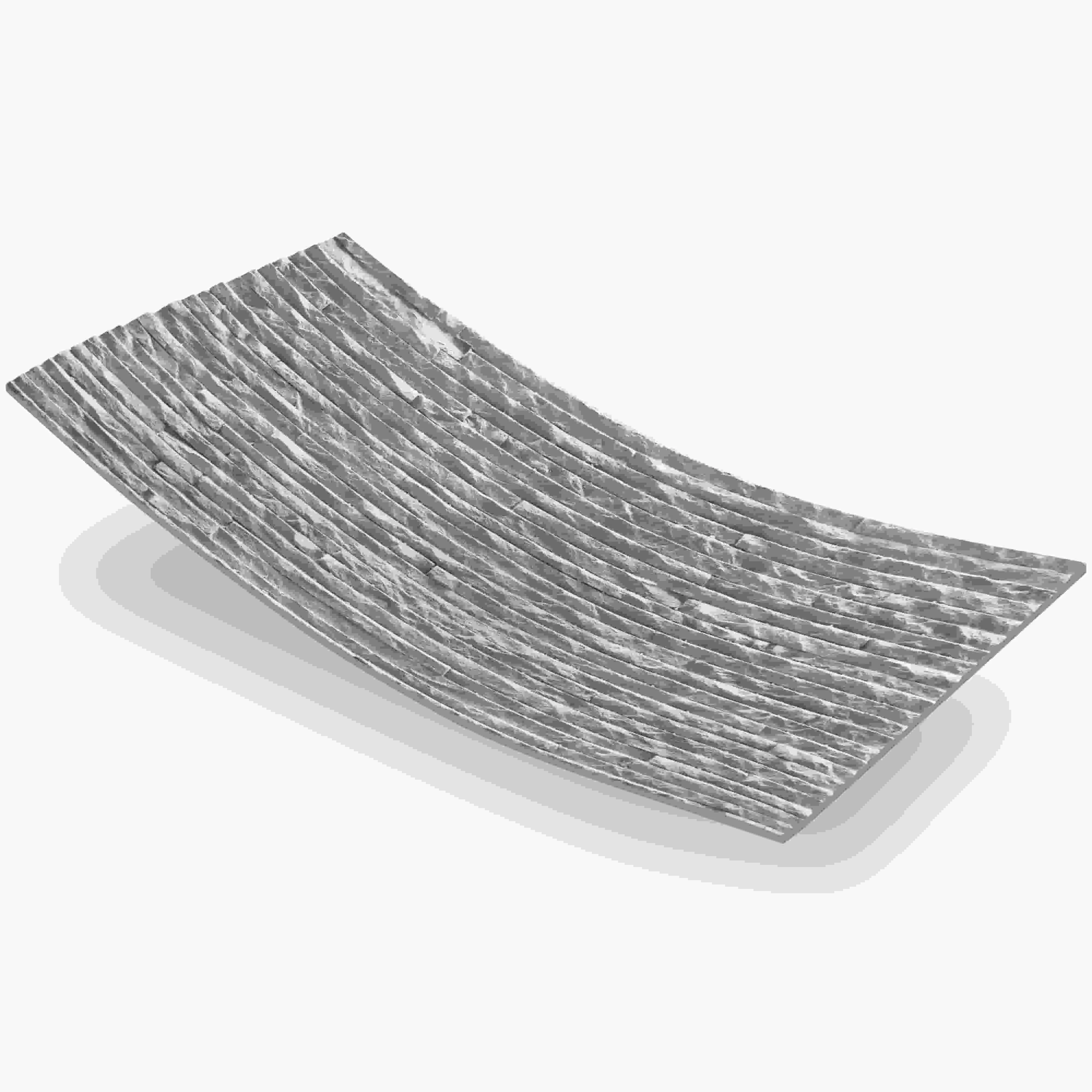
To really understand Muretto Stone (Light Grey)'s uniqueness, it helps to see how it measures up against other popular building materials. Let's put it head-to-head with a few common options.
| Feature | Muretto Stone (Light Grey) | Fair-Faced Concrete | Lime Stone (Beige) | MCM Big Slab Board Series (Standard) |
|---|---|---|---|---|
| Weight (kg/m²) | 6-8 | 20-25 | 25-30 | 7-9 |
| Flexibility | Can bend up to 30° | Rigid (no flexibility) | Rigid (brittle) | Can bend up to 25° |
| Durability | Resistant to moisture, UV, stains | Durable but porous (prone to staining) | Durable but soft (prone to scratching) | Similar to Muretto (varies by texture) |
| Aesthetic Range | Warm, natural light grey with subtle texture | Cool, industrial grey (limited color options) | Warm beige (limited color variation) | Wide range (textures, colors, finishes) |
| Installation Ease | Lightweight, easy to cut, glue-on installation | Heavy, requires formwork, professional installation | Heavy, requires mortar, professional masonry | Lightweight, similar to Muretto |
| Sustainability | Recycled aggregates, low-VOC binders, long lifespan | High carbon footprint (cement production) | Quarrying impacts, heavy transportation | Similar to Muretto (varies by manufacturer) |
As you can see, Muretto Stone (Light Grey) holds its own—and often surpasses—traditional options like fair-faced concrete and lime stone. It's lighter than all of them, more flexible, and easier to work with. Compared to the MCM big slab board series (which is designed for bold, statement-making textures), Muretto Stone (Light Grey) is more understated, making it a better fit for spaces where subtlety is key.
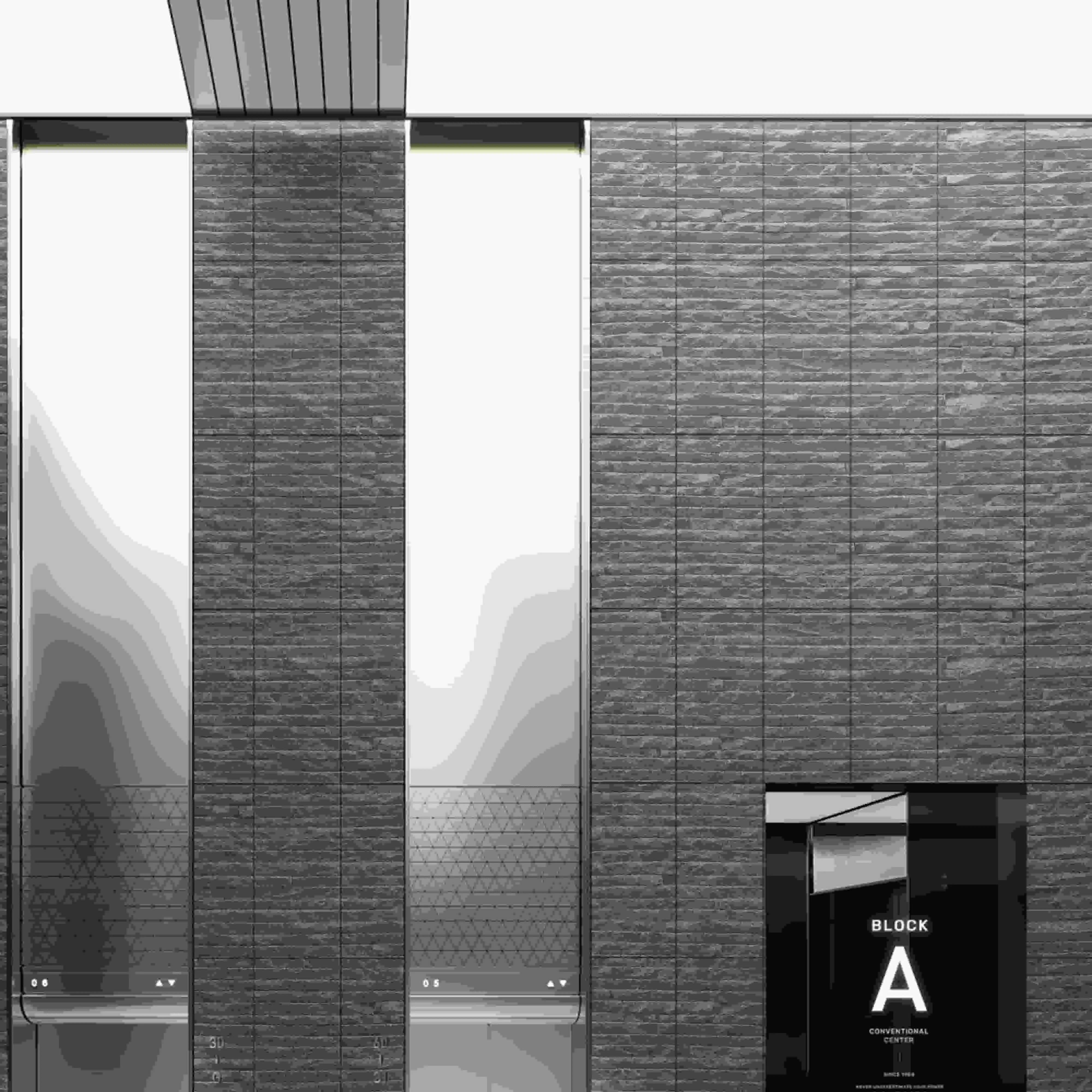
Enough talk about features—let's look at how people are actually using Muretto Stone (Light Grey) in the real world. Spoiler: the possibilities are endless.
One of the most popular uses for Muretto Stone (Light Grey) is exterior cladding. Its light weight means it can be applied to almost any building type, from small homes to large commercial complexes, without adding stress to the structure. And its durability ensures it can withstand the elements, from harsh winters to scorching summers.
Take, for example, a row of townhouses in Portland, Oregon. The architects wanted a cohesive look that felt modern but not cold, so they chose Muretto Stone (Light Grey) for the ground-floor facades. Paired with wooden siding on the upper floors and large windows, the result is a streetscape that feels unified yet inviting. "We wanted the buildings to look like they belonged together, but not like cookie-cutter copies," the lead architect explained. "Muretto Stone's texture adds just enough variation to keep things interesting, and the light grey ties everything together without overwhelming the neighborhood."
Inside the home, Muretto Stone (Light Grey) is a favorite for accent walls. In a living room, it can frame a fireplace, adding warmth and texture. In a bedroom, it can serve as a headboard wall, creating a cozy, cocoon-like feel. In a bathroom, it's a durable alternative to tile, resisting moisture and mold with ease.
A designer in Chicago used Muretto Stone (Light Grey) in a client's master bathroom, pairing it with white marble countertops and black fixtures. "The client wanted a spa-like vibe—calm, clean, and luxurious," she said. "Muretto Stone was perfect because it's not as cold as marble, but still feels elevated. Plus, it's easy to clean, which is a must in a bathroom." The result? A space that feels like a retreat, with the light grey walls reflecting soft light and creating a sense of serenity.
While Muretto Stone (Light Grey) is often used for walls, it's also a great option for floors—especially in areas that see a lot of foot traffic, like entryways, kitchens, and hallways. Its scratch resistance and durability make it ideal for busy families, and its matte finish provides traction, reducing the risk of slips.
A café owner in Austin, Texas, installed Muretto Stone (Light Grey) flooring in their space, replacing worn-out hardwood that couldn't stand up to spilled coffee and heavy furniture. "We were worried it would feel too industrial," they admitted, "but with the right lighting and wooden tables, it feels warm and inviting. And we haven't had a single scratch or stain in two years—even with kids dropping sippy cups and chairs scraping the floor."
At the end of the day, what really makes Muretto Stone (Light Grey) unique isn't its composition, its features, or even its applications. It's the way it makes people feel. In a world that's increasingly dominated by synthetic materials and digital screens, there's something deeply reassuring about a material that feels "real." Muretto Stone (Light Grey) doesn't just look like natural stone—it feels like it. Its texture invites touch; its color calms the eye; its presence makes spaces feel grounded, not artificial.
Think about it: when you walk into a room with Muretto Stone (Light Grey) walls, you don't think, "Wow, what a great building material." You think, "This space feels good." It's subtle, but it matters. It's the difference between a hotel lobby that makes you check your phone and one that makes you pause, take a breath, and appreciate your surroundings. It's the difference between a home that feels like a house and one that feels like a sanctuary.
Architects often talk about "biophilic design"—the idea that humans have an innate connection to nature, and that incorporating natural elements into buildings improves our well-being. Muretto Stone (Light Grey) nails this. It's not a perfect replica of natural stone, but it captures its essence—the irregularities, the warmth, the sense of time and history. It's a material that acknowledges the past while embracing the future, and in doing so, it creates spaces that feel both timeless and alive.
Building materials come and go. What's "in" today might be "out" tomorrow. But Muretto Stone (Light Grey) feels different. It's not a passing trend; it's a material built for the long haul. Its combination of durability, flexibility, aesthetics, and sustainability addresses the core needs of modern construction, while its human-centered design ensures it will remain relevant even as styles change.
Whether you're building a new home, renovating a commercial space, or just looking to add a little texture to a room, Muretto Stone (Light Grey) offers something that few other materials can: the best of both worlds. It's strong enough to stand up to life's messes, beautiful enough to elevate any space, and human enough to make you feel right at home.
So the next time you walk into a space and feel that subtle sense of calm, that quiet comfort, take a closer look at the walls. Chances are, you might be looking at Muretto Stone (Light Grey)—a material that doesn't just build spaces, but builds moments, memories, and feelings. And in the end, isn't that what architecture is all about?
Recommend Products












