
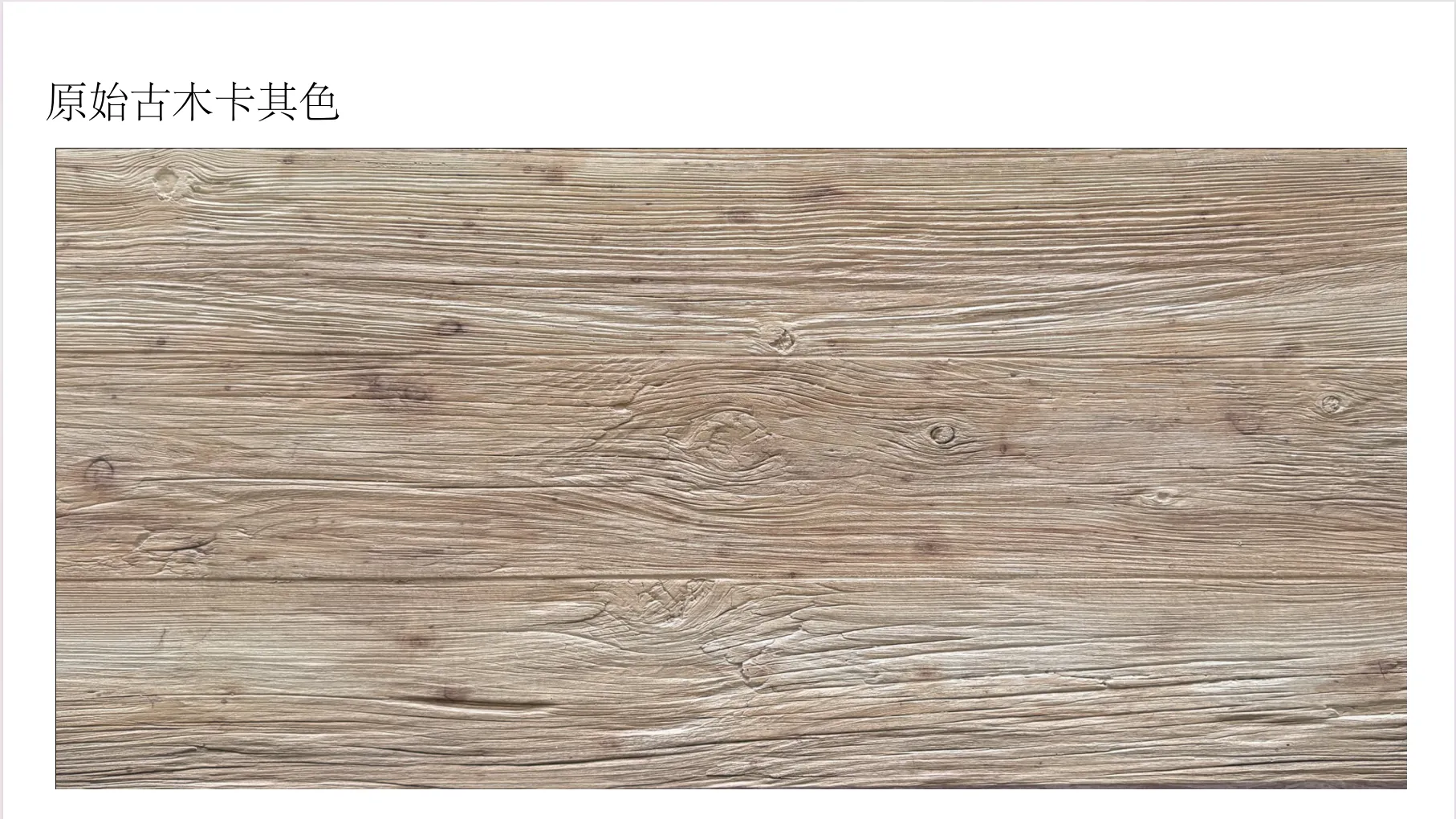
There's something almost magical about the way wood carries stories. Run your hand along a weathered beam in an old cottage, and you can almost feel the years—the creak of floorboards under generations of feet, the warmth of hearths that once crackled, the quiet hum of lives lived. Ancient wood, in particular, is more than a material; it's a living archive, a bridge between past and present. But here's the bittersweet truth: as time marches on, so much of that history fades. Old-growth forests shrink, rare wood species vanish, and the art of crafting with ancient wood becomes a fading tradition. Until now.
Enter COLORIA GROUP, a name synonymous with reimagining what's possible when heritage meets cutting-edge technology. Their latest breakthrough? The mcm 3d printing series —a revolutionary line that doesn't just replicate the look of ancient wood, but captures its soul. It's a marriage of 3D printing precision and a deep respect for the past, and it's changing how we think about bringing history into modern spaces. Let's dive into how COLORIA is turning forgotten wood patterns into tangible, touchable stories—one layer at a time.
To understand COLORIA's innovation, you first need to grasp why ancient wood holds such power. Unlike mass-produced lumber from today's fast-growing forests, ancient wood—think centuries-old oak beams, teak planks from 19th-century ships, or hand-carved mahogany from heritage homes—has a character that can't be replicated. Its grain twists in unique patterns, marked by knots that tell of storms weathered and seasons passed. It smells of earth and time, and underfoot or against your palm, it feels warm, alive, like it's still breathing.
But here's the challenge: ancient wood is finite. Harvesting it is often unsustainable, and even when reclaimed, it's fragile—prone to warping, rotting, or cracking when repurposed. Traditional woodworking, too, is a labor of love but limited by scale; a master craftsman might spend weeks carving a single panel, making it inaccessible for most projects. And in a world that craves both authenticity and efficiency, this disconnect has left designers and homeowners longing for a solution that honors the past without sacrificing the future.
COLORIA GROUP didn't just see a problem—they saw an opportunity. What if, instead of cutting down more trees or risking irreplaceable antiques, we could digitize the essence of ancient wood and print it anew? That's the vision behind the mcm 3d printing series , a technology that merges state-of-the-art 3D printing with a passion for preservation.
The process starts with a journey—literally. COLORIA's team of designers and historians travel the globe, seeking out fragments of ancient wood: a weathered door from a Tuscan villa, a rotting beam from a Chinese courtyard home, a carved chest from a Moroccan souk. These pieces are carefully scanned, their every groove, knot, and imperfection digitized into a 3D model with microscopic precision. "We're not just capturing a shape," says Elena Marini, lead designer at COLORIA. "We're capturing the memory of the wood—the way light hits its surface at dawn, the way it feels when it rains. That's the magic."
Once digitized, these models become the blueprints for the mcm 3d printing series. Using advanced printers and a proprietary blend of materials—including flexible stone , a durable yet malleable composite that mimics the suppleness of wood—the team recreates the ancient patterns layer by layer. The result? Panels, boards, and surfaces that look, feel, and even smell like the original wood, but with none of the drawbacks. "It's like bringing a ghost back to life," Marini laughs. "But a ghost that's tough enough to withstand a busy restaurant or a kid's playroom."
While the mcm 3d printing series is the engine driving this innovation, it's the specific products that make it tangible. Let's zoom in on a few standouts, starting with the wood grain board —a fan favorite that's redefining residential and commercial design.
Crafted using the 3D-printed ancient wood patterns and reinforced with flexible stone, the wood grain board is a study in balance. It has the warm, organic texture of real wood, but it's water-resistant, fire-retardant, and resistant to scratches—making it perfect for kitchens, bathrooms, or high-traffic lobbies. What's more, it's customizable: want the grain of a 200-year-old oak? Done. Prefer the swirling pattern of a rare black walnut? No problem. "We had a client who grew up in a house with a 1920s pine floor that was falling apart," says Marco Rossi, COLORIA's client relations manager. "We scanned a small piece of that floor, printed it onto wood grain boards, and now their new apartment has the exact same pattern. They cried when they walked on it. That's the power of this technology."
Then there's ancient wood —not just a material, but a signature line within the mcm 3d printing series. These pieces are designed to mimic the most intricate wood carvings, from the floral motifs of Indian palaces to the geometric patterns of Japanese temples. Unlike traditional carved wood, which requires skilled artisans and months of work, COLORIA's ancient wood panels can be printed in days, making them accessible for everything from boutique hotels to museum exhibits. "We worked on a heritage restoration project last year," Rossi recalls. "The original wood carvings on the building's facade were so degraded, they were at risk of collapsing. Instead of replacing them with new wood (which would have been historically inaccurate), we scanned the remaining fragments, printed them using the mcm 3d printing series, and attached them. Now the building looks like it did in 1890, but the panels will last for decades."
And for those who crave a blend of old and new, COLORIA pairs these wood-inspired pieces with complementary materials like foamed aluminium alloy board (vintage gold) . Imagine a restaurant wall: warm wood grain boards printed with ancient oak patterns, accented by sleek panels of vintage gold foamed aluminium. The contrast is striking—history and modernity in perfect harmony. "It's about creating spaces that feel rooted but not stuck," Marini explains. "Ancient wood gives the warmth; the foamed aluminium adds that 'wow' factor. Together, they tell a story of where we've been and where we're going."
Still skeptical? Let's break down the benefits of COLORIA's approach versus traditional woodworking. The table below highlights key differences:
| Aspect | Traditional Ancient Wood | COLORIA's 3D Printed Ancient Wood (mcm 3d printing series) |
|---|---|---|
| Sustainability | Relies on rare, old-growth wood; often involves deforestation or risking irreplaceable antiques. | Uses recycled materials and flexible stone; no trees cut down; preserves original antiques by scanning, not harvesting. |
| Cost & Time | Expensive (rare materials + skilled labor); can take months to source and craft a single piece. | More affordable (scalable 3D printing); projects completed in days/weeks, not months. |
| Durability | Prone to rot, pests, warping; requires constant maintenance (polishing, sealing). | Water-resistant, fire-retardant, scratch-proof; minimal maintenance needed. |
| Customization | Limited by the size and condition of available wood; hard to replicate exact patterns. | Unlimited customization; any scanned pattern can be resized, modified, or combined with other designs. |
| Emotional Impact | High (authenticity); but limited to those who can afford or access original pieces. | Equally high (captures the original's essence); accessible to more people, spreading the emotional connection to history. |
The beauty of COLORIA's 3D printed ancient wood patterns lies in their versatility. They're not just for luxury homes—they're for anyone who wants to infuse their space with meaning. Here are a few places where they're making waves:
COLORIA GROUP isn't stopping with wood. The mcm 3d printing series is just the beginning. "We're already exploring other materials and patterns," Marini hints. "Imagine 3D printed stone that mimics ancient marble carvings, or textiles printed with the weaves of forgotten cultures. The possibilities are endless."
They're also doubling down on sustainability, experimenting with even more eco-friendly materials and partnering with environmental organizations to reforest areas damaged by deforestation. "We want to be part of the solution, not just the innovators," Rossi says. "Every wood grain board we print is a step away from cutting down another tree. That's a legacy we're proud of."
But at the heart of it all, the focus remains on people. "Wood isn't just a material," Marini says. "It's about connection—to our past, to each other, to the spaces we live in. With the mcm 3d printing series, we're not just making products; we're making memories. And that's the most innovative thing of all."
In a world that often feels fast-paced and disconnected, COLORIA GROUP's 3D printed ancient wood patterns are a reminder of what matters: warmth, history, and the stories that shape us. Through the mcm 3d printing series , they've turned a fading tradition into a thriving innovation, proving that technology and heritage don't have to be enemies—they can be partners.
So the next time you walk into a space and feel that inexplicable warmth, that sense of "home," take a closer look. It might just be a wood grain board printed with the pattern of an ancient tree, brought back to life by 3D printing. And in that moment, you'll understand: this isn't just design. It's history, reimagined—for all of us.
Recommend Products












