

Picture this: an architect hunched over blueprints, frustration creasing their brow. They're trying to bring a vision to life—a facade that blends organic texture with geometric precision—but traditional stone cladding keeps falling short. The stone is too heavy, too rigid, too unforgiving. Every sample they order arrives with inconsistencies, and custom carvings take months, blowing the project timeline. Then, a colleague mentions something new: 3D printed Bali Stone . Skeptical at first, they request a sample. When it arrives, they run a hand over its surface—warm, tactile, with the subtle grain of natural stone—yet it bends slightly, flexing like a thin sheet of wood. This isn't just stone. It's a revolution.
At its core, 3D printed Bali Stone is a reimagining of natural stone cladding. It draws inspiration from the warm, earthy aesthetics of traditional Bali stone—think sun-baked terracotta hues, gentle pitting, and a lived-in texture that feels both ancient and alive—but redefines what stone can do through cutting-edge technology. Unlike quarried stone, which is hacked from the earth in rigid blocks, this material is born from digital design and additive manufacturing, layer by layer, using the MCM 3D Printing Series —a proprietary process that marries modified composite materials with precision engineering.
But it's not just about replication. 3D printed Bali Stone isn't trying to mimic nature; it's collaborating with it. The result is a material that retains the visual depth and tactile quality of natural stone but adds a level of flexibility and precision that's. Imagine a facade that curves like a wave, its surface rippling with intentional, repeatable patterns—something traditional stone could never achieve without cracking or requiring massive structural support. That's the promise here.
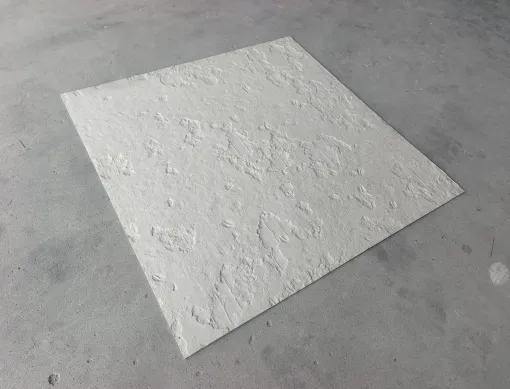
To understand 3D printed Bali Stone, you have to start with the MCM 3D Printing Series —the technology that makes it possible. MCM, short for Modified Composite Material, is a blend of mineral aggregates, polymers, and natural fibers, designed to mimic the look and feel of stone while shedding its limitations. The 3D printing process then takes this composite and builds up layers as thin as 0.5mm, allowing for intricate detailing that would take master craftsmen weeks to carve by hand.
What sets this series apart is its focus on control . Traditional stone fabrication is at the mercy of nature—veins, cracks, and color variations are unavoidable. With MCM 3D printing, every texture, pit, and hue is programmed into a digital model first. Want a surface that looks like it was eroded by wind over centuries? Digitize that erosion pattern, and the printer will replicate it exactly, panel after panel. No more "close enough" samples or last-minute substitutions. For architects, this means peace of mind: what you design is what you get.
Take, for example, the 3D Art Concrete Board —a sibling product in the MCM lineup. Designed for interior accent walls, it features bold, geometric reliefs that play with light and shadow. When paired with 3D printed Bali Stone, the contrast is striking: the Bali Stone's organic warmth softens the concrete's sharp edges, creating spaces that feel both modern and grounded. It's a collaboration of textures made possible only by the precision of 3D printing.
Here's a dirty secret about traditional stone cladding: it's stubborn. Heavy, brittle, and unyielding, it demands straight lines and flat surfaces. Try to wrap it around a curved wall, and it will crack. Attempt to install it on a lightweight structure, and you risk structural failure. This rigidity has boxed architects into safe, predictable designs for decades.
3D printed Bali Stone changes that with flexible stone technology. Thanks to the MCM composite's unique formulation, the material can bend up to 15 degrees without breaking—a game-changer for curved facades, undulating partitions, or even ceiling treatments. Suddenly, that spiral staircase with a stone-clad riser? Feasible. That amphitheater with a sweeping, stone-look backdrop? Doable. And because it's up to 70% lighter than traditional stone, it reduces the load on buildings, cutting costs on structural support and making retrofits possible where they once weren't.
Consider a recent project in Singapore: a boutique hotel with a facade designed to mimic the flow of a river. The architect originally planned to use glass, but wanted something warmer. Traditional stone was out of the question—the curves were too tight. Then they switched to 3D printed Bali Stone. The panels were printed in 6-meter sections, each flexing to follow the building's contours, and finished with a custom lunar peak silvery glaze that shimmers like moonlight on water. The result? A building that looks like it's flowing, not just standing.
Precision is where 3D printed Bali Stone truly shines. Let's say an architect designs a facade with a repeating pattern of 2mm-deep grooves, spaced exactly 5cm apart, to create a moiré effect when viewed from the street. With traditional stone, that would mean hand-chiseling each groove—a process prone to human error, with variations of up to 3mm per panel. With 3D printing, the digital model defines every groove, and the printer executes it with sub-millimeter accuracy. Every panel is identical, ensuring the moiré effect reads perfectly, just as designed.
This level of precision isn't just about aesthetics; it's about efficiency. Installation times drop dramatically because panels fit together like puzzle pieces, with pre-engineered mounting points that align exactly. No more on-site cutting or grinding to fix mismatched edges. A crew that might take a week to install traditional stone cladding can finish the same area in two days with 3D printed Bali Stone. For contractors, that means lower labor costs and happier clients.
And it's not just about repetition. The MCM 3D Printing Series excels at one-of-a-kind designs, too. Take the travertine (starry blue) variant—imagine a surface dotted with tiny, iridescent "stars," each precisely placed to form a constellation across a conference room wall. That level of customization would require hours of hand-setting glass chips in traditional travertine. With 3D printing, it's programmed into the design file, and the printer embeds the stars automatically, layer by layer.
3D printed Bali Stone is just the beginning. The MCM 3D Printing Series includes a range of complementary materials that expand design horizons even further. There's lunar peak silvery , with its cool, metallic sheen that mimics moonlight on rock; 3D Art Concrete Board , which adds industrial edge with bold, geometric reliefs; and even travertine (vintage gold) , a warm, brass-toned variant that pairs beautifully with Bali Stone's earthy hues.
These materials aren't meant to exist in isolation. Architects are mixing and matching them to create dynamic, multi-textural spaces. For example, a restaurant might use 3D printed Bali Stone on the lower half of its facade for warmth, transition to lunar peak silvery panels above for a modern lift, and accent with 3D Art Concrete Board insets for depth. The result is a building that tells a story, shifting mood as the sun moves across the sky.
| Feature | Traditional Stone Cladding | 3D Printed Bali Stone (MCM Series) |
|---|---|---|
| Material Flexibility | Rigid; prone to cracking under stress or curvature | Flexible (bends up to 15°); ideal for curved surfaces |
| Design Precision | Inconsistent; hand-carved details vary by craftsman | Sub-millimeter accuracy; digital designs translate exactly to physical panels |
| Production Time | Weeks to months for custom designs | Days to weeks; digital files eliminate wait for quarrying/cutting |
| Waste Generation | High (up to 30% of quarried stone is wasted as scrap) | Low (additive manufacturing uses only necessary material) |
| Weight | Heavy (20-30 kg/m²); requires robust structural support | Lightweight (6-8 kg/m²); suitable for retrofits and lightweight structures |
| Customization | Limited by stone's natural grain and structural constraints | Unlimited; textures, colors, and patterns programmed digitally |
In an era where sustainability is non-negotiable, 3D printed Bali Stone has another trick up its sleeve: it's kinder to the planet. Traditional stone quarrying is resource-intensive, stripping landscapes and generating massive amounts of waste. The MCM 3D Printing Series, by contrast, uses recycled mineral aggregates and low-VOC binders, cutting down on raw material extraction. And because it's 3D printed, there's no scrap—every layer is intentional, so material usage is optimized.
Then there's transportation. Traditional stone is heavy, so shipping it long distances leaves a large carbon footprint. 3D printed Bali Stone, being lightweight, reduces fuel consumption by up to 60% during transport. For global projects, that's a significant win for the environment—and for project budgets.
It's one thing to talk about innovation; it's another to see it in action. Take the "Ethereal Wave" office building in Barcelona, completed in 2024. Its facade features 3D printed Bali Stone panels shaped to mimic the Mediterranean Sea's gentle swells, accented with lunar peak silvery strips that catch the light like sunlight on water. The client initially worried the design was too ambitious, but the MCM 3D Printing Series delivered panels that curved exactly as planned, with zero waste and installation completed three weeks ahead of schedule.
Closer to home, a boutique hotel in Bali (fittingly) used 3D printed Bali Stone for its interior walls, pairing it with travertine (starry blue) accents in the lobby. Guests often comment on how the space feels "both modern and rooted in tradition"—a testament to the material's ability to bridge the old and new.
3D printed Bali Stone isn't just a new material; it's a shift in mindset. It's about architects and designers no longer asking, "What can stone do?" but "What do we want stone to do?" The technology is evolving, too. The MCM 3D Printing Series is already experimenting with self-cleaning coatings and embedded LED integration, turning cladding into functional art. Imagine a facade that lights up at night, its 3D printed texture casting dynamic shadows, or a hospital wall that resists bacteria growth while still feeling warm and inviting.
As the technology scales, costs are coming down, making it accessible to more projects—from luxury resorts to community centers. And as more architects adopt it, we'll see a wave of buildings that feel less like boxes and more like living, breathing entities—structures that respond to human emotion as much as they do to function.
3D printed Bali Stone is a reminder that innovation doesn't have to sacrifice soul. It takes the timeless beauty of natural stone and gives it superpowers—flexibility, precision, sustainability—without losing the qualities that make stone so beloved: its warmth, its texture, its ability to age gracefully. For architects tired of compromising on their vision, it's a tool that says, "Yes, you can." For the rest of us, it's a glimpse into a future where buildings don't just house us—they inspire us.
So the next time you walk past a building with a facade that seems to defy gravity, with curves that flow and textures that mesmerize, take a closer look. It might just be 3D printed Bali Stone—proving that sometimes, the most revolutionary ideas are the ones that bring us closer to nature, not farther from it.
Recommend Products












