
The construction industry has long been a cornerstone of human progress, but in recent decades, it has stood at the cusp of a quiet revolution. As cities grow taller, design aspirations bolder, and sustainability demands stricter, the materials that shape our built environment are evolving faster than ever. Among the most exciting innovations is the rise of 3D printed construction materials—and at the forefront of this movement is MCM's 3D Printed Cement Board, a standout in the mcm 3d printing series that's redefining what's possible in modern architecture. More than just a building material, it's a bridge between technology and artistry, blending precision engineering with the organic warmth of natural textures. Let's dive into how this breakthrough is reshaping construction, one layer at a time.
At its core, 3D printed cement board is a feat of additive manufacturing—think of it as "printing" buildings, but on a material level. Unlike traditional cement boards, which are cast in molds and limited by rigid forms, MCM's process uses computer-controlled extrusion to deposit layers of specialized cementitious material with pinpoint accuracy. This isn't just about speed; it's about unlocking design freedom that was once impossible.
Imagine a sculptor chiseling marble, but with a tool that can replicate intricate patterns infinitely, or an artist painting a mural that spans an entire facade—this is the precision of 3D printing applied to cement. The 3d art concrete board real photo collections from MCM showcase this: panels with flowing, organic textures that mimic weathered stone, geometric motifs sharp enough to look machined, and even custom designs that embed brand logos or cultural symbols. Each layer is deposited with millimeter-perfect consistency, ensuring structural integrity while allowing for curves, angles, and details that would require weeks of manual labor with traditional methods.
What truly sets MCM's 3D printed cement board apart is its adaptability. The technology works with modified composite materials—think of a blend of high-strength cement, fiber reinforcements, and additives that enhance flexibility and durability. This makes the panels not just strong, but surprisingly lightweight, a critical advantage in modern construction where reducing structural load can cut costs and expand design possibilities. It's a far cry from the heavy, brittle cement boards of the past; these panels can bend slightly without cracking, making them ideal for dynamic structures or seismic zones.
To understand the breakthrough of 3D printed cement board, we need to look at what's inside it. MCM's formula is a closely guarded innovation, but industry insiders hint at a focus on modified composite material panels that prioritize three key traits: durability, versatility, and sustainability. Let's break them down.
Traditional cement boards are tough, but they often crack under stress or absorb moisture, leading to mold or degradation. MCM's 3D printed version addresses this with a dense, layered structure that resists water penetration and minimizes shrinkage. Tests show these panels can withstand extreme temperatures—from the scorching heat of desert climates to the freezing cold of northern winters—without warping. They're also fire-resistant, a crucial safety feature for commercial and residential buildings alike. In short, this isn't a material that fades; it's built to age gracefully, developing a patina that adds character over decades.
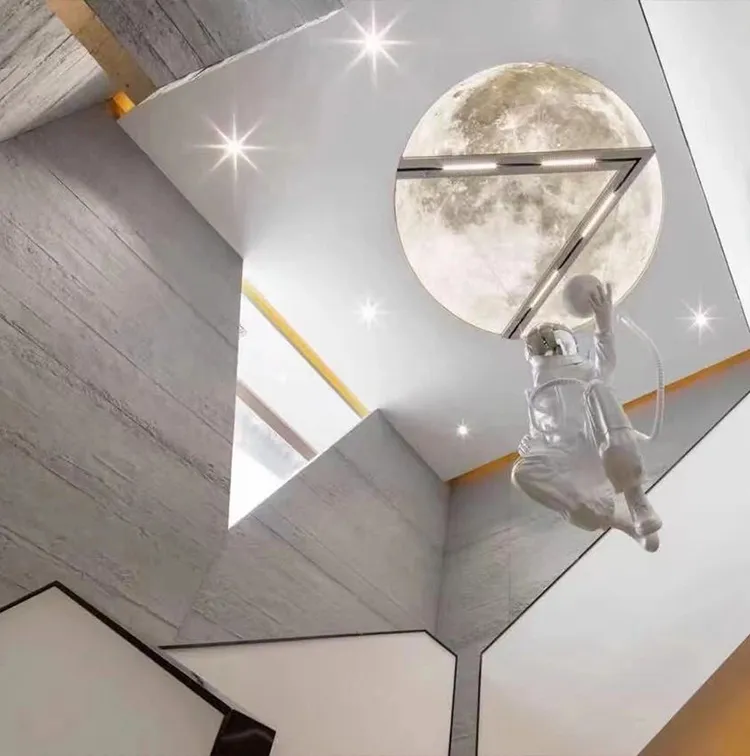
One of the most exciting aspects of 3D printed cement board is its chameleon-like ability to mimic other materials. Want the look of flexible stone cladding panels but with the lightweight benefits of cement? The 3D printing process can replicate the texture of travertine, slate, or even lunar peak silvery finishes with accuracy. For designers aiming for industrial chic, there are options that mimic fair-faced concrete or polish concrete , with smooth, matte surfaces that highlight the raw beauty of the material. And for projects with a warm, organic vibe, wood grain patterns or bamboo mat board textures can be embedded directly into the panel during printing.
In an era where "green building materials" are no longer a trend but a requirement, 3D printed cement board shines. Traditional cement production is notoriously carbon-intensive, but MCM's process cuts waste dramatically. Since the material is deposited only where it's needed, there's minimal excess—unlike traditional casting, which often requires molds and leaves leftover slurry. Additionally, the lightweight nature of the panels reduces transportation emissions, and their durability means less frequent replacement, lowering the lifecycle environmental impact. It's a material that doesn't just build better buildings; it builds a better planet.
The true measure of any construction innovation is how it performs on the job site. Here, 3D printed cement board and prefabricated mcm panel systems are changing the game, turning months-long projects into weeks and giving architects the freedom to dream bigger.
| Aspect | Traditional Cement Board | MCM 3D Printed Cement Board |
|---|---|---|
| Installation Time | 4-6 weeks for a 1,000 sqm facade (including cutting, fitting, and sealing) | 1-2 weeks for the same area (prefabricated panels, click-and-lock installation) |
| Weight | 25-30 kg/sqm | 12-15 kg/sqm (50% lighter) |
| Customization | Limited to standard sizes and textures; custom designs require expensive molds | Unlimited—any texture, pattern, or size possible via digital design; no mold costs |
| Waste Generated | 15-20% material waste (cutting to size, offcuts) | Less than 3% waste (precision printing, minimal offcuts) |
Take, for example, a recent project in downtown Dubai: a 15-story office building with a facade designed to mimic the ripples of sand dunes. Traditional methods would have required hand-carving each panel or using expensive 3D-molded stone, a process that would have added months to the timeline and blown the budget. Instead, the architects turned to MCM's 3D printed cement board. The panels were designed digitally, printed off-site in just 10 days, and installed in under two weeks. The result? A building that looks like it was sculpted by wind and time, at a fraction of the cost and time.
Another standout application is heritage restoration. When renovating a 19th-century railway station in Europe, preservationists needed panels that matched the original historical pathfinders stone but with modern structural integrity. MCM's 3D printers scanned the original stonework, replicated the weathered texture and color, and produced panels that blend seamlessly with the old masonry—proving that innovation and tradition can coexist beautifully.
It's not just about speed or sustainability—3D printed cement board is resonating because it solves real, everyday problems for architects, contractors, and even building owners. Let's break down the most compelling reasons it's becoming a go-to material:
Architects often have to choose between "what looks good" and "what's possible." With 3D printed panels, that choice disappears. Want a facade that curves gently like a wave? Or a lobby wall with a 3D relief map of the city? It's all doable. The mcm 3d printing series includes options like wave panel and thread textures, but the real power is in custom designs. One firm even printed panels with embedded LED lights, turning the building into a canvas for nighttime art—something unthinkable with traditional cement.
Labor is one of the biggest costs in construction, and 3D printed panels slash it dramatically. Since they're prefabricated and lightweight, a small crew can install them quickly—no heavy lifting equipment or specialized masonry skills needed. Add in reduced waste and faster project timelines (which mean lower financing costs), and the savings can be as much as 30% compared to traditional cladding materials.
Sustainability isn't just a buzzword—it's a requirement for many projects, especially in eco-conscious markets like Europe and North America. 3D printed cement board checks all the boxes: lower carbon footprint, minimal waste, and panels that can be recycled at the end of their life. When paired with other green building materials like foamed aluminium alloy board (vintage silver) or bamboo mat board , it helps projects earn LEED or BREEAM certifications, opening doors to grants and tax incentives.
The future of 3D printed construction materials is bright, and MCM is leading the charge. Looking ahead, we can expect even more innovations: panels embedded with sensors that monitor structural health, self-cleaning coatings inspired by slate veil white or marble veil white that resist dirt, and even bio-based additives that make the material carbon-negative. Imagine a building that not only uses less energy but actively removes CO2 from the air—that's the kind of breakthrough on the horizon.
There's also the potential for mass customization at scale. As 3D printing technology becomes more accessible, even small-scale projects—like a home renovation or a boutique café—could afford custom-designed panels. Picture a family choosing a facade pattern that tells their story, or a restaurant owner printing panels that match the theme of their menu. Buildings would no longer be generic; they'd be as unique as the people who use them.
3D printed cement board isn't just a new material—it's a new way of thinking about construction. It's about merging technology with art, efficiency with sustainability, and possibility with practicality. For MCM, the mcm 3d printing series is more than a product line; it's a commitment to pushing the boundaries of what buildings can be—stronger, more beautiful, and more in tune with the needs of people and the planet.
As we stand on the edge of this construction revolution, one thing is clear: the buildings of tomorrow won't just be built—they'll be printed, designed, and crafted with a level of care and creativity that was once unimaginable. And at the heart of it all? Materials like MCM's 3D printed cement board, turning blueprints into realities, and spaces into stories.
So whether you're an architect sketching the next iconic skyline, a builder racing to meet a deadline, or a homeowner dreaming of a space that feels uniquely yours—keep an eye on 3D printed cement board. It's not just changing construction. It's changing the way we live in the world.
Recommend Products












