Walk into any building—an old library with stone walls that hum with history, a sleek modern café with glass and steel—and you'll feel it immediately: materials shape more than just a structure. They shape mood, memory, and how we connect with the spaces we inhabit. For architects, this truth is both a thrill and a challenge. For decades, the industry has leaned on tried-and-true materials—marble, concrete, traditional stone—each with their own beauty but also their own constraints. Rigid, heavy, and often resistant to the wild, imaginative shapes that modern design demands. Enter 3D Printed
Cloud Stone, a standout innovation from the
MCM 3D Printing Series, and suddenly, the rulebook for architectural materials is being rewritten. This isn't just a new material; it's a conversation starter between technology and artistry, a way to turn bold ideas into tangible, touchable spaces.
The End of "Good Enough": Why Traditional Materials Are No Longer Cutting It
Think about the last time you saw a building that made you stop and stare. Chances are, it wasn't just the size that caught your eye—it was the details. The curve of a facade that mimics a wave, the texture of a wall that feels like it was carved by wind, the way light plays on a surface that's anything but flat. These are the moments that make architecture feel alive. But for too long, bringing these moments to life meant fighting against the limitations of traditional materials. Natural stone, for all its grandeur, is heavy and unforgiving. To get a custom shape, you'd need to carve it by hand or use expensive machinery, often sacrificing durability or blowing budgets. Concrete, while versatile, can feel cold and monotonous when overused. Even newer cladding options often come in standard sizes, leaving architects to "design around" the material rather than with it. It's the architectural equivalent of trying to paint a masterpiece with only three colors—you can make something nice, but never the exact vision in your head.
And then there's the practical side. Modern buildings need to be lighter to reduce structural stress, more sustainable to meet green standards, and faster to install to keep projects on schedule. Traditional stone slabs? Heavy, requiring reinforced framing. Custom concrete molds? Time-consuming and wasteful if a design changes mid-project. Architects and builders were stuck choosing between "what's possible" and "what's perfect." That is, until
Cloud Stone arrived.
Meet Cloud Stone: Where 3D Printing Meets the Soul of Natural Stone
Let's get one thing straight: 3D Printed
Cloud Stone isn't some cold, synthetic substitute for natural beauty. It's a love letter to stone—reimagined. Part of the
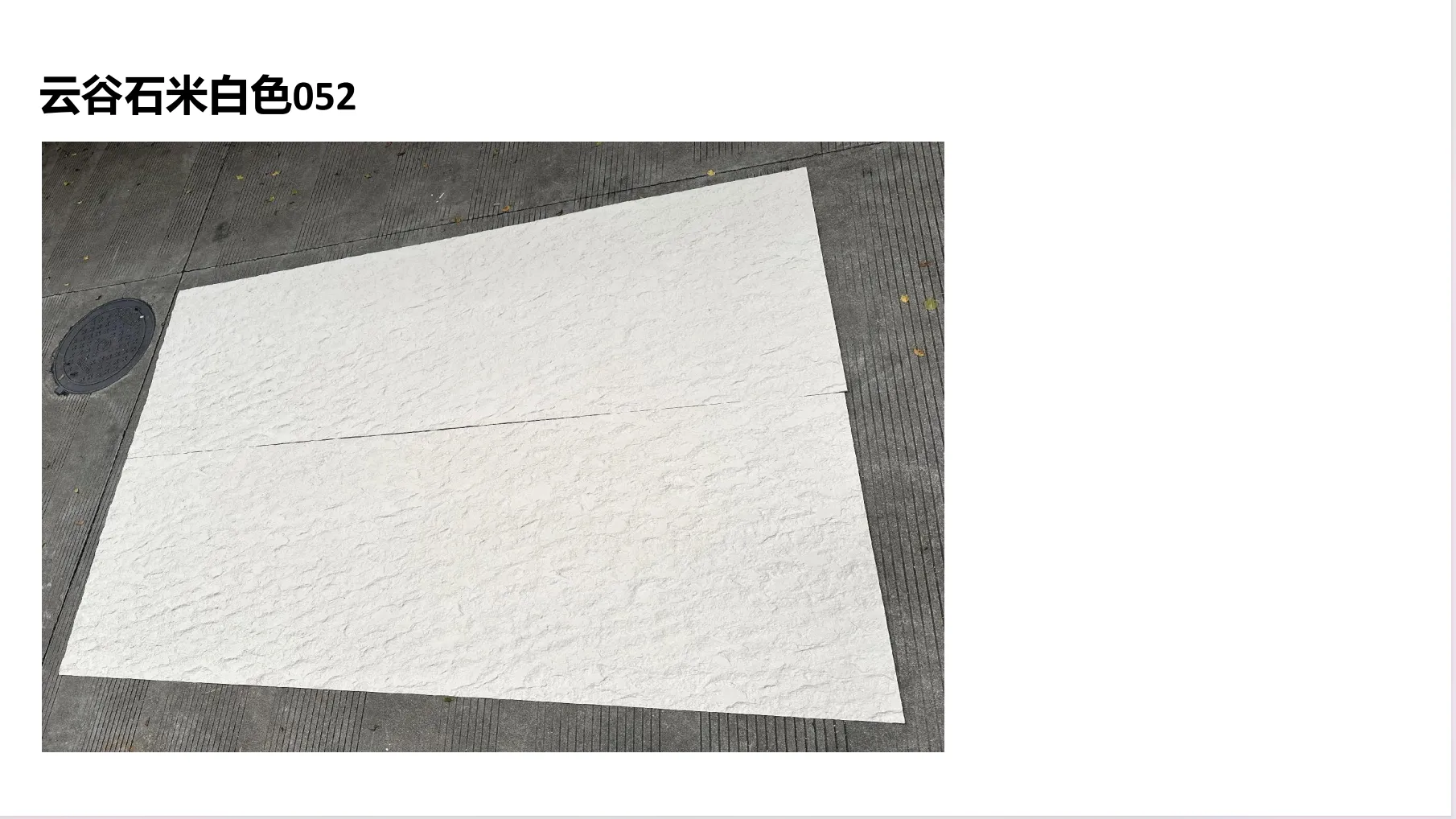
MCM 3D Printing Series, this material starts with the best of both worlds: the organic texture and warmth of natural stone, blended with the precision and flexibility of advanced 3D printing technology. The result? A lightweight, durable cladding solution that can be shaped into almost anything you can sketch. Imagine a wall that undulates like dunes at dawn, or a facade dotted with indentations that look like raindrops frozen in time—no hand-carving required.
Cloud Stone makes it possible, and it does so without losing the tactile, earthy quality that makes stone such a beloved material.
At its core,
Cloud Stone is a type of flexible stone cladding panel, but that term barely does it justice. "Flexible" here doesn't mean flimsy; it means adaptable. The material is engineered to bend, curve, and contour to complex designs while maintaining strength. It's also surprisingly lightweight—up to 60% lighter than traditional stone slabs—making it easier to transport, install, and integrate into both new builds and renovations. And because it's 3D printed, there's almost no waste. Traditional stone cutting can lose up to 30% of the raw material to offcuts; with 3D printing, you only use what you need. That's good for budgets, and even better for the planet.
Custom Shapes: The Architect's Dream, Delivered
The real magic of
Cloud Stone lies in those two words: custom shapes. For architects, this is a game-changer. Let's say you're designing a cultural center inspired by the local landscape—rolling hills, winding rivers. With traditional materials, you might approximate those forms with straight lines and flat panels, diluting the connection to the environment. With
Cloud Stone, you can 3D print panels that exactly match the curvature of those hills, or mimic the ripples of the river. No compromises, no "close enough." It's design freedom, pure and simple.
Take, for example, the concept of "biophilic design"—the idea that connecting buildings to nature improves well-being.
Cloud Stone makes this easier than ever. A school looking to create a calming courtyard could line the walls with
Cloud Stone panels shaped like leaves, their edges soft and organic, their texture rough enough to invite kids (and adults) to run their hands over them. A hotel aiming for a desert-inspired aesthetic could use panels that look like wind-eroded rock formations, each one unique, thanks to 3D printing's ability to replicate natural irregularities without the waste. Even commercial spaces, often stuck in "boxy" designs, can break free: imagine a retail store with a facade that looks like a cloud floating above the street, its shape so fluid it seems to shift as you walk past. These aren't just "cool" ideas—they're spaces that make people feel something. And that's the point of architecture, isn't it? To create places that stick in our memories.
Of course, beauty alone isn't enough. A material has to work as hard as the architects who choose it.
Cloud Stone, as part of the
MCM 3D Printing Series, checks all the practical boxes, starting with durability. Don't let the "flexible" label fool you—this material is built to last. It's resistant to weather, UV rays, and even minor impacts, making it suitable for both interior and exterior use. Unlike some lightweight cladding options that fade or crack over time,
Cloud Stone maintains its color and texture, even in harsh climates. That means less maintenance, fewer repairs, and a building that looks just as stunning in 20 years as it did on day one.
Then there's installation. Traditional stone cladding can take weeks to install, with teams carefully lifting heavy slabs and securing them one by one.
Cloud Stone panels, being lightweight and pre-cut to custom shapes, can be installed in a fraction of the time. This isn't just about saving money (though that's a nice bonus); it's about keeping projects on track, reducing disruption to communities, and letting architects see their vision come to life faster. For contractors, it means fewer labor hours and less risk of on-site accidents. For building owners, it means opening their doors sooner. It's a win-win for everyone involved.
And let's talk sustainability—a topic that's no longer optional in architecture. The
MCM 3D Printing Series prides itself on eco-friendly innovation, and
Cloud Stone is no exception. The 3D printing process uses precise amounts of material, minimizing waste, and the base ingredients include recycled stone aggregates and low-VOC binders, reducing its carbon footprint. Compared to quarrying natural stone, which can disrupt ecosystems and consume massive amounts of energy,
Cloud Stone's production is a more responsible choice. It's a material that lets architects design with their hearts and their consciences.
How Does Cloud Stone Stack Up? A Side-by-Side Look
|
Feature
|
Traditional Natural Stone
|
Standard Concrete Cladding
|
3D Printed Cloud Stone (MCM Series)
|
|
Custom Shape Capability
|
Limited (requires expensive carving; risk of breakage)
|
Basic (molds needed; hard to change designs)
|
Unlimited (3D printed to exact specs; no molds required)
|
|
Weight (per sqm)
|
25–40 kg
|
15–20 kg
|
8–12 kg
|
|
Installation Time
|
Slow (heavy lifting; precise alignment)
|
Moderate (mold setup; curing time)
|
Fast (lightweight panels; pre-cut for easy fit)
|
|
Sustainability
|
Low (quarrying impacts ecosystems; high waste)
|
Moderate (recyclable but energy-heavy production)
|
High (recycled materials; minimal waste; low-VOC)
|
|
Texture & Warmth
|
High (natural, unique texture)
|
Low (often smooth, uniform, cold feel)
|
High (mimics natural stone texture; organic warmth)
|
From Sketch to Skyline: Where Cloud Stone Is Making Its Mark
It's one thing to talk about a material's potential; it's another to see it in action. Let's paint a picture: a coastal art museum wants to honor the ocean that surrounds it. The architect's vision? A facade that looks like waves frozen mid-crash, with undulating curves and textured "foam" details. Traditional stone would require hundreds of custom-carved pieces, each heavy enough to require structural reinforcement. With
Cloud Stone, the design team 3D prints the panels in sections, each one shaped to fit the next like a puzzle. The result? A building that seems to rise from the sea, its walls shifting color as sunlight reflects off them, just like water. Visitors don't just see the museum—they feel the ocean's energy, even before stepping inside. That's the power of
custom MCM exterior panels done right.
Or consider a residential project: a family wants a home that feels like a retreat, with a backyard wall that looks like a natural stone cliff, complete with nooks for plants and seating. Traditional stone would be too heavy for the existing structure, and prefab concrete blocks would look generic.
Cloud Stone panels, lightweight and shaped to mimic real cliff textures, are installed in days. Now, the family has a wall that's both functional (it hides a utility area) and beautiful, a place where kids climb, adults relax, and everyone feels connected to nature. It's not just a wall—it's a part of their daily life.
Even cultural spaces are benefiting. A theater in a historic district wants to blend old and new: preserving its classic architecture but adding a modern extension that nods to the performing arts. The extension's facade, made with
Cloud Stone panels shaped like musical notes and flowing lines, becomes a visual metaphor for creativity. At night, LED lights behind the panels make the notes glow, turning the building into a landmark that celebrates both heritage and innovation. It's a reminder that materials don't just fill space—they tell stories.
The Future of Architecture: When Materials Keep Up with Imagination
So, what's next for 3D Printed
Cloud Stone and the
MCM 3D Printing Series? If the past few years are any indication, the only limit is how far we're willing to dream. As 3D printing technology advances, we can expect even more intricate designs—think panels with built-in lighting, or textures that change based on temperature. Imagine a hospital where the walls, made of
Cloud Stone, have a texture proven to reduce anxiety in patients, or a school where the facade doubles as a learning tool, with 3D printed maps or constellations embedded in the panels. The line between "material" and "experience" is blurring, and
Cloud Stone is leading the charge.
For architects, this means a future where "I wish we could" becomes "We can." No more scaling back ideas to fit what's available. No more compromising on the details that make a space feel human. It means designing buildings that are as unique as the people who use them—buildings that inspire, comfort, and connect us. And for the rest of us? It means living in a world where architecture doesn't just serve a function; it lifts our spirits.
Final Thoughts: Building Spaces That Matter
At the end of the day, architecture is about people. It's about the teacher who feels energized in a bright, textured classroom, the commuter who smiles at a building that looks like it was made just for their city, the family that turns a house into a home because the walls feel like they belong. 3D Printed
Cloud Stone, as part of the
MCM 3D Printing Series, isn't just changing how we build—it's changing how we feel about the spaces we inhabit. It's a reminder that the best innovations aren't just about technology; they're about heart. They're about giving creators the tools to make the world a little more beautiful, one custom shape at a time. So here's to the architects, the dreamers, and the materials that finally let them say, "Let's build it." The future of architecture is flexible, it's creative, and it's here—one
Cloud Stone panel at a time.