
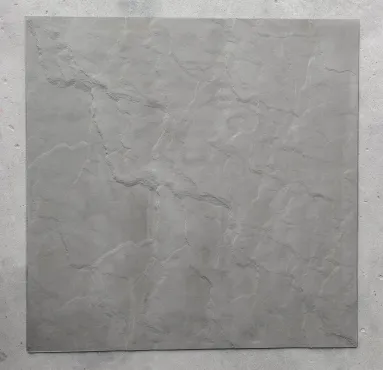
In the world of architecture and design, we're constantly searching for the next big thing—the material that will redefine our spaces, the technique that will unlock our creativity. For decades, we've revered natural stone for its beauty and permanence. But let's be honest, working with it has always been a battle. It's heavy, it's wasteful, and it often forces designers to compromise. Today, we're standing at the threshold of a new era, one where technology is not just enhancing our materials but completely reimagining them. This is the story of how 3D printed stone is turning the page, with innovators like COLORIA GROUP leading the charge to create stunning, custom projects without the environmental price tag.
Before we can truly appreciate the revolution, we need to understand the old regime. Think about any major construction project you've seen. What are the go-to materials for a premium finish, especially on facades and feature walls? Marble, granite, travertine—the heavyweights of the natural stone world. Their appeal is undeniable. Each slab tells a geological story millions of years in the making. But the story we often don't talk about is the one that happens *before* it gets to the building site.
The fundamental process of working with natural stone is "subtractive." You start with a massive block, quarried from a mountainside, and you cut, grind, and polish away everything that isn't your final design. The waste generated in this process is staggering. For every finished slab of marble, a significant percentage of the original block is turned into dust, rubble, and unusable off-cuts. If a complex curve or an intricate pattern is required, the waste percentage skyrockets. It's like buying a whole tree just to carve a single spoon.
This waste isn't just a matter of discarded rock. It represents wasted energy—the energy to quarry, the fuel to transport immense weight from the mountain to the processing plant, and the electricity to power the saws and grinders. Furthermore, mistakes are incredibly costly. A miscalculation or a crack during fabrication means that an entire, expensive slab might have to be discarded, setting the project back in both time and budget. This inherent risk often discourages designers from pushing creative boundaries, leading them to favor simpler, safer, and ultimately more generic designs.
Beyond the waste, there's the sheer physics of it all. Natural stone is incredibly heavy. This has a domino effect on the entire construction process. Buildings need stronger, more expensive structural support to bear the load of a stone facade. Transportation costs are immense, contributing significantly to the project's carbon footprint. On-site installation is a labor-intensive, hazardous process requiring specialized equipment and skilled crews.
From a design perspective, the limitations are just as frustrating. The size of the slabs is dictated by what can be quarried and transported. Creating seamless, large-scale features is challenging, often resulting in visible joint lines that break the aesthetic flow. Complex geometries, organic curves, and three-dimensional textures are either impossible or so prohibitively expensive that they remain confined to the most luxurious, budget-unconstrained projects. The material, in essence, dictates the design, not the other way around. This is the core problem that innovators in the building materials industry have been working tirelessly to solve.
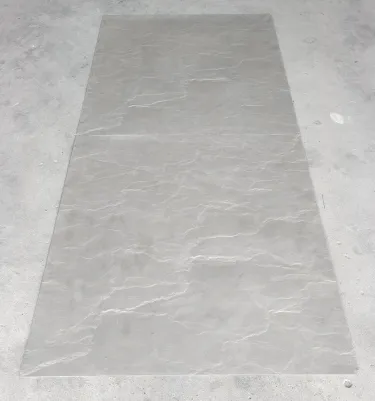
Every great revolution needs a catalyst, a foundational breakthrough that makes everything else possible. In the world of modern building materials, that breakthrough is **Modified Cementitious Material**, or MCM. Before we can even talk about 3D printing, we have to understand this remarkable class of materials that COLORIA GROUP has mastered. It's the "clay" from which the future is being molded.
So, what exactly is it? In simple terms, MCM is an advanced composite material. Imagine taking natural elements like soil, sand, and stone powder, and blending them with eco-friendly binders and modifying agents under a specific scientific process. The result is a material that has the soul and texture of natural elements but with superpowers that stone and clay can only dream of. It's not plastic, it's not resin—it's an evolution of earth itself.
One of the most mind-bending properties of MCM is its versatility. Depending on the formulation, it can be made into a wide array of products. A prime example from COLORIA GROUP's portfolio is **MCM Flexible Stone**. This product looks and feels like a thin slice of real slate or sandstone, yet it can be bent around curved columns, corners, and archways without cracking. It achieves the aesthetic of solid stone at a fraction of the weight and with installation ease that is simply unparalleled. This flexibility demonstrates the core potential of the base material—it can be engineered to fit the form, rather than forcing the form to fit the material.
Beyond flexibility, MCM is incredibly durable. It's resistant to fire, water, freeze-thaw cycles, and fading from UV exposure. This makes it an ideal choice for both stunning interior feature walls and resilient exterior facades. But perhaps its most important characteristic in today's world is its sustainability. The production process requires significantly less energy than firing traditional ceramic tiles or quarrying natural stone. Because it's primarily composed of natural, often recycled, mineral powders, it helps reduce the burden on our planet's resources. This is the very essence of **eco-friendly wall decoration**—achieving beautiful, lasting results with a clear conscience.
Now, let's combine the incredible potential of Modified Cementitious Material with the precision and freedom of 3D printing. This is where the magic truly happens. If MCM is the perfect ink, then 3D printing is the pen that can write in any language, draw any shape, and build any texture imaginable.
The process, championed by COLORIA GROUP through its **MCM 3D Printing** series, is the polar opposite of the wasteful subtractive method. It's an "additive" process. Instead of starting with a big block and carving away, you start with nothing and build the design layer by painstaking layer. A specialized paste, formulated from the MCM base, is extruded through a nozzle guided by a digital design file (a CAD model). The printer meticulously lays down path after path, building up the object from the ground up.
Think of it this way: subtractive manufacturing is like a sculptor carving a statue from a block of marble, leaving a pile of chips on the floor. Additive manufacturing is like a potter building a complex vase coil by coil, using only the clay that's needed for the final form. The efficiency is self-evident.
This is where architects and designers can truly let their imaginations run wild. With MCM 3D printing, the constraints of traditional manufacturing simply dissolve.
This level of personalization makes it a dream for creating one-of-a-kind spaces. For a flagship retail store, a boutique hotel, or a corporate headquarters, this technology offers the ability to create an environment that is truly unique and reinforces the brand's identity. It transforms a wall from a simple boundary into a storytelling canvas. This is the pinnacle of providing **custom building materials**—it's not just about offering different colors or finishes, but about providing the tools to create something genuinely new.
As the title of this piece suggests, the most profound impact of this technology is its contribution to sustainability by drastically reducing material waste. The additive nature of **MCM 3D Printing** means that virtually 100% of the material is used in the final product. There are no off-cuts. There is no pile of stone dust. The only "waste" is the tiny amount of support material that might be needed for extreme overhangs, and even that is often recyclable.
The savings extend beyond the material itself. A digital error in a 3D model can be corrected with a few clicks of a mouse at zero cost. Compare that to the financial and material loss of a 500-kilogram slab of granite being cut incorrectly. Furthermore, because the final products, while strong, are significantly lighter than solid stone, the energy and carbon cost of transportation plummets. This holistic approach to efficiency—from raw material to final installation—is what makes this technology not just an aesthetic choice, but a responsible one. It aligns perfectly with the growing global demand for greener construction practices and circular economy principles.
Talk is one thing, but seeing the direct comparison really drives the point home. Let's put the "3D Printed Epoch Stone," built on the MCM platform, head-to-head with its traditional predecessor, quarried natural stone. For any project manager, architect, or client, the choice becomes remarkably clear.
| Feature | 3D Printed Epoch Stone (MCM) | Traditional Natural Stone |
|---|---|---|
| Customization & Complexity | Virtually unlimited. Complex geometries, integrated textures, and bespoke shapes are standard. | Highly limited. Complex shapes are extremely difficult, wasteful, and prohibitively expensive. |
| Material Waste | Near-zero. Additive process uses only the material required for the final product. | Very high. Subtractive process can waste 30-70% of the raw material block. |
| Weight | Lightweight. Reduces structural load requirements on the building. | Extremely heavy. Requires significant structural reinforcement and heavy machinery. |
| Transportation & Carbon Footprint | Lower. Reduced weight leads to significantly lower fuel consumption and emissions. | High. Transporting heavy blocks and slabs over long distances is energy-intensive. |
| Installation | Faster, safer, and less labor-intensive due to lighter weight and precise manufacturing. | Slow, hazardous, and requires specialized, expensive labor and equipment. |
| Design & Prototyping | Rapid and cheap. Digital models can be iterated quickly. Small-scale prints can validate design. | Slow and expensive. Prototyping requires cutting actual stone, a costly and time-consuming process. |
| Consistency | Perfect. Every panel can be an exact replica of the digital model, ensuring a flawless fit. | Variable. Natural variations, fissures, and breakages are common challenges. |
| Environmental Impact | Low. Uses less energy, incorporates recycled materials, and eliminates quarrying scars. | High. Quarrying damages landscapes, processing and transport are energy-heavy. |
What this all amounts to is more than just a new product. It's a new language for design and construction. For decades, COLORIA GROUP has built its expertise in the building materials industry, establishing a global presence and a reputation for quality. Their focus on the MCM product series is not just about selling panels; it's about providing a complete ecosystem for modern construction. As a **one-stop solution provider**, they are empowering the industry to build better, smarter, and more sustainably.
Imagine the possibilities this unlocks. In booming markets like Saudi Arabia, where giga-projects are reshaping the landscape, the need for innovative, sustainable, and rapidly deployable building solutions is immense. Technologies like MCM 3D printing are not a luxury; they are a necessity to achieve the ambitious architectural visions of the 21st century. Instead of identical glass towers, we can envision facades with intricate, culturally-inspired patterns that tell a story. Instead of flat, uninspired lobbies, we can create immersive, three-dimensional experiences that captivate visitors from the moment they walk in.
The era of compromising creative vision due to material limitations is drawing to a close. The epoch of wasteful, energy-intensive construction is being challenged by a smarter, more elegant alternative. The advent of 3D Printed Epoch Stone, built upon the versatile and eco-friendly foundation of **Modified Cementitious Material**, represents a pivotal shift. It's a technology that serves the designer's imagination, the builder's schedule, the client's budget, and the planet's health.
The next time you look at a building, don't just see walls. See a canvas. And know that with the tools now at our disposal, thanks to forward-thinking companies like COLORIA GROUP, the masterpieces we can create are limited only by our imagination. The future of architecture is not just being built; it's being printed.
Recommend Products












