Let's start with a story we've all heard (or lived). A local furniture maker, let's call her Mia, spends weeks sketching a custom bookshelf for a client. The design? Soft, flowing curves that mimic the hills outside town—nothing sharp, nothing boxy. But when she heads to her workshop to carve the pieces from
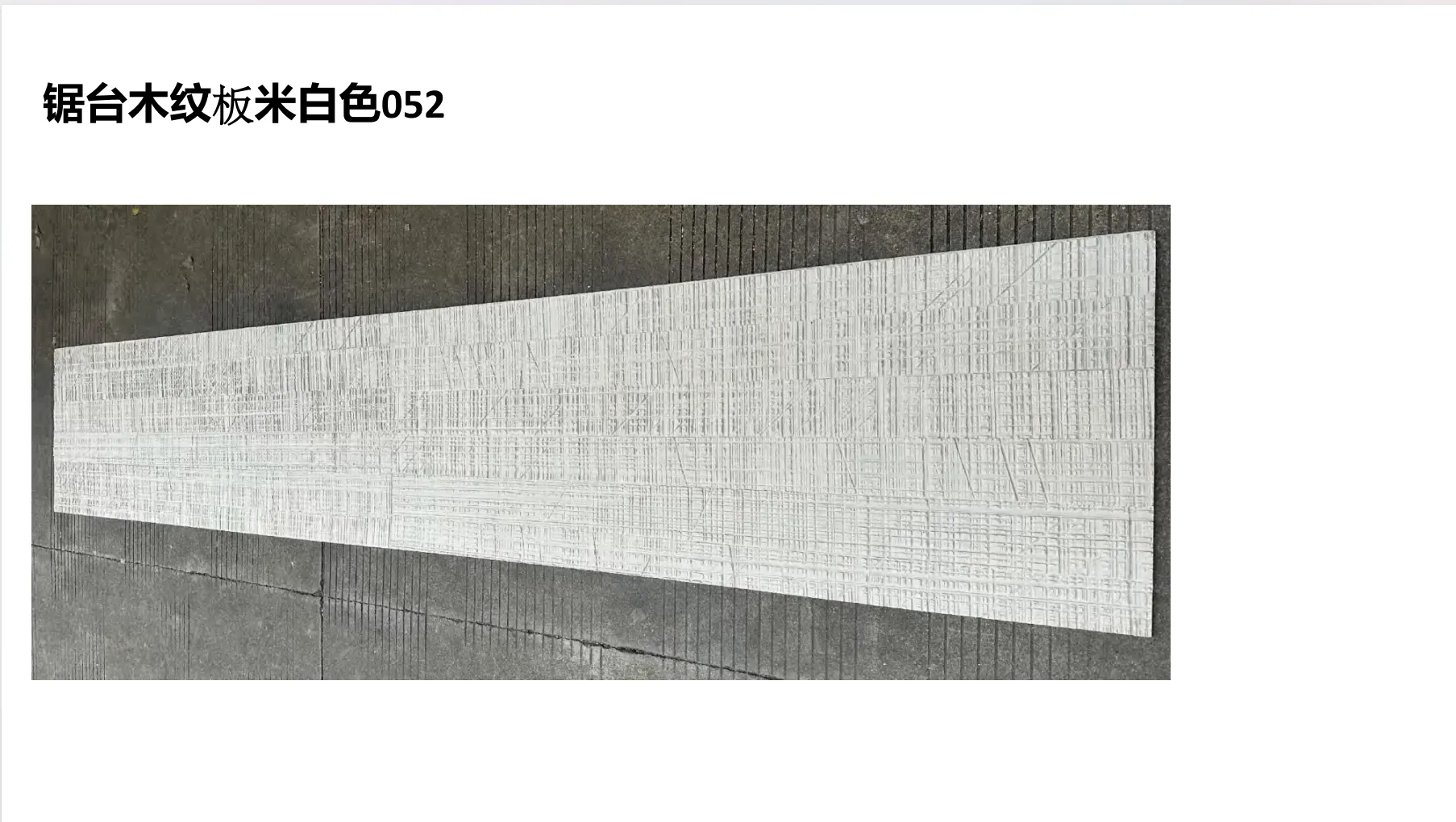
sawing wood boards, reality hits hard. The wood splits when she tries to bend it. The curves come out lopsided, more "wobbly line" than "rolling hill." By the third failed attempt, she's stuck: either simplify the design to straight edges (boring, but safe) or risk wasting more wood, time, and the client's trust. Sound familiar? For decades, traditional materials like
sawing wood boards have been the backbone of design—but they've also been its biggest roadblock. Enter 3D printed MCM: a revolution that's turning "impossible" shapes into everyday reality.
The Problem with "Traditional": Why Sawing Wood Boards Are Holding Us Back
Let's get real about
sawing wood boards. They're reliable, sure. We've built homes, offices, and art with them for centuries. But reliable doesn't mean perfect. For starters, they're stuck in the "subtractive" mindset: you start with a big block and cut away until you get the shape you want. That's not just time-consuming—it's wasteful. Mia's failed bookshelf? She tossed over 20 square feet of usable wood because the curves didn't work. Multiply that by every carpenter, designer, and builder in the world, and you're looking at a mountain of waste.
Then there's the "rigidity" problem. Wood is organic, but it's not flexible.
Sawing wood boards can handle straight lines, basic angles, or shallow curves if you're careful, but anything more complex—say, a wave-like wall panel or a spiral staircase riser—requires specialized tools, expert craftsmanship, and a whole lot of luck. Even then, the end result often lacks precision. The grain of the wood can warp over time, or the joins between curved pieces weaken under stress. And let's not forget weight: solid wood boards are heavy, making installation a two-person job (or a trip to the chiropractor).
It's not just about wood, either. Traditional stone, concrete, or metal sheets come with their own baggage. Stone cracks if you try to mold it. Concrete is hard to shape once it sets. Metal? Sure, you can bend it, but complex geometries require expensive molds that only make sense for mass production, not one-off custom projects. For small businesses, indie designers, or anyone chasing something "unconventional," the math doesn't add up. Why dream big when the materials will just let you down?
3D Printed MCM: What Even Is It? (Spoiler: It's Not Just "Fancy Plastic")
Let's break down the jargon first. MCM stands for Modified Composite Material—a blend of polymers, minerals, and recycled fibers that's lighter than stone, stronger than wood, and infinitely more adaptable. And 3D printing? It's exactly what it sounds like: building objects layer by layer, using digital designs, instead of cutting or carving. Combine them, and you get the
mcm 3d printing series—a lineup of materials that's changing the game for architects, designers, and DIYers alike.
Here's why it matters: 3D printed MCM flips the script from "subtractive" to "additive." Instead of cutting away material, you add it—grain by grain, layer by layer—exactly where it's needed. No waste, no guesswork, no cracked wood or lopsided curves. And the materials themselves? They're stars. Take flexible stone, for example. It looks and feels like natural stone—rough texture, earthy tones—but bend it? Twist it? It flexes like rubber. Then there's the
mcm big slab board series: massive, seamless panels (up to 10 feet long!) that weigh a fraction of traditional stone slabs. Imagine installing a kitchen backsplash in one piece, no grout lines, no heavy lifting. That's the power of 3D printed MCM.
Design Freedom: From "No" to "Why Not?"
Let's circle back to Mia. With 3D printed MCM, her bookshelf design wouldn't just be possible—it'd be easy. She'd upload her 3D model to the printer, choose a material (maybe flexible stone for that organic feel, or a foamed aluminium alloy board (vintage silver) for a modern twist), and hit "print." The printer would lay down layer after layer of material, following her curves exactly. No splits, no waste, no stress. The end result? A bookshelf that looks like it was sculpted by wind, not a saw. That's the magic of design freedom—and it's not just for furniture.
Architects are using 3D printed MCM to create building facades that look like they're alive. Imagine a hotel exterior with undulating wave panels, each one slightly different, catching the light as the sun moves. Or a restaurant wall made of semicircle boards, arranged to look like ripples in a pond. These shapes would've been unthinkable with traditional materials—too expensive, too hard to install, too fragile. But with 3D printed MCM, they're just… projects.
Even small-scale designers are getting in on the fun. A jewelry maker in Portland uses the
mcm 3d printing series to create statement necklaces with intricate lattice patterns—so delicate, you could mistake them for lace. A café owner in Tokyo printed custom light fixtures that mimic cherry blossoms, their petals thin enough to glow softly when lit. These aren't just "products"—they're stories, told through shape and texture. And none of them would exist without 3D printed MCM.
Let's meet the MVPs. The
mcm 3d printing series isn't just one material—it's a toolbox, and each tool has a superpower. Here are the ones changing the game:
Flexible Stone:
The chameleon of the group. It's as strong as traditional stone but can bend up to 30 degrees without breaking. Perfect for curved walls, custom furniture, or even decorative accents like wall art. Pro tip: Pair it with the
mcm big slab board series for a seamless look—imagine a living room wall where the fireplace surround (flexible stone) flows into the adjacent big slab board, no visible joins.
Foamed Aluminium Alloy Board (Vintage Silver):
Sleek, modern, and lightweight. This stuff looks like brushed metal but weighs half as much as solid aluminium. It's water-resistant, fireproof, and scratch-resistant—ideal for high-traffic areas like lobbies or kitchen backsplashes. Designers love it for its "industrial chic" vibe, especially when paired with warm woods or soft fabrics.
Big Slab Board Series:
The workhorse. These massive panels (up to 12 feet long and 4 feet wide) are a godsend for large-scale projects. Install a big slab board as a kitchen countertop, and you'll never see a seam. Use it for a bathroom wall, and you'll cut installation time by 50%. They come in a range of finishes, too—from matte concrete to glossy marble-lookalikes.
And the best part? These materials play well together. Mix flexible stone with foamed aluminium alloy board (vintage silver) for a wall that's both organic and futuristic. Pair big slab boards with
sawing wood accents (yes, you can still use wood—just let MCM handle the hard parts!) for a blend of old and new. The possibilities are endless, and that's the point.
Sustainability: Less Waste, More World
Let's talk about the planet. Traditional materials like
sawing wood boards are resource-heavy. Deforestation, water usage, and carbon emissions from logging and transportation are real issues. And remember Mia's waste? That's not just a loss for her business—it's a loss for the environment. 3D printed MCM, on the other hand, is built on sustainability. Most MCM materials are made from recycled content: plastic bottles, industrial byproducts, even old concrete. The additive manufacturing process means zero waste—you only use the material you need. And since the
mcm 3d printing series is lightweight, shipping it produces fewer emissions than hauling heavy stone or wood.
Take the big slab board series, for example. A traditional stone slab weighs around 200 pounds per square foot. A big slab board? Just 30 pounds. That means fewer trucks on the road, less fuel burned, and lower carbon footprints for projects big and small. And flexible stone? It's made with 60% recycled minerals, so every panel you use is a step toward reducing mining waste. For businesses and homeowners alike, sustainability isn't just a "nice-to-have"—it's a priority. 3D printed MCM makes it easy to choose both beauty and responsibility.
Case Study: The "Flowing" Café That Almost Wasn't
In downtown Austin, a new café called "Ripple" wanted to live up to its name. The owner, Carlos, dreamed of a space where every surface felt like moving water—curved counters, wave-like walls, even ceiling panels that looked like they were rippling. Traditional contractors told him it was impossible. "Wood can't do that," they said. "Stone is too heavy. You'll need to stick to drywall and paint." Carlos almost gave up… until he found 3D printed MCM.
The solution? A mix of flexible stone for the walls (shaped into soft waves), big slab boards for the counters (seamless, so they look like a single pool of stone), and foamed aluminium alloy board (vintage silver) for the ceiling accents (lightweight enough to hang without extra support). The result? A café that feels like stepping into a tide pool. Customers rave about the "calming" vibe, and Carlos? He's already planning a second location. "3D printed MCM didn't just build my café," he says. "It built my brand."
The Future: Where 3D Printed MCM Takes Us Next
So, what's next? The
mcm 3d printing series is just getting started. Researchers are experimenting with self-healing MCM materials (imagine a scratch on your countertop that disappears overnight) and even materials that change color with temperature. Architects are talking about 3D printed entire houses using MCM—affordable, sustainable, and uniquely shaped. And for everyday designers? The barrier to entry is dropping. Home 3D printers for MCM are getting smaller, cheaper, and easier to use. In five years, Mia the furniture maker might have a 3D printer in her workshop, churning out custom pieces while she sips coffee and sketches her next big idea.
The bottom line? 3D printed MCM isn't just a new material—it's a new way of thinking. It's about ditching the "this is how we've always done it" mindset and embracing "what if?" It's about letting creativity lead, not the limitations of
sawing wood boards or stone. And for anyone who's ever looked at a blank canvas (or a workshop full of wood) and thought, "I wish I could make something that's never been made before"—this is your moment. The future of design isn't rigid. It's flexible. It's 3D printed. And it's here.
Traditional vs. 3D Printed MCM: The Numbers Speak for Themselves
|
Feature
|
Traditional Sawing Wood Boards
|
3D Printed MCM (mcm 3d printing series)
|
|
Design Flexibility
|
Limited to straight lines and shallow curves; prone to cracking with complex shapes
|
Unlimited: organic curves, intricate patterns, and custom geometries with precision
|
|
Material Waste
|
High (15-20% of wood is wasted as off-cuts)
|
Low (additive manufacturing uses only needed material; ~5% waste)
|
|
Weight
|
Heavy (solid wood boards can weigh 30+ lbs per sq ft)
|
Lightweight (flexible stone: 10 lbs/sq ft; big slab boards: 15 lbs/sq ft)
|
|
Sustainability
|
Dependent on deforestation and high energy use for processing
|
Recycled materials, low energy use, and minimal waste
|
|
Installation Time
|
Long (requires cutting, sanding, joining, and finishing)
|
Fast (precisely printed parts fit together easily; up to 50% faster than wood)
|
Final Thought: It's Time to Stop Compromising
At the end of the day, design is about storytelling. Every shape, every texture, every material tells a story about who we are and what we value. For too long, traditional materials like
sawing wood boards have forced us to tell small stories—safe, simple, and same-old. 3D printed MCM lets us tell big stories: bold, beautiful, and uniquely ours. So, the next time someone says, "That can't be done," show them a
wave panel made of flexible stone. Show them a big slab board that bends like a ribbon. Show them Mia's bookshelf, finally brought to life. Then ask, "Why not?" Because with 3D printed MCM, the answer is no longer "because the material won't let us." It's "because we haven't imagined it yet."