
Walk into any construction site today, and you'll notice something different. Gone are the days when the air hung heavy with the scent of sawdust, and piles of wooden planks—each cut, sanded, and shaped by hand—dominated the landscape. Instead, there's a quiet hum of innovation: machines whirring, designers huddled over tablets, and walls, countertops, and facades taking shape in ways that once seemed impossible. This shift isn't just about new tools; it's about a material revolution. And at the heart of it lies 3D printed MCM—modified composite materials that are redefining what construction can be, far beyond the limitations of traditional options like sawing wood boards.
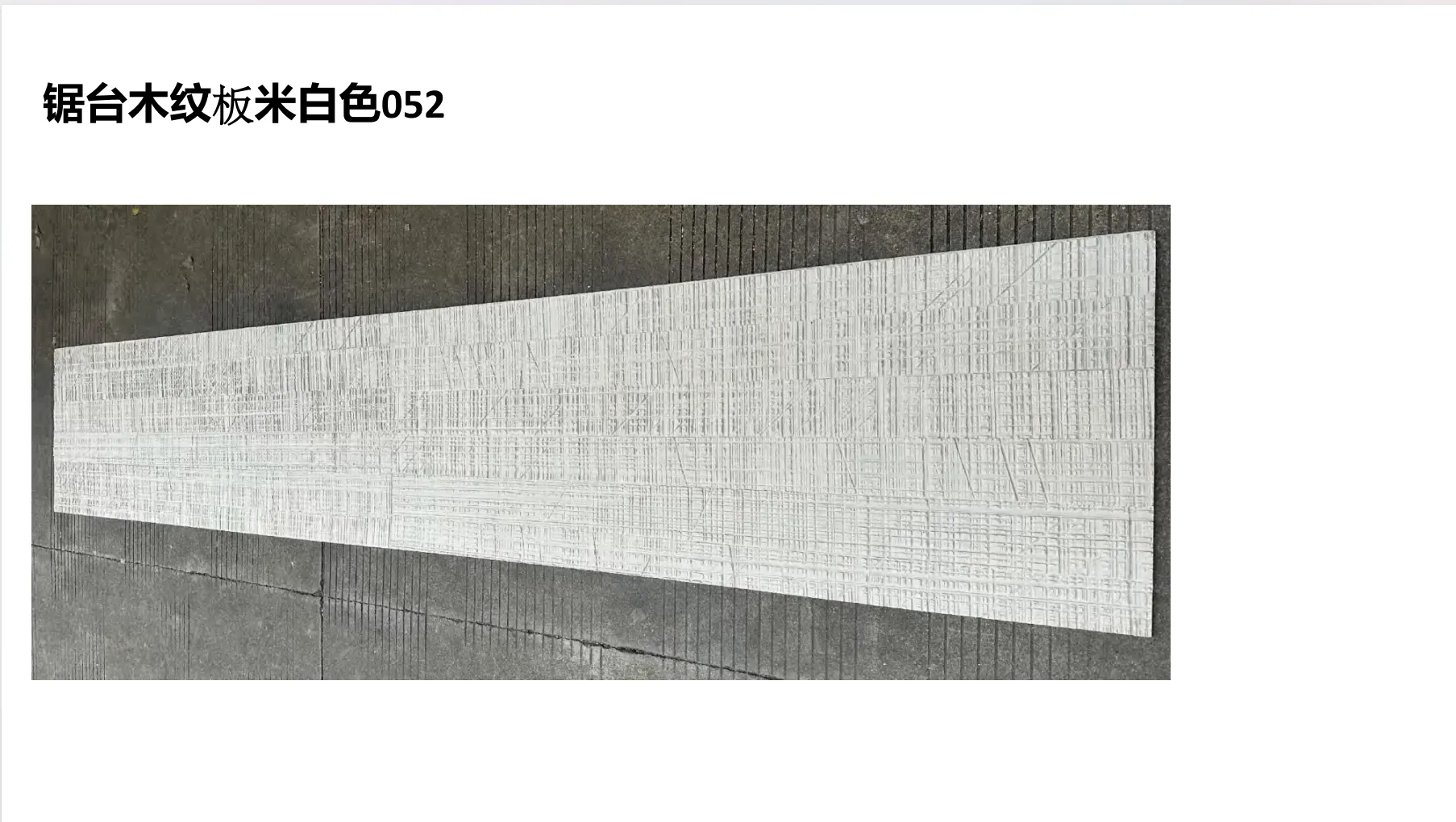
Let's start with the familiar: sawing wood boards. For centuries, wood has been a cornerstone of construction. It's warm, versatile, and has a natural charm that's hard to replicate. But anyone who's worked with it knows its flaws. Think about the process: logging trees (often from old-growth forests), transporting heavy trunks to mills, sawing them into planks, sanding away splinters, and treating them to resist rot or pests. It's labor-intensive, time-consuming, and wasteful—up to 30% of a tree can end up as sawdust or scraps. And even after all that effort, wood remains fragile: it warps in humidity, cracks in dry air, and is a feast for termites. In high-moisture areas like bathrooms or coastal homes, it's practically a ticking time bomb.
Then there are the design constraints. Sawing wood boards limits you to straight lines and standard sizes. Want a curved wall? You'd need to steam the wood, bend it, and hope it holds—a risky, expensive process. Need a large surface without seams? Good luck finding a single tree trunk wide enough. Wood, for all its beauty, is a material bound by nature's rules and human labor.
And it's not just wood. Traditional stone, concrete, and metal have their own issues: stone is heavy and hard to transport, concrete is rigid and slow to set, metal rusts and dents. Construction, for too long, has been a trade-off between durability, aesthetics, and practicality. But what if we could have it all?
MCM—short for Modified Composite Material—isn't a single product; it's a category of materials designed to solve the problems of the past. Imagine taking the best traits of stone, wood, and metal, stripping away the flaws, and adding a dash of 21st-century innovation. That's MCM. It's made by blending natural minerals (like limestone or granite) with high-performance polymers, creating a material that's lightweight, durable, and endlessly customizable. But it's when you add 3D printing to the mix that things really get exciting.
3D printed MCM isn't just about making things faster (though it does that). It's about unlocking design possibilities that were once unthinkable. Traditional manufacturing relies on molds or cutting tools, which restrict shapes to what's practical to produce. 3D printing, by contrast, builds objects layer by layer, using digital designs. Want a wall with a honeycomb pattern that's both decorative and structurally sound? Done. Need a countertop that curves like a wave? No problem. The only limit is the designer's imagination—and the software they use.
But let's get specific. What makes 3D printed MCM so revolutionary? Let's break it down:
To really understand the revolution, let's dive into a few standout products in the 3D printed MCM lineup. These aren't just materials—they're tools that let architects, builders, and homeowners reimagine spaces.
If you've ever tried to bend a stone, you know it doesn't end well. But flexible stone—one of the most exciting 3D printed MCM products—does exactly that. Picture a thin panel that looks and feels like natural travertine or slate but can curve around a column, wrap over a ceiling, or even form a wave-like facade. It's like giving stone a yoga lesson.
How does it work? The secret is in the composite blend. 3D printers layer ultra-fine stone particles with flexible polymers, creating a material that's rigid enough to stand up to the elements but pliable enough to be shaped into complex forms. Designers are going wild with it: imagine a restaurant with a curved wall that mimics a cliff face, or a home's interior where the backsplash flows up the wall and onto the ceiling, no sharp edges in sight. It's functional art, and it's only possible with 3D printed MCM.
Ever noticed how traditional countertops or flooring have seams? Those little lines where two boards or tiles meet? They're not just unsightly—they're magnets for dirt and grime. The big slab board series fixes that. These are massive, single-piece panels (some as large as 10 feet by 5 feet) printed in one go, creating seamless surfaces that look like they were carved from a mountain.
Think about a kitchen where the countertop, island, and backsplash are all one continuous slab—no cracks, no crevices, just smooth, uninterrupted beauty. Or a hotel lobby with a floor that stretches from wall to wall, no tile lines breaking the flow. Installers love them too: fewer pieces mean faster installation, and fewer seams mean less maintenance. It's a win-win, and it's a far cry from the days of piecing together small wooden planks.
Not all 3D printed MCM is about stone or wood looks. Take the foamed aluminium alloy board in vintage silver. This stuff is sleek, metallic, and full of character. Imagine a wall panel that shimmers like aged silver, with a texture that's both industrial and elegant. It's lightweight (thanks to the foaming process, which creates tiny air bubbles in the alloy), corrosion-resistant, and perfect for adding a touch of luxury to modern spaces.
Designers are using it in everything from boutique store facades to home accent walls. Pair it with warm lighting, and it glows; set it against dark stone, and it pops. And because it's 3D printed, you can get custom textures—brushed, hammered, or even patterned to mimic vintage metalwork. It's metal reimagined, and it's proving that 3D printed MCM isn't just about replacing traditional materials—it's about creating new ones.
Still not convinced that 3D printed MCM is a game-changer? Let's put it head-to-head with traditional sawing wood boards and other classics. The table below breaks down the key differences:
| Feature | Sawing Wood Boards | 3D Printed Flexible Stone | Big Slab Board Series | Foamed Aluminium Alloy Board (Vintage Silver) |
|---|---|---|---|---|
| Weight (per sqm) | 15-20 kg | 5-8 kg | 8-12 kg | 4-6 kg |
| Durability | Prone to warping, rot, pests | Waterproof, fire-resistant, impact-resistant | Scratch-resistant, heat-resistant, low maintenance | Corrosion-resistant, fade-resistant, lightweight yet strong |
| Installation Time (per sqm) | 2-3 hours (cutting, fitting, sealing) | 30-45 minutes (lightweight, flexible) | 1-1.5 hours (fewer pieces, seamless) | 20-30 minutes (lightweight, easy to mount) |
| Sustainability | High waste (sawdust), requires logging | Uses recycled materials, minimal waste | Low carbon footprint, recyclable | Recycled aluminium, energy-efficient production |
| Design Flexibility | Limited to straight lines, small sizes | Curved, bent, or custom shapes | Seamless, large-scale designs | Custom textures, metallic finishes |
It's one thing to talk about specs and benefits, but it's another to see 3D printed MCM in action. Let's look at a few projects that showcase its potential.
The Coastal Community Center: Located in a hurricane-prone area, this center needed materials that could withstand high winds and saltwater. Traditional wood would have rotted in months, and stone was too heavy for the foundation. Instead, architects chose 3D printed flexible stone for the exterior walls. The panels curved to mimic the ocean waves, and their lightweight design meant the building didn't need extra reinforcement. Two years later, the walls still look brand-new—no cracks, no corrosion, just the same stunning wave pattern.
The Urban Loft: A designer in a bustling city wanted to transform a small apartment into a spacious, modern retreat. The problem? Traditional wooden flooring and countertops made the space feel cramped. Enter the big slab board series. The entire kitchen—countertops, island, and even the dining table—was made from a single big slab, creating a seamless flow. The living room walls were clad in foamed aluminium alloy boards (vintage silver), adding a metallic sheen that reflects light, making the space feel larger. The result? A 600-square-foot apartment that feels twice as big, all thanks to 3D printed MCM.
The Eco-Friendly Office: A tech company wanted its headquarters to be as sustainable as its products. They chose 3D printed MCM for everything from the flooring (big slab boards made with recycled stone) to the accent walls (flexible stone using post-consumer plastic). Even the furniture—desks, conference tables—was 3D printed from MCM. The building's carbon footprint dropped by 40% compared to traditional construction, and employees rave about the bright, airy feel. Who said sustainability can't be stylish?
3D printed MCM isn't just changing what we build with—it's changing how we build. As the technology evolves, we'll see even more innovations: panels embedded with sensors that monitor temperature or structural health, materials that self-heal small cracks, or customizable textures that react to light. Imagine a wall that shifts color with the time of day, or a floor that warms up in winter and cools down in summer—all thanks to 3D printed MCM.
And it's not just for big projects. As 3D printers become more accessible, homeowners will be able to order custom MCM panels for their own spaces—whether it's a curved backsplash in the kitchen or a vintage silver accent wall in the living room. Construction, once a one-size-fits-all industry, is becoming personal.
Sawing wood boards will always have a place in construction—there's a nostalgia and warmth to wood that's hard to replace. But as we build for the future, we need materials that are smarter, stronger, and more sustainable. 3D printed MCM isn't just a replacement; it's an evolution. It's about building spaces that are beautiful, functional, and kind to the planet. It's about designers and builders finally having the tools to turn their wildest ideas into reality.
So the next time you walk into a new building, take a closer look at the walls, the floors, the countertops. Chances are, you're not just looking at materials—you're looking at the future. And it's a future where 3D printed MCM is leading the way, one layer at a time.
Recommend Products












