
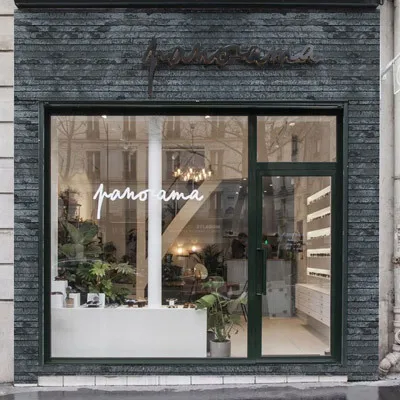
How a cutting-edge innovation is turning construction delays into on-time victories
Ask any construction project manager about their biggest headache, and you'll likely get the same answer: delays. Whether it's waiting weeks for custom stone slabs to arrive, dealing with weather-related shipping holdups, or struggling to source materials that match architectural renderings, lead times have long been the invisible hand slowing down builds. But what if there was a way to cut those wait times from months to mere days? Enter 3D printed Muretto Stone—a breakthrough in the MCM 3D Printing Series that's not just changing how we build, but how we imagine building.
For years, traditional stone materials like fair-faced concrete or quarried travertine have demanded patience. Sourcing them often involves long supply chains: from quarries in remote locations, to factories for cutting and finishing, to trucks navigating traffic and weather. By the time they reach a job site, weeks (or even months) have slipped by, pushing deadlines and inflating budgets. But 3D printed Muretto Stone flips that script. It's local, fast, and flexible—and it's quickly becoming the go-to choice for teams tired of watching calendars instead of breaking ground.
First, let's clarify: Muretto Stone isn't your average building material. Part of the broader MCM (Modified Composite Material) family, it's a blend of natural minerals, polymers, and MCM flexible stone—engineered to be lightweight, durable, and surprisingly malleable. When paired with 3D printing technology from the MCM 3D Printing Series, it transforms from a powder-like mixture into intricate, custom-designed panels, slabs, and accents in a fraction of the time traditional stone requires.
Think of it like baking a cake, but instead of an oven, you use a giant 3D printer. The printer layers the MCM flexible stone mixture with precision, following digital blueprints to create everything from sleek wall cladding to ornate decorative pieces. And unlike quarried stone, which is limited by the shape of the rock it's cut from, 3D printed Muretto Stone can be crafted into almost any design—curves, textures, even complex patterns that would take a master stonemason weeks to carve by hand.
But what really sets it apart? Speed. Traditional stone fabrication might take 6-8 weeks for a custom order. 3D printed Muretto Stone? In some cases, it's ready in 48 hours. That's not just a improvement—it's a revolution.
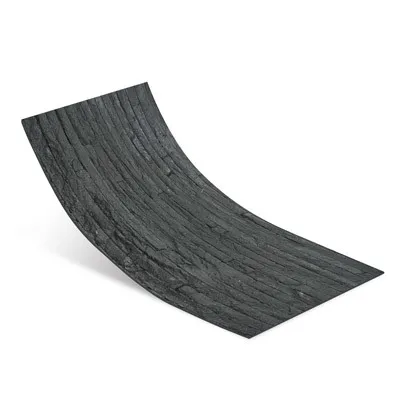
To understand why 3D printed Muretto Stone is so fast, let's peek into the production process. It starts with digital design: an architect uploads a 3D model of the desired stone piece—say, a wall panel with a wave-like texture or a decorative trim in Lunar Peak Silvery (a popular metallic finish that shimmers like moonlight). The MCM 3D Printing Series software then slices that model into thin layers, each just a few millimeters thick, creating a step-by-step roadmap for the printer.
Next, the material prep: MCM flexible stone powder is mixed with a binding agent, creating a paste that's fed into the printer's nozzle. The printer then moves along a gantry, depositing layer after layer of the paste with pinpoint accuracy. As each layer sets (thanks to UV light or heat curing, depending on the formula), the design takes shape. Once printing is done, the piece is cured fully, sanded for smoothness, and finished with coatings to enhance durability or add color—like that eye-catching Lunar Peak Silvery sheen.
The beauty of this process? It's almost entirely automated. No need for teams of workers to cut, shape, or polish by hand. No reliance on weather-dependent quarries. Just a machine, a digital file, and a material that's designed to work with 3D printing's unique demands. It's construction meets tech—and the result is a material that's as reliable as it is rapid.
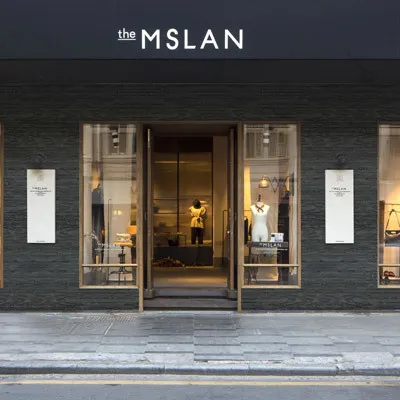
To really grasp the impact, let's compare 3D printed Muretto Stone to traditional stone materials. The table below breaks down key metrics for a mid-sized commercial project requiring 500 square feet of custom wall cladding:
| Metric | Traditional Stone (e.g., Fair-Faced Concrete) | 3D Printed Muretto Stone |
|---|---|---|
| Lead Time | 8-10 weeks (quarrying, cutting, shipping, finishing) | 7-10 days (design, printing, curing, finishing) |
| Material Waste | 15-20% (due to cutting errors, breakage) | Less than 5% (additive manufacturing uses only needed material) |
| Design Flexibility | Limited by stone block size and cutting tools | Unlimited—curves, textures, and custom patterns possible |
| On-Site Installation Time | 3-4 days (heavy lifting, precise fitting) | 1-2 days (lightweight panels, pre-cut for easy assembly) |
Take lead time alone: 8 weeks vs. 10 days. For a project on a tight deadline, that's the difference between missing a launch date and cutting the ribbon on time. And when you factor in lower waste and faster installation, the savings—both in time and money—add up quickly.
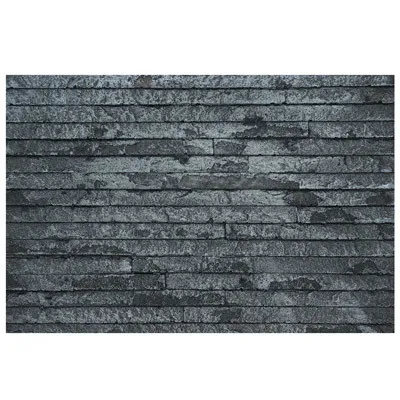
Speed is the headline, but 3D printed Muretto Stone has more tricks up its sleeve. Let's dive into the benefits that make it more than just a "fast" material—it's a smarter one.
Traditional stone mining is resource-intensive: quarries disrupt ecosystems, and transporting heavy blocks burns fossil fuels. 3D printed Muretto Stone, by contrast, uses MCM flexible stone—a material that requires 70% less energy to produce than quarried stone. Plus, its lightweight nature cuts shipping emissions by up to 40%. And because it's printed with minimal waste, it aligns with green building standards like LEED, making it a favorite for eco-conscious projects.
Architects often have to compromise on vision because traditional stone can't bend to their creativity. Not with Muretto Stone. Want a wall that mimics the undulating waves of the ocean? Print a wave panel. Dream of a lobby with a constellation-like pattern? Use starmoon stone accents in Travertine (Starry Blue) or Travertine (Starry Red). Even color customization is a breeze—options like Lunar Peak Silvery, Lunar Peak Golden, or Rona Yellow let designers match brand palettes or natural landscapes seamlessly.
You might wonder: Is a 3D printed material as tough as natural stone? Tests show Muretto Stone holds up surprisingly well. Its composite structure resists cracks better than fair-faced concrete, and it's UV-resistant, moisture-proof, and fire-retardant. In fact, a recent study found that 3D printed Muretto Stone panels installed on a coastal building in Miami showed no signs of weathering after 5 years—impressive, considering the salt air and humidity.
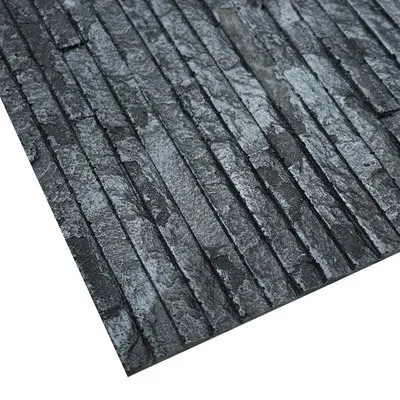
Let's zoom in on a project that put 3D printed Muretto Stone to the test: the Riverfront Medical Center in Denver, Colorado. The hospital's expansion required a facade that was both durable and visually calming—architects specified a blend of warm neutrals and subtle texture to create a welcoming vibe. Originally, they planned to use traditional limestone (beige), but delays in quarrying pushed the timeline back by two months. With a grand opening already announced, the team needed a solution fast.
Enter 3D printed Muretto Stone. The architects revised their design to use Muretto panels in a custom "ripple" texture, finished in Lunar Peak Silvery to complement the building's glass windows. Using the MCM 3D Printing Series, the panels were printed locally in just 9 days. Installation took another 3 days—total time from design to completion? 12 days. The result? A facade that looked even better than the original limestone plan, with soft, flowing lines that patients and staff now call "soothing." Best of all, the hospital opened on schedule.
"We were skeptical at first," admits Maria Gonzalez, the project's lead architect. "But seeing those panels come off the printer—exactly as we'd designed them, and in a fraction of the time—was a game-changer. Now, we specify 3D printed Muretto Stone for almost every project."
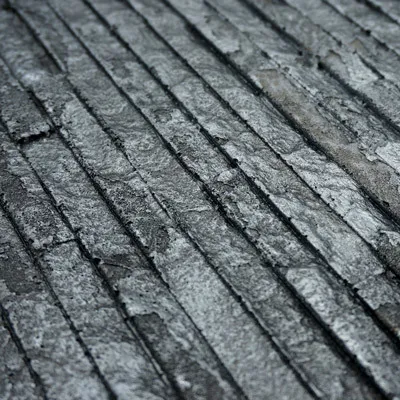
It's natural to ask: How does 3D printed Muretto Stone compare to tried-and-true materials like fair-faced concrete, travertine, or even lunar peak black? Let's break it down.
Fair-faced concrete is loved for its raw, industrial look, but it's slow to pour, cure, and finish. Muretto Stone offers a similar minimalist aesthetic but with faster turnaround and more texture options. Plus, unlike concrete, Muretto Stone won't crack due to temperature changes—a big win for projects in extreme climates.
Travertine is classic, but it's porous and requires sealing. 3D printed Travertine (Vintage Silver) or Travertine (Starry Orange) from the MCM line mimics the stone's natural beauty but adds a protective layer, making it stain-resistant and easier to maintain. And with options like linear travertine (claybank) or dolomitic travertine (dark grey), it offers more versatility than quarried travertine.
The Lunar Peak line—Lunar Peak Silvery, Golden, and Black—is known for its metallic sheen and durability. 3D printed Muretto Stone in Lunar Peak finishes matches that luster but with the added benefit of custom shapes. Imagine a Lunar Peak Silvery accent wall with integrated shelves or lighting cutouts—something traditional Lunar Peak stone can't achieve without extensive (and expensive) post-processing.
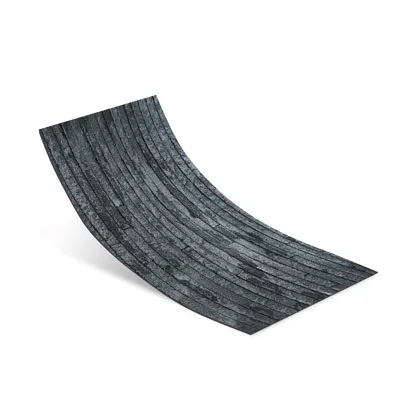
3D printed Muretto Stone is just the beginning. As the MCM 3D Printing Series evolves, we're seeing even more innovations: larger printers that can produce full wall sections in one piece, new materials like foamed aluminium alloy board (vintage gold) for high-end commercial projects, and even "smart" Muretto Stone embedded with sensors to monitor structural health.
Architects are already dreaming bigger. "We're working on a hotel in Bali that will use 3D printed Bali Stone panels to blend with the island's natural landscape," says David Chen, a designer at a global architecture firm. "The panels will be printed on-site, using local MCM flexible stone, to reduce shipping and honor the region's craftsmanship."
And for construction teams? The future looks less stressful. No more chasing suppliers, no more explaining delays to clients. Just a material that shows up when you need it, looks how you want it, and performs beyond expectations.
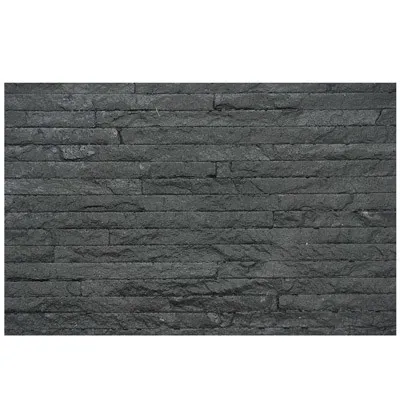
At the end of the day, 3D printed Muretto Stone isn't just about speed. It's about rethinking construction as a process that can be efficient, creative, and sustainable—all at once. It's about giving project managers their weekends back, letting architects dream without limits, and building spaces that feel human, even when made by machines.
So the next time you walk past a building with a stunning stone facade, take a closer look. It might just be 3D printed Muretto Stone—proof that when innovation meets construction, the only limit is our imagination.
Recommend Products












