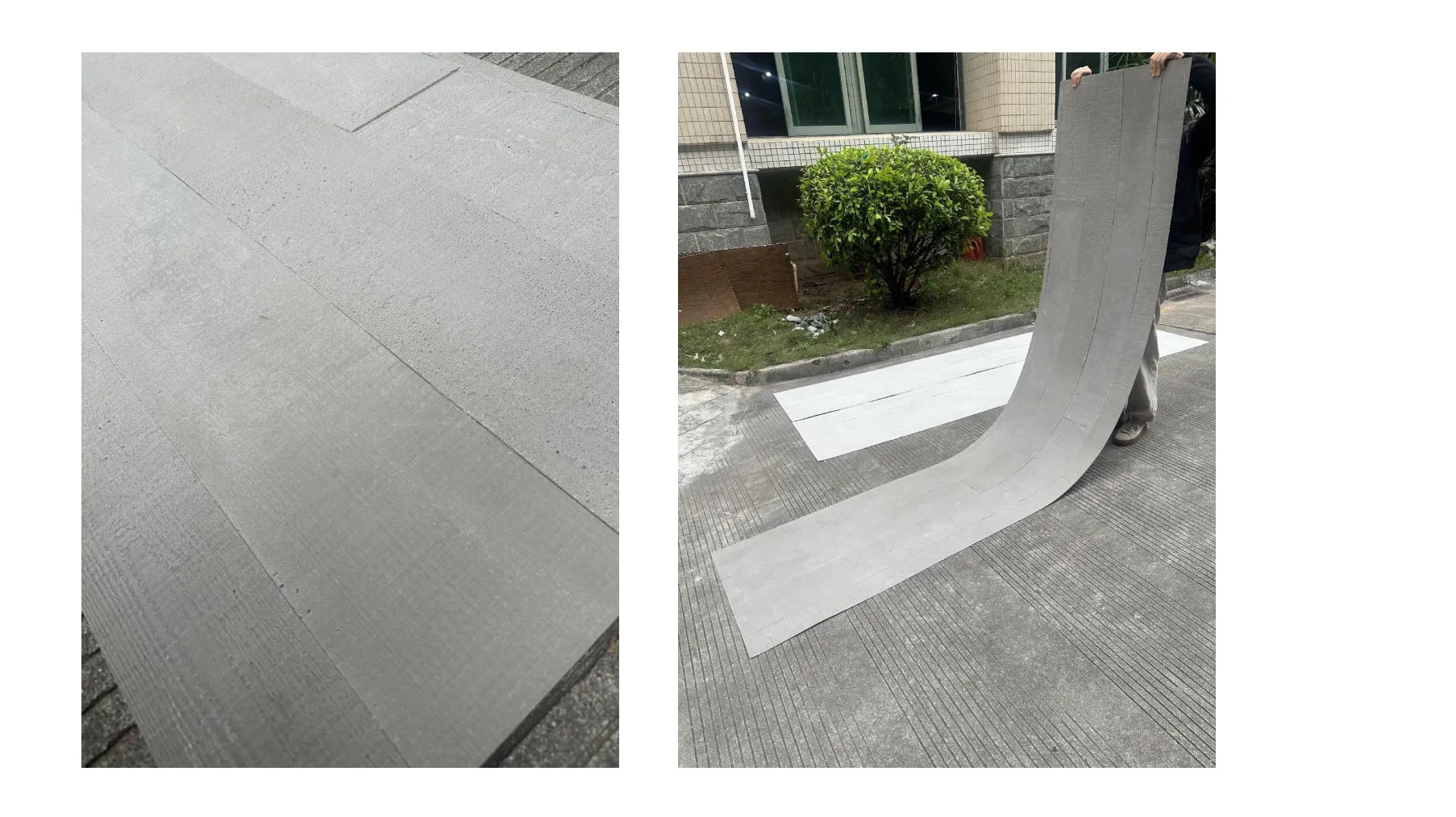
The Story Behind Architectural Surfaces
Walk into any space—whether it's a cozy café, a sleek office lobby, or a historic museum—and your first impression is shaped not just by light or layout, but by the materials underfoot and around you. The rough warmth of a wooden table, the cool smoothness of marble, the industrial edge of concrete—these surfaces don't just fill a room; they tell a story. And in recent years, one material has been quietly rewriting that story, blending the organic charm of wood with the durability of concrete, all brought to life through the precision of 3D printing: the
wood concrete board
. But to truly understand its impact, we need more than descriptions—we need to see it. Real photos, capturing every grain, every layer, every transition from a designer's sketch to a finished wall. This is the journey of 3D printed wood-
cement board, from architectural models to the spaces we inhabit.
3D Printing: Reshaping Material Possibilities
Not long ago, 3D printing felt like science fiction—a tool for creating small trinkets or prototype parts. Today, it's revolutionizing how we build. In architecture, 3D printing isn't just about speed or cost; it's about freedom. Designers can now craft textures that were once impossible with traditional casting or cutting. Imagine a surface that mimics the irregularity of tree bark but with the uniformity needed for a commercial wall, or a pattern so intricate it looks hand-carved, yet is produced with machine precision. This is the magic of 3D printing in construction materials, and it's where wood concrete board found its calling. Unlike rigid concrete slabs or one-size-fits-all wood panels, 3D printed wood concrete board is a chameleon—adaptable, detailed, and deeply human in its feel.
Wood Concrete Board: Where Nature Meets Innovation
What Is Wood Concrete Board, Anyway?
At its core, wood concrete board is a marriage of two unlikely partners: wood fibers and cement. The wood brings warmth, texture, and a connection to nature; the cement adds strength, fire resistance, and longevity. But what makes the 3D printed version special is how those elements are combined. Instead of mixing wood fibers into wet cement and pouring it into a mold (the old-school way), 3D printers layer the material with pinpoint accuracy, building up textures and patterns one thin line at a time. The result? A board that's lightweight enough for easy installation but tough enough to withstand the wear and tear of busy spaces. And when you run your hand over it, you don't feel cold concrete—you feel the soft give of wood, the subtle ridges of 3D-printed lines, like a fingerprint left by innovation.
The Making: 3D Printing Precision
The process starts with a digital design. An architect or designer sits at a screen, sketching the texture they want—maybe a woven pattern reminiscent of a
bamboo mat board
, or a linear grain that echoes aged oak. That design is then translated into code, telling the 3D printer how thick each layer should be, where to add depth, where to keep it smooth. The printer itself is a marvel: a large, robotic arm with a nozzle that dispenses the wood-cement mixture, moving back and forth like a painter with a brush. Each layer is applied with just enough pressure to bond to the one below, creating a material that's both strong and surprisingly flexible. It's a dance of technology and artistry, and the best part? Every step is captured in real photos—from the first layer oozing onto the build plate to the finished board being sanded and sealed.
Real Photos: From Blueprint to Reality
Let's talk about those real photos. They're not just marketing tools; they're proof of process. One set of images might show a scale model of a restaurant interior, with tiny wood concrete panels glued to the walls. The photos zoom in on the details: the way the 3D-printed lines catch the light, creating shadows that make the model feel almost life-sized. Another series captures a prototype panel in a workshop, propped against a wall next to a sample of raw wood and a chunk of concrete. Side by side, you can see the hybrid identity—wood's warmth, concrete's solidity, 3D printing's precision. Then there are the installation photos: a crew lifting a full-sized wood concrete board into place in a boutique hotel lobby, the sun streaming through a window and highlighting the texture. A close-up of a designer running their hand over the surface, smiling at how closely it matches their original vision. These photos don't just document a product—they document a transformation.
Beyond the Surface: Texture, Durability, and Warmth
The Tactile Experience
In a world of flat screens and glossy finishes, texture matters. We crave things we can feel, surfaces that invite touch. Wood concrete board delivers that in spades. Run your fingers across a 3D-printed panel, and you'll notice the difference immediately. Unlike smooth
fair-faced concrete
(which has its own industrial appeal), wood concrete board has depth. Some versions mimic the rough-hewn look of a
rock cut stone
, with jagged edges and pockmarks that feel like they've been weathered by time. Others are softer, with a grain pattern so realistic you half-expect to find sap. And because it's 3D printed, the texture isn't just on the surface—it runs through the material. Scratch it, and the pattern continues, no peeling or fading. It's a texture that ages gracefully, developing a patina over time that makes spaces feel lived-in, not brand-new.
Environmental Benefits: Building Greener
Sustainability isn't just a buzzword; it's a necessity. Wood concrete board checks that box too. By using wood fibers (often recycled) and cement, it reduces the need for virgin timber, which helps curb deforestation. And because 3D printing is additive—only using material where it's needed—there's less waste compared to cutting slabs from larger blocks. Even the production process is gentler: 3D printers use less water than traditional concrete mixing, and the wood fibers act as a natural insulator, reducing energy use in buildings where the boards are installed. It's a material that doesn't just look good; it does good too.
Comparing the Contemporaries: Wood Concrete vs. Foamed Aluminium & Fair-Faced Concrete
Wood concrete board isn't the only player in the modern materials game. Let's take a look at how it stacks up against two popular alternatives:
foamed aluminium alloy board (vintage silver)
and
fair-faced concrete. Real photos often show these materials side by side in design studios, helping architects choose the right fit for their project. Here's a breakdown:
|
Material
|
Texture
|
Durability
|
Best For
|
Warmth Factor
|
|
Wood Concrete Board
|
Organic, grainy, 3D-printed patterns (wood-like, bark-inspired)
|
High (resistant to scratches, fire, and moisture)
|
Residential interiors, cafés, boutique hotels
|
Warm, inviting, nature-connected
|
|
Foamed Aluminium Alloy Board (Vintage Silver)
|
Metallic, lightweight, subtle sheen with a matte finish
|
Extremely high (rust-proof, dent-resistant)
|
Modern offices, tech hubs, industrial-chic spaces
|
Cool, sleek, futuristic
|
|
Fair-Faced Concrete
|
Smooth, uniform, with subtle air bubbles and aggregate pebbles
|
Very high (weather-resistant, low maintenance)
|
Public buildings, minimalist homes, art galleries
|
Neutral, industrial, raw
|
As the table shows, each material has its strengths. Foamed aluminium brings a futuristic edge,
fair-faced concrete offers raw minimalism, but wood concrete board? It bridges the gap, adding warmth to modern spaces without sacrificing durability. That's why real photos often pair it with foamed aluminium accents—imagine a wood concrete wall with a foamed aluminium shelf mounted on it, the contrast of warm and cool creating visual interest. It's a material that plays well with others, making it a favorite among designers who want spaces to feel layered and intentional.
Applications: Where Wood Concrete Board Shines
Residential Spaces: Making Houses Feel Like Homes
Step into a home with wood concrete board, and you'll notice the difference right away. In a living room, it might line a feature wall behind a fireplace, the texture complementing the crackle of the fire. In a bedroom, it could be used as a headboard, softening the space with its woody warmth. Real photos of residential projects often highlight small moments: a child leaning against a wood concrete wall, tracing the 3D-printed pattern with their finger; a couple enjoying morning coffee at a table made from the same material, the sunlight bringing out the golden tones in the wood fibers. It's a material that feels personal, like it belongs in a space where memories are made.
Commercial Interiors: Brands with Personality
Businesses today don't just sell products—they sell experiences. And wood concrete board is helping brands tell their stories. A local brewery might use it for their taproom walls, pairing it with reclaimed wood tables to reinforce their "handcrafted" ethos. A bookstore could line its shelves with wood concrete board, creating a cozy, library-like atmosphere that encourages customers to linger. Real photos from these spaces often focus on the details: a beer glass condensation beading on a wood concrete bar top, or a customer running their hand along a bookshelf, commenting on how "homey" it feels. It's a material that doesn't shout—it whispers, inviting people to connect.
Public Installations: Art Meets Architecture
Wood concrete board isn't just for walls and tables—it's for art. Imagine a public park with a 3D-printed wood concrete bench, its surface carved with a pattern inspired by local flora. Or a community center where a mural is rendered not in paint, but in the varying textures of wood concrete panels. Real photos of these installations capture the interaction between people and art: a child sitting on the bench, tracing the pattern with their foot; a group of friends posing in front of the mural, the wood concrete backdrop adding depth to the photo. It's a reminder that materials aren't just functional—they're a form of expression.
The Language of Real Photos: Capturing Material Essence
Model Shots: Detailing the Craft
Before a single panel is installed, there are models. Tiny, intricate replicas of spaces, built to scale, with wood concrete board samples glued in place. Real photos of these models are a study in detail. One photo might zoom in on a 1:20 scale wall, showing how the 3D-printed texture of the wood concrete board contrasts with a miniature
marble stream stone
floor tile. Another might capture the model under different lighting—morning sun, evening lamplight—to show how the texture changes throughout the day. These photos aren't just for clients; they're for the designers themselves, a way to test how the material will behave in the real world before committing to a full build. They're a bridge between idea and execution.
Installation Moments: Bringing Spaces to Life
The most powerful real photos, though, are the ones taken during installation. There's something raw and exciting about watching a space transform from a skeleton of studs to a finished room. Photos of wood concrete board installation often capture the human element: a team of workers carefully aligning a panel, their hands steadying it as they secure it to the wall. A close-up of the first screw being driven in, the board fitting perfectly into place. Or a "before and after" shot: a drab office wall on the left, the same wall covered in wood concrete board on the right, suddenly warm and full of character. These photos tell a story of collaboration—designers, builders, and materials working together to create something meaningful.
Conclusion: Building Tomorrow, One Layer at a Time
The journey of 3D printed wood concrete board—from a designer's imagination to a finished wall—is more than just a tale of technology. It's a story about how we connect with the spaces we live in. In a world that often feels disconnected from nature, materials like wood concrete board bring us back, reminding us of the warmth of wood, the strength of concrete, and the beauty of human ingenuity. And real photos? They're the proof. They show us that innovation doesn't have to be cold or clinical—it can be tactile, emotional, and deeply human. So the next time you walk into a space and find yourself drawn to a wall, running your hand over its texture, take a moment to appreciate the journey behind it. Chances are, it started with a sketch, a 3D printer, and a vision—and was captured, frame by frame, in real photos that tell the story of a material that's changing the way we build, one layer at a time.