
Where texture, technology, and storytelling meet in architecture
Think of the last building that made you pause. Maybe it was a cozy café with a weathered wooden facade that felt like a warm hug, or a sleek modern museum with a facade that shimmered like stardust at sunset. Whatever it was, chances are its "face"—the facade—left a lasting impression. Facades aren't just walls; they're the first conversation a building has with the world. They tell stories of culture, purpose, and personality. But for architects and designers, crafting that story has long been a balancing act: between beauty and practicality, tradition and innovation, weight and flexibility.
Enter COLORIA MCM, a name that's quickly becoming synonymous with reimagining how we build the "faces" of our spaces. Today, we're diving into one of their most captivating creations: the 3D printed wood-cement board. And not just talking about it—exploring why real photos of this material matter, how it's changing the game for designers, and why it's more than just a building material; it's a bridge between nature and technology, nostalgia and forward-thinking design.
For centuries, facades relied on heavy hitters: stone, brick, concrete. These materials are durable, sure, but they come with a cost—literally and figuratively. A stone facade might evoke grandeur, but it requires massive structural support, limiting design flexibility. Brick is charming, but its uniformity can feel restrictive for bold, modern projects. And traditional concrete? It's strong, but often cold, lacking the warmth that makes a space feel "alive."
Then came the demand for more: more creativity, more sustainability, more adaptability. Architects began dreaming of curved facades that mimicked natural landscapes, textured surfaces that changed with the light, and materials that could travel long distances without breaking the bank (or the back of a construction crew). The problem? Traditional materials couldn't keep up. They were too heavy, too rigid, or too prone to wear and tear in harsh climates.
That's where modified composite materials (MCM) stepped in. Lightweight, flexible, and designed to mimic the look of natural materials without the drawbacks, MCMs started to turn heads. But COLORIA didn't just jump on the bandwagon—they drove it forward, especially with their mcm 3d printing series. Suddenly, the impossible became possible: 3D printed textures that replicate the grain of ancient wood, the roughness of mountain stone, or the smoothness of polished concrete—all in a material that weighs a fraction of the real thing.
What sets COLORIA apart? It's not just about creating materials—it's about creating experiences. Walk into their design studio, and you'll see shelves lined with samples that feel like they belong in a art gallery: swatches of flexible stone that bend in your hand (yes, bend!) yet promise the durability of traditional stone; panels of wood grain board that look so much like reclaimed oak, you'll half-expect to find a nail hole or two; and, of course, their 3D printed wood-cement boards, which blur the line between industrial precision and organic warmth.
At the heart of COLORIA's mission is a belief that architecture should be accessible to creativity. "Why should a designer have to compromise on their vision because a material is too heavy or too expensive?" asks Maria Lopez, a senior product designer at COLORIA. "Our 3D printing technology lets us turn any texture, any pattern—even a client's childhood doodle—into a facade panel. That's power. That's freedom."
Let's zoom in on the star of the show: the 3D printed wood-cement board. At first glance, it's easy to mistake it for a slab of high-end engineered wood. Run your fingers over it, though, and you'll notice something different—the subtle grit of cement, balanced by the soft, organic (texture) of wood grain. It's a marriage of two materials that shouldn't work together, yet somehow, they do. And the secret? 3D printing.
Traditional wood-cement boards are often flat, uniform, and limited in design. COLORIA's 3D printed version changes that. Using advanced 3D printing tech, their machines layer wood fibers and cementitious materials in precise patterns, creating textures that range from delicate, wispy wood grain to bold, chiseled grooves. Want a panel that looks like it was hand-carved by artisans? Done. Prefer a sleek, modern grid pattern? No problem. The possibilities are as endless as a designer's imagination.
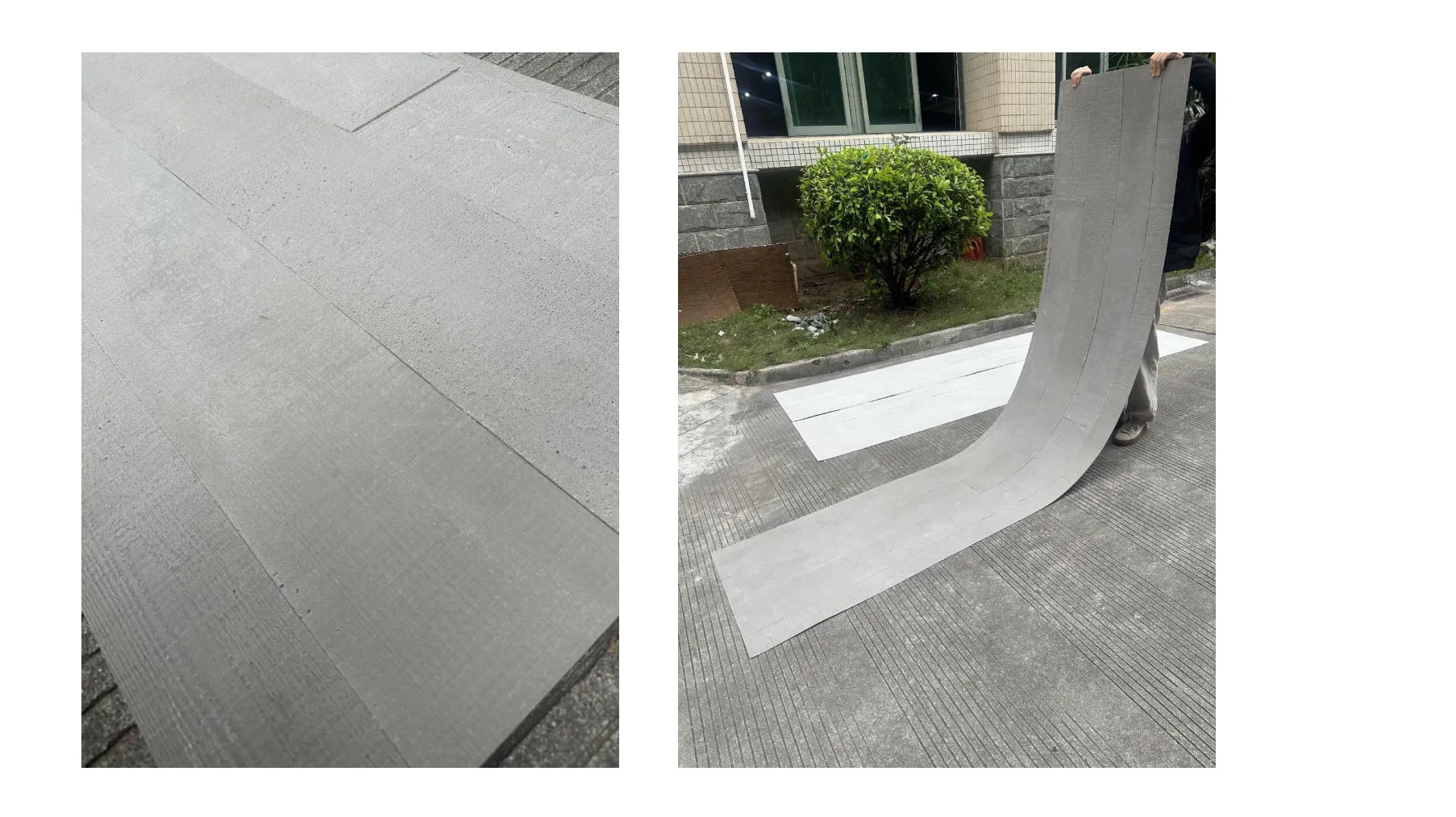
Here's the thing about facade materials: swatches and samples only tell half the story. A 2x2 inch chip of wood-cement board can't show you how the texture catches the afternoon sun, or how the color shifts from warm amber at dawn to soft gray at dusk. That's where COLORIA's 3D printed wood-cement board real photos come in. These aren't stock images or digitally rendered mockups—they're high-res photos of the actual panels, installed in real-world settings.
Flip through their catalog, and you'll see a cozy mountain cabin with the boards cladding its exterior, the wood-cement panels blending seamlessly with the surrounding pine trees. There's a trendy urban café where the material wraps around the counter, adding warmth to exposed brick walls. Even a luxury hotel lobby, where a feature wall of 3D printed wood-cement board serves as a backdrop for a minimalist art installation. In each photo, the texture is tangible—you can almost feel the ridges of the 3D printed pattern, see how the light plays off the cement's subtle sheen, and imagine how it would transform a space.
Beauty aside, the 3D printed wood-cement board is a workhorse. It's water-resistant, fire-retardant, and resistant to rot and pests—no small feat for a material that looks this organic. At just 4-6mm thick, it's lightweight enough to be installed on almost any structure, from low-rise homes to high-rise commercial buildings. And because it's 3D printed, waste is minimized during production, making it a greener choice than traditional materials.
| Material | Weight (per sqm) | Flexibility | Design Options | Durability |
|---|---|---|---|---|
| Traditional Stone | 20-30kg | Rigid (no bending) | Limited (natural patterns only) | High (but prone to cracking) |
| Traditional Wood | 10-15kg | Semi-rigid (minimal bending) | Moderate (grain patterns fixed) | Low (rot, pests, weather damage) |
| COLORIA 3D Printed Wood-Cement Board | 3-5kg | High (bends up to 30 degrees) | Unlimited (custom 3D printed textures) | Very High (water, fire, pest resistant) |
| COLORIA Flexible Stone | 2-4kg | Very High (bends up to 90 degrees) | Extensive (mimics marble, granite, etc.) | Very High (UV and weather resistant) |
The 3D printed wood-cement board is just the tip of the iceberg. COLORIA's lineup reads like a designer's wishlist, with materials that cater to every aesthetic and every project. Take flexible stone, for example. If you've ever dreamed of cladding a curved building in marble, but winced at the cost and weight of real marble, this is your solution. COLORIA's flexible stone is thin (as little as 2mm), lightweight, and can be wrapped around columns, arches, or even dome ceilings—all while looking indistinguishable from the real thing.
Then there's their fair-faced concrete, a modern classic reimagined. Traditional fair-faced concrete can be finicky—prone to discoloration, hard to install, and limited in finish. COLORIA's version? It comes in panels with precast textures, from smooth as silk to rough as a mountain trail, and installs in half the time. It's the material of choice for minimalist projects that crave that "raw yet refined" vibe.
And let's not forget the mcm 3d printing series, which includes more than just wood-cement. From 3D printed "lunar peak" panels that look like the surface of the moon to geometric "wave panels" that ripple across a facade, this series is for the bold, the creative, the designers who want their buildings to make a statement. Pair that with wood grain board—perfect for adding warmth to interiors or exteriors—and you've got a toolkit that can turn any architectural vision into reality.
It's one thing to talk about materials in a lab—it's another to see them in action. Let's walk through a few hypothetical (but all-too-real) scenarios where COLORIA's products have made a difference.
Nestled in the Swiss Alps, a new café wanted to blend in with its natural surroundings while still feeling contemporary. The designer chose COLORIA's 3D printed wood-cement board for the exterior. The panels, printed with a texture that mimics local pine wood, wrap around the building, creating a warm, inviting look. But here's the kicker: because the material is lightweight, the café's foundation didn't need expensive reinforcement, saving the owners 30% on construction costs. The real photos of the finished project? They went viral on design blogs, with commenters raving about how "the building looks like it grew out of the mountains."
A tech startup in Tokyo wanted their office to reflect their values: innovation and sustainability. They opted for a facade of COLORIA's flexible stone (in a light gray, marble-like finish) paired with 3D printed wood-cement board accents. The flexible stone curved around the building's glass windows, softening the industrial feel, while the wood-cement panels added warmth in the lobby. The best part? Both materials are 100% recyclable, aligning with the company's green mission. The real photos of employees working in front of the facade? They became the centerpiece of the startup's recruitment campaign—because who wouldn't want to work in a space that feels this inspiring?
At the end of the day, architecture isn't just about buildings—it's about people. It's about the café owner who wants to welcome strangers like old friends, the designer who wants to challenge the status quo, the homeowner who wants their house to feel like "them." COLORIA MCM gets that. Their materials—from the 3D printed wood-cement board to flexible stone to fair-faced concrete—aren't just products; they're tools for telling stories.
And in a world where we're bombarded with digital renders and filtered images, the power of real photos can't be overstated. They remind us that architecture is tactile, sensory, alive. They let us see how a material behaves in the real world—not just in a lab or on a screen. They inspire confidence, spark creativity, and turn "what if" into "why not."
So the next time you pass a building that makes you stop and stare, take a closer look. Maybe it's wrapped in COLORIA's 3D printed wood-cement board, its 3D printed texture catching the light. Maybe it's clad in flexible stone, bending around a curve that once seemed impossible. Whatever it is, remember: behind every great facade is a great material—and a great story waiting to be told.
Recommend Products












