
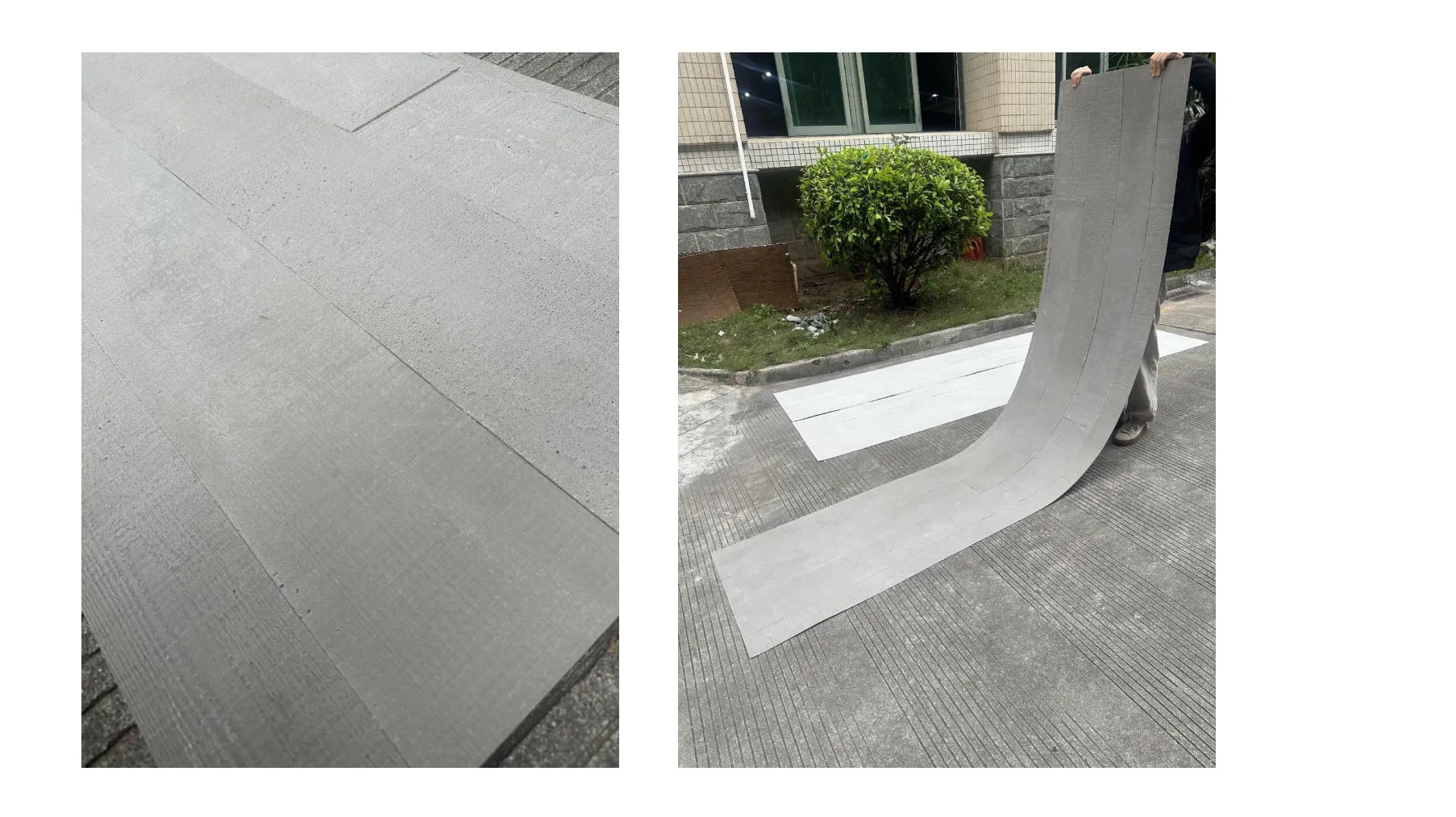
In the world of architecture and design, materials are more than just building blocks—they're storytellers. They carry the weight of tradition, the spark of innovation, and the quiet ability to turn a space into something that feels alive. Today, we're diving into a journey that blends cutting-edge technology with the warmth of natural textures: the 3D printing series of wood concrete board , a material that's redefining how we think about walls, facades, and interiors. From the precision of CAD screens to the tactile reality of on-site installations, let's walk through the process of bringing these surfaces to life—and why they matter.
It starts with a question: What if we could merge the durability of concrete with the softness of wood? Not just mimicry, but a true fusion—something that feels both industrial and intimate. That's the idea behind wood concrete board , a composite material that marries wood fibers with cement, creating a surface that's strong yet surprisingly lightweight, rough yet full of warmth. And when paired with 3D printing technology? It becomes a canvas for shapes and textures that were once impossible with traditional manufacturing.
Designers and architects often talk about "material memory"—the way a surface holds the trace of how it was made. With 3D printing, that memory is intentional. Every layer, every contour, is a deliberate choice, programmed into a digital model before a single nozzle extrudes material. It's a dance between human creativity and machine precision, and it all begins on a screen.
Before any printer hums to life, there's the design phase. Imagine an architect hunched over a CAD program, sketching lines that will eventually become a wall panel. They're not just drawing shapes; they're thinking about light. How will the morning sun hit this facade? Will the texture cast shadows that shift throughout the day? Will the pattern feel cohesive with the flexible stone panels that will flank it? These are the questions that turn a technical drawing into a narrative.
CAD software is the bridge between imagination and reality. It allows designers to tweak curves, adjust textures, and test proportions with a few clicks. For wood concrete board , this precision is key. The wood fibers need to be evenly distributed to ensure strength, while the 3D-printed layers must align to create the desired texture—whether it's a subtle wood grain or a bold, geometric pattern. It's not just about making something look good; it's about making sure it works —standing up to weather, time, and the everyday wear of a busy space.
| Traditional Manufacturing | 3D Printing with Wood Concrete Board |
|---|---|
| Limited to simple, uniform shapes | Complex geometries (waves, curves, custom textures) |
| Heavy, labor-intensive installation | Lightweight panels, faster on-site assembly |
| Material waste from cutting/shaping | Precision extrusion = minimal waste |
| Static designs (hard to customize post-production) | Digital files allow for last-minute tweaks |
At the heart of this process is the material itself: wood concrete board . Let's break it down. Wood fibers (often recycled, adding an eco-friendly edge) are mixed with cement, water, and a few secret additives to bind everything together. The result? A material that's 30% lighter than traditional concrete but just as strong. Run your hand over it, and you'll feel the wood fibers catching the light—little whispers of nature in an industrial base.
But 3D printing adds another layer of magic. The printer's nozzle extrudes the material in thin, controlled layers, like frosting a cake with mathematical precision. Want a wave panel texture? The printer can rise and fall, creating undulating surfaces that mimic ocean swells. Prefer a more structured look, like linear travertine (claybank) ? It can lay down straight, even lines that evoke the order of natural stone. The beauty is that the texture isn't an afterthought—it's built into the material as it's printed.
And sometimes, wood concrete board isn't alone. Designers often pair it with flexible stone , a thin, bendable stone veneer that adds contrast and depth. Imagine a facade where 3D-printed wood concrete forms the base, and flexible stone in travertine (starry blue) is inlaid like a mosaic—industrial meets celestial. It's a reminder that materials don't exist in isolation; they talk to each other, creating a dialogue of textures.
There's something almost meditative about watching a 3D printer at work. The hum of the motor, the slow, steady movement of the nozzle, the way the material builds up, layer by layer, until a flat design becomes a three-dimensional object. For wood concrete board panels, this process can take hours—even days—depending on the size and complexity.
Each panel starts as a digital file, sliced into thousands of thin layers by the printer's software. The material, a thick, paste-like mixture, is fed into the nozzle and deposited with pinpoint accuracy. What's remarkable is how little waste there is. Traditional methods might cut large slabs of stone or concrete, discarding the excess; 3D printing only uses what it needs, making it a more sustainable choice.
Once printed, the panels cure for a few days, hardening into their final form. That's when the texture really comes alive. Run your finger along the edge, and you can feel the ridges of each printed layer—a subtle, tactile reminder of the technology that created it. It's not perfect, and that's the point. Unlike a perfectly smooth concrete slab, wood concrete board has character. It's a surface that invites touch, that tells you, "I was made, carefully, by hand and machine."
The real test comes when the panels arrive on-site. All the digital planning, all the printing precision—none of it matters if the installation doesn't go smoothly. But here's where wood concrete board shines: its lightweight nature makes it easy to handle. A team of installers can lift and position large panels without heavy machinery, reducing time and labor costs. It's a small detail, but it changes everything for construction crews working on tight deadlines.
Imagine a commercial space—a boutique hotel, say—where the lobby walls are being clad in 3D-printed wood concrete panels. The installers align each panel with care, using brackets hidden behind the surface to keep them secure. As they go, the room transforms. What was once a blank, white wall becomes a tapestry of texture: the warm, earthy tones of the wood fibers, the subtle ridges of the 3D-printed layers, the way the light catches the surface and creates soft shadows.
Sometimes, installers will mix in other materials to add depth. Maybe a section of fair-faced concrete to contrast with the wood concrete, or foamed aluminium alloy board (vintage silver) for a metallic accent. These combinations aren't just aesthetic—they're strategic. They create visual interest, guiding the eye and making the space feel dynamic.
At the end of the day, what makes 3D printed wood concrete board special isn't just the technology—it's how it makes us feel. Walk into a room with these panels, and you'll notice it immediately. The space feels grounded, yet light. Industrial, yet inviting. It's a balance that's hard to achieve with traditional materials. A stone wall might feel cold; a wooden wall might feel too delicate. Wood concrete board hits that sweet spot.
Take, for example, a restaurant with a facade printed in a wood grain pattern. The panels weather gently over time, the wood fibers fading slightly in the sun, giving the building a lived-in, welcoming look. Or a home office with wave panel walls, where the undulating surface softens the harsh lines of desks and computers, making the space feel more organic. These aren't just surfaces—they're mood setters.
And let's not forget the practical side. Wood concrete board is resistant to fire, moisture, and pests, making it ideal for both indoor and outdoor use. It's low-maintenance, too—no need for frequent painting or sealing. It's a material that ages gracefully, growing more characterful over time, not less.
In a world of mass-produced, cookie-cutter buildings, materials like 3D printed wood concrete board are a rebellion. They remind us that architecture can be personal, that surfaces can tell stories, that technology and nature don't have to be at odds. They're a bridge between the past—with the warmth of wood and the durability of concrete—and the future, where digital design and sustainable manufacturing lead the way.
So the next time you walk past a building with a textured facade, or touch a wall that feels both rough and soft, take a moment to wonder: How was this made? What story does it tell? Chances are, it might just be a wood concrete board panel, printed layer by layer, designed with care, and installed with purpose. And in that story, there's a little bit of all of us—the desire to build something that lasts, and that feels like home.
Recommend Products












