
In a world where brands fight for attention, the difference between being remembered and fading into the background often lies in the details—the texture of a wall, the warmth of a sign, the story a material tells. Imagine walking into a cozy café: the first thing that catches your eye isn't just the logo above the counter, but the way its edges seem to echo the grain of ancient wood, as if carved by time itself. Yet, when you reach out to touch it, it feels surprisingly lightweight, durable, almost modern. That's the magic of merging age-old aesthetics with cutting-edge technology—and it's exactly what the MCM 3D printing series brings to the table. Today, we're diving into how custom branding is being reimagined through the lens of ancient wood, flexible stone, and innovative materials like foamed aluminium alloy, proving that the most unforgettable brands aren't just seen—they're felt.
Wood has always been more than a building material. It's a storyteller. Think of a weathered barn door, its surface etched with years of rain and sun, or a hand-carved wooden sign outside a family-owned bookstore—each knot and grain tells a tale of heritage, warmth, and authenticity. For brands, this emotional resonance is gold. In an era of sleek screens and digital overload, wood feels human. It's tactile; it invites touch. It says, "We care about tradition. We're here to stay."
But here's the catch: traditional wood has its limits. Solid hardwood is expensive, heavy, and prone to warping or rotting over time. Sourcing rare or "ancient" wood can raise ethical red flags, too—deforestation, unsustainable harvesting, and the loss of natural habitats. And when it comes to custom branding? Carving intricate logos or designs into wood is labor-intensive, leaving little room for tweaks or last-minute changes. For small businesses or startups, that's a barrier to creating the unique, memorable identity they crave.
That's where the MCM 3D printing series steps in. It's not about replacing wood—it's about reimagining it. By blending the organic beauty of ancient wood with the precision of 3D printing and the durability of modified composite materials (MCM), brands can now capture that timeless warmth without the hassle. Suddenly, a logo that looks like it was hewn from a 200-year-old oak can be printed in days, not weeks, and installed in spaces where traditional wood would never survive—like a high-traffic retail store or a humid restaurant kitchen. It's the best of both worlds: the soul of the past, with the practicality of the present.
Let's start with the basics: What is MCM, anyway? Modified composite materials are engineered blends of natural fibers, polymers, and minerals, designed to mimic the look and feel of traditional materials—wood, stone, metal—while being lighter, stronger, and more customizable. The MCM 3D printing series takes this a step further by using these materials in additive manufacturing, allowing for incredibly detailed, layer-by-layer designs that would be impossible with conventional tools.
Picture this: A brand wants a logo that combines the rustic charm of ancient wood with the geometric precision of modern design. With traditional methods, they might hire a woodworker to carve it, but if they change their mind about the font or add a small icon, the entire piece has to be redone. With MCM 3D printing? They can tweak the digital design in minutes, hit "print," and watch as the logo emerges—complete with lifelike wood grain, subtle knots, and even the slight imperfections that make ancient wood so appealing. It's like having a time machine and a design studio in one.
But the MCM 3D printing series isn't just about logos. It's a toolkit for creating entire brand ecosystems. From wall panels that echo the texture of ancient wood to signage that blends wood grain board with foamed aluminium alloy accents, the technology lets brands weave their identity into every corner of a space. And because MCM materials are flexible (literally—think MCM flexible stone that can bend around curves), designers aren't limited to flat surfaces. Imagine a retail store where the checkout counter features a 3D-printed ancient wood logo, and the walls are clad in wave panels that mimic the flow of a forest stream—all made with MCM materials that stand up to scuffs, spills, and the test of time.
While ancient wood and wood grain board are stars of the show, the magic of MCM 3D printing lies in its ability to blend materials, creating textures and contrasts that make brands pop. Let's take a closer look at some of the standout players in this lineup:
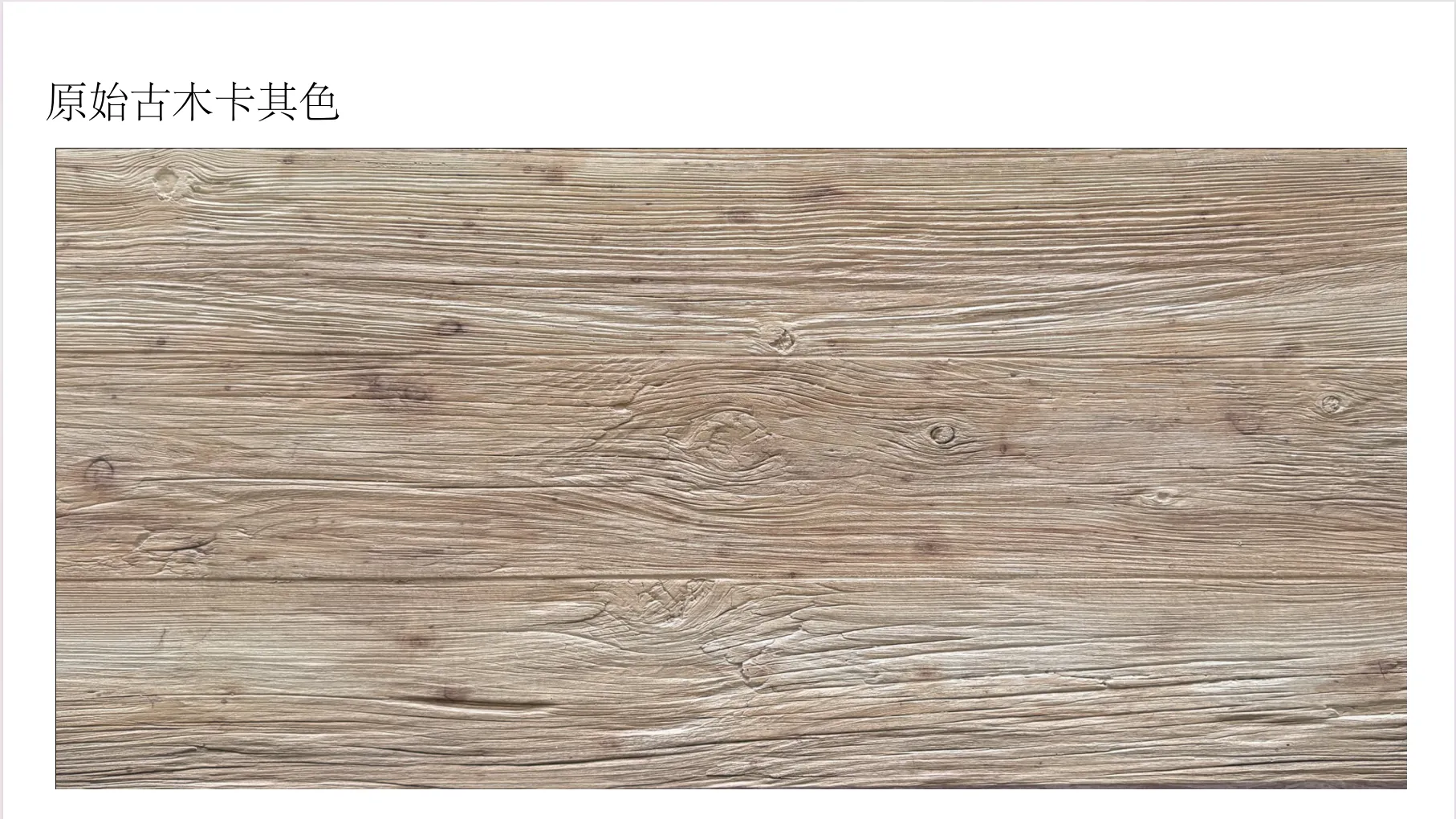
Wood grain board is the backbone of many MCM 3D printed designs, and for good reason. It's engineered to replicate the look of everything from weathered oak to smooth teak, with grains so realistic you'll find yourself running your fingers over it to check if it's "real." But unlike solid wood, it's moisture-resistant, termite-proof, and won't split or crack. For brands going for a cozy, inviting vibe—think a neighborhood café or a boutique clothing store—wood grain board adds that "homey" touch without the maintenance nightmare.
If wood grain board is the warm hug of materials, MCM flexible stone is the reliable sidekick. Lightweight yet surprisingly strong, this material can mimic the texture of rough-hewn stone, smooth marble, or even slate—all while bending to fit curved surfaces. Imagine a restaurant with a logo printed on wood grain board, framed by flexible stone in a "starry blue" finish that evokes a night sky. It's unexpected, it's memorable, and it works in spaces where real stone would be too heavy or expensive. Plus, with colors like "lunar peak silvery" or "rust square line stone," the design possibilities are endless.
For brands that want to balance tradition with a sleek, contemporary look, foamed aluminium alloy board is a game-changer. Available in finishes like "vintage silver," "vintage gold," and "gold," this material adds a metallic sheen that contrasts beautifully with wood grain board or flexible stone. Imagine a tech startup's office: the reception area features a 3D-printed ancient wood logo (in "travertine starry red" for a pop of color) mounted on a foamed aluminium alloy board backdrop. It says, "We honor the past, but we're building the future." And because foamed aluminium is lightweight and corrosion-resistant, it's perfect for high-traffic areas or even outdoor signage.
| Material | Durability | Customization | Sustainability | Cost |
| Solid Ancient Wood | Prone to warping/rot | Limited (hand-carved) | High environmental impact | Expensive |
| MCM Wood Grain Board | Water/termite-resistant | Unlimited (3D-printed designs) | Recyclable, low waste | Cost-effective |
| Natural Stone | Heavy, brittle | Minimal (pre-cut slabs) | Mining impacts | Very expensive |
| MCM Flexible Stone | Lightweight, shatterproof | Custom colors/textures | Low carbon footprint | Affordable |
| Traditional Aluminium | Durable but heavy | Basic shapes only | High energy to produce | Moderate |
| Foamed Aluminium Alloy Board | Lightweight, corrosion-resistant | Intricate 3D designs | Recyclable, energy-efficient | Moderate to low |
Enough theory—let's talk about how brands are actually using these materials to create unforgettable spaces. Take "The Rustic Nook," a small café in Portland, Oregon. Owner Maya wanted her logo to feel like a hand-painted sign from the 1920s, but she needed something durable enough to withstand daily coffee spills and cleaning. Enter MCM 3D printing: Her logo, a simple wooden spoon with the café name, was printed using wood grain board in "travertine beige" and accented with a strip of foamed aluminium alloy board in "vintage gold." The result? A sign that looks like it's been there for decades, but cost a fraction of what a custom wood carving would have. "Customers comment on it all the time," Maya says. "They say it feels 'homey' but also 'fresh.' That's exactly what we wanted."
Then there's "Pathfinder Tech," a software company in Austin, Texas, that prides itself on "blending old-world problem-solving with new-world innovation." Their office lobby features a massive wall installation: a 3D-printed map of ancient trade routes (using MCM flexible stone in "historical pathfinders stone" finish) with the company logo—an compass rose—printed in wood grain board and outlined in foamed aluminium alloy board "vintage silver." "We wanted to tell our story visually," says CEO Raj Patel. "The map represents our mission to 'find paths' for clients, and the materials? They show we respect history but aren't stuck in it. Employees love it, clients love it—it's become a talking point."
Even luxury brands are getting in on the action. "Bali Stone Spa," a high-end wellness chain, uses MCM 3D printing to create consistent branding across its locations. Each spa features a logo carved into "bali stone" (a textured MCM material) with accents of "lunar peak golden" flexible stone. "We wanted every location to feel like a retreat, but we also needed consistency," explains design director Lila Chen. "With MCM 3D printing, we can replicate the exact texture and color in New York, Paris, or Tokyo. No more worrying about sourcing local stone or wood that might vary. It's a game-changer for brand cohesion."
You might be wondering: How do you 3D print something that looks like ancient wood? It starts with a design. Brands work with MCM designers to create a digital model of their logo or artwork—down to the smallest details, like the direction of the wood grain or the texture of the stone. This model is then loaded into a 3D printer, which uses MCM materials (like wood grain board pellets or flexible stone resin) to build the design layer by layer.
The key to making it look "real"? Texture mapping. Designers use software to mimic the irregularities of natural materials—knots in wood, veins in stone, even the slight pitting in "travertine starry blue." Then, during printing, the machine adjusts the density of the material in certain areas to create depth. For example, a logo with a "rough granite stone" finish will have thicker, more uneven layers in some spots, mimicking the look of a stone chiseled by hand.
Once printed, the piece goes through a finishing process. This might involve sanding to smooth rough edges, adding a protective sealant (for materials like wood grain board), or applying a metallic coating (for foamed aluminium alloy board). The result? A piece that looks and feels organic, but with the precision of modern technology. And because the entire process is digital, brands can tweak the design even after printing—something that would be impossible with traditional materials.
So, why is this technology more than just a trend? For one, it's sustainable. MCM materials are often made from recycled or renewable resources, and 3D printing produces less waste than traditional manufacturing (no excess wood or stone to discard). As consumers become more eco-conscious, brands that prioritize sustainability will stand out—and MCM 3D printing makes that easier than ever.
It's also cost-effective. For small businesses, startups, or even large brands looking to experiment with new designs, the ability to print custom pieces on-demand (without minimum order quantities) is a game-changer. No more investing in expensive molds or hiring specialized craftsmen—just upload a design, hit print, and go.
But perhaps most importantly, it's about emotion. In a world where so much of our lives is digital, people crave tangible, sensory experiences. A logo that you can touch, that has depth and texture, creates a connection that a flat screen never will. MCM 3D printing lets brands tap into that—whether it's the warmth of wood grain board, the coolness of foamed aluminium, or the earthiness of flexible stone. It's branding that doesn't just tell a story—it lets customers feel it.
Recommend Products












