
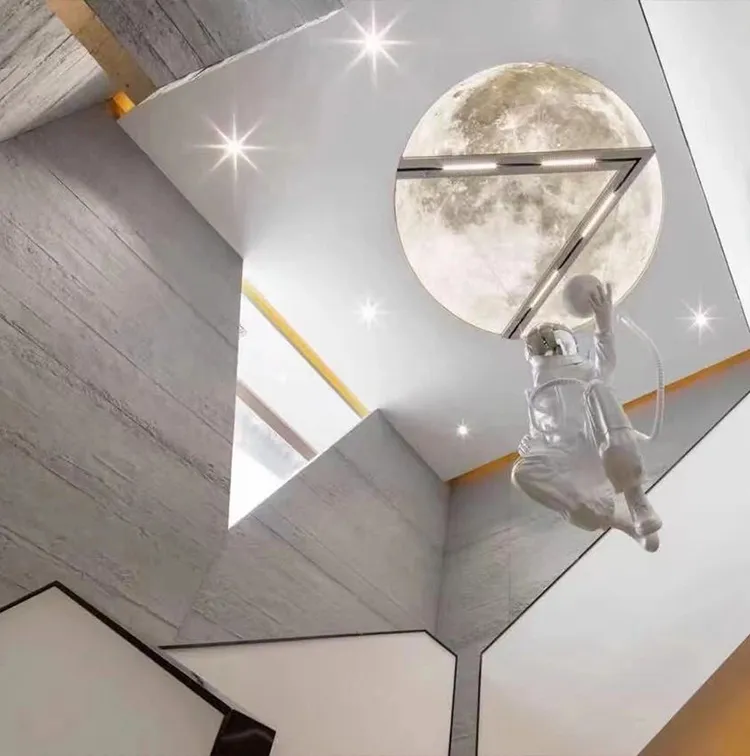
Architecture has always been a dance between vision and material. For centuries, builders and designers have dreamed of shapes that seemed impossible, limited only by the tools and materials at their disposal. Today, that dance is being rewritten—thanks to 3D printing. When it comes to cement boards, a material once associated with rigidity and uniformity, 3D printing is not just a technological leap; it's a creative revolution. It's the kind of shift that makes architects lean forward in their chairs, sketching wilder curves, bolder textures, and spaces that feel less like constructions and more like living, breathing stories. Let's dive into how 3D printed cement boards are reshaping what's possible, one layer at a time.
Think about the last time you walked into a building and truly felt its personality. Maybe it was the way light played off a textured wall, or the unexpected curve of a facade that made you pause. That "wow" factor often starts with materials—and 3D printed cement boards are quickly becoming the stars of that show. Unlike traditional cement boards, which are typically cast in molds or cut from large slabs, 3D printed versions are built layer by layer, using computer-controlled extrusion nozzles that deposit cementitious mixtures with pinpoint precision. This isn't just about making boards faster; it's about making boards that could never exist before.
Take the MCM 3D Printing Series , for example. This line of materials isn't just a product—it's a toolkit for dreamers. By combining advanced 3D printing technology with innovative formulations, MCM has unlocked a world where cement boards aren't just flat panels but canvases for texture, color, and form. Imagine a wall that mimics the undulating surface of a desert dune, or a ceiling that looks like a constellation of semicircle boards suspended in midair. With 3D printing, these aren't just ideas—they're blueprints waiting to be built.
One of the biggest frustrations for architects has always been the gap between what they draw and what can actually be constructed. Traditional cement boards, while durable, are limited by their manufacturing process. Want a wave panel that curls like ocean foam? You'd need a custom mold, which is expensive and time-consuming. Craving a thread-like pattern that weaves across a facade? Good luck cutting that precisely from a slab. 3D printing erases those limits.
Let's talk about wave panels —a design element that's long been admired for its ability to soften hard architectural lines. With 3D printing, a wave panel isn't just a repeated pattern; it can be unique, with each curve varying in height or width to create a dynamic, almost fluid effect. Picture a beachfront restaurant where the exterior walls undulate like the waves just beyond the patio—guests would feel like they're dining inside a seashell, not a building. That's the power of 3D printing: it turns static surfaces into stories.
Then there are semicircle boards and thread patterns . These delicate, intricate designs were once the stuff of art installations, too fragile or complex for everyday use. Now, 3D printed cement boards can incorporate these elements seamlessly into walls, ceilings, or even furniture. Imagine a home office where the accent wall is made of semicircle boards arranged in a spiral, guiding the eye upward and making the room feel larger. Or a hotel lobby with thread-like lines crisscrossing the ceiling, mimicking the paths of constellations—suddenly, a mundane space becomes a journey through the stars.
3D printed cement boards don't exist in a vacuum. Their true magic shines when they're paired with other cutting-edge materials, creating combinations that are as functional as they are beautiful. Let's take a closer look at some of these partnerships and how they're elevating architecture today.
Flexible stone is a game-changer in its own right—a lightweight, durable material that can bend without breaking. When combined with 3D printed cement boards, it opens up new possibilities for cladding. Imagine a retail storefront where the lower half is clad in 3D printed cement boards with a rough, industrial texture, while the upper half features flexible stone in a warm, earthy tone like lime stone (beige) . The contrast of rigid and flexible, rough and smooth, creates a facade that's both inviting and memorable. It's not just about looks, either—flexible stone adds an extra layer of weather resistance, making the building smarter and more resilient.
Fair-faced concrete has long been celebrated for its minimalist, industrial charm—the kind of material that feels honest and unpretentious. But when you 3D print it, you take that raw beauty to a whole new level. 3D printed fair-faced concrete boards can feature intentional, controlled textures: tiny ridges that catch the light, subtle indentations that mimic natural stone, or even custom patterns that reflect a brand's identity. A museum using 3D printed fair-faced concrete for its exterior wouldn't just be a building; it would be a statement about embracing imperfection and finding beauty in simplicity.
For designers craving a touch of luxury, foamed aluminium alloy boards (think vintage silver, vintage gold, or bold gold) pair stunningly with 3D printed cement boards. The cool, sleek finish of the aluminium contrasts with the organic, tactile quality of the cement, creating a look that's both modern and timeless. Imagine a high-end boutique where the walls are 3D printed cement boards in a thread pattern, accented with foamed aluminium alloy panels in vintage gold. The combination would make customers feel like they're stepping into a space that's equal parts art gallery and luxury marketplace—an experience that lingers long after they leave.
| Feature | Traditional Cement Boards | 3D Printed Cement Boards |
|---|---|---|
| Design Complexity | Limited to simple shapes; custom molds required for curves or textures | Unlimited—complex geometries, unique textures, and one-of-a-kind patterns possible |
| Material Waste | High—excess material from cutting slabs or mold spills | Low—only the exact amount of material needed is used |
| Production Time | Long—mold creation and curing can take days or weeks | Short—24-48 hour turnaround for most custom designs |
| Sustainability | Moderate—some eco-friendly options, but high energy use in manufacturing | High—reduced waste, energy-efficient production, and compatibility with recycled materials |
In a world where every industry is being called to do better for the planet, 3D printed cement boards are leading the charge in sustainable architecture. Traditional cement production is notoriously carbon-intensive, and manufacturing cement boards often involves significant waste—slabs cut down to size, molds that go unused after a single project, excess material that ends up in landfills. 3D printing flips that script.
For starters, additive manufacturing (the technical term for 3D printing) is inherently efficient. The printer deposits material only where it's needed, slashing waste by up to 60% compared to traditional methods. That's not just good for the environment—it's good for budgets, too. Builders and designers can create custom pieces without worrying about the cost of excess material.
But it's not just about less waste; it's about better materials. Many 3D printed cement boards, like those in the Epoch Stone or Century Stone lines, are formulated with recycled aggregates or low-carbon binders, reducing their environmental footprint even further. Some manufacturers are even experimenting with carbon-negative cements, which absorb more CO2 over their lifetime than they emit during production. Imagine a school built with these boards—not only would it be a safe, inspiring space for kids, but it would also be actively helping to fight climate change. That's the kind of legacy architects dream of leaving.
Energy efficiency is another win. 3D printers don't require the high temperatures or heavy machinery of traditional manufacturing, cutting down on energy use. And because the boards are lightweight (thanks to their layered, porous structures), transporting them uses less fuel, too. It's a chain reaction of sustainability that starts with the printer and ripples out to the entire construction process.
Numbers and specs tell part of the story, but it's the real-world projects that make 3D printed cement boards come alive. Let's step into a few spaces where these innovative materials have transformed ordinary buildings into extraordinary experiences.
In a small coastal town in Portugal, a community center was struggling to connect with locals. The old building was dark, cramped, and felt more like a storage shed than a gathering space. The architects tasked with its renovation knew they needed something bold—something that would make people want to walk through the doors. Their solution? 3D printed cement boards clad in travertine (starry blue) .
The exterior walls were printed with a wave-like texture, mimicking the ocean that bordered the town. Embedded within the cement were flecks of blue and silver, creating the illusion of a starry night sky reflected on water. Inside, semicircle boards in warm beige (a nod to lime stone (beige) ) curved overhead, softening the space and making it feel intimate. Within months of opening, the center became the heart of the community—kids hosting art classes, seniors playing chess, neighbors gathering for weekend markets. "It's not just a building anymore," one local said. "It's ours."
In downtown Tokyo, a tech company wanted its headquarters to reflect its innovative spirit. The result? A 20-story tower wrapped in 3D printed cement boards inspired by the Lunar Peak series—silvery, golden, and black panels that shift color as the sun moves across the sky. The facade features a repeating pattern of semicircle boards and thread-like lines, creating a sense of movement that makes the building look like it's reaching for the stars.
Inside, the lobby is a study in contrast: fair-faced concrete walls (3D printed, of course) with embedded foamed aluminium alloy boards in vintage gold. The combination of raw concrete and sleek metal feels both grounded and futuristic, perfectly capturing the company's mission. Employees often remark that walking into work feels like stepping into the future—not a cold, sterile future, but one that's warm and full of possibility.
In the American Southwest, a family wanted a home that blended into the desert landscape while still feeling modern. The architect turned to 3D printed cement boards paired with gobi panel and rammed earth elements. The exterior walls feature a custom 3D printed texture that mimics the ripples of sand dunes, finished in warm terracotta and rusty red tones. Large windows frame views of the desert, while the interior uses flexible stone cladding in soft beige to create a cozy, earthy atmosphere.
The home isn't just beautiful—it's also incredibly efficient. The 3D printed boards, with their layered structure, provide excellent insulation, keeping the interior cool in summer and warm in winter. The family reports that their energy bills are a fraction of what they were in their old home, and they love how the building seems to "breathe" with the desert, changing color with the light of dawn and dusk. "It feels like we're living in harmony with the land," they said. "Not just on it."
Architecture isn't just about keeping the rain out or providing a place to work. It's about emotion. The way a space makes you feel—calm, inspired, connected—is what turns a building into a home, a workplace into a community, a museum into a journey. 3D printed cement boards excel at speaking this emotional language, thanks to their texture, color, and versatility.
Take travertine (starry red) or travertine (starry orange) —these materials aren't just colors on a swatch. A wall clad in starry red 3D printed cement boards feels warm and energetic, perfect for a creative studio or a restaurant where you want guests to feel lively and engaged. Starry orange, with its hints of gold and amber, evokes warmth and nostalgia, making it ideal for a family home or a community center. Even the texture plays a role: a rough, tactile surface can make a space feel grounded and authentic, while a smooth, polished finish might feel sleek and forward-thinking.
The Lunar Peak series—silvery, golden, black—taps into a sense of wonder. A ceiling printed with Lunar Peak silvery boards, dotted with tiny indentations that catch the light, feels like looking up at the moon on a clear night. It's a subtle detail, but it transforms a conference room into a space where ideas feel limitless. Similarly, wave panels in soft gray or blue can evoke the calm of the ocean, making a hospital waiting room feel less stressful or a hotel lobby feel more serene.
Perhaps the most powerful emotional impact comes from customization. When a community center uses 3D printed boards with a pattern inspired by local art, or a home features semicircle boards arranged to spell out a family's initials, the space becomes deeply personal. It tells a story. And stories, as we all know, are what connect us.
If the last decade has taught us anything, it's that 3D printing technology evolves faster than we can imagine. So what's on the horizon for 3D printed cement boards? The possibilities are as exciting as they are endless.
One area poised for growth is smart materials. Researchers are experimenting with cement mixtures that can sense temperature changes, repair small cracks on their own, or even generate electricity from sunlight. Imagine a 3D printed cement board that not only clads a building but also powers its lights or alerts maintenance when it needs repairs. That's not science fiction—it's science fact, and it's closer than you might think.
AI integration is another game-changer. Architects and designers could soon input a few parameters—climate, budget, desired aesthetic—and AI-powered tools would generate optimized 3D printing designs, suggesting material combinations (like foamed aluminium alloy board (vintage gold) with travertine (vintage silver) ) or texture patterns that maximize both beauty and efficiency. It's collaboration between human creativity and machine precision, leading to spaces we haven't even dreamed of yet.
We're also likely to see more sustainable innovations, from carbon-negative cements to boards made with locally sourced, renewable materials. Imagine a 3D printer on a construction site, using sand and aggregates from the surrounding area to print custom cement boards on demand—reducing transportation emissions and supporting local economies. It's a vision of architecture that's not just green, but deeply rooted in place.
And let's not forget scale. While 3D printed cement boards are already used in everything from tiny homes to skyscrapers, the technology is getting better at handling larger and more complex projects. We might soon see entire buildings printed in one piece, with 3D printed cement boards seamlessly integrated into the structure—no more separate panels, just a single, flowing form that's as strong as it is beautiful.
3D printed cement boards aren't just a new material—they're a new way of thinking about architecture. They remind us that the best buildings aren't just built; they're crafted, with intention and imagination. Whether it's a community center in Portugal clad in starry blue travertine, a Tokyo office tower reaching for the moon, or a desert home that breathes with the landscape, these boards are proving that when technology and creativity collide, magic happens.
For architects and designers, the message is clear: don't limit yourself to what's been done. Let the materials inspire you. Let 3D printing be your partner in pushing boundaries, telling stories, and creating spaces that matter. For builders and homeowners, it's an invitation to dream bigger—to imagine a home or workplace that's not just functional, but meaningful, sustainable, and uniquely yours.
As we look to the future, one thing is certain: 3D printed cement boards are here to stay. And they're just getting started. So the next time you walk into a building and feel that spark of wonder, take a closer look at the walls. Chances are, you're looking at the future—layer by layer, curve by curve, story by story.
Recommend Products












