
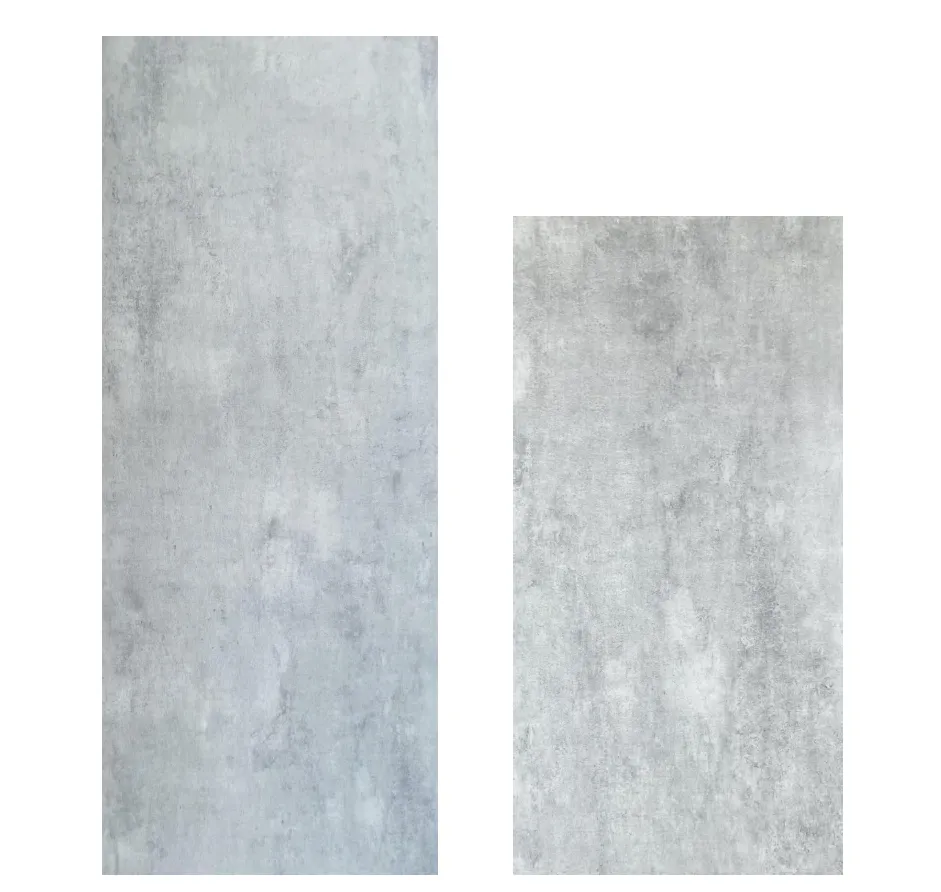
Redefining How We Build, One Layer at a Time
Walk down a cobblestone street in Rome, and you'll feel the weight of history in every chiseled marble block. Step into a sleek, modern museum in Tokyo, and the walls might whisper of innovation—smooth, curved surfaces that seem to defy the laws of traditional construction. Architecture, at its core, has always been a dialogue between the past and the future. But in recent years, that dialogue has exploded into a full-blown revolution, thanks to materials like 3D printing marble concrete board . This isn't just a new product; it's a paradigm shift, blending the timeless elegance of marble with the cutting-edge precision of 3D technology to reimagine what buildings can be.
For decades, architects and designers have grappled with the limitations of traditional building materials. Marble, while stunning, is heavy, brittle, and notoriously difficult to shape into complex forms. Concrete, reliable as it is, often feels cold and monolithic—think of the stark, utilitarian lines of fair-faced concrete structures, impressive but lacking warmth. Even flexible stone , a more modern alternative, has its constraints, struggling to balance durability with the intricate designs that push creative boundaries. Enter 3D printing marble concrete board: a hybrid material that marries the best of marble's luxury, concrete's strength, and 3D printing's design freedom. It's not just building material—it's a canvas for architectural dreams.
Let's break it down simply: Imagine a paste—rich with crushed marble dust, fine concrete aggregates, and a proprietary blend of binders and additives—squeezed through a high-precision nozzle, layer by layer, to build up a solid, structural panel. That's the essence of 3D printing marble concrete board. Unlike traditional marble slabs, which are quarried, cut, and polished in rigid rectangles, this material is "grown" digitally, allowing for curves, undulations, and even hollowed-out sections that would be impossible with a chisel and saw.
The magic lies in the composite formula. By mixing marble powder (often recycled from leftover scraps of traditional marble processing, reducing waste) with high-performance concrete, manufacturers create a material that's lighter than solid marble but just as durable. The 3D printing process itself adds another layer of ingenuity: computer-aided design (CAD) files translate into precise, layer-by-layer deposition, meaning even the most intricate patterns—think of a facade that mimics the ripples of a lake or the spiral of a seashell—can be executed with minimal human error. And because it's printed on-site or in controlled factories, there's no need to transport massive, heavy slabs, cutting down on carbon emissions and logistical headaches.
Traditional marble cutting is a game of subtraction: you start with a block and chip away until you get the shape you want. More often than not, that means compromising—curves get simplified, intricate details get scaled back, all to avoid cracking the brittle stone. 3D printing marble concrete board flips the script. It's additive: you build up the material exactly where you need it, no waste, no limits. Architects are now designing facades with organic, flowing lines that would have been unthinkable a decade ago. Take the "Lunar Peak Tower" in Dubai, a recent project that uses 3D printed marble concrete panels to mimic the jagged, otherworldly contours of a mountain range. The panels, which curve and twist at varying angles, create a facade that shifts with the sun, casting dynamic shadows that make the building feel alive. Compare that to a traditional marble-clad skyscraper, where uniformity is king, and you start to see the revolution.
Even small-scale projects are benefiting. A boutique hotel in Barcelona, for example, used 3D printed marble concrete board to create custom headboards for each room—each one unique, with patterns inspired by local Catalan tile work. The result? A space that feels personal and artisanal, without the exorbitant cost of hand-carving marble. This is the power of design freedom: it turns buildings from generic structures into stories.
The construction industry is one of the world's biggest waste generators. Traditional marble quarrying and cutting can result in up to 50% waste—blocks that crack, shards that are too small to use, dust that's swept away. 3D printing marble concrete board, by contrast, is a model of efficiency. The paste is extruded only where needed, so waste is typically under 10%. Even better, many manufacturers are using recycled marble dust from traditional processing plants, turning what was once landfill fodder into a high-value material. It's a circular economy in action, and it aligns perfectly with the growing demand for green building materials that reduce our environmental footprint.
Take the "EcoWave Community Center" in Portland, Oregon. The building's facade is made entirely of 3D printed marble concrete panels, using 80% recycled marble dust. Not only did this cut the project's carbon emissions by 35% compared to traditional marble, but it also saved on material costs—proving that sustainability and affordability can go hand in hand. When you run your hand over those panels, you're not just touching stone; you're touching a more responsible way of building.
One of the biggest drawbacks of traditional marble is its weight. A standard marble slab can weigh upwards of 200 kg per square meter, requiring heavy-duty structural support and limiting where it can be used. 3D printed marble concrete board, thanks to its layered structure and composite formula, weighs in at just 60–80 kg per square meter—light enough to be used on high-rise facades, interior partitions, and even furniture without compromising safety. But don't let the weight fool you: it's surprisingly tough. Testing shows it can withstand extreme temperatures, moisture, and even moderate impact, making it suitable for both indoor and outdoor use.
This lightweight durability is a game-changer for renovation projects, too. Imagine a historic building in Paris, where adding heavy traditional marble would risk damaging the centuries-old structure. With 3D printed marble concrete panels, you can restore the facade to its original grandeur—even adding modern twists—without straining the building's bones. It's a bridge between preservation and progress, ensuring our architectural heritage can evolve without eroding.
3D printing marble concrete board isn't meant to replace other materials—it's meant to dance with them. Architects are increasingly pairing it with flexible stone for dynamic, texture-rich facades: imagine a building where 3D printed marble concrete forms the rigid, geometric base, and flexible stone wraps around it like a fabric, creating movement and softness. Or combining it with fair-faced concrete for a raw, industrial look with a touch of luxury—the smoothness of the printed marble contrasting with the rough, tactile surface of the concrete.
In Singapore's "Harmony Tower," designers used 3D printed marble concrete board alongside glass and metal to create a facade that reflects the city's blend of tradition and modernity. The marble panels, printed with intricate floral patterns inspired by local botany, add warmth to the sleek glass exterior, making the building feel rooted in its culture while looking firmly to the future. It's a reminder that great architecture isn't about one material stealing the show—it's about materials working in harmony to tell a story.
| Material | Weight (kg/m²) | Customization Level | Production Time (per m²) | Sustainability Score* |
|---|---|---|---|---|
| 3D Printing Marble Concrete Board | 60–80 | High (complex shapes, custom patterns) | 4–6 hours | 4.5/5 |
| Fair-Faced Concrete | 150–200 | Medium (simple forms, limited textures) | 12–24 hours | 3/5 |
| Traditional Marble Slab | 180–220 | Low (mostly flat, simple cuts) | 24–48 hours | 2/5 |
*Sustainability score based on waste reduction, energy use, and recyclability.
Of course, no innovation is without its hurdles. 3D printing marble concrete board is still relatively new, and initial setup costs for large-scale printers can be high. There's also a learning curve for architects and contractors unused to designing for additive manufacturing—CAD files need to be optimized for 3D printing, and teams need training to ensure the panels are installed correctly. Additionally, while durability is strong, long-term performance data (over 50+ years) is still emerging, which can make some clients hesitant to adopt it for critical projects.
But these challenges are surmountable. As demand grows, printer costs are falling, and more manufacturers are entering the space, driving competition and innovation. Training programs are popping up worldwide, teaching architects how to leverage 3D printing's design potential. And as more projects use the material—from small cafes to iconic skyscrapers—we'll gather the long-term data needed to build trust.
Looking ahead, the future is bright. Imagine 3D printers on construction sites, printing panels on-demand to match the day's. Or integrating sensors into the printed layers, turning facades into "smart skins" that monitor temperature, air quality, or structural health. There's even talk of bio-based additives that allow the material to self-heal small cracks, extending its lifespan further. This isn't science fiction—it's the next chapter in building, and 3D printing marble concrete board is leading the way.
At the end of the day, architecture isn't just about bricks and mortar—it's about how spaces make us feel. A cold, sterile building can leave us feeling disconnected; a warm, thoughtfully designed one can inspire, comfort, and bring communities together. 3D printing marble concrete board, with its ability to blend beauty, efficiency, and sustainability, is helping create buildings that do just that. It's a material that doesn't just serve a function—it tells a story, reflects our values, and adapts to the way we live.
So the next time you walk past a building with a facade that seems to flow, or a wall with a pattern so intricate it looks hand-crafted, take a closer look. It might just be 3D printing marble concrete board—quietly revolutionizing architecture, one layer at a time. And as we build the cities of tomorrow, let's hope we build them with materials that honor both the past and the planet, creating spaces that don't just stand tall, but stand with purpose.
Recommend Products












