
Architecture has always been a dialogue between the past and the future. From the marble columns of ancient Rome to the glass skyscrapers of today, each era leaves its mark through the materials it chooses. But what if we could take the timeless beauty of classical stone and infuse it with the precision of cutting-edge technology? That's exactly what the MCM 3D Printing Series is doing—redefining how we build, one layer at a time. And at the heart of this revolution? A material that bridges millennia: Roman Huge Travertine, reimagined through 3D printing. Let's dive into how this innovation is reshaping architectural design, and why it might just be the material your next project has been waiting for.
First, let's get familiar with the star of the show: MCM, or Modified Composite Materials. You might have heard the term thrown around in design circles, but what makes it so special? Think of MCM as the Swiss Army knife of building materials—durable, lightweight, and surprisingly flexible. Unlike traditional stone or concrete, which can be heavy and unforgiving, MCM blends polymers, minerals, and fibers to create sheets that are thin yet strong, easy to install, and endlessly customizable. It's the reason architects and designers have been buzzing about it for years: finally, a material that doesn't force you to choose between aesthetics and practicality.
But MCM didn't stop at being "just" flexible. The MCM 3D Printing Series takes things a step further. Imagine a production process where you can "draw" a building material into existence, layer by layer, with the precision of a artist's pen. That's 3D printing for architecture—and when paired with MCM, it unlocks possibilities that were once confined to the realm of blueprints. No more the limitations of traditional cutting or molding; with 3D printing, you can create intricate textures, curved surfaces, and custom shapes that would make a classical sculptor weep (in a good way).
Now, let's talk about the material stealing the spotlight: Roman Huge Travertine. Travertine itself is no stranger to greatness. For centuries, it's adorned the facades of iconic structures—think the Colosseum, the Trevi Fountain, or the Baths of Caracalla. Its warm, porous texture, with subtle veins and earthy tones, has a way of making buildings feel both grand and grounded. But traditional travertine comes with a catch: it's heavy, difficult to transport, and often requires extensive cutting to fit specific designs. Enter MCM 3D printing, and suddenly, Roman Huge Travertine becomes something entirely new.
So, what makes "huge" travertine so huge? We're talking about slabs that dwarf traditional stone panels—up to 3 meters in length, with consistent thickness and zero cracks. Thanks to 3D printing, these massive sheets are created in one continuous process, eliminating the need for (pīnjiē, or "piecing together") that weakens traditional stone. The result? A facade that looks like it was carved from a single block of stone, but weighs a fraction of the real thing. This isn't just about size, though; it's about texture. The 3D printing process can replicate the natural pitting and veining of travertine with uncanny accuracy, right down to the way light plays off its surface at different times of day. It's like having the soul of ancient Rome, but with the convenience of modern engineering.
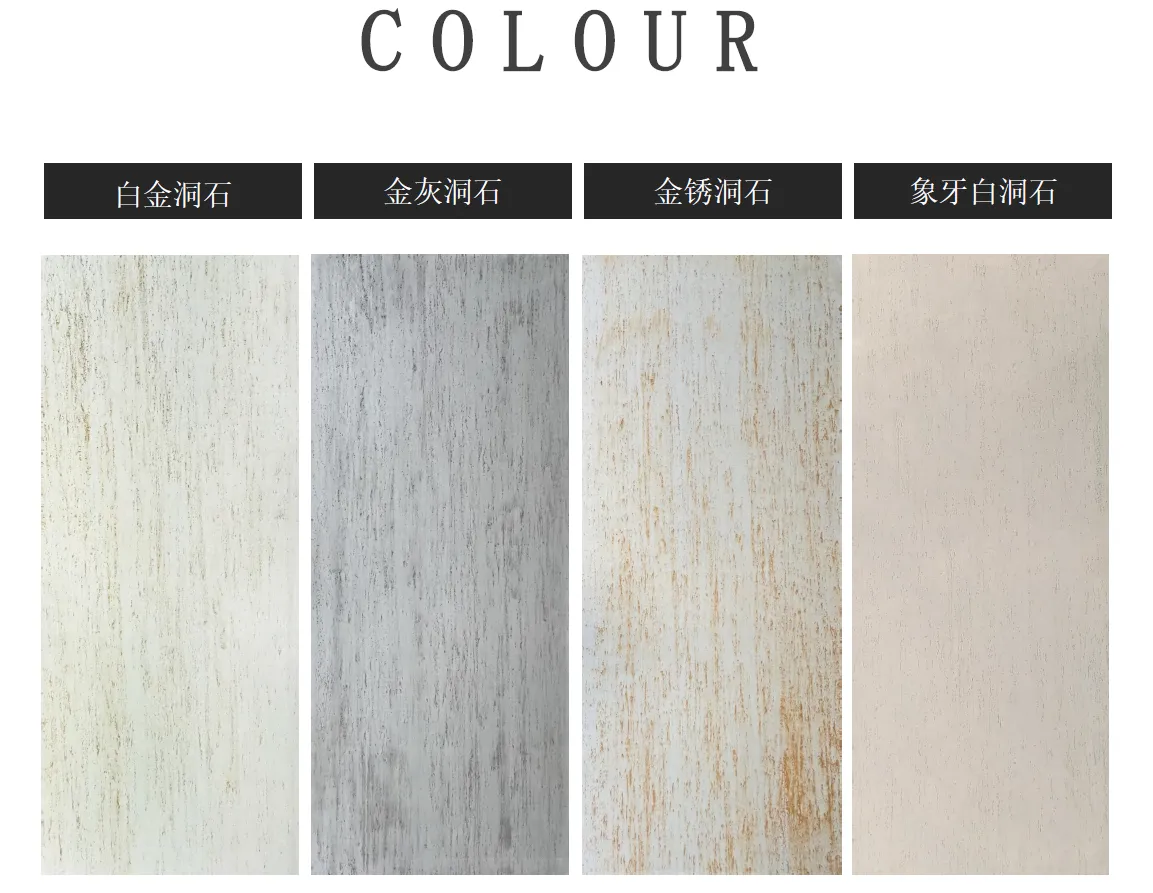
But why stop at replicating the past? The MCM 3D Printing Series lets designers tweak Roman Huge Travertine to fit contemporary tastes. Want a vintage silver finish? There's Travertine (Vintage Silver). Craving a pop of color? Travertine (Starry Blue) adds a celestial twist, with tiny, iridescent flecks that catch the light like stars. And for those who prefer a more understated look, Travertine (Beige) stays true to the material's roots, with a warm, sand-like hue that complements everything from minimalist homes to bustling commercial spaces.
Roman Huge Travertine might be the headline act, but it's far from the only star in the MCM lineup. Let's take a quick tour of some complementary materials that are making waves in architectural design—because great design is all about mixing and matching.
First up: MCM Flexible Stone. If Roman Huge Travertine is the bold protagonist, Flexible Stone is its versatile sidekick. As the name suggests, this material bends. Not in a flimsy way, but in a "let's wrap it around a curved wall" way. Imagine a museum lobby with a sweeping, organic facade that flows like water—no rigid angles, no unsightly seams. That's Flexible Stone in action. It's thin (as little as 3mm thick), lightweight, and can be printed in custom patterns, making it perfect for accent walls, furniture, or even ceiling panels. Pair it with Roman Huge Travertine on a building's exterior, and you've got a design that balances strength and softness, tradition and modernity.
Then there's Lunar Peak Silvery—a material that feels like it was plucked from the surface of the moon. With a metallic, almost iridescent finish, it shimmers subtly in the light, adding a touch of futurism to any space. Picture a high-rise office building where the lower floors are clad in Roman Huge Travertine (Vintage Gold), grounding the structure in warmth, while the upper floors transition to Lunar Peak Silvery, reflecting the sky and giving the building a sense of upward movement. It's a visual story—earth to sky—and it's only possible because MCM materials play so well together.
And let's not forget the MCM Big Slab Board Series, which includes everything from Rust Square Line Stone (with its industrial, weathered look) to Bali Stone (inspired by the tropical textures of Southeast Asia). These slabs are designed to work seamlessly with Roman Huge Travertine, whether you're creating a cohesive facade or mixing textures for contrast. For example, a restaurant might use Roman Huge Travertine for its exterior, then bring Bali Stone indoors for the walls, creating a flow that feels both exotic and familiar.
Okay, so the design possibilities are endless—but what about the nuts and bolts? Why should architects and builders care about MCM 3D printed materials beyond their good looks? Let's break it down.
First, sustainability. Traditional stone mining is resource-intensive, often leaving behind scars on the landscape. MCM, on the other hand, is made from a blend of recycled minerals and polymers, reducing waste and minimizing environmental impact. The 3D printing process itself is efficient, using only the exact amount of material needed for a project—no more excess chunks of stone ending up in landfills. And because MCM panels are lightweight, transporting them requires less fuel, cutting down on carbon emissions. It's a win-win: you get a beautiful material, and the planet gets a break.
Then there's durability. MCM might be lightweight, but it's tough. It's resistant to water, fire, and UV rays, meaning it won't fade or crack under harsh weather conditions. Traditional travertine, for all its beauty, is porous and can stain easily; MCM Roman Huge Travertine, however, is coated with a protective layer that repels dirt and moisture. That means less maintenance, fewer repairs, and a building that looks fresh for decades. For commercial property owners, that translates to lower long-term costs—a selling point that's hard to ignore.
Installation is another game-changer. Traditional stone slabs require cranes, heavy machinery, and a team of workers to maneuver into place. MCM panels? They're light enough to be carried by two people and installed with simple tools. This not only speeds up construction time (imagine finishing a facade in weeks instead of months) but also reduces labor costs. For a developer racing to meet a deadline, that's a difference-maker.
Enough talk—let's look at how these materials are transforming real spaces. Take the "Skyline Residences" in Dubai, a hypothetical (but entirely plausible) luxury apartment complex. The architects wanted a design that paid homage to ancient Roman grandeur while embracing modern minimalism. Their solution? Roman Huge Travertine (Starry Blue) for the exterior, with its deep, celestial hue, paired with Lunar Peak Silvery accents on the balconies. The 3D printed travertine slabs create a seamless facade that shimmers like a night sky, while the silvery peaks add a touch of metallic elegance. Inside, the lobby features MCM Flexible Stone in a warm, terracotta tone, curved around the reception desk to create a welcoming, organic feel. Residents rave about how the building "feels alive"—changing with the light of day, from soft blue at dawn to deep indigo at dusk.
Then there's the "Heritage Museum" in Kyoto, Japan, which blends traditional Japanese aesthetics with contemporary materials. The exterior uses Roman Huge Travertine (Beige) to mimic the earthy tones of local stone, but with the durability to withstand Japan's humid climate. The roof, however, is a bold choice: Foamed Aluminium Alloy Board (Vintage Gold), 3D printed into intricate, wave-like patterns that evoke the shape of traditional Japanese tiles. The contrast between the warm travertine and the metallic gold creates a building that feels both rooted in history and forward-thinking. Inside, exhibit walls are clad in Thread—a delicate, woven MCM material that adds texture without overwhelming the artifacts. It's a masterclass in balancing old and new.
Even smaller projects are getting in on the action. A boutique café in Portland, Oregon, called "Travertine & Thread," uses Linear Travertine (Claybank) for its exterior walls, with its subtle, linear texture adding depth to the small storefront. Inside, the counter is made from a single slab of Roman Huge Travertine (Vintage Black), polished to a smooth finish that contrasts beautifully with the rough-hewn walls. The owners report that customers often comment on how "inviting" the space feels—proof that even in small doses, MCM materials can make a big impact.
| Feature | Traditional Travertine | MCM 3D Printed Roman Huge Travertine |
|---|---|---|
| Weight | Heavy (80-100 kg/m²) | Lightweight (15-20 kg/m²) |
| Customization | Limited (shapes restricted by cutting tools) | Unlimited (intricate textures, curves, and colors) |
| Sustainability | High environmental impact (mining, transportation) | Low impact (recycled materials, efficient production) |
| Installation Time | Slow (requires heavy machinery and precision cutting) | Fast (lightweight, easy to handle) |
| Durability | Prone to staining, cracking, and weathering | Water, fire, and UV resistant; low maintenance |
So, what's next for MCM 3D printing? The possibilities are as limitless as the imagination of designers. One emerging trend is "biophilic design"—creating spaces that connect people with nature. Imagine a hospital where the walls are 3D printed with MCM materials that mimic the texture of tree bark (hello, Wood Grain Board) or the flow of a stream (Stream Limestone, Claybank). Studies show that exposure to natural elements speeds up healing, and MCM makes it possible to bring those elements indoors without the hassle of maintaining real wood or stone.
Another area of growth is "smart materials." Researchers are experimenting with adding conductive layers to MCM panels, turning facades into giant solar collectors or interactive displays. Imagine a office building where the Roman Huge Travertine facade not only looks beautiful but also generates electricity for the building—talk about form meeting function.
And let's not forget about affordability. As 3D printing technology becomes more widespread, the cost of MCM materials is expected to drop, making them accessible to smaller projects—think community centers, schools, or even single-family homes. No longer will stunning architectural design be reserved for the ultra-wealthy; soon, anyone could have a home clad in Roman Huge Travertine or accented with Lunar Peak Silvery.
At the end of the day, architecture is about more than just buildings—it's about creating spaces that inspire, comfort, and connect us. The MCM 3D Printing Series, with stars like Roman Huge Travertine, is doing just that. It's taking the best of the past—the timeless beauty of travertine, the grandeur of classical design—and infusing it with the innovation of the future: precision, sustainability, and endless creativity. Whether you're an architect dreaming up the next iconic skyscraper or a homeowner looking to add a touch of elegance to your space, these materials offer something truly special: the ability to build not just for today, but for generations to come.
So, the next time you walk past a building and find yourself thinking, "Wow, that's beautiful," take a closer look. It might just be MCM 3D printed magic—layer by layer, redefining what's possible in architecture.
Recommend Products












