
Walk into any modern boutique hotel, sleek office lobby, or high-end retail space today, and you'll likely notice something different about the walls. They're not just surfaces—they're stories. Textures that invite touch, patterns that catch the light, materials that feel both timeless and utterly new. Behind this shift is a quiet revolution in building materials: MCM, or Modified Composite Material, and at its cutting edge is 3D printing. Today, we're diving into one of the most exciting developments in this space: the marriage of 3D printing technology with Marble Interstellar Gray, a material that's redefining what's possible in design.
For decades, architects and designers have grappled with a trade-off: beauty versus practicality. Natural stone is stunning but heavy, fragile, and hard to customize. Traditional composites offer durability but often lack the soul of natural materials. Then came MCM. Short for Modified Composite Material, MCM blends the best of both worlds—lightweight, weather-resistant, and infinitely adaptable—without sacrificing aesthetics. It's the reason why spaces like trendy cafes and luxury resorts now feel as good as they look.
But MCM's true potential has only begun to unfold, thanks to 3D printing. Imagine a world where you don't just choose a material—you design it. Where the pattern on a wall isn't limited by molds or cutting tools, but by the boundless creativity of the human mind. That's the promise of the MCM 3D printing series, a collection of technologies and materials that's turning design dreams into tangible reality.

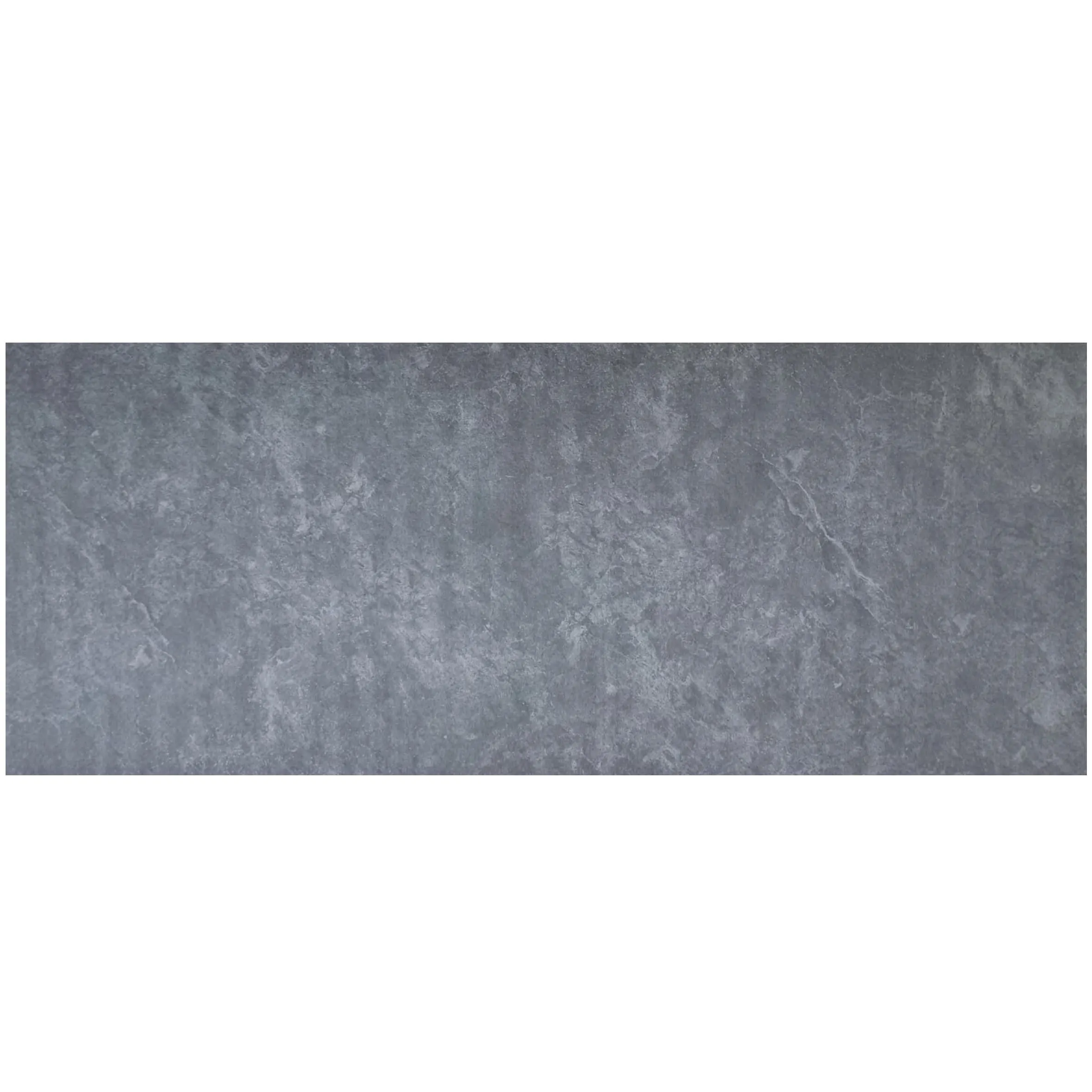
At the heart of this innovation is Marble Interstellar Gray. Close your eyes for a moment and picture it: a base of soft, smoky gray that shifts in the light, like storm clouds at dusk. Swirls of lighter and darker grays weave through it, reminiscent of distant galaxies—hence the name "Interstellar." But it's not just the color that captivates; it's the texture. Run your hand across it, and you'll feel a subtle, almost organic grain—smooth in some spots, gently textured in others—like polished stone that's been touched by time. It's marble, reimagined.
What makes Marble Interstellar Gray truly special, though, is how it's made. Using 3D printing technology, manufacturers can layer the material with precision, creating patterns and textures that would be impossible with traditional casting or cutting. Want a wall that mimics the flow of a river? Or a facade that looks like it's been carved by wind? With 3D printed MCM, it's not just possible—it's straightforward.

Of course, great design isn't just about looks. It's about function, too. That's where flexible stone comes into play. A key component of many MCM products, flexible stone is exactly what it sounds like: stone-like material that bends. This might sound like a small detail, but it's a game-changer. Traditional stone is rigid, making it hard to install on curved surfaces or in tight spaces. Flexible stone? It wraps around columns, hugs arches, and fits into corners with ease, all while maintaining the strength and durability of solid stone.
Pair flexible stone with 3D printing, and you get a material that's as versatile as it is beautiful. Take the MCM big slab board series, for example. These large, lightweight panels are perfect for creating seamless walls or statement facades. When printed with Marble Interstellar Gray, they become focal points—imagine a hotel lobby where the entire back wall is a single, sweeping slab of Interstellar Gray, its galaxy-like patterns drawing the eye and setting a mood of calm sophistication.

| Feature | Traditional MCM Production | 3D Printed MCM (Marble Interstellar Gray) |
|---|---|---|
| Design Flexibility | Limited by molds and cutting tools; complex patterns require custom molds, increasing cost and lead time. | Virtually unlimited; patterns, textures, and shapes are programmed digitally, allowing for one-of-a-kind designs at no extra cost. |
| Material Waste | High; cutting and shaping often result in leftover scraps that can't be reused. | Low; 3D printing layers material only where needed, reducing waste by up to 70%. |
| Installation | Heavier panels may require additional structural support; rigid materials can't conform to curved surfaces. | Lightweight (up to 50% lighter than traditional MCM); flexible options conform to curves, simplifying installation. |
| Lead Time | Weeks to months, especially for custom designs. | Days to weeks; digital design and printing streamline the process. |
| Durability | Strong, but patterns may fade or wear over time in high-traffic areas. | Equally strong, with printed textures integrated into the material, ensuring they won't wear off. |

To understand the impact of 3D printed Marble Interstellar Gray, look no further than the projects already using it. Take the "Ethereal Lobby" project in downtown Chicago, a boutique hotel designed by award-winning firm Studio Luminance. The client wanted a space that felt "both grounded and otherworldly," says lead designer Mia Chen. "We tried traditional marble, but it was too heavy for the curved walls, and the patterns felt too uniform. Then we discovered 3D printed Marble Interstellar Gray. The ability to print the material in custom waves, mimicking the flow of a nebula, was exactly what we needed. Now, guests walk in and stop—they reach out to touch the walls, they take photos. It's become the heart of the hotel."
Another example is the "Gobi Office" in Dubai, where architects paired Marble Interstellar Gray with foamed aluminium alloy board (vintage silver) to create a space inspired by desert landscapes. The warm grays of the Interstellar Gray contrast beautifully with the cool metallic sheen of the aluminium, creating a balance of textures that feels both modern and timeless. "3D printing let us match the scale of the aluminium panels perfectly," explains project manager Kareem Al-Mansoori. "No gaps, no mismatched patterns—just a seamless transition between materials. It's the kind of precision that would have been impossible a decade ago."
While 3D printing excels at intricate details, it's also transforming large-scale design, thanks to the MCM big slab board series. These panels, which can be as large as 4x8 feet, are ideal for creating expansive, uninterrupted surfaces. When printed with Marble Interstellar Gray, they turn vast lobbies, conference rooms, or retail floors into immersive environments. Imagine walking into a tech company's headquarters where the entire reception area is clad in big slab Interstellar Gray, its subtle patterns creating a sense of depth that makes the space feel cozy despite its size.
And it's not just about size. The big slab board series also offers consistency. In traditional stone, veining and color can vary dramatically from slab to slab, making it hard to create a uniform look. With 3D printing, every panel is identical—unless you want them to be different. Designers can program slight variations, mimicking the natural inconsistency of stone, but with full control over the outcome. It's the best of both worlds: the organic feel of natural materials with the reliability of modern manufacturing.
In an era where sustainability is more than a buzzword—it's a responsibility—3D printed MCM stands out for its eco-friendly credentials. Traditional stone mining is resource-intensive, often requiring heavy machinery and leaving large environmental footprints. MCM, by contrast, is made with recycled materials and requires less energy to produce. Add 3D printing to the mix, and the benefits multiply. By reducing waste, cutting down on transportation (thanks to lightweight panels), and using local production facilities, 3D printed MCM is helping designers create beautiful spaces without costing the Earth.
Flexible stone, too, plays a role here. Because it's lighter than traditional stone, it reduces the need for structural reinforcement, which means less steel, concrete, and energy used in construction. It's a small change, but multiplied across thousands of projects, it adds up to a big impact.
So, what's next for 3D printed MCM and Marble Interstellar Gray? If experts are to be believed, the possibilities are endless. We're already seeing experiments with color-changing materials, where 3D printed MCM panels shift hue based on light or temperature. Imagine a facade that's soft gray in the morning, deep blue at dusk, and starry silver at night—all thanks to programmable 3D printed textures.
There's also the potential for smarter materials. Embedding sensors into 3D printed MCM could turn walls into functional elements: panels that monitor temperature, adjust lighting, or even purify the air. And as 3D printing technology becomes more accessible, we might see smaller firms and even homeowners getting in on the action, designing custom backsplashes, accent walls, or furniture pieces that reflect their unique style.
At the end of the day, design is about connection. It's about creating spaces that make us feel something—calm, inspired, curious. 3D printed Marble Interstellar Gray, with its blend of beauty, flexibility, and innovation, is more than just a building material. It's a tool for connection. It lets designers tell stories, helps businesses create identities, and allows people to live and work in spaces that feel truly their own.
Whether you're an architect dreaming up the next iconic building, a designer crafting a cozy cafe, or a homeowner looking to add a personal touch to your space, the message is clear: the future of building materials is here, and it's customizable, sustainable, and full of heart. And in that future, Marble Interstellar Gray and the MCM 3D printing series are leading the way—one layer, one texture, one story at a time.
Recommend Products












