
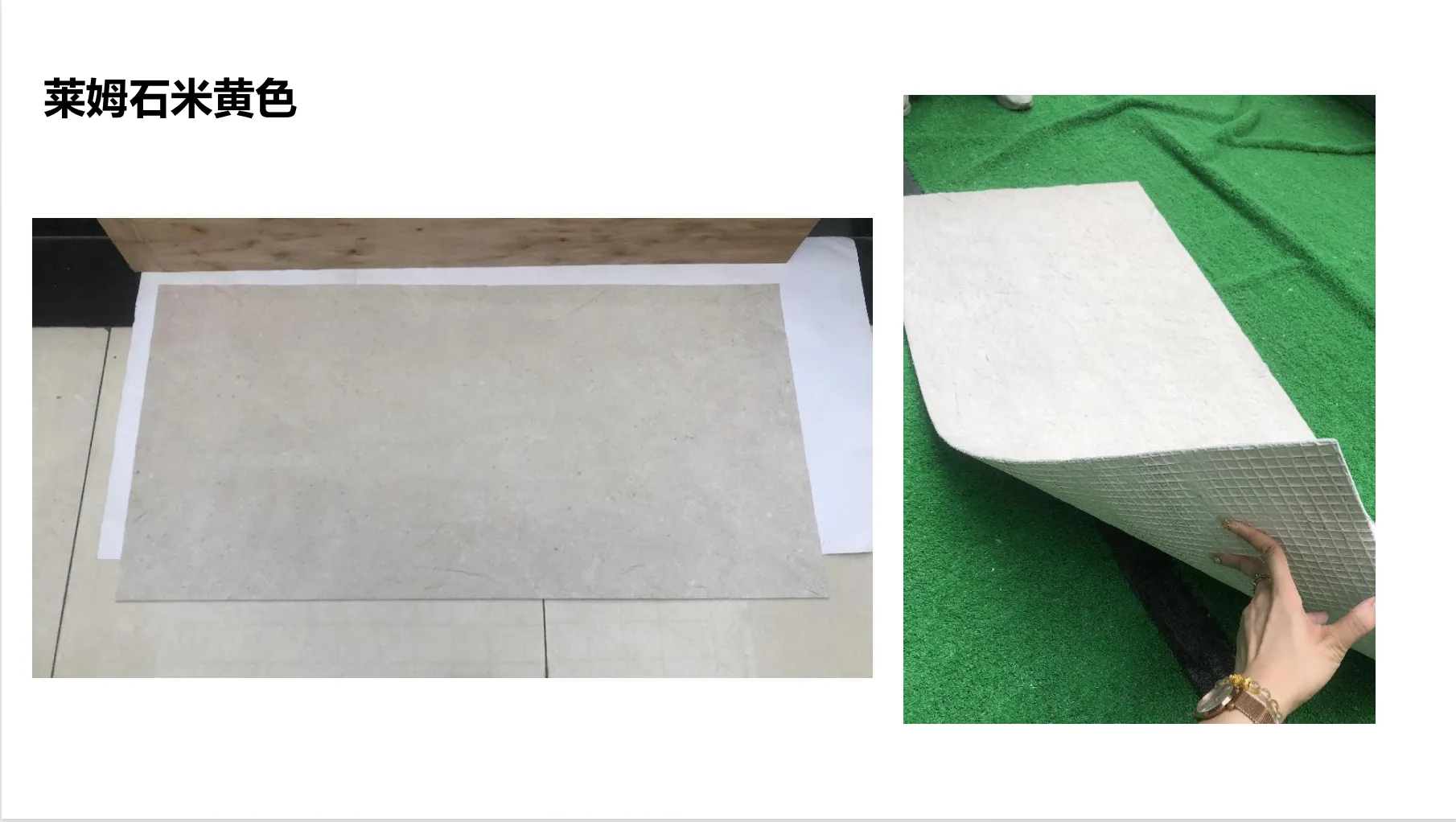
Every architect, homeowner, or designer knows the weight of choosing building materials. It's not just about aesthetics—though the warm glow of lime stone(beige) or the modern edge of MCM flexible stone can make a space sing. It's about the planet, too. The materials we pick leave footprints: in quarries, factories, landfills, and the air we breathe. Today, let's pull back the curtain on two popular choices: the timeless naturalness of lime stone (beige) and the innovative flexibility of MCM products. Which one truly walks softer on the Earth?
There's a reason lime stone(beige) has been a staple for centuries. Its soft, earthy tones—think warm sand dunes at dawn—blend seamlessly with both rustic cottages and sleek urban homes. Flip through lime stone real photos , and you'll see it: a material that feels "alive," as if it carries the memory of the oceans and sediments that formed it millions of years ago. But that natural beauty comes with a hidden price tag.
First, extraction. To get lime stone (beige) from the earth, quarries carve into landscapes, disrupting ecosystems. Heavy machinery tears through soil, displacing wildlife and fragmenting habitats. In regions where lime stone is abundant, entire hillsides are stripped bare, leaving scars that take decades to heal. Then there's transportation: raw stone is heavy. A single slab of lime stone (beige) can weigh hundreds of pounds, meaning trucks burn more fuel to haul it from quarries to job sites. In 2023, the U.S. Geological Survey reported that stone transportation accounts for 12% of carbon emissions in the construction materials sector—much of that from dense materials like lime stone.
Durability is often cited as a plus for lime stone (beige), but even that has an environmental catch. While it can last decades, installation is unforgiving. A cracked slab during transport or a mismeasurement on-site means wasted stone—stone that required energy to extract, cut, and ship. And when lime stone (beige) finally reaches the end of its life? It's rarely recycled. Most often, it ends up in landfills, taking up space and leaching trace minerals into the soil over time.
Don't get me wrong—lime stone (beige) has charm. Its porous texture breathes, regulating humidity in homes, and its natural variation means no two slabs are identical. But in a world grappling with climate change, we have to ask: Is "natural" always "sustainable"?
Enter MCM flexible stone —a rising star in the building materials world. Short for "Modified Composite Material," MCM is a blend of minerals, polymers, and recycled components, engineered to mimic the look of natural stone (think travertine (starry green) or rust square line stone ) but with a fraction of the environmental impact. What makes it different? Let's start with its birth.
Unlike lime stone (beige), MCM flexible stone isn't quarried—it's manufactured. But don't let that fool you into thinking it's "unnatural." Modern MCM production lines prioritize sustainability: many brands use recycled stone dust from quarry waste, reducing the need for new extraction. The MCM 3D printing series takes this further, using additive manufacturing to minimize material waste. Instead of cutting slabs from blocks (and discarding 30-40% of the stone as scrap), 3D printers deposit layers of MCM precisely, so almost every ounce of material ends up in the final product.
Flexibility is another eco-win. MCM sheets are thin—often just 3-5mm thick—and lightweight. Compare that to a lime stone (beige) slab, which can be 20mm thick or more. Lighter materials mean lower transportation emissions: a truck can carry 3-4 times more MCM sheets than lime stone slabs, cutting fuel use per square meter by up to 60%. On-site, MCM's flexibility shines, too. It bends around curves, adheres to uneven surfaces, and trims easily, so installers waste less material. A study by the Green Building Council found that MCM installation generates 75% less waste than traditional stone installation.
Then there's longevity. MCM flexible stone is resistant to cracks, stains, and weathering—even in harsh climates. That means fewer replacements over time, reducing the cycle of extraction, production, and disposal. And when it does reach the end of its life? Many MCM products are recyclable, with manufacturers offering take-back programs to grind old sheets into new material. It's a closed-loop system that lime stone (beige), with its non-biodegradable nature, can't match.
To truly see the difference, let's break down the environmental impact of lime stone(beige) and MCM flexible stone across key categories:
| Environmental Factor | Natural Lime Stone (Beige) | MCM Flexible Stone |
|---|---|---|
| Extraction/Production Emissions | High: Quarrying machinery emits 1.2-1.8 tons of CO₂ per ton of stone; cutting and finishing add 0.5 tons more. | Low: Uses 30-50% recycled materials; 3D printing reduces energy use by 40% vs. traditional manufacturing. |
| Transportation Impact | High: Heavy slabs require more fuel; 1 truck = ~200 sq. ft. of stone, emitting 0.15 tons CO₂ per sq. ft. | Low: Lightweight sheets; 1 truck = ~800 sq. ft. of MCM, emitting 0.04 tons CO₂ per sq. ft. |
| Installation Waste | High: 15-20% of material wasted due to breakage, cutting errors, or misfits. | Low: 3-5% waste; flexibility reduces breakage, and precise sizing minimizes cuts. |
| Durability & Lifespan | Long (50+ years) but prone to cracking; repairs often require full slab replacement. | Long (50+ years) with better impact resistance; minor damage can be patched without full replacement. |
| End-of-Life Recyclability | Low: Rarely recycled; most ends up in landfills. | High: 80-90% recyclable; manufacturers repurpose old sheets into new MCM products. |
MCM's sustainability story doesn't end with flexible stone. The MCM project board series includes eco-friendly alternatives like foamed aluminium alloy board (vintage silver) and foamed aluminium alloy board (vintage gold) . These lightweight, corrosion-resistant panels use 70% recycled aluminum, with production requiring 95% less energy than mining new aluminum ore. They're perfect for exterior cladding, reflecting heat to reduce building energy use—a bonus for both the planet and utility bills.
Then there's MCM big slab board series , which mimics the grandeur of natural stone slabs (like boulder slab (vintage silver) or marble interstellar gray ) but with the same low-impact production as flexible stone. These large-format panels (up to 4ft x 8ft) mean fewer seams, faster installation, and less waste—proving that sustainability and luxury can go hand in hand.
Natural lime stone (beige) is beautiful, no doubt. Its organic texture and timeless appeal have earned it a place in architecture for millennia. But in 2025, as we face mounting climate challenges, its high extraction costs, transportation emissions, and wasteful lifecycle make it a less sustainable choice.
MCM flexible stone , on the other hand, represents the future of construction: materials designed with the planet in mind. From recycled inputs and low-waste production to lightweight transport and recyclable end-of-life, it checks every eco-box without sacrificing style. Whether you're drawn to the cosmic allure of travertine (starry green) or the industrial chic of fair-faced concrete , MCM offers a way to build beautifully and responsibly.
At the end of the day, the choice is yours. But next time you flip through lime stone real photos or admire an MCM-clad facade, remember: every slab, every sheet, is a vote for the kind of world you want to live in. For me? I'm leaning toward MCM—not just for its looks, but for the hope it represents: that we can build better, without breaking the planet.
Recommend Products












