

Choosing the right material for your home or commercial space is like picking a lifelong companion—you want something that's not just beautiful at first glance, but also grows with you, stands the test of time, and doesn't turn into a high-maintenance hassle. For decades, red travertine has been a top pick for designers and homeowners alike, thanks to its warm, earthy tones that range from soft terracotta to deep crimson, and its unique veining that tells a story of nature's artistry. But in recent years, a new player has entered the ring: MCM Red Travertine, a engineered alternative that promises the same stunning look with a fraction of the upkeep. So, which one is right for you? Let's dive into the world of natural red travertine and MCM Red Travertine, exploring their maintenance needs, long-term care, and how they stack up in real life.
First, let's get to know the classic: natural red travertine. Formed over thousands of years by mineral-rich hot springs, this sedimentary rock is a type of limestone, but with a twist—its porous structure, created by trapped air bubbles and water flow, gives it a unique, almost honeycombed texture. Those tiny pores are part of its charm, allowing light to play off the surface and highlighting the rich red and gold undertones that make it so sought after. Walk into a room with natural red travertine floors or walls, and you'll immediately feel a sense of warmth and history, like stepping into a sunlit canyon in the American Southwest.
But here's the catch: those pores that make it beautiful also make it a bit of a diva when it comes to maintenance. Imagine spilling a glass of red wine on natural red travertine—if you don't wipe it up within minutes, the liquid seeps into those pores, leaving a stain that's tough to remove, even with harsh cleaners. That's because natural stone, by nature, is porous, and red travertine is no exception. Its porosity also makes it vulnerable to etching from acidic substances like lemon juice, vinegar, or even some cleaning products, which can eat away at the surface and leave dull, discolored marks.
A Homeowner's Love-Hate Relationship
Take Sarah, a homeowner in Chicago who fell in love with natural red travertine for her kitchen backsplash. "I saw a photo online of this stunning red travertine with golden veins, and I knew it would warm up my all-white kitchen," she says. "The installation was beautiful—every tile had a unique pattern, like a little piece of art. But six months in, I noticed a dark spot near the stove. Turns out, it was from a tomato sauce splatter I didn't clean right away. I tried everything—baking soda, stone cleaners, even a professional service—but the stain had set into the pores. Now, I stare at that spot every time I cook, and it drives me crazy."
So, what does it take to keep natural red travertine looking its best? Let's break it down:
Over time, even with perfect care, natural red travertine may show signs of wear—faded areas, minor scratches, or a dulled finish. Professional polishing can help restore its shine, but that's an added cost (usually $2–$5 per square foot) that adds up over the years.
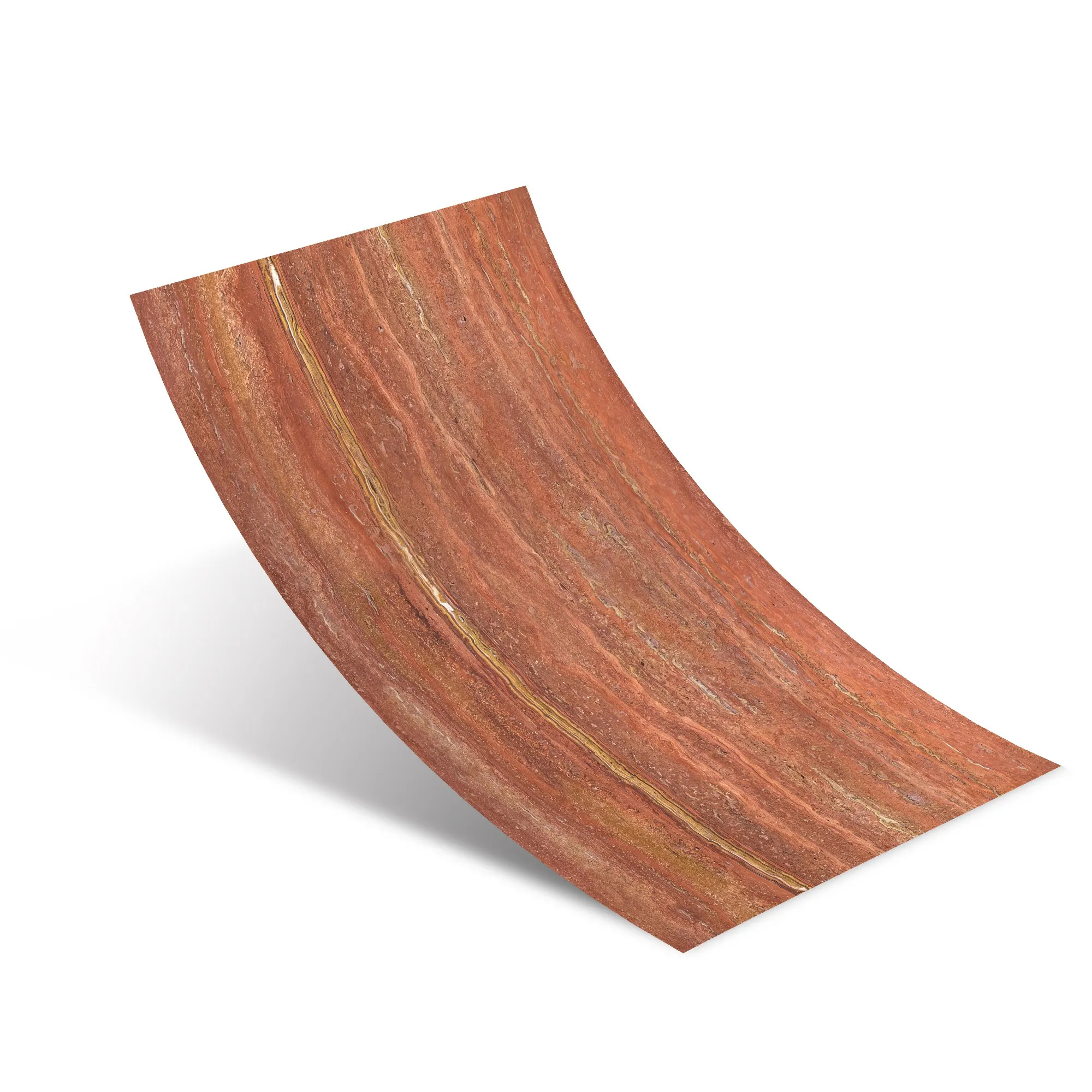
Now, let's meet the newcomer: MCM Red Travertine. MCM stands for Modified Composite Material, a revolutionary technology that takes the beauty of natural stone and wraps it in a more durable, low-maintenance package. At the heart of MCM Red Travertine is MCM flexible stone —a thin, lightweight material made by combining natural stone particles with a polymer resin binder. The result? A product that looks and feels like natural red travertine but with superpowers: flexibility, durability, and near-zero porosity.
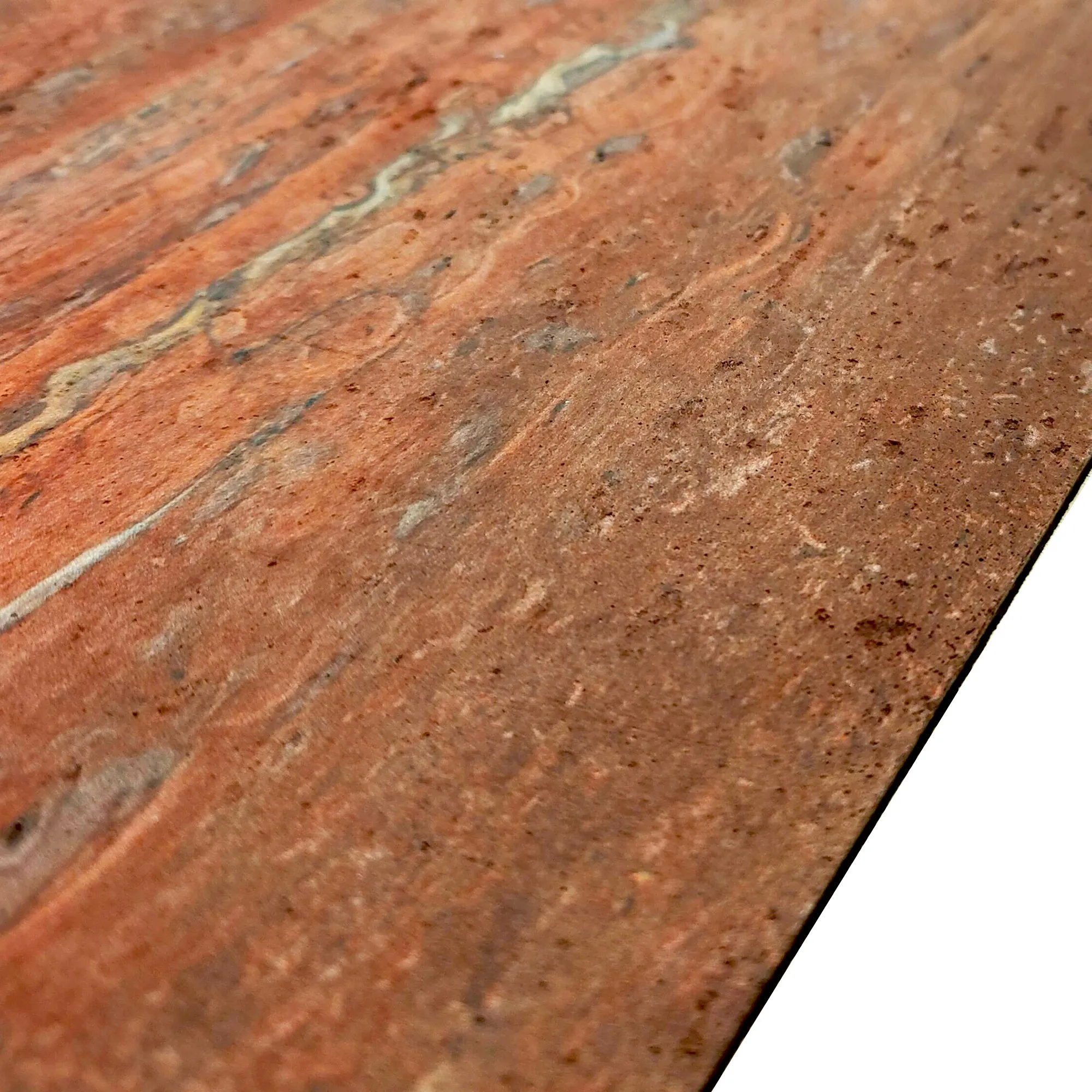
One of the biggest advantages of MCM flexible stone is its consistency. Unlike natural stone, which can vary widely in color and pattern from slab to slab, MCM Red Travertine is engineered to replicate specific looks with precision. Want the deep red of natural travertine with a hint of sparkle? There's even travertine (starry red) , a design option that adds subtle metallic flecks, mimicking the night sky reflected on a canyon wall. And because it's flexible, MCM can be installed on curved surfaces, backsplashes, or even ceilings—something natural stone, with its rigidity and weight, struggles to do.
But the real star here is its maintenance profile. Since MCM flexible stone is non-porous (thanks to that polymer binder), liquids bead up on the surface instead of seeping in. Stains? Spills can sit for hours (though we still recommend wiping them up, just to be safe) without leaving a mark. Acidic substances? No problem—lemon juice or vinegar won't etch the surface. And scratches? MCM is more scratch-resistant than natural travertine, thanks to its resin coating, making it ideal for high-traffic areas like entryways, kitchens, and even outdoor patios.
From Frustration to Freedom: A Restaurant's Experience
Mario, the owner of a popular Italian restaurant in Miami, switched from natural red travertine to MCM Red Travertine for his dining room floors after years of battling stains. "We had natural travertine for 10 years, and it looked amazing—until the first time a customer spilled red wine. We sealed it every year, but with 200+ people dining daily, spills were constant. We were spending $500 every six months on professional cleaning, and the floors still looked worn. Then a supplier showed us MCM flexible stone. We chose the travertine (starry red) design because it had that same warm glow, but with tiny sparkles that catch the candlelight. Now, when a customer spills wine, we wipe it up with a damp cloth, and there's no stain. No more sealing, no more expensive cleanings. The floors still look brand-new after three years, and our staff doesn't stress about spills anymore."
So, what does it take to keep MCM Red Travertine looking fresh? Spoiler: a lot less than natural stone.
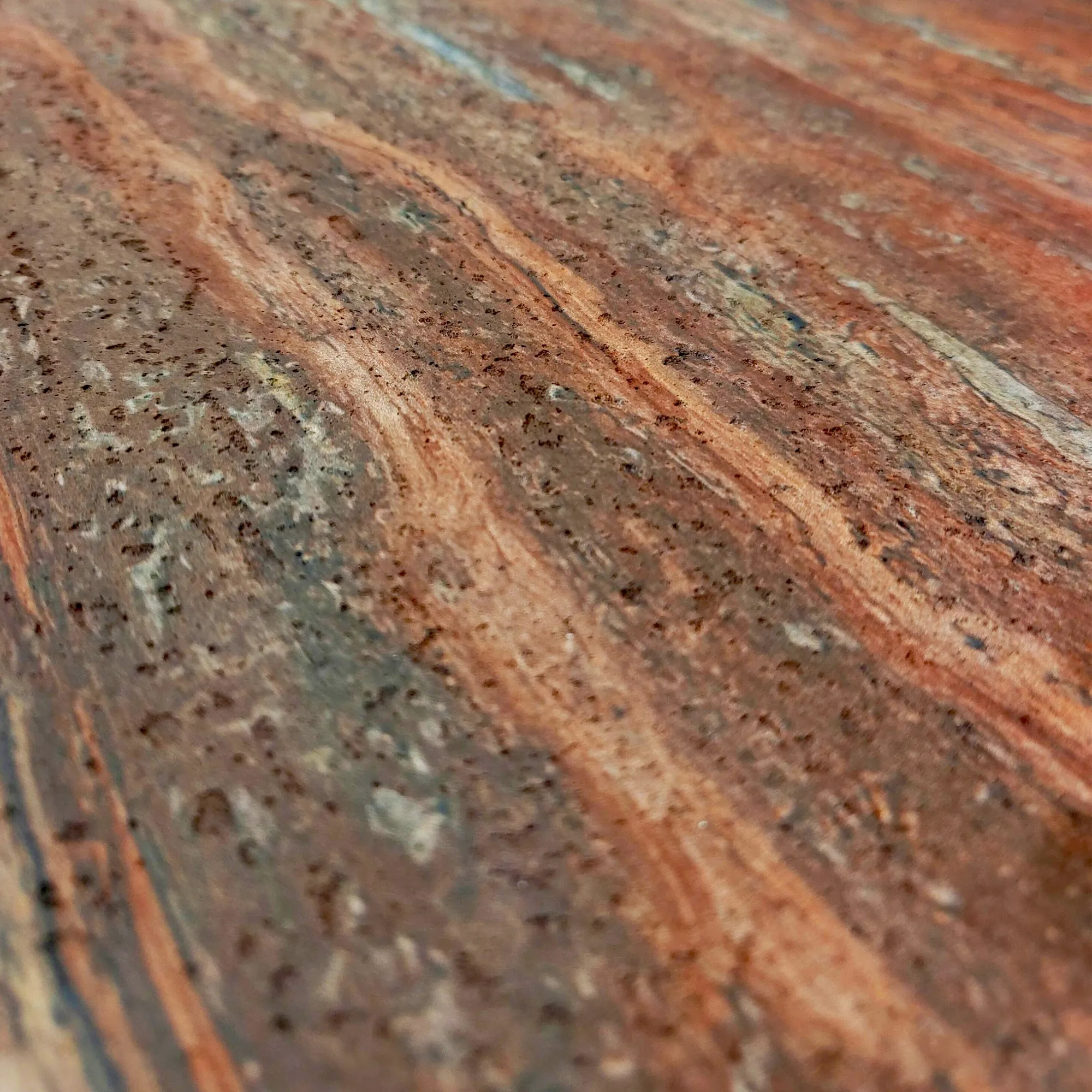
To help you visualize the differences, here's a side-by-side breakdown of natural red travertine and MCM Red Travertine in key areas:
| Feature | Natural Red Travertine | MCM Red Travertine (MCM Flexible Stone) |
|---|---|---|
| Porosity | Highly porous; absorbs liquids quickly | Non-porous; liquids bead on surface |
| Sealing Required | Every 1–3 years (critical for protection) | Optional; no regular sealing needed |
| Stain Resistance | Low; stains set quickly in pores | High; spills wipe away easily |
| Scratch Resistance | Low; prone to scratches from heavy use | High; resin coating resists minor scratches |
| Acid Resistance | Low; acidic substances cause etching | High; no etching from lemon juice, vinegar, etc. |
| Water Resistance | Low; water can seep in and cause mold/mildew | High; moisture-resistant, safe for wet areas |
| Cleaning Difficulty | High; requires special stone cleaners | Low; soap and water work for most messes |
| Initial Cost | Higher (natural stone extraction and cutting) | Lower (engineered material, easier production) |
| Long-Term Cost | Higher (sealers, repairs, professional cleaning) | Lower (minimal maintenance, no repairs needed) |
| Installation Flexibility | Low; heavy, rigid, limited to flat surfaces | High; lightweight, flexible, works on curves |
Whether you choose natural or MCM Red Travertine, a little proactive care goes a long way. Here are some expert tips to keep your surfaces looking their best for years to come:
Pro Tip: Invest in a high-quality penetrating sealer with a long lifespan (look for "10-year" sealers, though they may need reapplication sooner in high-traffic areas). Test the sealer on a small, hidden area first to ensure it doesn't darken the stone or alter its color—some sealers can make red travertine look muddy.
Pro Tip: While MCM is tough, avoid using pressure washers on outdoor installations—high pressure can damage the resin binder over time. Stick to a garden hose with a gentle spray nozzle instead.
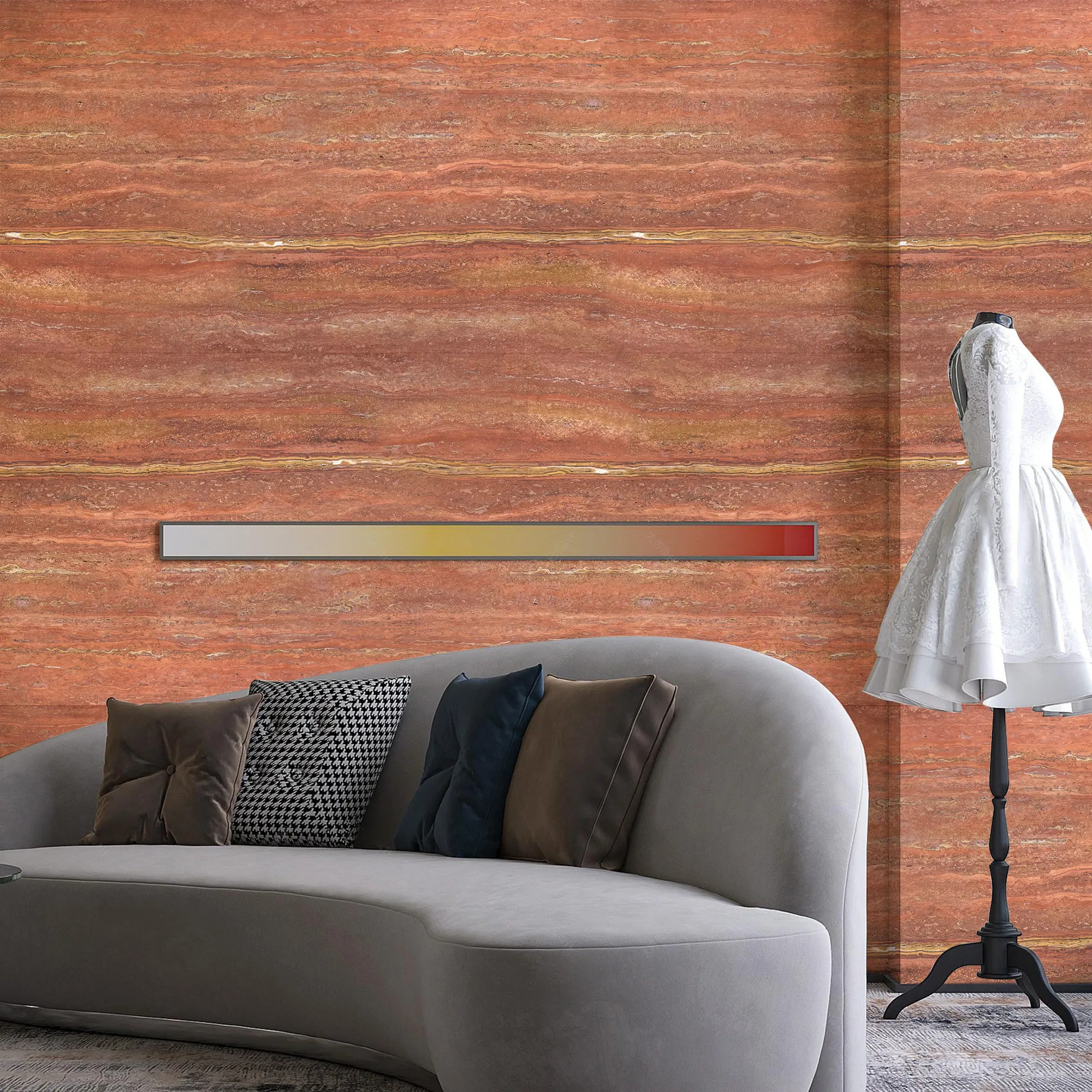
So, when should you choose natural red travertine, and when is MCM Red Travertine the better bet? It all comes down to your lifestyle, budget, and design goals.
Natural Red Travertine is ideal for: - Low-traffic areas where maintenance is manageable (e.g., master bathroom floors, accent walls in living rooms). - Historic homes or spaces where authenticity is key—nothing beats the raw, organic beauty of natural stone. - Homeowners who don't mind putting in the effort to preserve a one-of-a-kind material and see maintenance as part of the charm.
MCM Red Travertine (MCM Flexible Stone) is ideal for: - High-traffic areas like kitchens, entryways, or commercial spaces (restaurants, hotels, offices) where spills and scratches are inevitable. - Outdoor use—patios, pool decks, or exterior walls—thanks to its resistance to fading, moisture, and temperature changes. - DIY enthusiasts or those on a budget: MCM is lightweight and easy to install, often requiring only basic tools and no professional help. - Design projects that need flexibility: curved walls, backsplashes with intricate shapes, or ceilings where heavy natural stone would be impractical.
At the end of the day, both natural red travertine and MCM Red Travertine have their place. Natural stone offers unparalleled authenticity and a connection to the earth that's hard to replicate. But for many of us—busy homeowners, parents with kids, restaurant owners, or anyone who wants beauty without the stress—MCM Red Travertine, with its MCM flexible stone technology, is a game-changer. It gives you the warm, rich look of red travertine (even with fun twists like travertine (starry red) ) without the constant worry about stains, sealing, or scratches.
Think of it this way: natural red travertine is like a vintage sports car—it's stunning, turns heads, but requires regular tune-ups and careful handling. MCM Red Travertine is like a modern electric vehicle—just as sleek, but with low maintenance, high efficiency, and built for the demands of daily life. Both will get you where you want to go in style; it just depends on how much work you're willing to put in along the way.
So, whether you're designing a cozy home or a bustling commercial space, take the time to weigh your priorities. If you crave the raw, unfiltered beauty of nature and don't mind the upkeep, natural red travertine is a timeless choice. But if you want that same beauty with the freedom to live life without limits, MCM Red Travertine might just be the material you've been waiting for.
Recommend Products











