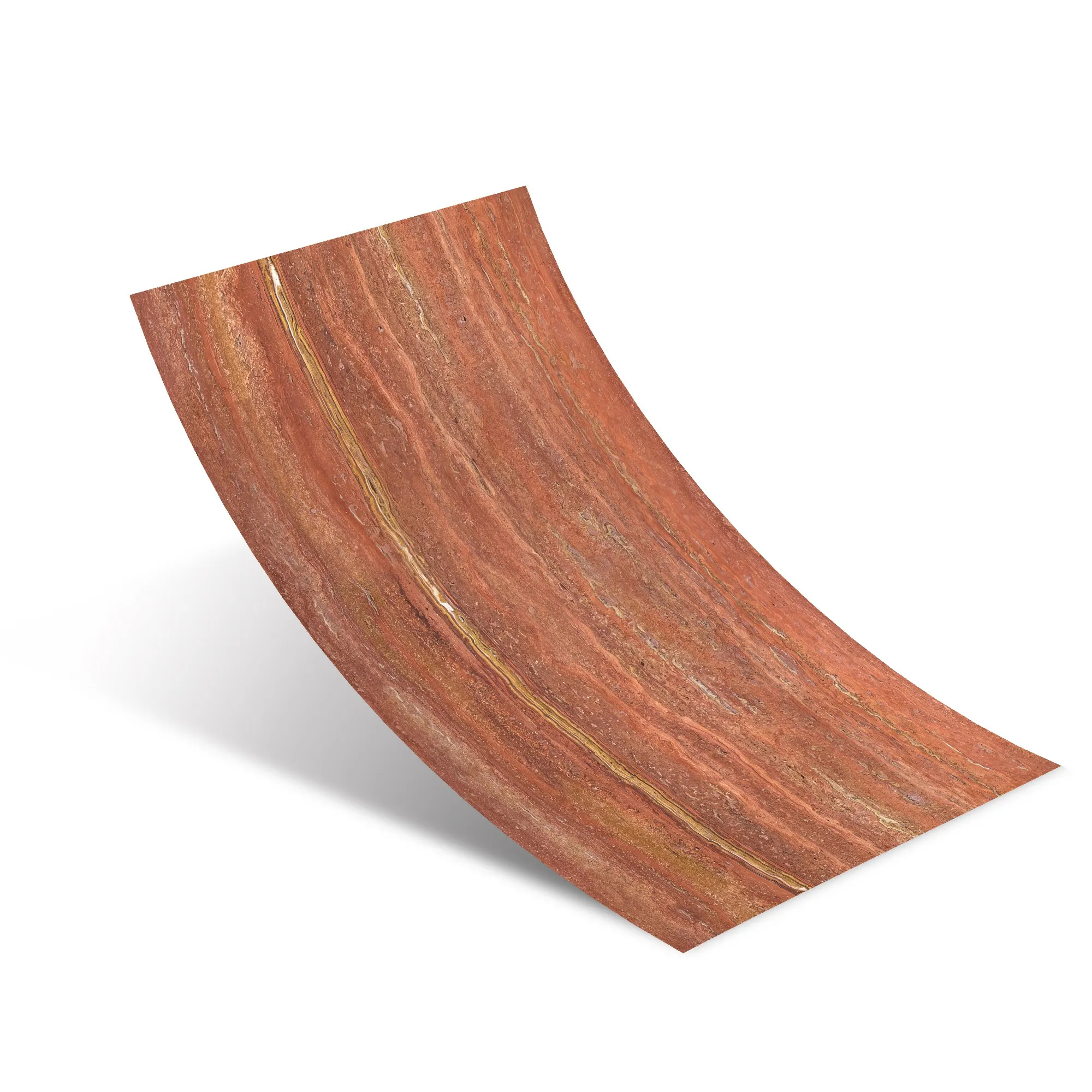
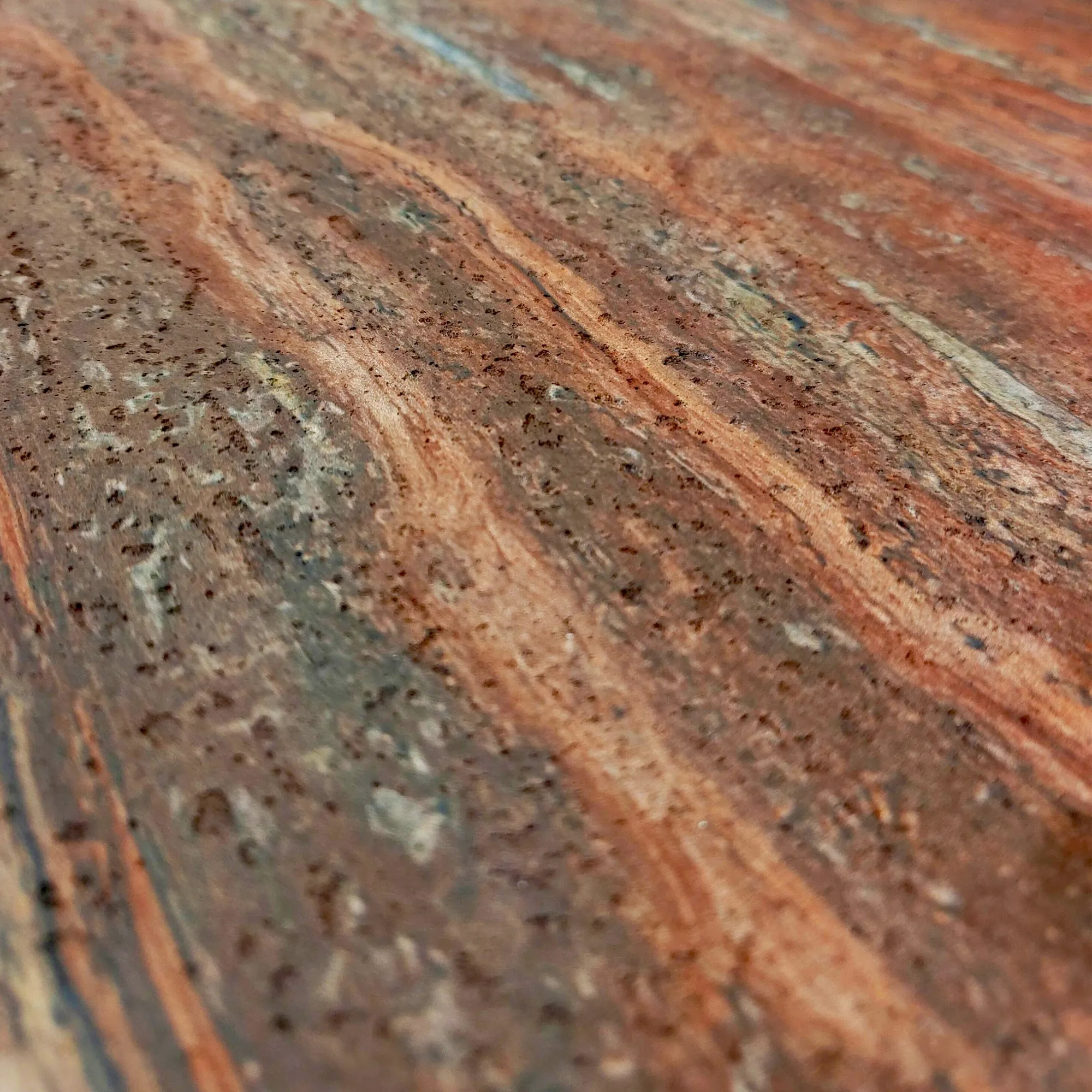
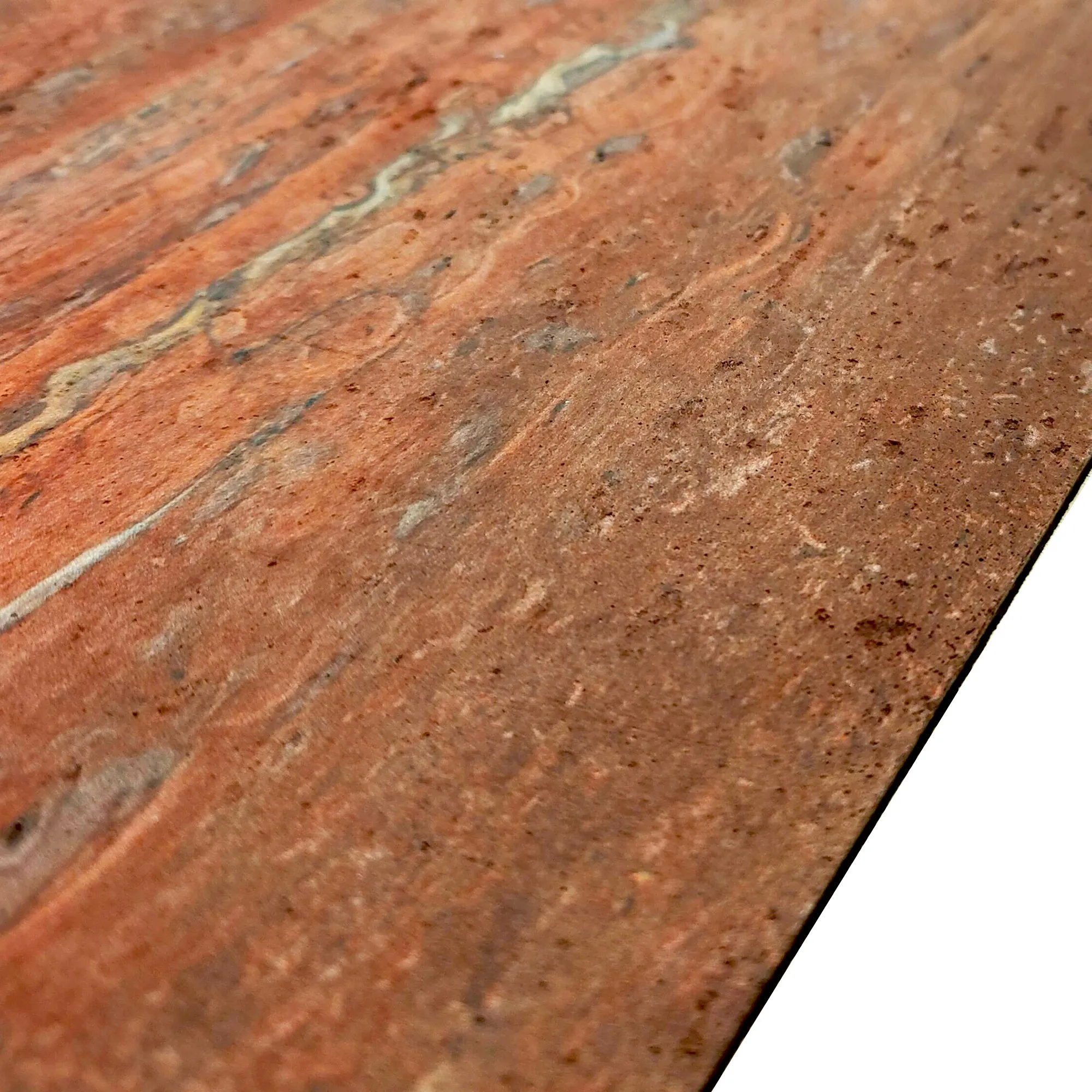
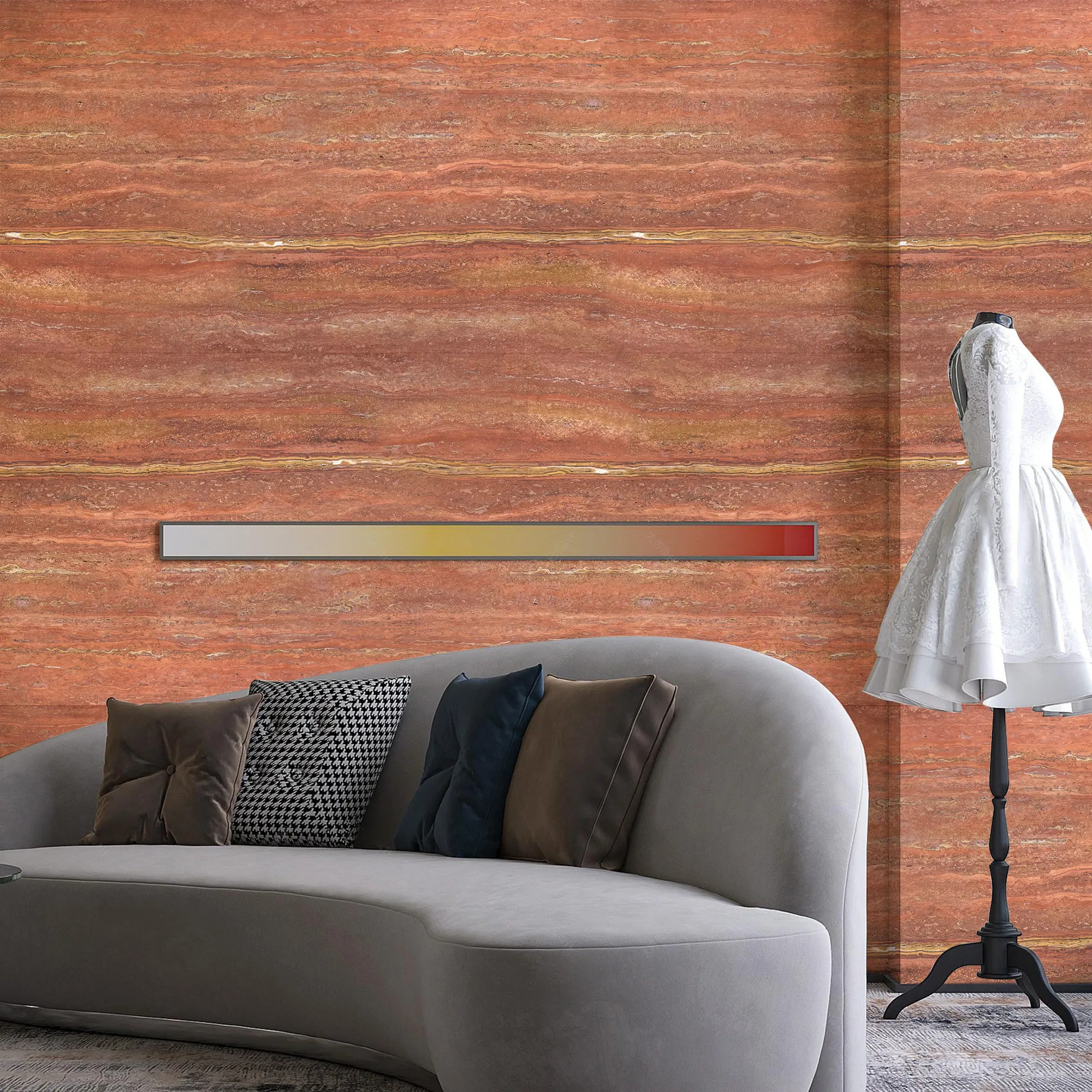
At the end of the day, the decision often comes down to dollars and cents. Let's break down the costs step by step, from the moment you order the material to 10 years down the line when the client is still enjoying their space.
1. Initial Material Cost: Quarry vs. Factory
Natural
red travertine isn't cheap to get out of the ground. Quarrying stone requires heavy machinery, skilled labor, and permits—costs that get passed down to you. On average, you're looking at $40-$80 per square foot for high-quality natural
red travertine slabs, depending on the grade (think: how uniform the color is, how many pits need filling). And if you're eyeing something fancy like
travertine (starry red)
—with those eye-catching crystal inclusions that sparkle under light—you could be looking at $90+ per square foot.
MCM
red travertine, on the other hand, is manufactured in factories, which means more consistency and lower production costs. Most suppliers price it between $25-$45 per square foot, even for the big slab series. Why the difference? No quarrying, less waste, and the ability to mass-produce. Plus, since MCM is lighter, shipping costs are drastically lower—we're talking $0.50-$1 per square foot vs. $3-$5 for natural stone, especially if you're importing from overseas.
2. Installation: Time = Money
Here's where MCM really starts to shine. Natural
red travertine is heavy and brittle. Installers need to handle each slab with care, cut it on-site (which generates dust and waste), and ensure it's perfectly level to avoid cracks. A team of 2-3 installers might cover 200-300 square feet in a day. With labor costs averaging $15-$25 per square foot, that adds up fast.
MCM's flexibility and big slab design change the game. Those large panels mean fewer cuts and seams—we've seen crews cover 500+ square feet in a day. And since it's lightweight, you don't need specialized lifting equipment. Installation costs for MCM hover around $8-$15 per square foot. For a 10,000-square-foot project, that's a savings of $70,000-$100,000 just in labor.
3. Maintenance: Sealing vs. Wiping
Natural
travertine is porous, which sounds charming until you realize it stains like crazy. Coffee spills, rainwater, even foot traffic can leave marks if it's not sealed properly. You'll need to seal it every 1-2 years at $2-$4 per square foot. Over 10 years, that's $20-$40 per square foot in maintenance. And if a slab cracks? Replacing it means matching the color and texture of a one-of-a-kind stone—good luck finding an exact match.
MCM
red travertine, thanks to its polymer coating, is stain-resistant and doesn't need sealing. A quick wipe with soap and water is usually enough. And if a panel gets damaged? Since MCM is mass-produced, replacement panels are identical to the original. Maintenance costs? Maybe $0.50 per square foot over 10 years for occasional cleaning.
4. Long-Term Value: Fading vs. Staying Power
Natural stone proponents argue that it "ages like fine wine," but the reality is, exposure to sunlight and moisture can fade those rich red tones over time. MCM, however, uses UV-stable pigments that retain their color for decades. Plus, its flexibility helps it withstand temperature changes and structural shifts without cracking—critical for exterior cladding in harsh climates.