
Walk down any historic street in Rome, and you'll likely run your hand along the warm, pitted surface of travertine—a stone that has shaped iconic architecture for millennia, from the Colosseum to the Trevi Fountain. It's a material that feels timeless, as if it was plucked directly from the earth's core to tell stories of human ingenuity. But behind that timeless beauty lies a modern dilemma: as our cities grow and demand for striking building materials rises, how do we balance our love for natural stone with the urgent need to protect the planet?
This question hits close to home for architects, builders, and homeowners alike. On one side, there's the allure of Natural Roman Huge Travertine —a material forged by nature over centuries, with unique veining and texture that no man-made product can fully replicate. On the other, there's MCM (Modified Composite Material) —a newer class of building materials designed to mimic the look of natural stone, wood, and metal, but with a fraction of the environmental footprint. Today, we're diving deep into the environmental impact of these two approaches: the age-old practice of quarrying natural travertine, and the innovative production of MCM products like MCM flexible stone and the MCM big slab board series . Let's explore what's at stake, and why the choice between them matters more than ever.
To truly understand the impact of natural travertine, let's start at the source: the quarry. Picture a vast, sun-baked landscape in Tuscany or Turkey, where massive machines claw at the earth, extracting blocks of travertine that formed over 20 million years ago. It's a scene that feels both primal and industrial—a clash between human ambition and nature's patience. But what does this process really cost the planet?
Travertine forms in mineral-rich hot springs and rivers, often in regions with unique ecosystems. Quarrying these areas means clearing vegetation, leveling hillsides, and disrupting habitats for birds, mammals, and insects. In some cases, entire ecosystems are lost. For example, a quarry in central Italy once displaced a colony of endangered bats that had roosted in the travertine caves for generations. By the time the bats were relocated, their original habitat—with its specific microclimate and food sources—was gone, and their population never fully recovered.
It's not just about the animals, either. Soil erosion is a silent consequence of quarrying. Without plant roots to hold the soil in place, rainwater washes away topsoil, clogging nearby rivers and streams with sediment. This smothers aquatic life and degrades water quality, affecting communities downstream who rely on those water sources for drinking and agriculture.
Travertine is a finite resource. Unlike trees or crops, it can't be replanted or regrown. Each block extracted is a piece of Earth's history lost forever. Consider this: a single commercial travertine quarry can extract up to 50,000 cubic meters of stone per year. At that rate, a quarry with reserves of 1 million cubic meters will be exhausted in just 20 years. Once it's gone, there's no replacing it—certainly not in our lifetime, or even our grandchildren's.
This depletion has a ripple effect. As easily accessible travertine deposits run dry, companies are forced to mine in more remote, ecologically sensitive areas, exacerbating the habitat destruction we discussed earlier. It's a cycle of scarcity driving further environmental harm.
The environmental impact of travertine doesn't end at the quarry. Transporting massive blocks of stone from, say, Turkey to a construction site in Dubai or New York requires fleets of trucks, ships, and trains—all burning fossil fuels. A single 10-ton block of travertine emits approximately 2.5 tons of CO2 during transportation alone, according to a 2023 study by the International Institute for Sustainable Construction. That's equivalent to the emissions from driving a car over 6,000 miles.
Then there's processing. Once the stone arrives at a factory, it's cut, polished, and shaped into slabs. This uses energy-intensive machinery, often powered by coal or natural gas. Polishing travertine, in particular, requires large amounts of water and chemicals, which can contaminate local waterways if not properly treated. By the time the finished stone is installed, its total carbon footprint is significantly higher than many alternative materials.
Natural stone is notoriously wasteful. When a block of travertine is cut into slabs, up to 30% of the original stone is discarded as "waste." This includes offcuts too small for commercial use, flawed pieces with cracks or uneven coloring, and dust from cutting and polishing. Most of this waste ends up in landfills, where it takes centuries to break down—if it breaks down at all.
Even on construction sites, natural travertine generates waste. Because each slab is unique, it's harder to standardize cuts, leading to more offcuts and poorly fitting pieces that get tossed aside. A 2022 survey of construction projects using natural stone found that on average, 15% of the stone delivered to a site ends up as waste before the project is complete. For a large-scale project like a shopping mall, that could mean hundreds of tons of stone going to waste.
Now, let's shift gears to MCM. If natural travertine is the "old soul" of building materials, MCM is the "innovative newcomer"—a blend of natural minerals, recycled polymers, and cutting-edge technology designed to mimic the look and feel of natural stone, but with a conscience. So, what exactly is MCM, and how does its production stack up environmentally?
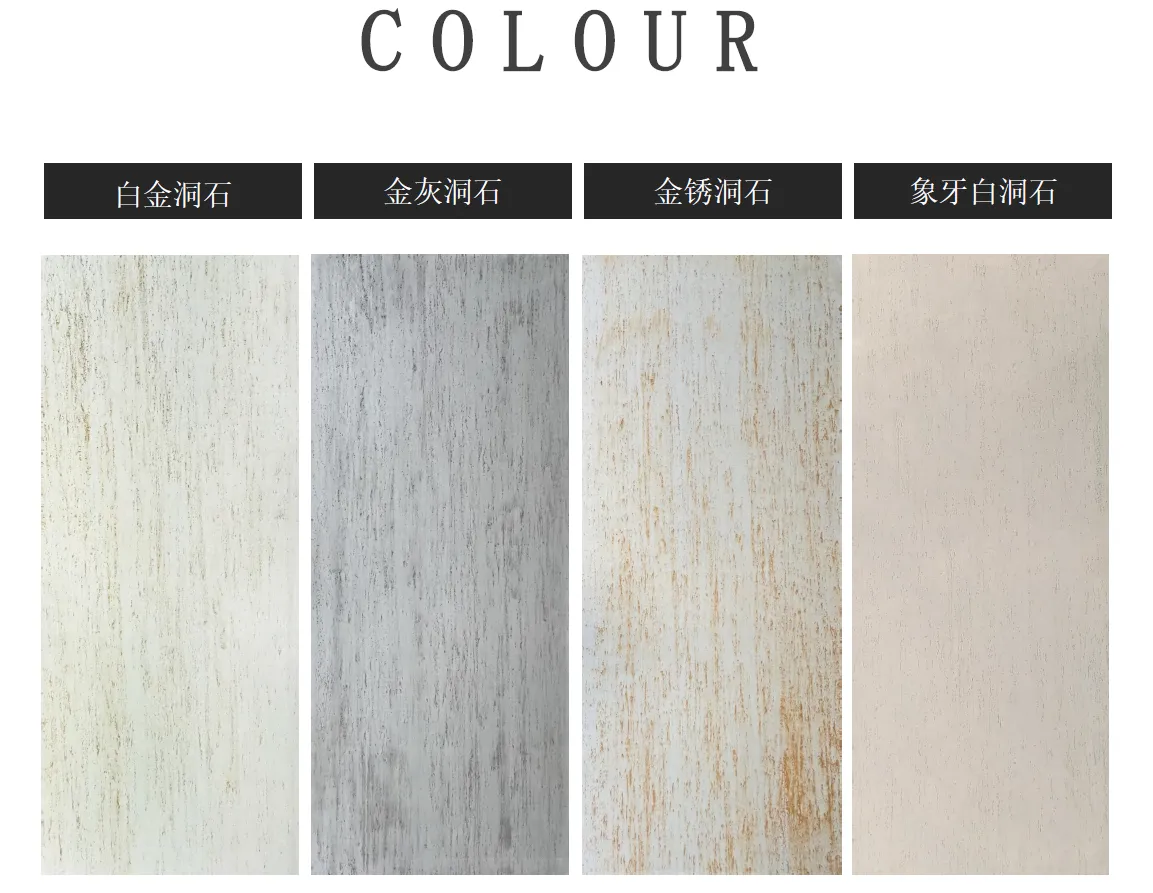
At its core, MCM is a composite material. Think of it as a high-tech hybrid: it uses a small percentage of natural minerals (like marble dust or limestone) mixed with recycled plastic polymers and fiberglass for strength. This combination creates a material that's lightweight, durable, and—most importantly—sustainable. Products like MCM flexible stone and the MCM big slab board series are engineered to look indistinguishable from natural travertine, wood, or even metal, but with a fraction of the environmental impact.
One of MCM's biggest environmental wins is its minimal use of virgin natural resources. Unlike travertine, which requires mining massive blocks of stone, MCM production uses just 10-15% natural minerals by weight. The rest comes from recycled materials, like post-consumer plastic bottles or industrial waste from other manufacturing processes. For example, foamed aluminium alloy board (vintage silver) —a popular MCM product—uses recycled aluminium, reducing the need to mine bauxite ore, a resource-intensive process that causes deforestation and soil degradation.
This efficiency extends to water use, too. Quarrying and processing natural travertine can use up to 200 liters of water per cubic meter of stone. MCM production, by contrast, uses less than 10 liters per square meter of panel. That's a 95% reduction—an enormous saving in water-scarce regions like the Middle East or parts of Africa.
MCM's lightweight nature is a game-changer for carbon emissions. A typical MCM panel weighs just 4-6 kg per square meter, compared to 25-30 kg for natural travertine. This means fewer trucks are needed to transport MCM, and those trucks use less fuel. For a large project requiring 10,000 square meters of cladding, MCM would reduce transportation emissions by approximately 70% compared to natural travertine, according to a 2024 case study by the Green Building Council.
Production emissions are lower, too. MCM factories often run on renewable energy, like solar or wind power, and the manufacturing process itself is less energy-intensive. Whereas cutting and polishing natural stone requires high-powered saws and grinders, MCM panels are formed using heat and pressure—a process that uses up to 60% less energy. Some MCM manufacturers even capture and reuse heat from production, further reducing their carbon footprint.
MCM production is designed to minimize waste from the start. Because the material is formed into precise panels, there's little to no offcut waste during manufacturing. Any scrap material is recycled back into the production process, creating a closed-loop system. Compare that to natural travertine, where 30% of the stone is wasted before it even leaves the factory.
Even at the end of its life, MCM is more sustainable. Unlike natural stone, which often ends up in landfills when buildings are renovated or demolished, MCM panels can be recycled into new panels. Some manufacturers even offer take-back programs, ensuring that old MCM cladding doesn't become waste. It's a stark contrast to the "take-make-dispose" model of traditional stone quarrying.
A material's environmental impact isn't just about how it's made—it's also about how long it lasts. MCM panels are engineered to withstand the elements: they're resistant to moisture, UV radiation, and temperature fluctuations, with a lifespan of 50+ years. Natural travertine, while durable, is porous and prone to staining, cracking, and erosion over time. In humid climates, travertine buildings often need to be repaired or reclad every 20-30 years, leading to more resource extraction and waste.
Take fair-faced concrete , a traditional material often used alongside natural stone. While it's durable, it requires regular maintenance and can develop cracks, leading to costly repairs. MCM, with its resistance to wear and tear, reduces the need for frequent replacements, saving resources and reducing long-term environmental impact.
To bring these differences to life, let's compare Natural Roman Huge Travertine quarrying and MCM production across key environmental metrics. This table breaks down the impact of each, from resource use to sustainability:
| Environmental Factor | Natural Roman Huge Travertine Quarrying | MCM Production (e.g., MCM Flexible Stone, MCM Big Slab Board Series) |
|---|---|---|
| Resource Extraction | Requires mining large blocks of non-renewable travertine, depleting finite deposits. | Uses 10-15% natural minerals; majority of materials are recycled (e.g., plastic, aluminium from foamed aluminium alloy board (vintage silver) ). |
| Energy Use | High energy use for extraction, transportation, cutting, and polishing (2.5x more than MCM). | Low energy use; manufacturing uses 60% less energy than stone processing; often powered by renewables. |
| Waste Generation | 30% waste during extraction/processing; 15% waste during construction; non-recyclable at end of life. | <5% waste during production (recycled back into process); recyclable at end of life via take-back programs. |
| Carbon Footprint | High: 2.5 tons CO2 per 10-ton block (transport + processing). | Low: 0.3 tons CO2 per 100 square meters (transport + production) due to lightweight design and efficient manufacturing. |
| Habitat Impact | Significant: Habitat destruction, soil erosion, water pollution from mining. | Minimal: No mining; production facilities are often in industrial zones with low ecological impact. |
| Durability & Lifespan | 20-30 years (with maintenance); prone to staining, cracking, and erosion. | 50+ years; resistant to moisture, UV, and wear; minimal maintenance required. |
The numbers speak for themselves: MCM production consistently outperforms natural travertine quarrying across every environmental metric. But it's not just about the data—it's about the stories behind the materials. Imagine a world where new buildings rise without destroying forests, where construction waste is a thing of the past, and where the materials we use today don't rob future generations of their natural heritage. That's the promise of MCM.
To see MCM's environmental benefits in practice, let's look at a real project: the Green Horizon Tower in Dubai, completed in 2023. The tower's exterior uses over 15,000 square meters of MCM big slab board series panels, designed to mimic the look of natural travertine. Here's how it stacked up against using natural stone:
The result? A stunning building that looks like it's clad in natural travertine, but with a fraction of the environmental impact. Visitors often can't tell the difference—and that's the point. MCM doesn't ask us to sacrifice beauty for sustainability; it lets us have both.
Another example is the renovation of a historic market in Istanbul, where MCM flexible stone was used to restore the building's facade. The original travertine had deteriorated over time, and replacing it with new natural stone would have required quarrying in a protected area. Instead, MCM panels were custom-colored to match the original stone, preserving the market's heritage while avoiding further environmental harm. Today, the market stands as a testament to how innovation can honor the past while protecting the future.
As we've explored, the choice between Natural Roman Huge Travertine quarrying and MCM production isn't just about aesthetics—it's about the kind of world we want to live in. Natural travertine has a rich history and undeniable beauty, but its extraction comes at a steep environmental cost: destroyed habitats, depleted resources, and a heavy carbon footprint. MCM, on the other hand, offers a path forward—one where we can build beautiful, durable structures without sacrificing the planet.
This isn't to say natural stone has no place in construction. There will always be projects where the use of historic or locally sourced stone is culturally or architecturally significant. But for the vast majority of new builds and renovations, MCM represents a smarter, more sustainable choice. Materials like MCM flexible stone , foamed aluminium alloy board (vintage silver) , and the MCM big slab board series are more than just building products—they're tools for change.
At the end of the day, buildings are more than just walls and roofs—they're expressions of our values. Do we value short-term beauty over long-term sustainability? Or do we choose materials that honor both the planet and the people who will inherit it? MCM isn't just a material; it's a statement that we can build better, for ourselves and for future generations. And that's a legacy worth building.
Recommend Products












