
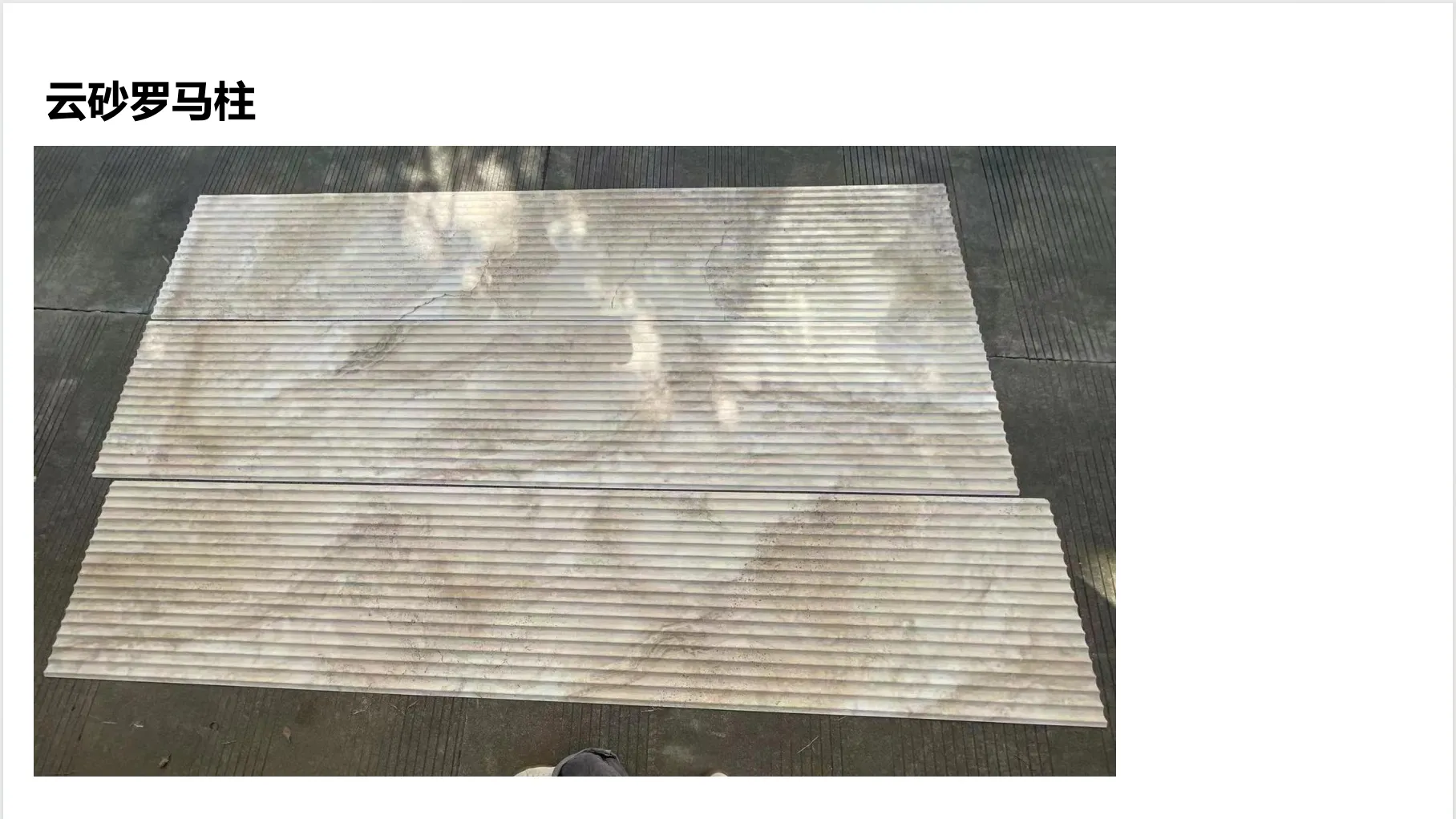
Pillars have stood as silent storytellers of architecture for centuries—supporting grand cathedrals, framing ancient temples, and adding a touch of majesty to modern homes. When it comes to choosing materials for these structural stars, two options often rise to the top: the timeless allure of natural marble and the innovative practicality of MCM (Modified Composite Material) alternatives. While flipping through marble pillar real photos can spark inspiration, the decision goes beyond aesthetics. Let's dive into the details, weighing the pros, cons, and real-world applications of both to help you pick the perfect fit for your project.
There's a reason natural marble has been a go-to for architects since the days of the Roman Empire. Quarried from the earth's crust, each slab carries unique veining, color gradients, and mineral deposits that make it a one-of-a-kind masterpiece. Imagine a pillar swirled with soft whites and grays, or bold strokes of gold and black—no two are exactly alike. Variants like travertine (starry blue) take this uniqueness further, with subtle, star-like mineral inclusions that catch the light, turning a simple pillar into a conversation piece.
But this beauty comes with trade-offs. Natural marble is heavy—really heavy. A single pillar can weigh hundreds of pounds, requiring reinforced structural support and specialized installation teams. Its porous nature also makes it prone to stains, scratches, and etching from acidic substances like coffee or citrus. Without regular sealing (think yearly maintenance), even a small spill can leave a permanent mark. And let's talk cost: quarrying, transporting, and crafting natural marble into pillars is labor-intensive, putting it out of reach for many budget projects.
That said, for projects where authenticity and heritage matter—like restoring a historic mansion or building a luxury villa—natural marble's flaws fade next to its prestige. It's not just a material; it's a piece of the earth's history, and that narrative is irreplaceable.
Enter MCM, the underdog that's redefining architectural materials. Short for Modified Composite Material, MCM blends natural minerals (like marble dust), high-performance polymers, and glass fibers to create a product that's lightweight, durable, and stunningly realistic. MCM flexible stone —a popular variant—lives up to its name: it bends without breaking, making it easy to shape into curved pillars or intricate designs that natural marble can't match.
Take marble concrete board , a type of MCM that mimics the look of polished marble so closely, you'd need a side-by-side comparison to tell the difference. Real photos of MCM marble pillars showcase this versatility: whether you want the smooth, veined finish of classic marble or the rugged texture of a boulder slab , MCM can replicate it with consistency. No more worrying about mismatched veining or color variations—every pillar in your project will look cohesive, a boon for large commercial spaces or modern designs that demand uniformity.
But MCM's appeal goes beyond looks. It's up to 80% lighter than natural marble, cutting installation time and structural costs dramatically. Its non-porous surface resists stains, scratches, and moisture, making it ideal for high-traffic areas like hotels, airports, or outdoor patios. And because it's man-made, MCM generates less waste during production and often uses recycled materials, aligning with eco-conscious building trends. Maintenance? A quick wipe with soap and water is usually all it takes—no pricey sealants required.
| Feature | Natural Marble | MCM Marble Concrete Board |
|---|---|---|
| Weight | Extremely heavy (requires structural reinforcement) | Lightweight (80% lighter than natural marble) |
| Durability | Porous; prone to stains, scratches, and etching | Non-porous; resistant to moisture, scratches, and UV damage |
| Aesthetics | Unique veining and natural variations; irreplaceable authenticity | Replicates natural looks with consistency; customizable textures (e.g., boulder slab, travertine patterns) |
| Cost | High (quarrying, transport, and installation costs add up) | Mid-range (affordable than natural marble; lower long-term maintenance costs) |
| Installation | Complex; requires specialized labor and equipment | Simple; lightweight and flexible for easy cutting/shaping |
| Sustainability | High environmental impact (quarrying, waste, transportation emissions) | More sustainable (recycled materials, less waste, lower carbon footprint) |
So, which is better? It depends on your project's priorities:
For Heritage or Luxury Projects: If you're building a trophy home, a boutique hotel, or restoring a historic site, natural marble's authenticity is worth the investment. Its unique character adds layers of depth that MCM, for all its realism, can't replicate. Just be prepared for the upkeep and cost.
For Commercial or High-Traffic Spaces: MCM is the practical choice here. Airports, shopping malls, and office lobbies need materials that can handle daily wear and tear without losing their shine. MCM's durability, lightweight design, and consistent look make it a workhorse that keeps spaces looking fresh for years.
For Modern or Budget-Conscious Builds: MCM shines in contemporary designs where clean lines and cost efficiency matter. Whether you're going for a minimalist aesthetic or need to stretch your budget across multiple pillars, MCM delivers the marble look without the marble price tag. Plus, its flexibility lets you experiment with shapes—think curved pillars or geometric patterns—that natural marble can't accommodate.
For Outdoor Use: Rain, snow, and UV rays are natural marble's worst enemies. MCM, on the other hand, thrives outdoors. Its resistance to moisture and fading makes it perfect for patio pillars, garden structures, or exterior facades that need to withstand the elements.
At the end of the day, both natural marble and MCM marble concrete board have their place in architecture. Natural marble is a love letter to tradition—heavy, flawed, and infinitely charming. MCM is a nod to progress—lightweight, resilient, and unapologetically modern. When you look at marble pillar real photos of both, you're not just comparing materials; you're choosing the story you want your space to tell.
So, flip through those real photos, weigh your priorities, and don't forget to consider the long run. Will you cherish the uniqueness of natural marble, even with the upkeep? Or will MCM's practicality and versatility let your vision shine brighter? Either way, with the right choice, your pillars won't just support structures—they'll support memories.
Recommend Products












