
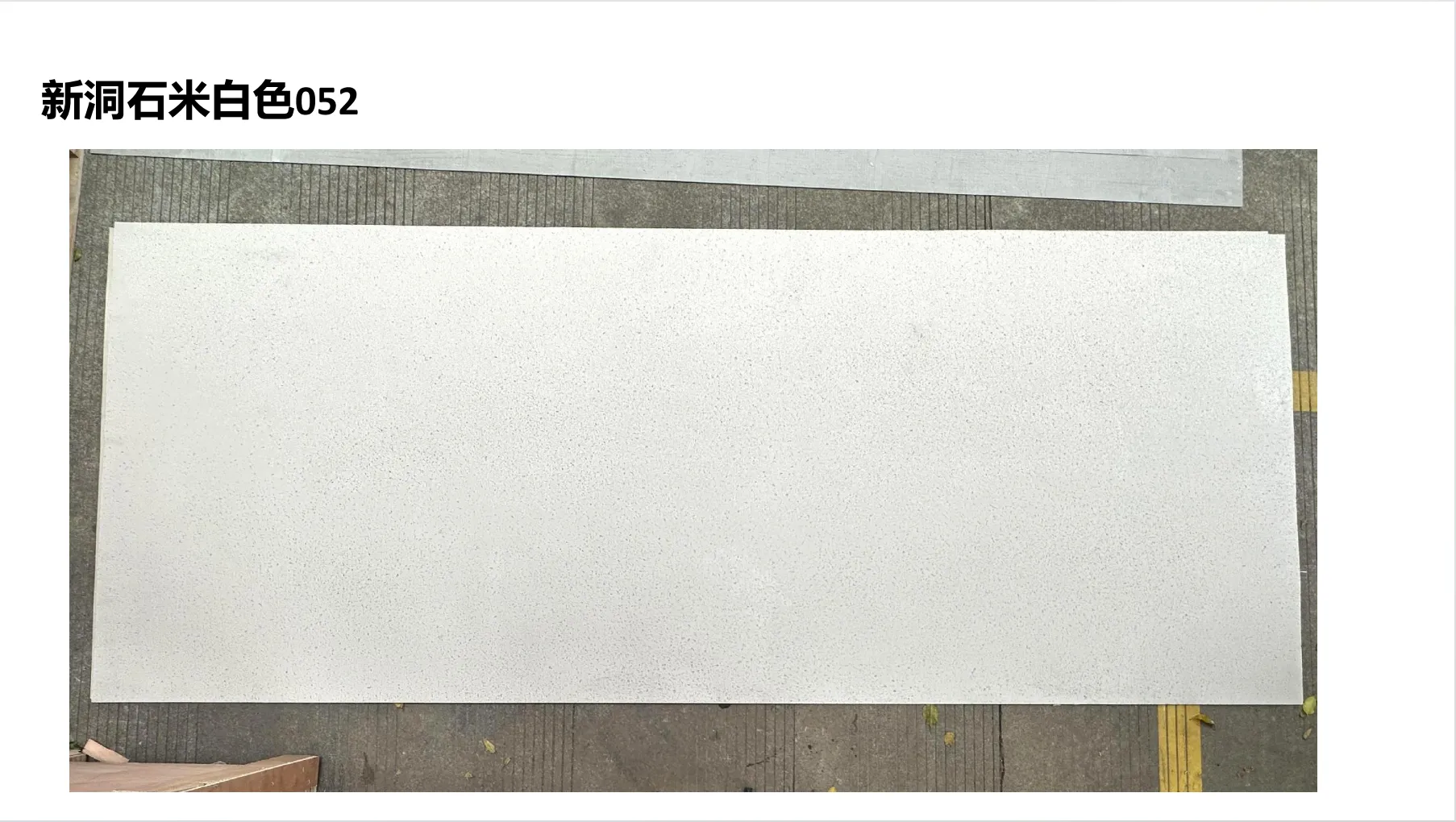
There's something almost spiritual about standing on a slab of white travertino. Its creamy surface, veined with delicate hints of gold and gray, feels like a page from the earth's own diary—one written in mineral deposits and ancient water currents. For centuries, this stone has adorned palaces, cathedrals, and homes, its beauty rooted in the slow, patient work of nature. But as architects and designers chase its timeless allure, they've long grappled with a challenge: how to honor the magic of natural travertino while making it accessible, sustainable, and adaptable to modern spaces. Enter MCM's innovative solutions, where technology meets geology to reimagine this classic material for the 21st century.
White travertino isn't born overnight. It's a masterpiece millions of years in the making, crafted by the earth's most patient sculptor: water. The journey begins when rainwater, slightly acidic from absorbing carbon dioxide, seeps through layers of limestone. As it travels, this water dissolves calcium carbonate—the same mineral that makes limestone hard—turning into a natural "mineral soup." When this mineral-rich water reaches the surface, often via hot springs or geysers, the sudden drop in pressure releases carbon dioxide, and the calcium carbonate begins to precipitate out, layer by layer, like snowflakes piling up to form a drift.
Over centuries, these layers build into massive deposits, each one telling a story of the environment that created it. The pure white hue comes from nearly flawless calcium carbonate, while subtle variations—ivory, pale gold, or soft gray—hint at trace minerals like iron or magnesium that snuck into the mix. Then there are the pores: tiny, irregular holes that give travertino its signature texture. These are gas bubbles trapped as the stone solidified, frozen in time like whispers from the ancient springs that birthed it. Run your hand over a slab, and you can almost feel the rhythm of those long-ago waters.
Some of the world's most famous travertino deposits, like those in Tivoli, Italy, or Pamukkale, Turkey, have been quarried for millennia. The Romans used it to build the Colosseum and the Pantheon, drawn to its lightness (compared to marble) and its warm, inviting glow. Even today, stepping into a space clad in natural white travertino feels like stepping into history—a connection to the earth's slow, steady creativity.
For all its beauty, natural white travertino comes with a set of challenges that can make it tough to love in modern design. First, there's the weight. A single slab can weigh hundreds of pounds, making installation a logistical nightmare—especially in high-rises or older buildings where structural limits come into play. Then there's the porosity. Those charming pores? They're also tiny traps for dirt, oil, and moisture. Without constant sealing, a spilled glass of wine or a rainy day can leave permanent stains, turning that pristine white surface into a canvas of regret.
Cost is another hurdle. Because travertino forms only in specific geological conditions, deposits are limited. Quarrying it requires heavy machinery, skilled labor, and often long-distance transport, driving up prices. And sustainability? Quarrying can disrupt local ecosystems, stripping away natural landscapes and altering water flow. For designers and homeowners who want both beauty and responsibility, natural travertino can feel like a compromise they're not willing to make.
This is where MCM steps in. Short for Modified Composite Material, MCM products—like the MCM 3D printing series and MCM flexible stone —are designed to capture the soul of natural travertino without the headaches. Think of it as nature, but smarter. These aren't cheap imitations; they're engineered to honor the stone's beauty while solving its practical flaws.
The magic starts with technology, and MCM's 3D printing series is a game-changer here. Instead of hacking chunks out of mountains, MCM starts with high-resolution scans of the finest natural travertino slabs. These scans are fed into 3D modeling software, where designers can tweak details—enhancing a vein here, softening a pore there—to create the perfect "digital twin" of the stone. Then, using advanced 3D printers, the design is brought to life with a composite material that blends minerals, resins, and recycled materials. The result? A surface that looks, feels, and even breathes like natural travertino—without the weight, the porosity, or the environmental impact.
Then there's MCM flexible stone , a innovation that bends the rules (literally). Unlike rigid natural stone, MCM flexible stone is thin—often just a few millimeters thick—and pliable, able to curve around corners, wrap columns, or even cover uneven surfaces. It's lightweight, too: a 4x8-foot sheet might weigh less than 20 pounds, making installation a breeze. And because it's made with durable, non-porous composites, it resists stains, moisture, and wear—no sealing required. Suddenly, travertino can grace a bathroom wall, a kitchen backsplash, or even a curved staircase without fear of damage.
While white travertino will always be a classic, MCM's replication technology opens the door to a whole spectrum of travertine-inspired designs. Take travertine (starry green) , for example. This vibrant variation swaps white for deep, forest-green veins that twist through a cream base, like sunlight filtering through leaves onto a forest floor. It's bold, unexpected, and impossible to find in natural travertino—yet MCM's 3D printing lets designers dream up such colors, blending artistry with technology to create stones that nature never could (or at least, hasn't… yet).
These colorful cousins aren't just for show. They let designers tell more nuanced stories with space. A hotel lobby might use starry green travertine to evoke calm and luxury; a restaurant could opt for warm, earthy tones to create a cozy, inviting vibe. With MCM, the palette isn't limited by what the earth happened to create—it's limited only by imagination.
| Feature | Natural White Travertino | MCM Flexible Stone (from MCM 3D Printing Series) |
|---|---|---|
| Weight | Heavy (hundreds of pounds per slab) | Lightweight (often <20 lbs per 4x8 sheet) |
| Durability | Porous; prone to stains and scratches (needs sealing) | Non-porous; moisture and scratch-resistant (no sealing needed) |
| Installation | Requires heavy machinery and skilled labor | Easy to cut, bend, and install (even DIY-friendly for some projects) |
| Sustainability | Quarrying can disrupt ecosystems; limited supply | Uses recycled materials; reduces quarrying impact |
| Customization | Limited by natural variation; fixed sizes | Custom colors (e.g., starry green), shapes, and textures |
Does MCM's replication mean the end of natural travertino? Hardly. There will always be a place for the real thing—the slab that bears the earth's unique, irreplicable marks. But MCM products like the 3D printing series and flexible stone offer something equally valuable: a way to bring travertino's beauty to more spaces, more people, and more designs than ever before. They honor the stone's heritage while making it practical for the way we live now—sustainable, adaptable, and full of possibility.
In the end, MCM isn't replacing nature. It's celebrating it. By capturing the essence of white travertino—and reimagining it—MCM reminds us that the best innovations don't just copy the past; they carry it forward, letting us love the earth's creations without breaking it. And that, perhaps, is the most beautiful story of all.
Recommend Products












