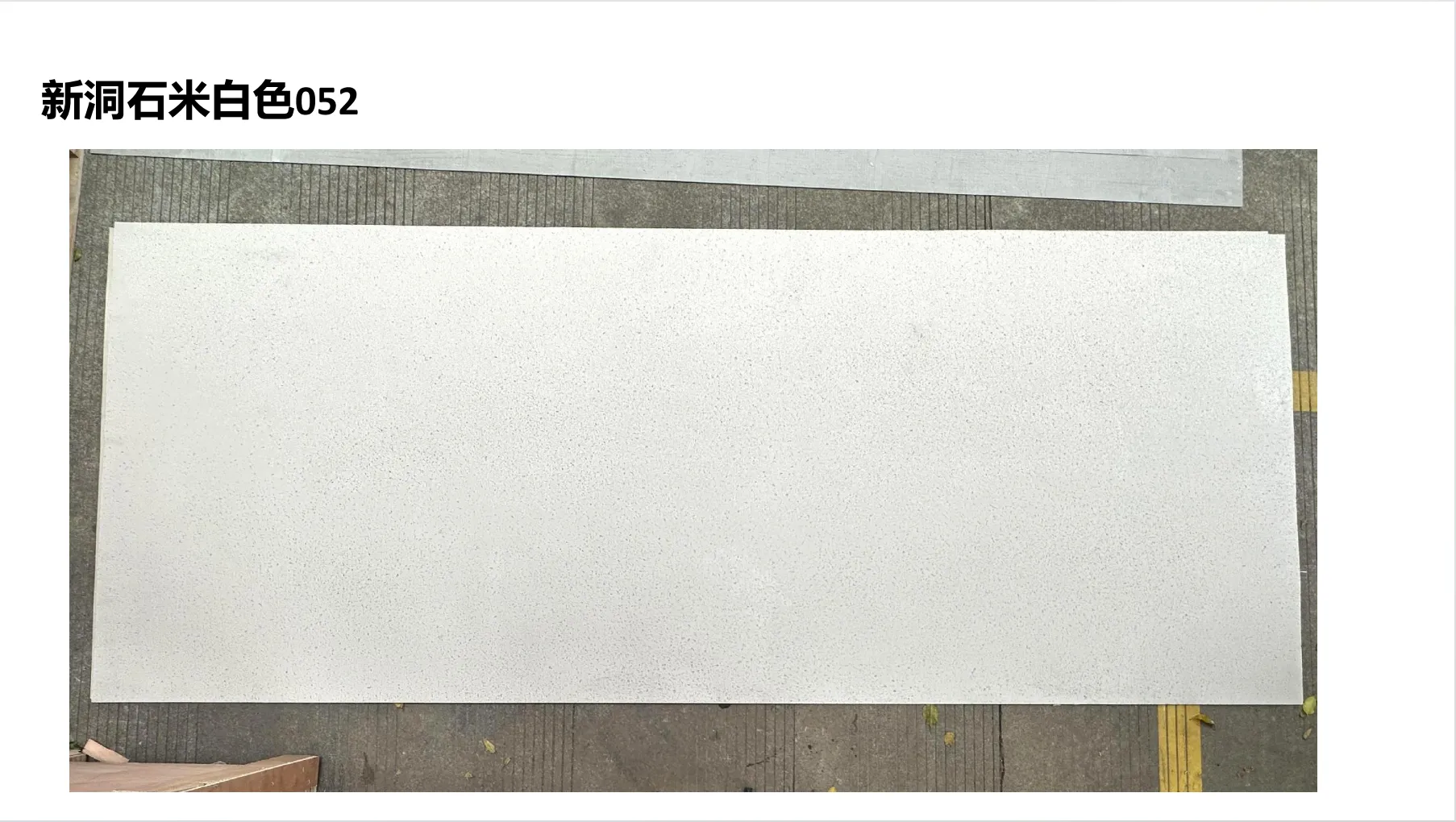
Walk into any luxury hotel, boutique café, or high-end residence, and you'll likely be greeted by the warm, porous elegance of natural stone. For decades, materials like white
travertino have been the gold standard in design—their earthy tones, unique veining, and timeless texture turning ordinary spaces into works of art. Architects and homeowners alike fall for their "authenticity," the idea that every chip, pit, and swirl tells a story of millions of years of geological formation. But what if that story has a darker chapter we've been ignoring? Behind the beauty of natural
travertino lies a hidden cost: the environmental toll of mining these stones from the earth. Quarries scar landscapes, disrupt ecosystems, and contribute to climate change—all for a material that, while stunning, often comes with unsustainable trade-offs. Today, there's a new player in the game: MCM, or Modified Composite Material. It's not just a trend; it's a revolution that proves we don't have to choose between aesthetics and the planet. Let's dive into why MCM is quickly becoming the go-to choice for designers who care about both beauty and sustainability.
The Hidden Toll of Natural Travertino Mining
To truly understand why MCM matters, we first need to unpack the impact of mining natural white
travertino.
Travertino forms in hot springs and limestone caves, where mineral-rich water cools and deposits calcium carbonate over centuries. To extract it, miners blast, drill, and cut into these fragile geological formations, often in regions already vulnerable to environmental stress. Let's start with the obvious: land destruction. Quarries are massive operations, requiring acres of land to be cleared—forests felled, topsoil stripped, and ecosystems uprooted. In Italy's Tivoli, a historic
travertino mining region, quarries have expanded so much that they now encroach on ancient Roman ruins, a stark reminder of how short-term extraction can erase long-term cultural heritage.
Then there's water pollution. Mining releases sediment and chemicals into nearby rivers and groundwater, turning clear streams murky and unsafe for aquatic life. In Turkey's Pamukkale, another
travertino hotspot, locals have reported fish die-offs and contaminated drinking water linked to quarry runoff. The carbon footprint is equally alarming: extracting
travertino requires heavy machinery that guzzles fossil fuels, and transporting these heavy slabs across the globe adds even more emissions to the mix. A single truckload of
travertino can emit over 200kg of CO2—before it even reaches the construction site.
And let's not forget waste. Natural stone is prone to cracking during extraction, meaning up to 30% of mined
travertino is discarded as "waste"—left in heaps at quarries to degrade or dumped in landfills. For a material prized for its "naturalness," it's a surprisingly wasteful process. Even after installation,
travertino is high-maintenance: it stains easily, requires regular sealing, and can chip or erode over time, leading to more replacements and more mining. It's a cycle that's hard to justify in a world grappling with climate change and biodiversity loss.
MCM: A Sustainable Alternative with Uncompromised Beauty
Enter MCM: a blend of natural minerals, recycled materials, and advanced polymers designed to mimic the look and feel of natural stone—without the environmental damage. Think of it as nature's beauty, reimagined through science and sustainability. MCM starts with a base of recycled stone powder, glass, or even agricultural waste, mixed with non-toxic resins that bind the materials into a lightweight, flexible panel. The manufacturing process uses 80% less water than traditional stone mining and emits 60% fewer greenhouse gases. No quarries, no deforestation, no water pollution—just a controlled, eco-friendly production line that turns waste into wonder.
But here's the kicker: MCM doesn't just *look* like natural stone—it often outperforms it. Unlike
travertino, which is porous and fragile, MCM panels are water-resistant, scratch-proof, and UV-stable. They won't fade in sunlight, stain from coffee spills, or crack under heavy foot traffic. And because they're lightweight (up to 70% lighter than natural stone), they're easier and safer to install, reducing labor costs and transportation emissions. Architects love them for their flexibility: MCM can be cut into any shape, curved around corners, or even printed with custom patterns—something natural stone can rarely match.
Sustainability isn't just a buzzword for MCM; it's baked into every step. Many MCM manufacturers use renewable energy in production, and the panels themselves are 100% recyclable at the end of their lifespan. Plus, their durability means they last decades longer than natural stone, reducing the need for replacements and further minimizing environmental impact. It's a closed-loop system that respects the planet without skimping on style.
Spotlight on MCM Collections: Beauty That Doesn't Cost the Earth
MCM isn't a one-size-fits-all material—it's a universe of textures, colors, and styles, each designed to capture the essence of natural stone (and more). Let's take a closer look at some standout collections that are winning over designers worldwide:
If you love the organic, uneven edges of natural stone but hate the weight,
MCM flexible stone is your answer. This collection mimics the rough-hewn texture of quarried stone but bends like a sheet of paper, making it perfect for curved walls, columns, or accent pieces. Imagine wrapping a fireplace in what looks like hand-chiseled
travertino, but installing it in hours instead of days—no heavy lifting, no risk of cracking. It's available in shades from warm beige to deep gray, with subtle veining that mimics the real thing. Designers use it in both residential and commercial spaces, proving that flexibility doesn't mean sacrificing authenticity.
For those who crave the drama of natural
travertino but want a twist, the Starry Green collection is a showstopper. It takes the classic porous texture of
travertino and infuses it with a deep, forest-green hue, speckled with tiny metallic flecks that catch the light like stars in the night sky. It's bold yet earthy, perfect for accent walls in living rooms or statement facades on boutique hotels. Unlike natural green stone, which is rare and expensive to mine, Starry Green MCM is widely available and affordable—no need to deplete rare geological formations for a pop of color.
Foamed Aluminium Alloy Board (Vintage Silver)
MCM isn't just about stone—it's about reimagining metals, too. The Foamed Aluminium Alloy Board in Vintage Silver is a prime example. Lightweight yet incredibly strong, this panel has a matte, weathered finish that looks like aged aluminum, with a subtle texture that adds depth to modern spaces. It's perfect for industrial-chic interiors or exterior cladding, where durability and style go hand in hand. Unlike mining aluminum (which is energy-intensive and polluting), this MCM variant uses recycled aluminum, cutting down on raw material use and emissions. It's rust-proof, fire-resistant, and requires zero maintenance—making it a favorite for high-traffic areas like airports and restaurants.
Concrete has long been a staple in modern design, but traditional concrete is heavy, prone to cracking, and uses large amounts of cement—a major CO2 emitter. MCM's
Fair-Faced Concrete collection changes the game. It replicates the raw, industrial look of poured concrete but in lightweight panels that are easy to install and far more durable. The texture is spot-on: smooth with subtle air bubbles and fine aggregate, just like the real thing. Architects love it for minimalist homes and commercial spaces, where its neutral tone lets other design elements shine. And because it's made with recycled aggregates and low-carbon binders, it's a fraction of the environmental impact of traditional concrete.
For a touch of warmth and natural texture, MCM's
Bamboo Mat Board is unbeatable. It mimics the look of woven bamboo mats, with rich, golden-brown tones and a tactile surface that adds coziness to any room. Unlike real bamboo, which requires intensive farming and can lead to deforestation in vulnerable regions, this MCM variant uses recycled bamboo fibers and plant-based resins. It's moisture-resistant, making it ideal for kitchens and bathrooms, and won't warp or fade like natural bamboo. Whether used as a backsplash or a feature wall, it brings the serenity of nature indoors—without harming a single bamboo grove.
Mining vs. MCM: A Side-by-Side Comparison
Still on the fence? Let's break down the differences between natural
travertino mining and MCM production. The numbers speak for themselves:
|
Category
|
Natural Travertino Mining
|
MCM Production
|
|
Environmental Impact
|
High: Deforestation, habitat loss, water pollution, carbon-heavy extraction/transport.
|
Low: Uses recycled materials, 80% less water, 60% fewer emissions, no quarrying.
|
|
Durability
|
Moderate: Porous, stains easily, requires sealing; prone to chipping/erosion.
|
High: Water/scratch/UV resistant, no sealing needed; lasts 30+ years with minimal maintenance.
|
|
Aesthetic Range
|
Limited: Dependent on natural deposits; colors/veining can't be customized.
|
Unlimited: Custom colors, textures, and patterns (e.g., Starry Green, Vintage Silver); mimics stone, metal, wood, and more.
|
|
Cost-Efficiency
|
High: Expensive extraction, transportation, installation, and long-term maintenance.
|
Moderate: Lower upfront costs (no heavy machinery/transport), minimal maintenance, longer lifespan = better ROI.
|
|
Installation Ease
|
Difficult: Heavy slabs require specialized labor and equipment; risk of breakage during transport/install.
|
Easy: Lightweight panels (5-8kg/m²) install with basic tools; flexible design reduces waste/cutting time.
|
"I used to specify natural
travertino for every high-end project—it was what clients expected," says Maria, an architect with 15 years of experience. "But after visiting a quarry in Tuscany and seeing the damage firsthand, I couldn't justify it anymore. Now, I use MCM's Starry Green panels for accent walls and
Fair-Faced Concrete for exteriors. Clients love the look, and I love knowing we're not contributing to deforestation. Plus, the installation time is cut in half, which keeps projects on budget. It's a win-win."
Why Designers and Builders Are Making the Switch
It's not just about the environment—MCM solves practical problems for designers and builders, too. For starters, sustainability is no longer a "nice-to-have" for clients; it's a requirement. Green building certifications like LEED and BREEAM reward projects that use eco-friendly materials, and MCM checks all the boxes. Builders appreciate the lightweight nature: fewer workers needed, faster installation, and lower shipping costs. Homeowners love that they don't have to baby their walls—no panic when a glass of red wine spills, no yearly sealing appointments.
Then there's design freedom. With MCM, you're not limited to what the earth provides. Want a
travertino-like wall with a pop of starry blue? Done. Need a curved facade that looks like aged copper but weighs nothing? MCM can do that. It's a playground for creativity, allowing designers to push boundaries without compromising on sustainability.
And let's talk about availability. Natural
travertino is tied to specific regions—if a quarry closes or demand spikes, prices skyrocket and supply dwindles. MCM is manufactured in controlled facilities, so it's consistently available and priced. No more delays due to "stone shortages" or last-minute substitutions that derail a project's aesthetic.
Conclusion: Beauty and Sustainability Can Coexist
Natural white
travertino is undeniably beautiful, but beauty shouldn't come at the expense of our planet. MCM proves that we can have both—the texture, color, and character we love in natural stone, plus the peace of mind that comes with sustainable, responsible design. It's not about replacing nature; it's about honoring it by choosing materials that respect its limits.
As designers, builders, and homeowners, we have the power to shape the future of architecture. Every choice we make—every material we specify—sends a message about what we value. Do we value short-term aesthetics over long-term planetary health? Or do we choose innovation that preserves beauty for generations to come? With MCM, the answer is clear. It's time to leave the quarries behind and build a world where sustainability and style go hand in hand. The future of design isn't just beautiful—it's responsible, too.