
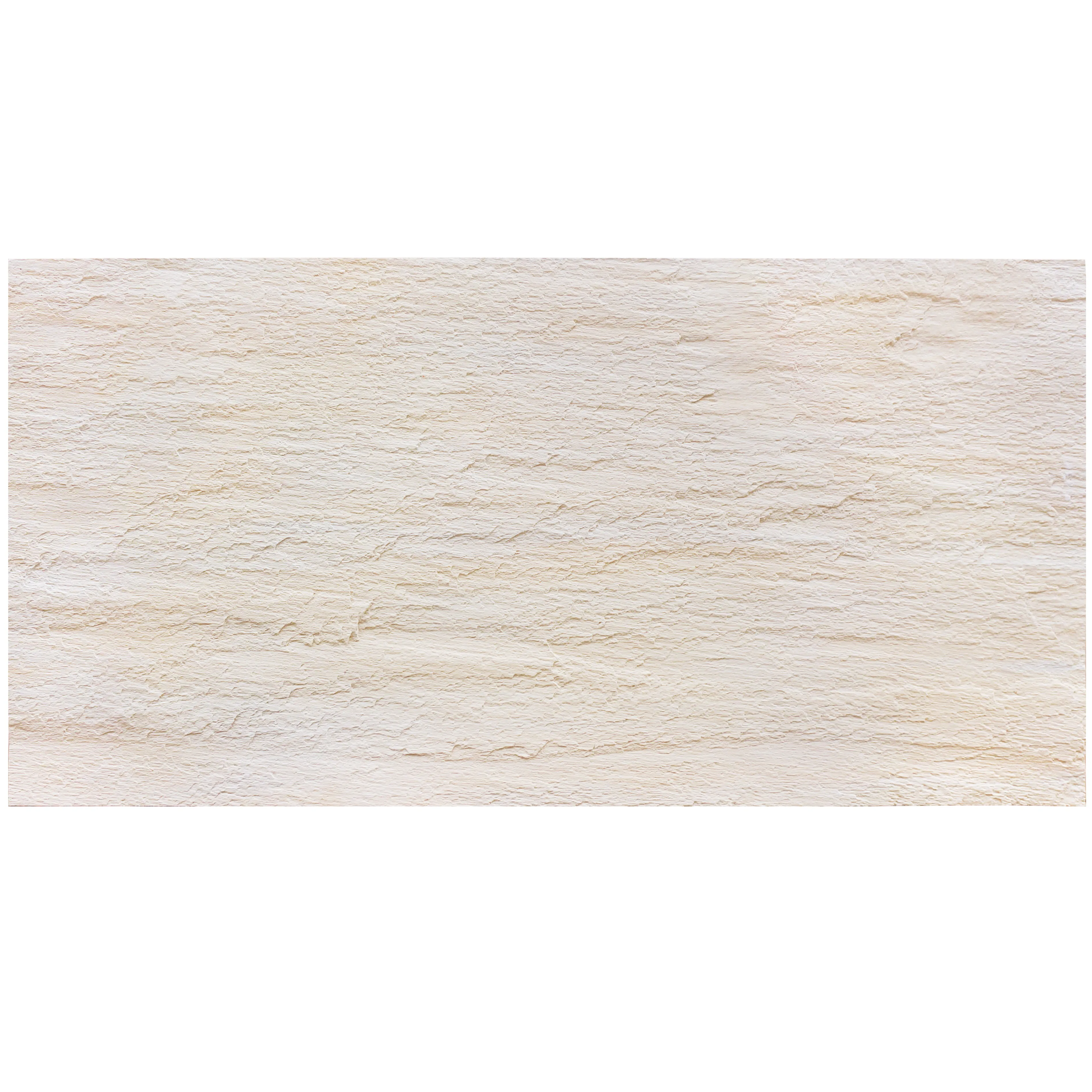
Walk into any hardware store or flip through an architecture magazine, and you'll quickly realize: building materials are stuck in a tricky balancing act. We want walls that can withstand storms, heatwaves, and the test of time—but we don't want those walls to weigh so much they threaten the building's foundation. We crave materials that look timeless, but we need them to be easy to install, especially in tight spaces or historic renovations. For decades, architects and builders have had to choose: durability *or* lightweight. Strength *or* flexibility. Until now.
Enter Oasis Stone Foge—a material that's been quietly turning heads in construction circles for its uncanny ability to check both boxes: tough as nails, yet light enough to be carried by two people. But what's the secret behind this modern marvel? Let's peel back the layers and explore the material composition that makes Oasis Stone Foge a game-changer in the world of building materials.
Before we dive into the chemistry, let's get clear on what we're talking about. Oasis Stone Foge isn't your grandma's marble or the concrete slabs you see on sidewalks. It's part of a newer class of building materials known as modified composite materials (MCM), which blend natural minerals with advanced polymers to create something greater than the sum of its parts. Think of it as the "superfood" of cladding: packing all the nutrients (strength, durability, aesthetics) into a lightweight, easy-to-digest package.
If you've heard of MCM flexible stone, you're already in the ballpark. MCMs are celebrated for their flexibility (they can bend without breaking) and strength, but Oasis Stone Foge takes it a step further with a composition tailored specifically for extreme durability and minimal weight. It's designed for high-stakes applications: skyscraper facades, coastal buildings battered by saltwater, even historic renovations where adding heavy materials would risk damaging the original structure. Simply put, it's built to perform where other materials fall short.
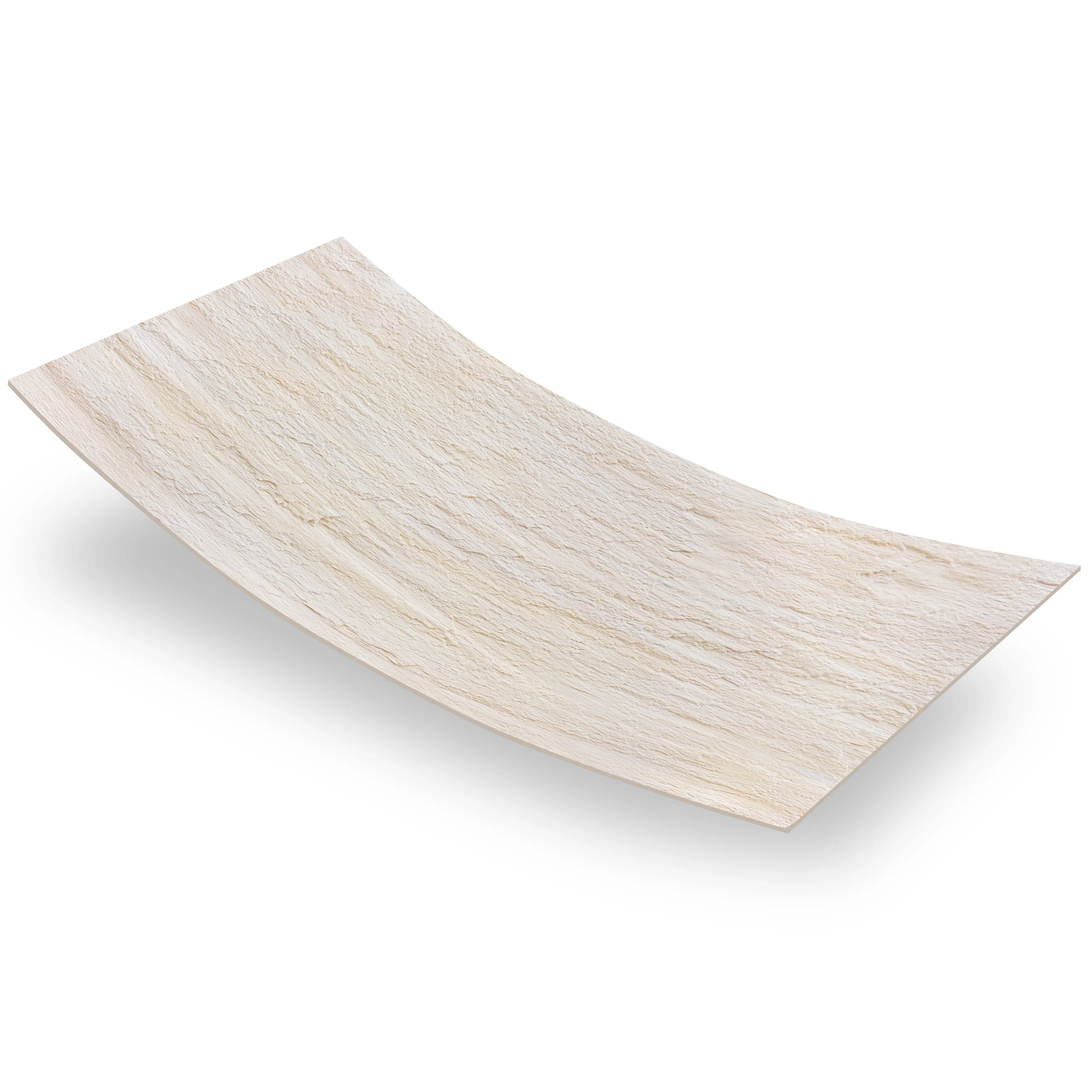
Let's get granular. What exactly goes into making Oasis Stone Foge? It's a carefully calibrated mix of three key components: a mineral base, a polymer binder, and a suite of performance-enhancing additives. Each plays a critical role in the material's final properties—think of them as the ingredients in a perfectly baked cake: remove one, and the whole thing falls flat.
At its core, Oasis Stone Foge starts with natural minerals—think finely ground stone powders, often sourced from marble, limestone, or dolomite waste. Quarries generate tons of leftover dust and small fragments that would otherwise end up in landfills; Oasis Stone Foge repurposes these, giving new life to materials that would've gone to waste. This isn't just eco-friendly—it's smart engineering. These minerals provide the material with its authentic stone-like texture and compressive strength (the ability to withstand being squeezed or pressed).
But here's the twist: instead of using coarse aggregates (which add weight), Oasis Stone Foge uses ultra-fine mineral particles, typically 100-200 microns in size (about the width of a human hair). This fine grind allows for tighter packing during manufacturing, reducing empty space (and thus weight) while maintaining density where it counts.
If the minerals are the "bones" of Oasis Stone Foge, the polymer binder is the "muscle and ligaments." Traditional stone relies on natural geological bonds (like the pressure of the Earth's crust over millions of years) to stay intact, but those bonds are rigid and heavy. Oasis Stone Foge swaps that for a synthetic binder—usually a modified acrylic or epoxy resin—that's both strong and flexible.
Why does this matter? Unlike rigid binders (think concrete's cement), these polymers can stretch slightly under stress. That means if the building shifts (say, during an earthquake) or the material expands in the heat, Oasis Stone Foge won't crack—it'll flex and bounce back. And because the binder is applied in precise, thin layers (often just 5-10% of the material's total weight), it adds strength without piling on pounds.
No great material is complete without a few secret weapons, and Oasis Stone Foge is no exception. Tiny doses of specialized additives give it superpowers traditional stone can only dream of:
Even the best ingredients need the right recipe, and Oasis Stone Foge's manufacturing process is where the "lightweight yet durable" magic truly happens. Unlike traditional stone, which is quarried and cut (leaving lots of waste and irregularities), Oasis Stone Foge is made in a controlled factory setting using a process called high-pressure compression molding .
Here's how it works: The mineral powder, polymer binder, and additives are mixed into a thick paste, then spread onto a backing sheet (usually fiberglass or aluminum for extra stability). The whole thing is then pressed under extreme pressure—often 1,000-2,000 psi (that's about 10 times the pressure in a car tire)—and cured at a moderate temperature (around 80-120°C) for several hours. This pressure squeezes out air bubbles, compacts the material, and activates the binder, creating a dense, uniform panel with minimal porosity.
The result? A panel that's dense enough to be strong but structured in a way that avoids unnecessary weight. It's like baking a cake at the perfect temperature—you get a moist, fluffy interior without the heaviness of an undercooked slab.
Now that we know what's in it, let's tackle the first big question: Why is Oasis Stone Foge so durable? Durability isn't just about being "tough"—it's about standing up to the daily grind of weather, time, and wear. Here's how its composition helps it go the distance:
From scorching deserts to freezing tundras, buildings face a barrage of environmental stressors. Oasis Stone Foge is built to handle them all:
Durability also means handling physical stress. Oasis Stone Foge's compressive strength (how much weight it can bear) clocks in at around 35 MPa—stronger than many types of concrete (which averages 30 MPa) and comparable to medium-grade natural stone. But what's more impressive is its toughness —its ability to absorb impact without breaking.
drop a steel ball from 10 feet onto traditional travertine, and you'll likely get a spiderweb of cracks. Do the same with Oasis Stone Foge, and you might see a small dent at worst. That's thanks to the flexible polymer binder, which acts like a shock absorber, spreading the impact energy across the material instead of letting it focus on a single point.
Now, let's tackle the other side of the equation: why is Oasis Stone Foge so lightweight? The answer lies in its density —mass per unit volume. Traditional stone has a density of 2.5-2.7 g/cm³ (think of a bowling ball), while Oasis Stone Foge comes in at just 1.2-1.5 g/cm³ (more like a basketball). But how does its composition achieve that?
Remember those ultra-fine mineral powders we mentioned earlier? By using small particles, manufacturers can pack them more tightly than coarse aggregates, reducing the amount of "empty space" (porosity) in the material. But wait—if it's more tightly packed, why is it lighter? Because coarse aggregates (like gravel in concrete) are heavy, dense rocks. Fine powders, by contrast, allow for a higher ratio of binder to mineral, and the binder is lighter than solid stone.
Think of it this way: A bucket filled with golf balls (coarse aggregates) is heavier than a bucket filled with sand (fine powders) mixed with a little water (binder). The sand fills in the gaps more efficiently, and the water adds cohesion without adding much weight.
Traditional stone cladding often needs to be 20-30mm thick to be strong enough, adding weight. Oasis Stone Foge, thanks to its high strength-to-weight ratio, can achieve the same durability at just 8-12mm thick. That might not sound like much, but when you're covering a 10-story building, the savings add up fast. A 10mm-thick panel of Oasis Stone Foge weighs about 13 kg per square meter, compared to 26 kg for 10mm travertine—half the weight!
Many variants of Oasis Stone Foge also include a thin backing sheet (like aluminum or fiberglass mesh) that adds tensile strength without adding significant weight. This backing acts like a skeleton, supporting the material and preventing it from bending or warping, even when cut into large panels (up to 1.2m x 2.4m). Traditional stone, by contrast, can't be made that large without becoming unwieldy and prone to cracking.
To really appreciate Oasis Stone Foge, let's compare it to two common alternatives: traditional natural stone (like travertine) and fair-faced concrete (a popular modern material). The table below breaks down key properties:
| Property | Oasis Stone Foge | Traditional Travertine | Fair-Faced Concrete |
|---|---|---|---|
| Density (g/cm³) | 1.3 | 2.6 | 2.4 |
| Weight per sq.m (10mm thickness) | 13 kg | 26 kg | 24 kg |
| Compressive Strength (MPa) | 35 | 40 | 30 |
| Water Absorption (%) | <1% | 3-5% | 5-8% |
| Fire Rating | A1 (Non-combustible) | B1 (Limited combustible) | A1 |
| Installation Ease | High (light, flexible, large panels) | Low (heavy, brittle, small pieces) | Medium (heavy, rigid, requires formwork) |
The takeaway? Oasis Stone Foge is lighter than both traditional stone and fair-faced concrete, has better water resistance than either, and matches or exceeds their strength. And when it comes to installation? It's no contest—those lightweight, flexible panels mean faster, cheaper, and safer construction.
Durable and lightweight sounds great on paper, but where does this material actually make a difference in the real world? Let's look at a few scenarios where Oasis Stone Foge's unique properties are a game-changer:
Tall buildings are all about balance—literally. The heavier the cladding, the more the foundation and structural frame have to work to support it. With Oasis Stone Foge, architects can clad a 50-story tower with the look of natural stone without adding thousands of extra tons to the structure. This not only reduces construction costs (less steel needed for support) but also opens up design possibilities: think cantilevered floors, curved facades, or larger windows that wouldn't be feasible with heavier materials.
Ever walked past a beautiful old building with cracked stone cladding? Many historic structures weren't built to handle the weight of modern materials, so retrofitting them with traditional stone would require costly structural reinforcements. Oasis Stone Foge, with its light weight, lets architects restore the building's original look without risking damage to fragile foundations or walls. For example, a 1920s brick warehouse in Chicago was recently renovated using Oasis Stone Foge to mimic the original limestone cladding—saving the owners $200,000 in structural repairs.
Buildings near the ocean face a triple threat: saltwater corrosion, high winds, and driving rain. Traditional stone absorbs saltwater, leading to cracking and discoloration, while wood rots and metal rusts. Oasis Stone Foge's low water absorption and chemical resistance make it ideal for coastal homes, boardwalks, and beachfront hotels. In Miami, a luxury resort used it for their pool deck and reported zero maintenance issues after three hurricane seasons.
It's not just for exteriors. Oasis Stone Foge's lightweight nature makes it perfect for interior cladding, too. Imagine a restaurant with a feature wall that looks like rough-hewn stone—except it's so light, it can be installed directly over drywall without extra support. Or a retail store with custom-shaped panels that mimic marble, but won't crack during installation. The possibilities are endless.
In today's world, no building material is complete without a sustainability story, and Oasis Stone Foge delivers here, too. Let's break down its eco-credentials:
At the end of the day, Oasis Stone Foge isn't just another building material—it's a solution to a decades-old problem. By blending natural minerals with advanced polymers and precision manufacturing, it delivers the durability of stone, the lightweight convenience of modern composites, and the aesthetic versatility that architects crave. Whether you're building a skyscraper, restoring a landmark, or designing a cozy café, it offers a rare combination: strength without the weight, beauty without the hassle, and sustainability without compromise.
So the next time you walk past a building with stunning stone-like cladding that seems too perfect to be real, take a closer look—it might just be Oasis Stone Foge. And now, you'll know the science (and the story) behind what makes it so special.
Recommend Products












