
There's a moment that stays with you when you step into a thoughtfully designed office space—one where the air feels different, the light softer, and every element seems to whisper, "This matters." For many, that moment is often anchored by a striking feature: marble pillars. Not just structural supports, but storytellers. They carry the weight of history in their veined patterns, the sheen of modernity in their polished surfaces, and the warmth of human connection in how they shape the spaces we work, collaborate, and create in. Today, we're diving into the world of office building marble pillars—exploring how they transform sterile work environments into places that inspire, how they bridge classic elegance with contemporary needs, and why, in the hands of skilled designers, they become more than just "materials" but partners in crafting memorable experiences.
Walk into the lobby of a tech startup in downtown Chicago, and you might expect exposed brick or sleek glass. But what if, instead, your gaze is drawn upward to a set of marble pillars—their surfaces a soft "travertine (beige)" with delicate, honey-colored veins that catch the morning light like sunlight through old windows? That's the power of marble pillars: they subvert expectations. They say, "We care about the details, even the ones you don't notice at first." Designers often describe them as "silent brand ambassadors." A law firm opting for "marble interstellar gray" pillars signals stability and trust; a creative agency choosing "travertine (starry blue)" with its swirled, cosmic patterns? It's a nod to innovation and thinking beyond the box. These pillars don't just hold up ceilings—they set the tone for how a company sees itself and how it wants to be seen. "A marble pillar isn't just about aesthetics," says Mia Carter, an interior designer with 15 years of experience in commercial spaces. "It's about psychology. When employees walk past a pillar that feels intentional, that has texture you want to reach out and touch, it subtly communicates that their work is valued in a space that's been crafted with care."
Take, for example, a recent project in Austin, Texas, where a financial services firm wanted to balance professionalism with approachability. The designers chose "marble series" pillars—specifically "marble veil white" with thin, wispy gray veins—paired with warm wood accents and soft ambient lighting. The result? A lobby that feels both authoritative and welcoming. "Clients used to rush through the lobby; now they linger," Carter notes. "They take photos, ask about the stone. It's become a conversation starter. That's the human touch—when a material stops being 'just a material' and becomes a bridge between people."
Marble and travertine have been building blocks of civilization for millennia—from the Parthenon's columns to the Taj Mahal's intricate inlays. But in modern offices, they're not just callbacks to the past; they're reimagined for today's needs. Let's start with travertine, a type of limestone formed by mineral-rich hot springs. Its porous, honeycombed texture gives it a tactile quality that feels lived-in, not cold. "Travertine (vintage gold)" is a favorite among designers aiming for warmth—it has a sunlit, aged patina that softens even the most minimalist spaces. In a recent project for a marketing agency in Seattle, the team paired "travertine (vintage gold)" pillars with "fair-faced concrete" walls. The contrast was striking: the concrete's raw, industrial edge grounded the space, while the travertine added a layer of warmth, like a well-worn leather chair in a modernist room. "It's about balance," explains Jake Torres, the project's lead designer. "Concrete says 'forward-thinking,' travertine says 'we respect where we came from.' Together, they say 'we're building something lasting.'"
Then there's the "marble series"—a collection of finishes and colors that cater to every design vision. "Marble stream stone," with its flowing, river-like patterns, is perfect for spaces that want to evoke movement and creativity. "Marble concrete board," on the other hand, blends the classic veining of marble with the durability of concrete, making it ideal for high-traffic areas like office hallways. What's remarkable about these stones is their adaptability. A "polish concrete" floor might feel utilitarian on its own, but when paired with a "marble pillar (veil white)," it becomes refined. A "wood grain board" accent wall adds warmth, but next to a "travertine (starry red)" pillar? It becomes dynamic, a dance of organic and geometric. These materials don't compete—they collaborate.
It's easy to get lost in the beauty of marble pillars, but their true magic lies in how they integrate with the rhythm of daily work life. Consider a busy open office: desks, computers, the hum of conversation. Now add a cluster of "boulder slab (vintage silver)" pillars—their rough-hewn edges a contrast to the sleek desks, their height creating natural "zones" for meetings or quiet focus. Suddenly, the space feels less chaotic. Employees gravitate toward these pillars, using them as informal meeting points or as backdrops for quick check-ins. "We didn't just design pillars; we designed 'third spaces,'" says Torres. "Spaces that aren't conference rooms or cubicles, but in-between areas where collaboration happens naturally. The marble pillars anchor those zones, making them feel intentional but not forced."
Then there's the sensory aspect. Think about the sound in an office with hard surfaces—echoes, chatter bouncing off walls. Marble, surprisingly, helps with that. Its density absorbs some of the noise, softening the acoustics. A "fair-faced concrete" ceiling might amplify sound, but paired with "travertine (light grey)" pillars? The space feels calmer, more focused. "I had a client tell me their team's stress levels dropped after we installed marble pillars," Carter recalls. "They didn't realize how much the harsh acoustics were affecting them until they were gone. It's the little things—how a space feels to be in—that make the biggest difference."
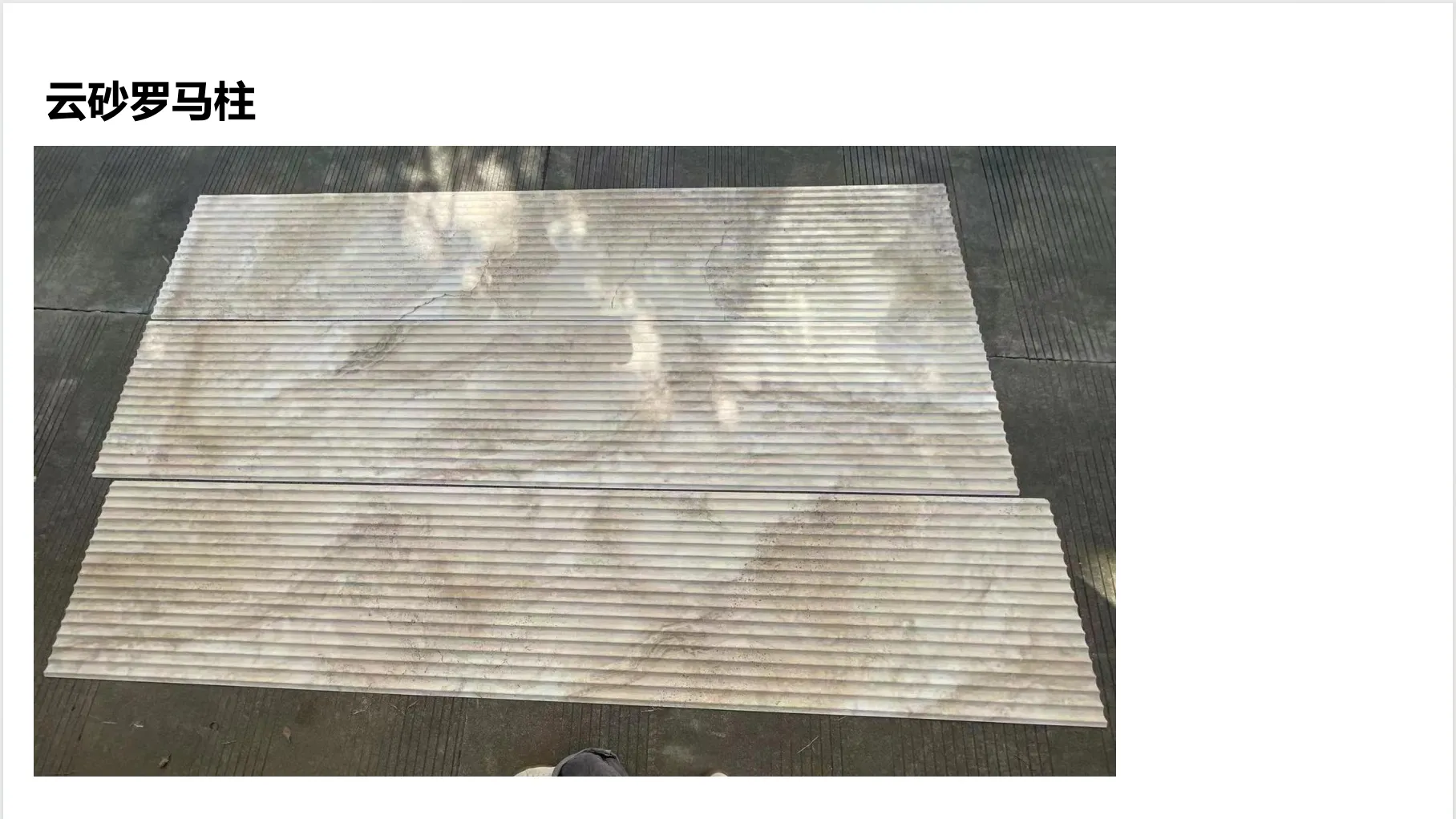
One of the most exciting aspects of modern marble pillars is the level of customization available. The "marble series" isn't a one-size-fits-all collection; it's a palette. Want a pillar that feels like it was carved from a single block of stone? "Boulder slab" pillars, with their thick, monolithic profiles, deliver that. Prefer something more delicate? "Linear travertine (claybank)" with its fine, horizontal veins creates a sense of height and lightness. For a touch of the unexpected, "travertine (starry orange)" adds bursts of color—like autumn leaves frozen in stone—perfect for breakout areas where creativity thrives. And it's not just about color or texture. Designers can choose finishes: polished for a mirror-like shine that reflects light, honed for a matte, velvety feel, or brushed for a weathered, rustic charm. "We worked with a nonprofit that wanted their office to feel like a 'historical pathfinders stone'—something that felt rooted in legacy," says Carter. "We custom-mixed a 'gradient color rammed earth board' for the base of their marble pillars, blending soft terracottas and beiges. The result? Pillars that look like they've been part of the landscape for decades, but with the durability to last decades more."
Marble pillars shine brightest when they're part of a larger design ecosystem—when they play off other materials to create harmony. Let's talk about "foamed aluminium alloy board (vintage gold)"—sleek, metallic, and modern. Pair it with a "marble pillar (lunar peak golden)," and you get a space that feels luxurious but not ostentatious. The gold tones complement each other, the aluminium adding edge, the marble softening it. It's a favorite combo for tech companies that want to feel innovative but approachable. Then there's "wood line" accents—thin, vertical strips of wood that add warmth and movement. Next to a "dolomitic travertine (dark grey)" pillar, the wood becomes a counterpoint: organic against structured, warm against cool. It's like pairing a tailored blazer with a soft sweater—polished but comfortable.
For a more industrial vibe, "fair-faced concrete" walls are a go-to. But left alone, they can feel stark. Enter "rust board granite" pillars—their deep, earthy tones and rough texture add depth, turning a cold concrete box into a space with character. "We used this combo in a startup incubator in Boston," Torres says. "The concrete keeps it modern, the rust granite adds soul. Tenants tell us they feel more inspired there—like they're part of something with grit and history, even though the space is brand-new."
| Marble/Travertine Type | Color & Texture | Best For | Design Vibe |
|---|---|---|---|
| Travertine (beige) | Soft beige base with honey-colored veins; porous, matte finish | Lobbies, reception areas | Warm, inviting, timeless |
| Marble Veil White | Crisp white with thin, wispy gray veins; polished surface | Law firms, financial offices | Professional, sophisticated, clean |
| Travertine (starry blue) | Deep blue base with swirled, star-like patterns; honed finish | Creative agencies, tech startups | Innovative, energetic, cosmic |
| Boulder Slab (vintage silver) | Thick, rough-hewn silver-gray; natural edge | Open offices, collaborative zones | Raw, organic, grounded |
| Marble Interstellar Gray | Mid-tone gray with bold, irregular veins; brushed finish | Modern workspaces, executive suites | Edgy, confident, forward-thinking |
At the end of the day, the most powerful thing about marble pillars isn't their beauty or their durability—it's how they make us feel. We spend a third of our lives at work; shouldn't that space feel like more than a "workplace"? Marble pillars, with their blend of history and modernity, their texture and warmth, help bridge that gap. They remind us of ancient temples where ideas were debated, of grand libraries where knowledge was preserved, of homes where families gathered. In an office, they become a touchstone—a physical reminder that the work we do matters, that the space we're in is worthy of our effort. "I once had an employee tell me she felt 'proud' to bring clients to her office because of the marble pillars," Carter says. "Proud. That's a feeling you can't quantify, but it's everything. When people feel proud of their space, they show up differently—more engaged, more creative, more connected."
Take a moment to imagine it: You're standing in an office, coffee in hand, chatting with a colleague. Behind you, a "travertine (vintage gold)" pillar catches the afternoon light, its veins glowing like old memories. To your left, a "wood grain board" wall adds a touch of home, and ahead, "fair-faced concrete" floors keep it grounded. This isn't just a workspace. It's a place where you feel seen, where the design says, "You belong here." That's the gift of marble pillars in office design—they don't just fill space; they fill it with meaning.
As workplaces evolve—becoming more hybrid, more focused on well-being—marble pillars are evolving too. Designers are experimenting with new finishes, like "3d art concrete board" pillars that combine the strength of concrete with the artistry of marble, or "foamed aluminium alloy board (gold)" accents that add a futuristic twist to classic stone. There's also a growing focus on sustainability: sourcing marble from quarries with ethical practices, repurposing stone from old buildings, and using "epoch stone" or "century stone" that mimics the look of aged marble without the environmental impact. "The future isn't about replacing marble—it's about reimagining it," says Torres. "We're asking, 'How can this ancient material solve modern problems?' And the answer is always surprising."
In the end, office building marble pillars are more than just design elements. They're proof that great design is about balance—between past and present, function and beauty, structure and soul. They remind us that the spaces we build shape how we live, work, and connect. So the next time you walk into an office with marble pillars, take a second to really look at them. Trace the veins with your eyes, feel the way the light hits their surface, and let yourself be drawn into their story. Because in that moment, you're not just in a workplace—you're in a space that was designed with you in mind.
Recommend Products












