

Imagine stepping into a sunlit lobby where the walls glow with a deep, warm red—like the embers of a fading sunset. The surface isn't just a color, though; it's alive with texture: tiny pores that catch the light, subtle veins that wind like rivers, and, if you lean in close, faint star-like speckles that seem to twinkle as you move. This is the magic of Starry Red Travertine, a natural stone that has captivated architects and designers for decades. But for all its beauty, this stone carries a heavy secret: its natural form is often too fragile, too heavy, and too rare to meet the demands of modern construction. Enter COLORIA, a pioneer in building materials, and their revolutionary solution: replicating the timeless allure of Starry Red Travertine using MCM flexible stone and cutting-edge technology. In this article, we'll journey from the geological cradle of Starry Red Travertine to the innovative labs of COLORIA, exploring how science and artistry converge to make nature's masterpiece accessible to all.
To understand the allure of Starry Red Travertine, we must first travel to its birthplace: mineral-rich hot springs and limestone caves, where nature acts as both sculptor and painter. Travertine itself is a form of limestone, but what sets Starry Red Travertine apart is its vivid hue and celestial patterns. Let's break down its formation, step by step.
It begins with water—specifically, groundwater heated by the Earth's mantle, which dissolves calcium carbonate from surrounding limestone rocks. As this mineral-laden water rises to the surface (often in hot springs or geysers), it encounters lower pressure and cooler air, causing the calcium carbonate to precipitate out. Over centuries, these deposits build up layer by layer, forming the porous, banded structure we recognize as travertine.
But where does the "red" come from? Enter iron oxides. In regions where the soil or bedrock is rich in iron, the mineral-laden water absorbs these iron compounds, tinting the travertine in shades ranging from soft terracotta to deep, fiery red. The "starry" effect, meanwhile, is a happy accident of nature: as the travertine forms, gas bubbles (released during precipitation) get trapped in the calcium carbonate layers. Over time, these bubbles mineralize, leaving behind tiny, star-shaped cavities that catch light and create that signature twinkle.
Geologists often refer to Starry Red Travertine as a "living stone" because its formation is influenced by more than just chemistry—it's shaped by microorganisms, too. Certain bacteria and algae thrive in the mineral-rich waters, forming biofilms that act as templates for calcium carbonate deposition. These microbial communities create intricate, organic patterns in the stone, ensuring no two slabs are exactly alike. It's this uniqueness that makes Starry Red Travertine so prized, but also so problematic for large-scale architectural use.
Historically, quarries in regions like Tuscany, Italy, and parts of Turkey have been sources of high-quality travertine, but Starry Red Travertine is even rarer. Its formation requires specific conditions: the right balance of iron oxides, consistent water flow, and stable temperatures. This scarcity, combined with its striking appearance, has made it a luxury material, reserved for buildings and high-end interiors. But for architects and designers, the dream of using Starry Red Travertine often collides with harsh realities.
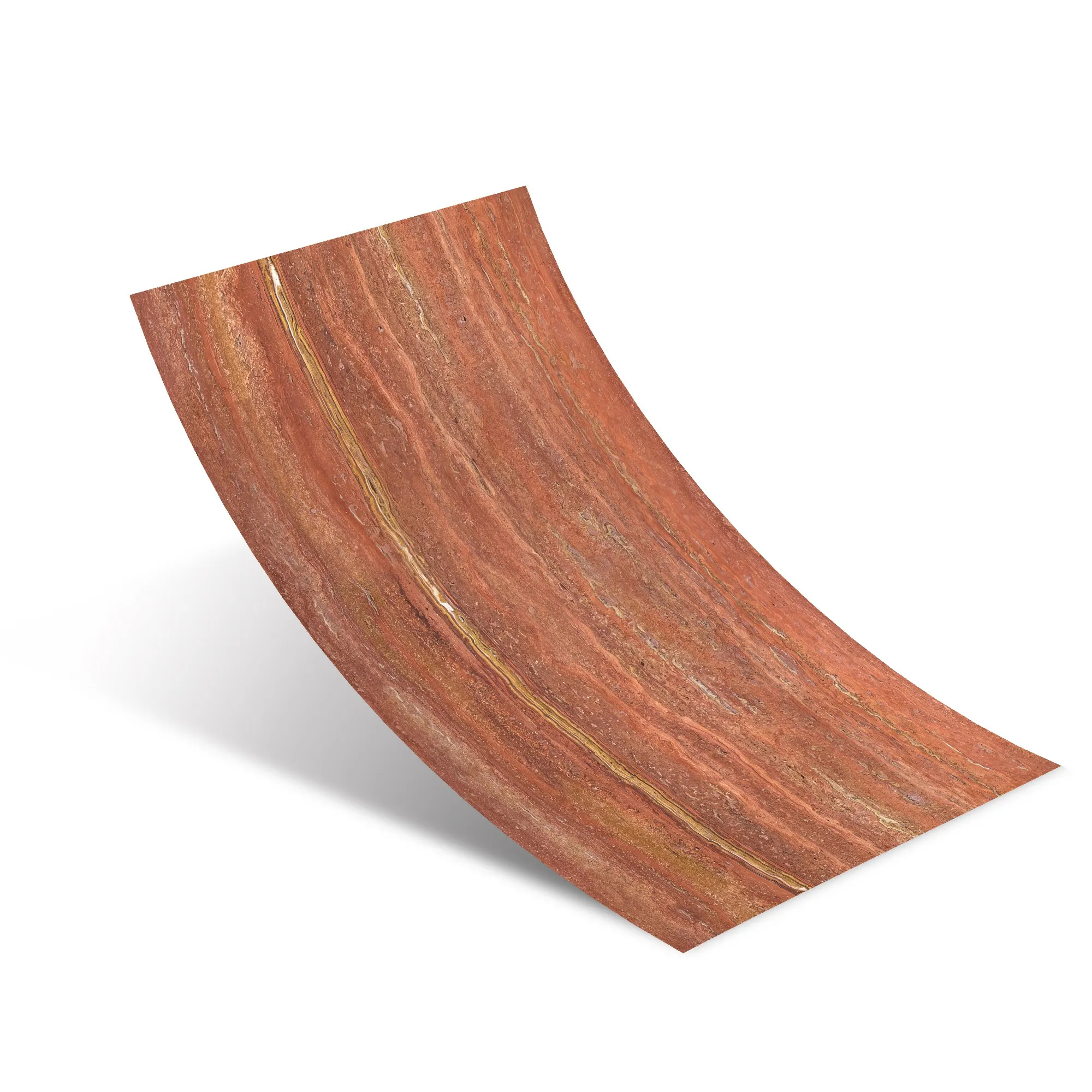
Imagine a designer sketching a hotel lobby, envisioning walls clad in Starry Red Travertine—a material that would infuse the space with warmth and drama. But as the project progresses, reality sets in. Natural Starry Red Travertine is heavy—very heavy. A single slab can weigh hundreds of pounds, requiring reinforced structural support. Installation becomes a logistical nightmare, with cranes, specialized labor, and increased construction time. Then there's durability: while travertine is strong, its porous nature makes it prone to staining, etching, and weathering. In exterior applications, rain, frost, and pollution can dull its color and erode its texture over time. And let's not forget cost: rare and labor-intensive to extract, natural Starry Red Travertine comes with a price tag that puts it out of reach for most projects.
Worst of all, perhaps, is the environmental impact. Quarrying natural stone disrupts ecosystems, destroys habitats, and contributes to carbon emissions from transportation. As the world shifts toward sustainable design, many architects are reluctant to specify materials that require intensive mining. "We love the look of Starry Red Travertine," says Maria Gonzalez, a senior architect at a global firm, "but we can't justify the environmental cost. Clients want beauty, but they also want to know their building is eco-friendly."
These challenges—weight, fragility, cost, and sustainability—have long been barriers to widespread use of Starry Red Travertine. For years, the industry has sought alternatives: painted concrete, vinyl wraps, even ceramic tiles meant to mimic stone. But these substitutes often fall short, lacking the depth, texture, and authenticity of the real thing. They feel flat, artificial—a poor imitation of nature's artistry.
That's where COLORIA saw an opportunity. Founded on the belief that "beauty shouldn't come with compromise," the company set out to replicate the essence of Starry Red Travertine using cutting-edge materials and technology. Their goal? To capture every nuance—the red hue that shifts with light, the porous texture that feels alive to the touch, the star-like speckles that dance when illuminated—while solving the practical problems of natural stone. The result? Their line of MCM panels, including the game-changing MCM flexible stone and MCM 3D printing series.
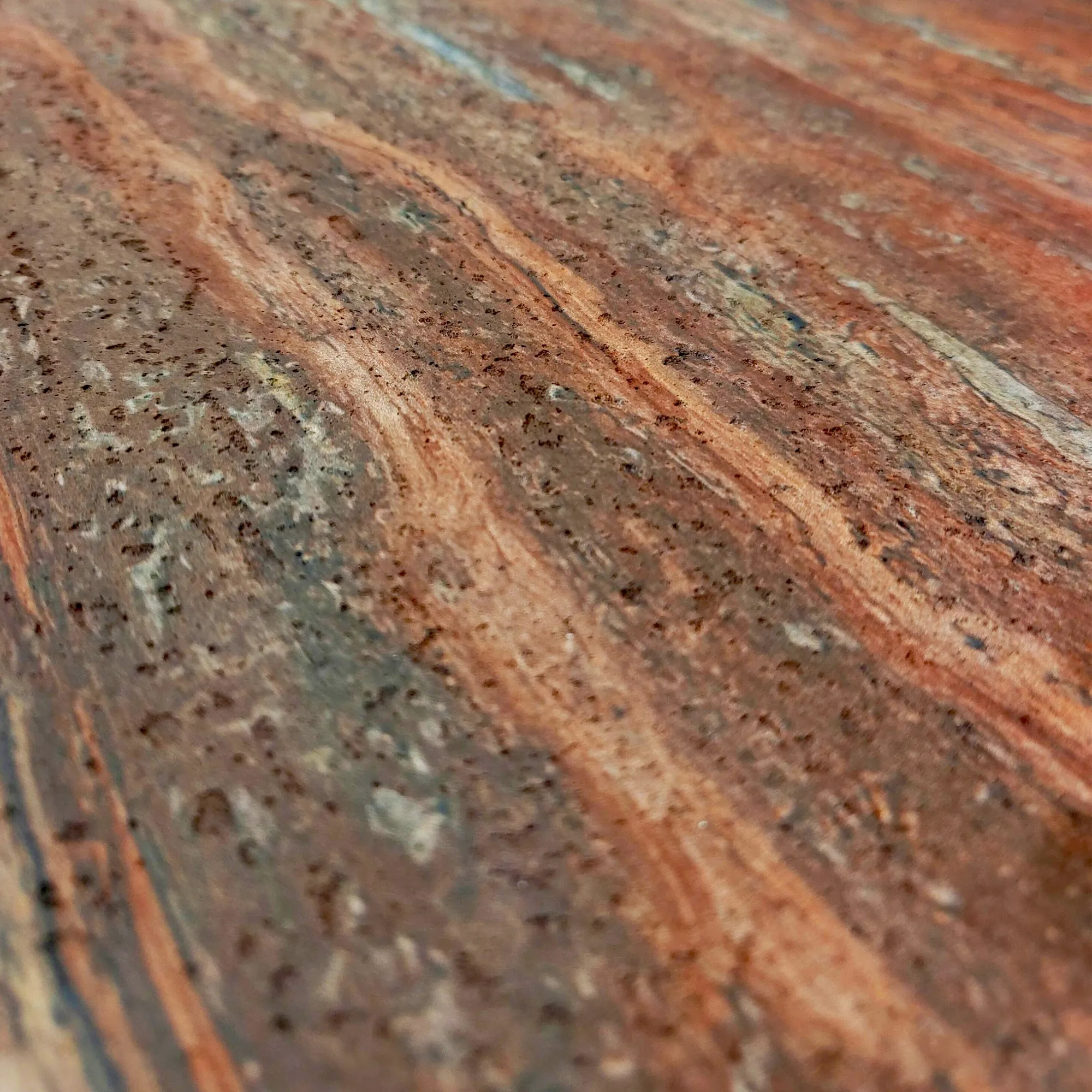
Replicating nature is no easy feat, but COLORIA's approach is equal parts science and art. It starts with a simple question: What makes Starry Red Travertine "Starry Red Travertine"? To answer that, the company's design team embarked on a global quest, collecting samples of authentic stone from quarries and historical buildings. These samples became the blueprint for their replication process—a multi-step journey that combines advanced technology with old-world craftsmanship.
First, COLORIA uses state-of-the-art 3D scanners to capture every detail of the Starry Red Travertine samples. These scanners create digital models with micrometer-level precision, mapping not just the color and pattern, but the depth of pores, the angle of veins, and the size and distribution of star-like inclusions. "It's like creating a fingerprint of the stone," explains Dr. Elena Patel, COLORIA's lead materials scientist. "We don't just copy the surface—we capture the stone's memory, the way it formed over centuries."
The scanning process also records how light interacts with the stone. Starry Red Travertine has a unique "luminosity"—the way its porous surface scatters light, creating a soft, diffused glow. To replicate this, COLORIA's team uses spectrometers to analyze the stone's reflectivity and absorption properties, ensuring their MCM panels will react to light just like the real thing.
Once the digital model is complete, the focus shifts to the material itself: MCM flexible stone. MCM, or Modified Composite Material, is a proprietary blend of natural minerals, polymers, and reinforcing fibers. Unlike traditional stone or even concrete, MCM is lightweight (up to 80% lighter than natural travertine), flexible, and incredibly durable. But what makes it ideal for replicating Starry Red Travertine is its ability to hold intricate textures and colors.
COLORIA's MCM flexible stone starts with a base layer of recycled stone aggregates (sourced from post-industrial waste, reducing the need for new quarrying) mixed with a polymer binder. This base provides strength and flexibility. On top, a texture layer is applied using the MCM 3D printing series—a technology that deposits material in thin, precise layers, mimicking the natural buildup of travertine. The 3D printers use the digital scans to recreate pores, veins, and star-like inclusions with accuracy. "It's like building a tiny mountain range on each panel," says Patel. "We control every ridge, every valley, to match the natural stone."
The color is added next, using a combination of mineral pigments and nano-particles. COLORIA's colorists spend months formulating the perfect "Starry Red" hue, mixing iron oxides (the same mineral that colors natural travertine) with other pigments to achieve the depth and variation of the real stone. They even add subtle color gradients, just like nature does—darker reds in some areas, lighter terracottas in others—to avoid the uniform look of cheap imitations.
The final step is sealing the MCM panels to protect the texture and color. Unlike natural travertine, which requires regular sealing to prevent staining, COLORIA's panels are treated with a UV-resistant, water-repellent coating that's baked into the material during production. This coating preserves the stone's appearance for decades, even in harsh weather conditions.
Before the panels are approved, they undergo rigorous testing: freeze-thaw cycles to check durability, impact tests to simulate hail or debris, and colorfastness tests under intense sunlight. "We don't just want them to look like Starry Red Travertine—we want them to outperform it," says Patel. The results are impressive: COLORIA's MCM panels can withstand temperatures from -40°C to 80°C, resist mold and mildew, and won't fade or crack for up to 50 years. For architects, this means peace of mind—no more worrying about maintenance or replacement costs.
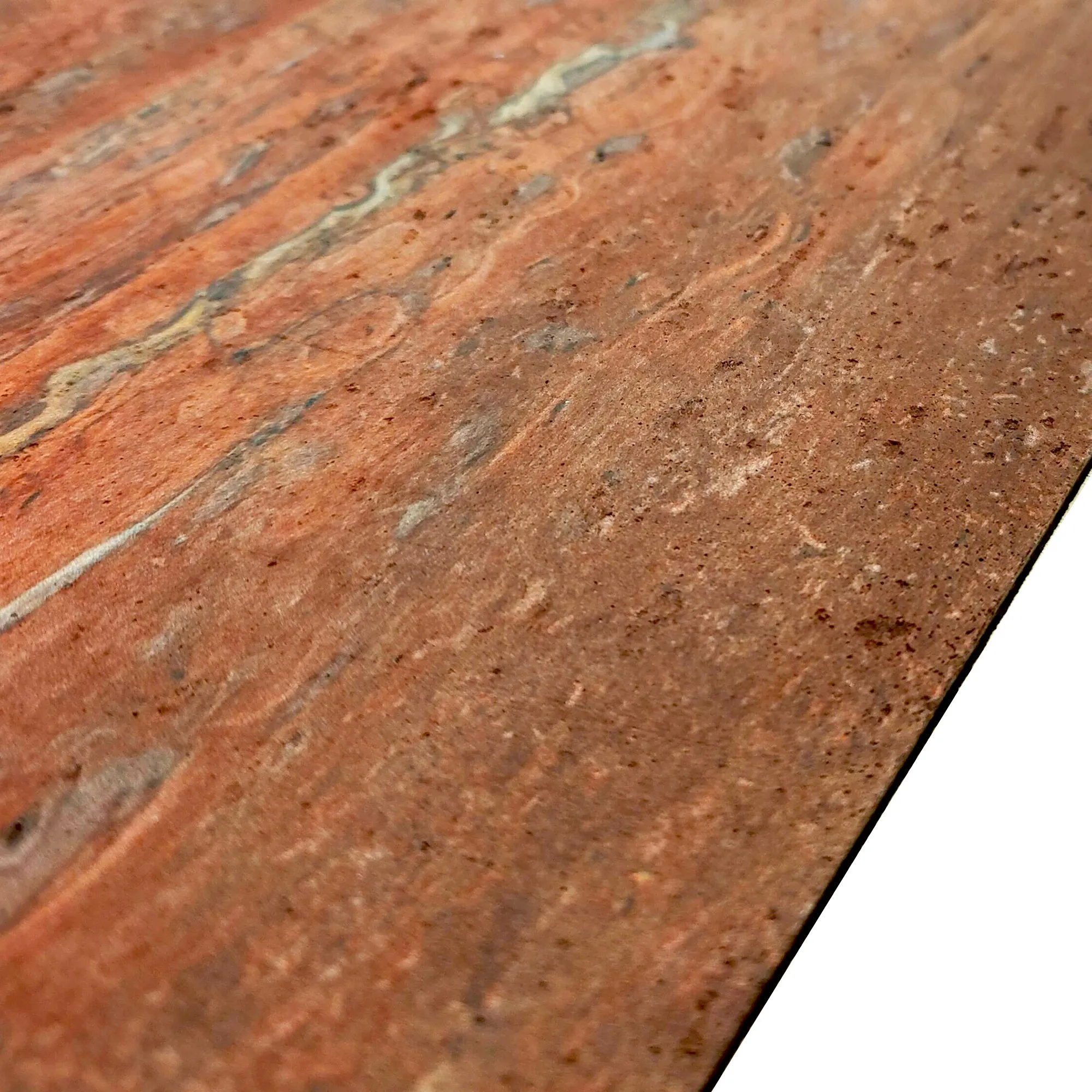
At first glance, COLORIA's MCM panels look identical to natural Starry Red Travertine. Run your hand over them, and you'll feel the same porous texture, the same subtle ridges. Stand back, and the red hue glows just like the real stone. But look closer, and the advantages of MCM become clear. Let's break them down.
| Feature | Natural Starry Red Travertine | COLORIA MCM Starry Red Travertine Panels |
|---|---|---|
| Weight | Heavy (20-30 kg/m²) | Lightweight (4-6 kg/m²) |
| Flexibility | Brittle; cannot bend | Flexible (can bend up to 30° without cracking) |
| Durability | Porous; prone to staining/weathering | Non-porous; UV/water/fire resistant |
| Installation | Requires heavy machinery and structural reinforcement | Can be installed with basic tools; no reinforcement needed |
| Sustainability | High carbon footprint; quarrying impacts ecosystems | Recycled materials; low energy production; reduces quarrying |
| Cost | High (rare, labor-intensive extraction) | Affordable (mass-produced with efficient technology) |
One of the most exciting advantages is flexibility. Natural Starry Red Travertine is rigid, limiting its use to flat surfaces. COLORIA's MCM panels, however, can be curved, making them perfect for innovative designs like rounded walls, vaulted ceilings, or even sculptural elements. "We worked with a restaurant designer who wanted a circular bar clad in Starry Red Travertine," recalls James Wilson, COLORIA's sales director. "With natural stone, it would have been impossible—too heavy, too hard to cut. With our MCM panels, they achieved the curved look in days, not months."
Lightweight construction is another game-changer. In high-rise buildings, every kilogram counts. Using MCM panels reduces the load on the structure, allowing architects to design taller, more ambitious buildings without sacrificing aesthetics. It also lowers transportation costs—trucks can carry 10 times more MCM panels than natural stone slabs, reducing fuel consumption and carbon emissions.
Sustainability, too, is a key selling point. COLORIA estimates that using their MCM panels instead of natural stone reduces carbon emissions by up to 60% per project. By incorporating recycled materials and minimizing waste, the company aligns with the growing demand for eco-friendly building solutions. "Clients today don't just ask, 'Does it look good?'" says Wilson. "They ask, 'Is it green?' Our MCM panels let them say yes to both."
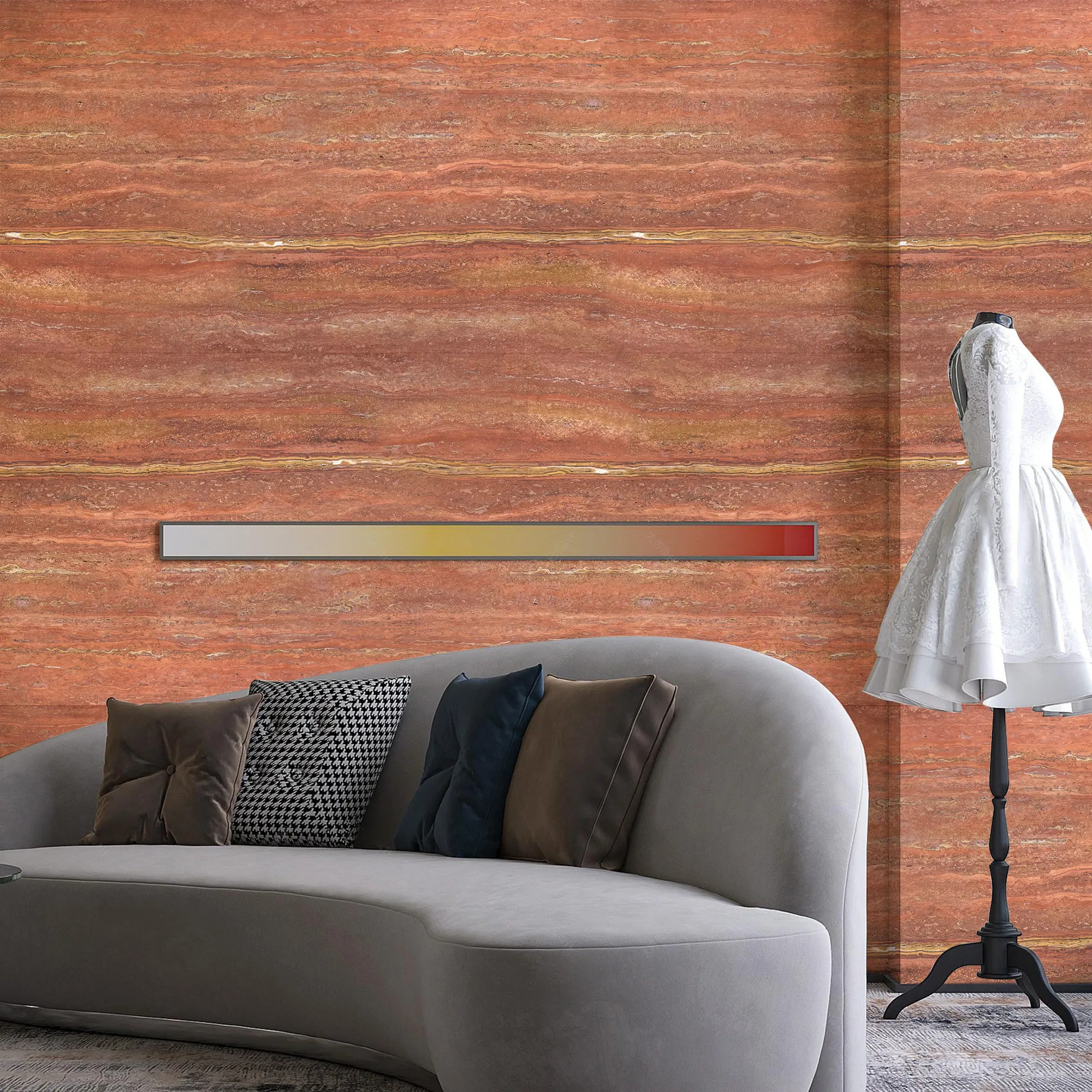
From luxury hotels to residential homes, COLORIA's MCM Starry Red Travertine panels are transforming spaces around the world. Let's explore a few standout projects that showcase their versatility and beauty.
Located in Dubai's Design District, The Celestial Hotel wanted a lobby that would "evoke the wonder of a starry night." The design team initially specified natural Starry Red Travertine for the main wall, but structural engineers raised concerns about the weight. Enter COLORIA's MCM panels. Today, the 20-meter-tall lobby wall is clad in Starry Red Travertine MCM panels, backlit to enhance the star-like inclusions. "At night, it's like standing under a red nebula," says the hotel's interior designer, Sarah Khalid. "Guests can't believe it's not real stone—even when we tell them, they run their hands over it, checking for pores." The panels were installed in just five days, and the hotel estimates saving over $500,000 in structural reinforcement and labor costs.
A homeowner in Malibu dreamed of a hillside home with exterior walls that would complement the surrounding red rock landscape. Natural Starry Red Travertine was the vision, but wildfires and coastal weather made durability a priority. COLORIA's MCM panels proved the perfect solution: fire-resistant, UV-stable, and able to withstand the salt air. The home's facade now features Starry Red Travertine panels, which fade gracefully over time (just like natural stone) but won't crack or peel. "We get compliments every day," says the homeowner, Michael Torres. "People drive by and stop to take photos. They think we imported stone from Italy, but it's all from COLORIA."
Istanbul's Heritage Museum needed to restore a historic wing while adding a modern extension. The goal was to blend old and new, using materials that honored the building's past but met modern safety standards. The original structure featured red travertine details, so the museum chose COLORIA's Starry Red Travertine MCM panels for the extension's facade. The panels were custom-colored to match the aged travertine of the historic wing, creating a seamless transition. "It's like the building is speaking two languages—old and new—but they understand each other," says the museum's curator, Ayşe Demir. "And because the panels are lightweight, we didn't have to reinforce the historic foundations, which was crucial for preservation."
Starry Red Travertine is just one of many natural materials COLORIA is replicating with MCM technology. From the lunar-like textures of Lunar Peak Silvery to the weathered charm of Gobi Panel, the company's MCM project board series offers a wide range of options for designers seeking the authenticity of natural stone without the drawbacks. And with ongoing advancements in the MCM 3D printing series, the possibilities are expanding.
"We're not just making panels—we're democratizing beauty," says Dr. Patel. "For too long, the most stunning natural materials were reserved for the few. Now, with MCM, any project—big or small—can have the warmth, character, and elegance of stone like Starry Red Travertine."
Looking ahead, COLORIA is exploring new ways to enhance their MCM panels, including integrating smart technology (like embedded sensors for temperature or moisture monitoring) and developing even more sustainable materials. But at the core of their mission remains a simple idea: to honor nature by preserving its beauty, not exploiting it.
Starry Red Travertine is more than a building material—it's a story written in stone, a testament to the Earth's. For centuries, it has inspired awe, decorating palaces, temples, and homes with its fiery beauty. But as we strive for a more sustainable, accessible future, we need new ways to tell that story.
COLORIA's MCM panels are not just an imitation—they're a reimagining. By combining cutting-edge technology with a deep respect for nature, the company has created a material that captures the soul of Starry Red Travertine while solving the practical challenges of the modern world. It's a reminder that innovation and tradition don't have to be enemies; they can dance together, creating something new and wonderful.
So the next time you see a wall glowing with the warm red hues of Starry Red Travertine, take a moment to appreciate it—not just for its beauty, but for the ingenuity that made it possible. Behind that surface is a story of science, sustainability, and a love for the natural world—a story that, thanks to COLORIA, is just beginning.
Recommend Products











