
Where Durability Meets the Art of Gathering
There's a quiet magic in outdoor pavilions. They're not just structures—they're punctuation marks in the landscape, pauses where life unfolds. A parent chasing a toddler through dappled sunlight. Friends sharing laughter over iced tea as rain drums on the roof. A solo moment of reflection, watching clouds drift across a summer sky. For decades, these spaces have been shaped by the materials we trust to stand between us and the elements. But what happens when the materials themselves start to fade, crack, or crumble? When the pavilion that once felt like a haven begins to show its age, not with grace, but with wear? It's a loss deeper than aesthetics—it's the erosion of memories in the making.
Enter MCM (Modified Composite Material) and its Marble Series—a collection of materials designed not just to survive the weather, but to thrive alongside it. These aren't just "building products." They're storytellers, crafted to age like fine wine, preserving the beauty of your pavilion while standing firm against rain, wind, sun, and time. Let's step into this world where resilience meets artistry, and discover how MCM is redefining what an outdoor pavilion can be.
Outdoor pavilions live in a constant state of negotiation with nature. Consider the coastal pavilion, where salt-laden winds gnaw at wooden beams until they splinter. Or the mountain retreat, where freeze-thaw cycles turn solid stone into a network of cracks. Even in mild climates, UV rays bleach colors to pale shadows, and rainwater seeps into porous surfaces, breeding mold that stains and weakens. Traditional materials—solid wood, natural marble, poured concrete—have long been the go-to choices, but they come with a hidden cost: maintenance, replacement, and the slow, sad realization that your pavilion's beauty is temporary.
I once visited a community park in my hometown where a 20-year-old wooden pavilion had become a cautionary tale. Its once-rich cedar beams were gray and brittle; the roof, sagging under years of rain, leaked during storms. The local council debated replacing it, but the price tag for natural stone felt prohibitive. "Why can't something beautiful also be tough?" a retired architect muttered to me, staring up at the peeling paint. That question lingered—and it's exactly what MCM set out to answer.
MCM isn't just a material; it's a reimagining of what building materials can do. Blending natural minerals with advanced polymers, it marries the best of both worlds: the tactile warmth of natural stone and the durability of modern engineering. Lightweight yet strong, flexible yet stable, MCM products like the Marble Series, Flexible Stone, and Lunar Peak line aren't just "weather-resistant"—they're weather-responsive . They don't fight the elements; they adapt to them, aging in ways that enhance their character rather than diminish it.
Take MCM Flexible Stone, for example. Run your hand over its surface, and you'll feel the cool, slightly textured finish of real stone—but bend it, and it gives, gently, like a sheet of thick leather. This flexibility means it can wrap around curved pavilion columns, follow the slope of a roof, or conform to uneven terrain without cracking. It's a material that works with the landscape, not against it. And when the rain comes? Unlike porous travertine or sandstone, it repels water, resisting mold and mildew. Sunlight? UV-stabilized pigments keep colors vibrant, so that soft beige or deep charcoal stays true, year after year.
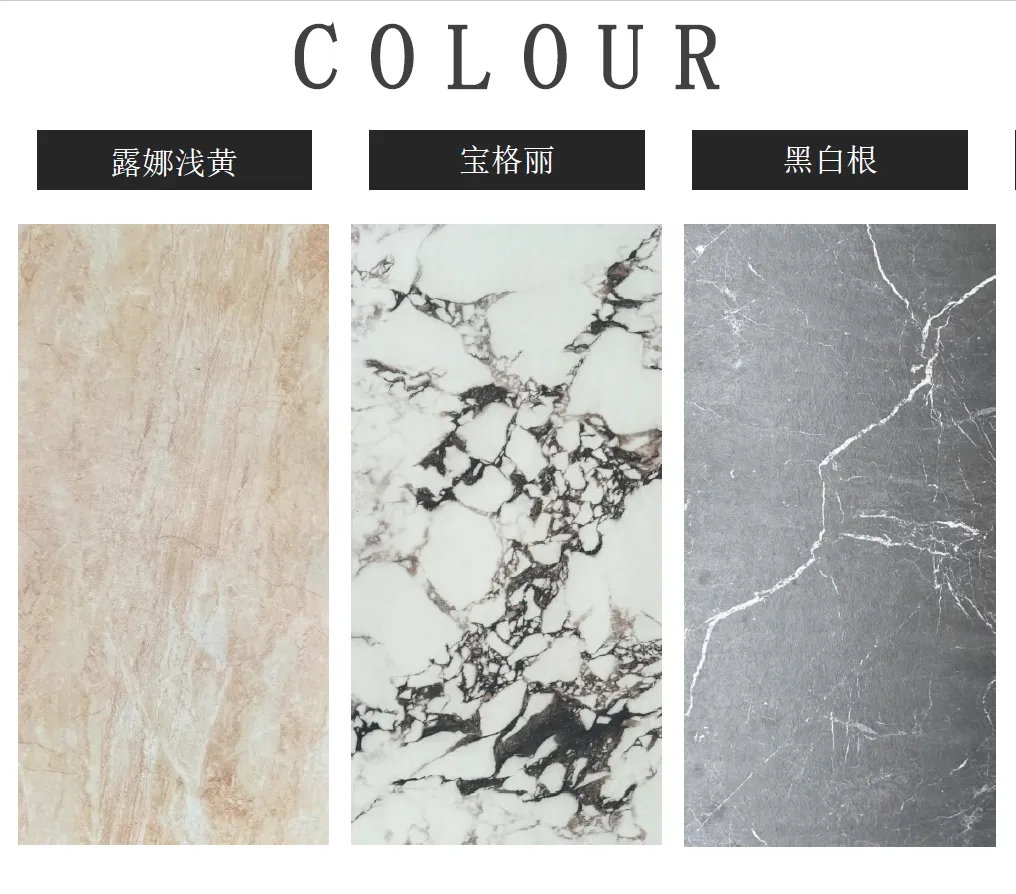
Marble has long been the gold standard for luxury, but its porous nature makes it a risky choice for outdoors. Spills stain it, rain etches it, and freeze-thaw cycles can shatter even the thickest slabs. MCM's Marble Series changes that. By recreating marble's iconic veining, sheen, and depth in a composite matrix, it captures the material's timeless beauty without the vulnerability.
Imagine a pavilion roofed in Marble Veil White panels. The color is a whisper of white, with faint gray veining that mimics the look of Carrara marble, but with a matte finish that diffuses sunlight instead of glaring. On a hot summer day, it stays cool to the touch, so bare feet (or a napping cat) won't flinch. Rain rolls off it in sheets, leaving no water spots, and after years of sun exposure, it doesn't yellow—just retains that clean, cloud-like softness. It's marble, but better: elegant without the.
For pavilions that make a statement, Marble Interstellar Gray is a showstopper. Its deep, moody base is streaked with silver and charcoal veins, like a storm cloud frozen in stone. Installed as wall cladding, it transforms a simple pavilion into a modernist masterpiece. What's remarkable is how it interacts with light: at dawn, it glows with a subtle blue-gray hue; at dusk, it warms to charcoal, as if absorbing the day's last light. Unlike natural gray marble, which can fade to a dull ash, Interstellar Gray holds its depth, even after years of rain and wind. It's not just a surface—it's a mood, preserved.
Travertine is beloved for its porous, honeycombed texture, but that texture is also its downfall outdoors—dirt clogs the pores, and water seeps in. MCM's Travertine (Starry Blue) reimagines this classic stone. Its surface mimics travertine's natural pitting, but each "pore" is sealed, creating a texture that's tactile and visually striking without the maintenance. The real magic? Those tiny pits are infused with iridescent particles that catch the light. On a sunny day, they shimmer like distant stars; when it rains, the blue deepens, and the sparkles intensify, turning a gloomy afternoon into something almost magical. It's travertine with a secret: it doesn't just look like the night sky—it stays bright, no matter the weather.
If the Marble Series is about redefining elegance, MCM Flexible Stone is about redefining possibility. Traditional stone is rigid—you build around its limits. Flexible Stone bends, curves, and conforms, letting you design pavilions that flow with the landscape, not fight it. It's thin (just 3-5mm thick), lightweight (8-12kg/m²), and yet astonishingly strong, with a flexural strength that lets it wrap around columns, arch over doorways, or even slope gently to create a "living roof" effect.
Consider a backyard pavilion designed with curved walls, meant to mimic the sweep of a river. With traditional stone, this would require custom-cut slabs, expensive installation, and the risk of cracks as the material settles. With MCM Flexible Stone, the panels bend to the curve like fabric, creating a seamless, organic shape. And because it's so light, it reduces the load on the pavilion's frame, cutting down on structural costs. It's design freedom without compromise—and it's tough as nails.
I visited a coastal resort in Thailand last year where the poolside pavilion used MCM Flexible Stone in a warm beige tone. The panels curved gently over the seating area, creating a cocoon-like feel. The resort manager told me they'd chosen it after a previous wooden pavilion had rotted in the humid climate. "Three years later, it still looks brand new," she said, running a hand over the stone's surface. "The monsoons hit hard here, but this material? It just laughs them off."
Some pavilions are meant to feel otherworldly—and the Lunar Peak Series delivers that vibe, with colors and textures inspired by the moon's rugged surface. Lunar Peak Silvery, Golden, and Black aren't just "colors"—they're experiences. Imagine a pavilion clad in Lunar Peak Silvery: its surface is matte, with a subtle metallic sheen that shifts like moonlight on water. It's cool to the touch, even on the hottest days, and its non-slip texture makes it safe for bare feet. Unlike real metal panels, which rust or fade, Lunar Peak Silvery resists corrosion, making it perfect for coastal pavilions where salt air is a constant threat.
Lunar Peak Golden, on the other hand, warms up a space. Its rich, amber hue has a depth that flat paint can never match—think of sunlight hitting a field of wheat at sunset. Installed as a ceiling panel, it turns the pavilion into a lantern at dusk, reflecting the last light of day. And Lunar Peak Black? It's bold, dramatic, and surprisingly versatile. Used as an accent wall, it makes greenery pop; paired with white trim, it feels modern and crisp. What ties all three together? They're designed to age with the elements, not against them. A little rain, a lot of sun—they just get more interesting, like a story with plot twists you didn't see coming.
Concrete has a reputation for being cold, industrial—but MCM's Fair-Faced Concrete flips that script. This isn't the gray, lifeless slab of parking garages. It's concrete with soul: a warm, earthy tone with subtle variations in texture, like the surface of a river stone smoothed by time. It's raw yet refined, making it perfect for pavilions that aim for a "rustic modern" vibe.
What sets it apart? Durability, for starters. Traditional concrete cracks under freeze-thaw cycles; Fair-Faced Concrete flexes just enough to avoid splitting. It's also stain-resistant—spilled juice or muddy footprints wipe away with a damp cloth. But the real joy is in its versatility. Use it for a minimalist pavilion with clean lines, and it feels sleek. Pair it with wooden beams and potted plants, and it becomes cozy, almost cabin-like. It's a blank canvas that doesn't feel empty—just full of potential.
Still wondering how MCM stacks up against the materials you've known for years? Let's break it down—not with technical jargon, but with the stuff that matters: how they feel, how they last, and how they fit into your life.
| Aspect | Traditional Materials (Wood/Stone) | MCM Materials (Marble Series, Flexible Stone, etc.) |
|---|---|---|
| Aesthetics Over Time | Fades, cracks, or rots; requires frequent refinishing to stay beautiful. | Ages gracefully—colors deepen, textures soften, and character grows without decay. | s
| Vulnerable to UV damage, water, and salt; prone to mold, warping, or splitting. | UV-stabilized, water-repellent, and corrosion-resistant; withstands rain, wind, salt, and extreme temperatures. | |
| Heavy, rigid, and labor-intensive; requires specialized tools and skilled masons. | Lightweight and flexible; cuts easily with standard tools; installs 30-50% faster than traditional stone. | |
| High: annual sealing, painting, or repairs; costs add up over time. | Low: occasional cleaning with soap and water; no sealing or refinishing needed. | |
| Limited by weight and rigidity; curves or custom shapes are costly and risky. | Flexible enough for curves, slopes, and custom designs; lightweight enough for creative framing. |
At the end of the day, an outdoor pavilion is about more than shelter. It's about the moments that happen under its roof: the first steps of a toddler, the toasts of a birthday party, the quiet mornings with a book and a cup of coffee. When you choose MCM materials, you're not just building a structure—you're building a legacy. A space that will outlast the storms, the seasons, and even the years, so that one day, your grandchildren might sit there and say, "Remember when…?"
MCM's Marble Series, Flexible Stone, Lunar Peak, and Fair-Faced Concrete aren't just "weather-resistant." They're memory-resistant —designed to protect the stories that make a pavilion more than wood and stone. So the next time you dream of an outdoor space, don't just imagine what it looks like today. Imagine what it will look like in 10 years, 20 years, with your family's laughter still echoing off walls that have aged like fine wine.
That's the promise of MCM: durability that doesn't compromise beauty, and beauty that doesn't fade with time. Because the best pavilions aren't just built—they're lived in, loved, and left behind as proof that some things really can last.
Recommend Products












