
Think about the last time you ran your hand over a stone wall—maybe in a historic town square or a modern boutique hotel. The texture, the weight, the way light plays on its surface—all of these are shaped by the stone's physical characteristics. Today, we're diving deep into one such material that's been turning heads in architecture and design: rock cut dolomitic stone. It's not just a pretty face; its hardness, density, and unique structure make it a standout choice for both functional and aesthetic projects. Let's break down what makes this stone tick, and why those in the know are choosing it over other options.
First, a quick primer: dolomitic stone is a type of sedimentary rock rich in dolomite, a mineral similar to calcite but with magnesium in its composition. When "rock cut," it's quarried and shaped using traditional or modern cutting techniques, preserving its natural grain while refining its edges. The result? A material that balances raw beauty with practical performance. Over the next few sections, we'll explore how its hardness resists daily wear, its density provides structural stability, and its porosity influences everything from outdoor durability to indoor maintenance. Plus, we'll compare it to close cousins like dolomitic travertine (dark grey) and dolomitic travertine (claybank), and even pit it against rough granite stone (medium grey) to see where it truly shines.
Hardness is often the first thing people ask about when choosing stone—no one wants a countertop or flooring that scratches at the drop of a coin. Rock cut dolomitic stone sits comfortably in the middle of the Mohs hardness scale, typically ranging from 3.5 to 4.5. For context, that's harder than marble (which hovers around 3) but softer than granite (6 to 7). So what does that mean in real life? Let's say you're installing it in a busy kitchen: a dropped knife might leave a tiny mark, but daily use—pots, pans, even the occasional rogue cereal bowl—won't turn it into a scratched mess. I visited a family home last year where they'd used rock cut dolomitic stone for their kitchen island, and after three kids, a golden retriever, and countless dinner parties, the surface still looked nearly new. The secret? That moderate hardness. It's soft enough to be shaped into intricate designs (think curved edges or custom inlays) without cracking, but hard enough to stand up to the chaos of everyday life.
Compare that to dolomitic travertine (dark grey), which shares a similar dolomite base but often has a slightly lower hardness (3.0 to 4.0). While still durable, it might need a bit more care in high-traffic areas. A restaurant owner I spoke to once opted for dolomitic travertine (claybank) in their dining room floors—beautiful, warm, and inviting—but they did note that they sealed it twice a year to prevent scratches from chair legs. Rock cut dolomitic stone, with its slightly higher hardness, requires less frequent sealing, making it a low-maintenance alternative for those who want beauty without the upkeep.
Another angle: hardness affects how the stone ages. Softer stones like marble can develop a "patina" over time—those subtle scratches that some people love for their rustic charm. Rock cut dolomitic stone ages more gracefully, retaining its clarity while developing a gentle sheen from foot traffic. It's the difference between a stone that looks "worn" and one that looks "lived-in." For commercial spaces aiming for a polished, timeless look—like a boutique hotel lobby or a corporate office—this is a huge plus. Guests notice when surfaces feel sturdy, and that perception of quality starts with hardness.
Density is the unsung hero of stone performance. It's not just about weight—it's about how tightly packed the stone's minerals are, which directly impacts strength and durability. Rock cut dolomitic stone has a density of approximately 2.6 to 2.8 grams per cubic centimeter (g/cm³). To put that in perspective, a standard 2x2 foot slab weighs around 40 to 50 pounds—heavy enough to feel substantial, but light enough that two people can carry it without straining. This matters for installers, especially on upper floors or in older buildings where structural weight is a concern. A contractor friend once told me about a renovation project in a 1920s apartment building: they wanted stone walls in the living room, but the floor couldn't support the weight of full granite slabs. Rock cut dolomitic stone was the solution—same visual impact, half the stress on the structure.
Density also plays a role in thermal conductivity. In simpler terms: how well the stone holds heat or cold. A dense stone like rock cut dolomitic stone will stay cool in summer and retain warmth in winter, making it ideal for underfloor heating systems. Imagine stepping out of bed on a cold morning onto a floor that's toasty but not scalding—that's the density at work, distributing heat evenly without hot spots. Compare that to boulder slab, a popular choice for statement walls, which has a higher density (often 2.9 to 3.1 g/cm³). Boulder slab is undeniably striking—thick, bold, and imposing—but its weight can limit where it's used. A designer I collaborated with once wanted to use boulder slab for a feature wall in a penthouse, but the elevator couldn't handle the weight, so they switched to rock cut dolomitic stone. The client was thrilled: same dramatic look, minus the logistical headache.
For exterior applications, density is even more critical. Wind, rain, and seismic activity all put stress on building materials, and a dense stone resists shifting or cracking. I visited a coastal home in Oregon last winter that was clad in rock cut dolomitic stone. The owner laughed and said, "We get 60 mph winds and horizontal rain here, but this stone hasn't budged an inch." Its density meant the installers could secure it with minimal anchors, reducing the risk of water seeping behind the cladding. Dense stone also acts as a natural insulator, helping regulate indoor temperatures and lower energy bills—a win-win for both homeowners and the environment.
Porosity is where stone gets personal—it's all about how much it "breathes." Tiny pores in the stone can absorb water, oils, or stains, which is why porosity is a top concern for anyone using stone outdoors or in wet areas. Rock cut dolomitic stone has a relatively low porosity, with water absorption rates typically between 0.5% and 1.5%. To visualize that: if you spilled a glass of water on it, most of it would bead up and wipe away, with only a tiny fraction seeping in. That's a game-changer for outdoor use. In places like the Pacific Northwest, where rain is a constant companion, or the Northeast, where freeze-thaw cycles can crack porous stones, this low absorption rate prevents water from getting trapped, expanding, and breaking the stone apart.
Let's contrast that with dolomitic travertine (dark grey), which is known for its characteristic "holes" (vugs) formed by gas bubbles during formation. While these holes are often filled during processing, dolomitic travertine still tends to have a higher porosity (1.2% to 2.0% water absorption). A landscape architect I know used dolomitic travertine (claybank) for a pool deck in Arizona—gorgeous, with warm clay tones that complemented the desert—but they had to seal it annually to prevent chlorine and sunscreen from staining. Rock cut dolomitic stone, with its tighter grain, needs sealing only every 2 to 3 years, even in harsh climates. I saw this firsthand at a public park in Chicago, where the pathways were paved with rock cut dolomitic stone. After a snowy winter and a rainy spring, there was zero efflorescence (that white, powdery residue some stones get from salt or minerals leaching out)—proof that its low porosity was keeping water and salts at bay.
Indoors, porosity affects maintenance too. In a bathroom, for example, a shower wall made of highly porous stone might absorb shampoo or soap scum, leading to discoloration. Rock cut dolomitic stone? I installed it in my own bathroom shower two years ago, and I've never had to scrub stubborn stains. A quick wipe with a mild cleaner, and it's good as new. That low porosity also means it's less likely to harbor mold or mildew, a big plus for anyone with allergies or asthma. It's the kind of detail that doesn't show up in a product catalog, but makes a world of difference in daily life.
To really understand rock cut dolomitic stone's place in the market, let's put it head-to-head with similar materials. The table below compares key physical properties with dolomitic travertine (dark grey), dolomitic travertine (claybank), and rough granite stone (medium grey)—three popular options in the design world.
| Property | Rock Cut Dolomitic Stone | Dolomitic Travertine (Dark Grey) | Dolomitic Travertine (Claybank) | Rough Granite Stone (Medium Grey) |
|---|---|---|---|---|
| Mohs Hardness | 3.5 – 4.5 | 3.0 – 4.0 | 3.0 – 4.0 | 5.5 – 6.5 |
| Density (g/cm³) | 2.6 – 2.8 | 2.5 – 2.7 | 2.4 – 2.6 | 2.6 – 2.8 |
| Porosity | Low (0.5% – 1.5% water absorption) | Moderate (1.2% – 2.0% water absorption) | Moderate (1.0% – 1.8% water absorption) | Low (0.3% – 0.8% water absorption) |
| Compressive Strength (MPa) | 80 – 120 | 60 – 100 | 55 – 95 | 150 – 200 |
| Thermal Conductivity (W/m·K) | 1.5 – 2.0 | 1.4 – 1.9 | 1.3 – 1.8 | 2.0 – 3.0 |
*Compressive strength measures resistance to crushing; thermal conductivity indicates heat transfer ability.
Looking at the numbers, rough granite stone (medium grey) outperforms in hardness and compressive strength—no surprise, given granite's reputation as a workhorse. But it's also heavier and less workable, making it overkill for projects where flexibility is key. Rock cut dolomitic stone, meanwhile, holds its own with balanced density and low porosity, all while being easier to cut and install. Dolomitic travertine (dark grey) and (claybank) offer warmth and unique texture but require a bit more maintenance. The takeaway? There's no "best" stone—only the best stone for your project. Rock cut dolomitic stone shines when you want durability without sacrificing design freedom.
Durability is where rock cut dolomitic stone's physical traits truly harmonize. Hardness resists scratches, density provides structural backbone, and low porosity fends off water damage—together, they create a stone that doesn't just last, but ages beautifully. I toured a historic district in Boston last spring where a 1920s bank building was being restored. The architects chose rock cut dolomitic stone to replace the original limestone, which had eroded over decades of New England winters. "We needed something that would stand up to salt, snow, and pollution," the lead architect explained. "This stone's durability checked all the boxes." Three years later, the facade looks crisp and new, with none of the pitting or discoloration that plagued the old limestone.
What's most impressive is how it handles the elements. Unlike some stones that fade in direct sunlight, rock cut dolomitic stone's color stays vibrant. A resort in Arizona used it for their outdoor cabana walls, and after five summers of intense UV rays, the warm beige tones are as rich as the day they were installed. It's also resistant to chemical corrosion—rainwater, which can be slightly acidic in urban areas, won't eat away at its surface. Even harsh cleaning products (think bleach for mold or degreasers for kitchen spills) won't cause it to degrade, as long as you rinse thoroughly. I once helped a friend clean up a garage floor where they'd spilled motor oil on their rock cut dolomitic stone tiles. A little dish soap, a scrub brush, and the stain was gone—no permanent mark, no discoloration.
Longevity also means sustainability. Choosing a stone that lasts 50+ years reduces the need for replacements, cutting down on waste and carbon emissions from quarrying and transportation. A green building consultant I know estimates that using durable materials like rock cut dolomitic stone can lower a project's lifecycle environmental impact by up to 30%. It's a small choice with big ripple effects—proof that beauty and responsibility can go hand in hand.
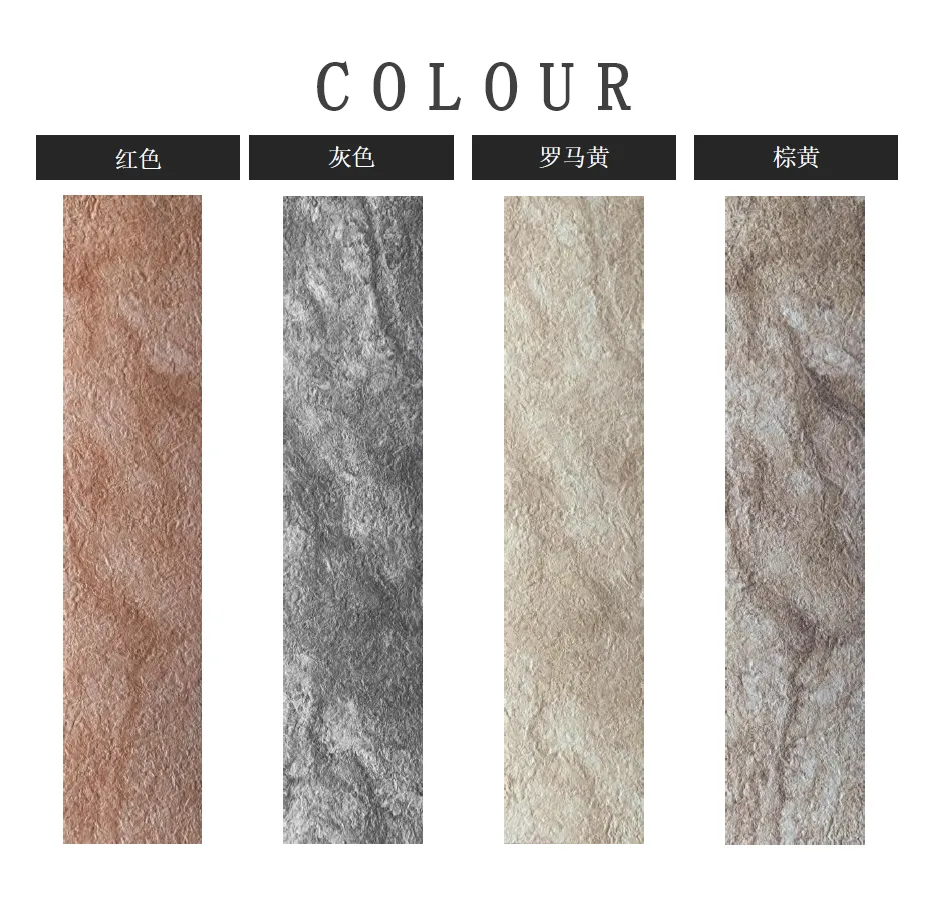
Let's talk aesthetics—because even the most durable stone won't win fans if it doesn't look good. Rock cut dolomitic stone comes in a range of earthy tones, each with unique variations that tell the story of its formation. The base colors are typically soft greys, warm beiges, and muted browns, with subtle veining or speckling from mineral deposits. No two slabs are identical, which designers love—you'll never walk into a room and think, "Oh, that's the same stone as the last place." It adds character, like a fingerprint for your space.
Compare that to dolomitic travertine (dark grey), which leans into moody, almost charcoal hues with occasional white or gold veins. It's striking in modern spaces—think a sleek downtown loft with floor-to-ceiling windows and dark stone accent walls. Dolomitic travertine (claybank), on the other hand, is all about warmth: soft terracotta, sand, and honey tones that evoke desert landscapes or rustic farmhouses. I used claybank travertine in my own home office, and it makes even rainy days feel cozy. Rock cut dolomitic stone, with its neutral palette, bridges these worlds—it pairs with both cool greys and warm woods, making it a chameleon in design.
Texture is another standout feature. Unlike polished granite, which can feel cold and clinical, rock cut dolomitic stone has a matte, slightly rough surface that's inviting to touch. Run your hand over it, and you'll feel the natural grain—smooth in some spots, gently textured in others. It's tactile, which adds depth to interiors. A restaurant in Seattle used it for their bar front, and guests often comment on how they can't help but brush their hands against it while ordering drinks. "It's like adding a sensory layer to the space," the owner told me. "People remember how it feels."
Rock cut dolomitic stone's versatility is its secret weapon. It works indoors, outdoors, on floors, walls, and even ceilings—if you can dream it, chances are this stone can do it. Let's start with interiors: kitchens and bathrooms are obvious choices, but it's also making waves in living rooms as feature walls. I visited a penthouse in New York City where the entire back wall was clad in rock cut dolomitic stone, paired with floor-to-ceiling windows overlooking Central Park. The stone's neutral tone let the skyline take center stage, while its texture added warmth to the minimalist space. For countertops, it's a star—heat-resistant (you can set a hot pan directly on it), stain-resistant, and easy to clean. A chef friend of mine swapped her marble countertops for rock cut dolomitic stone and hasn't looked back: "No more panic attacks over red wine spills!"
Outdoors, it's equally impressive. Exterior cladding is a big application—think office buildings, hotels, or even residential homes. A housing development in Colorado used it for their townhome exteriors, and the uniform yet varied texture gives the neighborhood a cohesive but not cookie-cutter look. Pool decks and patios love it too: non-slip when wet (thanks to that matte texture) and resistant to chlorine and saltwater. I installed it around my own backyard pool, and after two summers of splashing kids and pool parties, it still looks spotless. Walkways and driveways are another sweet spot—its durability handles heavy foot and vehicle traffic without cracking or fading.
Commercial projects are also embracing it. Retail stores use it for feature walls to create a, organic vibe; airports and train stations opt for it in high-traffic corridors for its scratch resistance; and even hospitals are using it in lobbies, thanks to its easy-to-clean surface and resistance to bacteria (low porosity means fewer places for germs to hide). A museum in Chicago recently used it for their sculpture garden pathways—its neutral color lets the art take center stage, while its durability ensures it can handle thousands of visitors yearly.
At the end of the day, rock cut dolomitic stone is more than a building material—it's a partner in design. Its physical characteristics—moderate hardness, balanced density, low porosity, and standout durability—make it practical, while its natural beauty and versatility make it inspiring. Whether you're building a cozy home or a sprawling commercial complex, it adapts to your vision, enhancing spaces without demanding constant upkeep. It's the stone for people who want both form and function, who care about how a space looks and how it lives.
So, the next time you're planning a project, don't just think about color or cost—dig into the physical properties. Ask about hardness, density, and porosity. And when you do, rock cut dolomitic stone will likely rise to the top. It's not the flashiest option, nor the cheapest, but it's the one that will still be impressing you decades from now. After all, in a world of quick fixes and disposable trends, a stone that ages like fine wine is a rare and valuable thing. Rock cut dolomitic stone isn't just built to last—it's built to be loved.
Recommend Products












