
Saudi Arabia's landscape is a study in extremes—where golden deserts stretch to the horizon, ancient cities meet futuristic skylines, and the sun blazes with an intensity that tests the limits of even the toughest materials. For architects and builders here, choosing the right cladding and construction materials isn't just about aesthetics; it's about survival. Extreme temperatures (often soaring above 45°C in summer), relentless UV radiation, sandstorms that grind away at surfaces, and coastal humidity in cities like Jeddah all demand materials that don't just look good, but stand the test of time. Enter COLORIA MCM, a name increasingly synonymous with durability and innovation in the region. Among their star products, Poly Wood Board has emerged as a game-changer, blending the warmth of wood with the resilience needed for Saudi Arabia's harsh conditions. In this article, we'll dive into how Poly Wood Board performs in real-world Saudi projects, explore its unique durability features, and see why it's becoming the go-to choice for forward-thinking builders—paired with other COLORIA staples like MCM flexible stone and fair-faced concrete .
To appreciate Poly Wood Board's impact, it helps to first understand the hurdles facing construction in Saudi Arabia. Let's break down the main culprits:
From Riyadh's inland deserts to the coastal plains of Dammam, summer temperatures regularly exceed 40°C, with surfaces like metal cladding sometimes hitting 70°C. Traditional wood, beloved for its natural beauty, quickly becomes a liability here. Unprotected wood warps, cracks, and fades under prolonged heat, losing its structural integrity and aesthetic appeal in as little as a year. Even treated wood struggles—chemical preservatives can break down under UV exposure, leaving the material vulnerable to rot and insect infestations.
Sandstorms are a fact of life in Saudi Arabia, especially in the central and eastern regions. These storms hurl fine, gritty sand at speeds up to 60 km/h, acting like sandpaper on building exteriors. Materials with soft finishes or porous surfaces—think painted wood or low-quality composite panels—scratch easily, dulling over time and requiring frequent repairs. For commercial buildings, this isn't just a maintenance headache; it's a blow to curb appeal and brand image.
Cities like Jeddah and Yanbu face a different enemy: humidity (often above 60% in summer) combined with salt-laden air from the Red Sea. This cocktail accelerates corrosion in metal, promotes mold growth in organic materials, and weakens adhesives in cheaper cladding systems. Traditional concrete, while strong, can develop efflorescence (those unsightly white salt deposits) or crack due to moisture expansion, especially when paired with temperature fluctuations.
Add to this the growing demand for sustainable, low-maintenance materials—driven by both cost savings and environmental awareness—and it's clear: the era of "build and replace" is over. Saudi builders need materials that last, perform, and look good doing it. That's where COLORIA MCM's Poly Wood Board steps in.
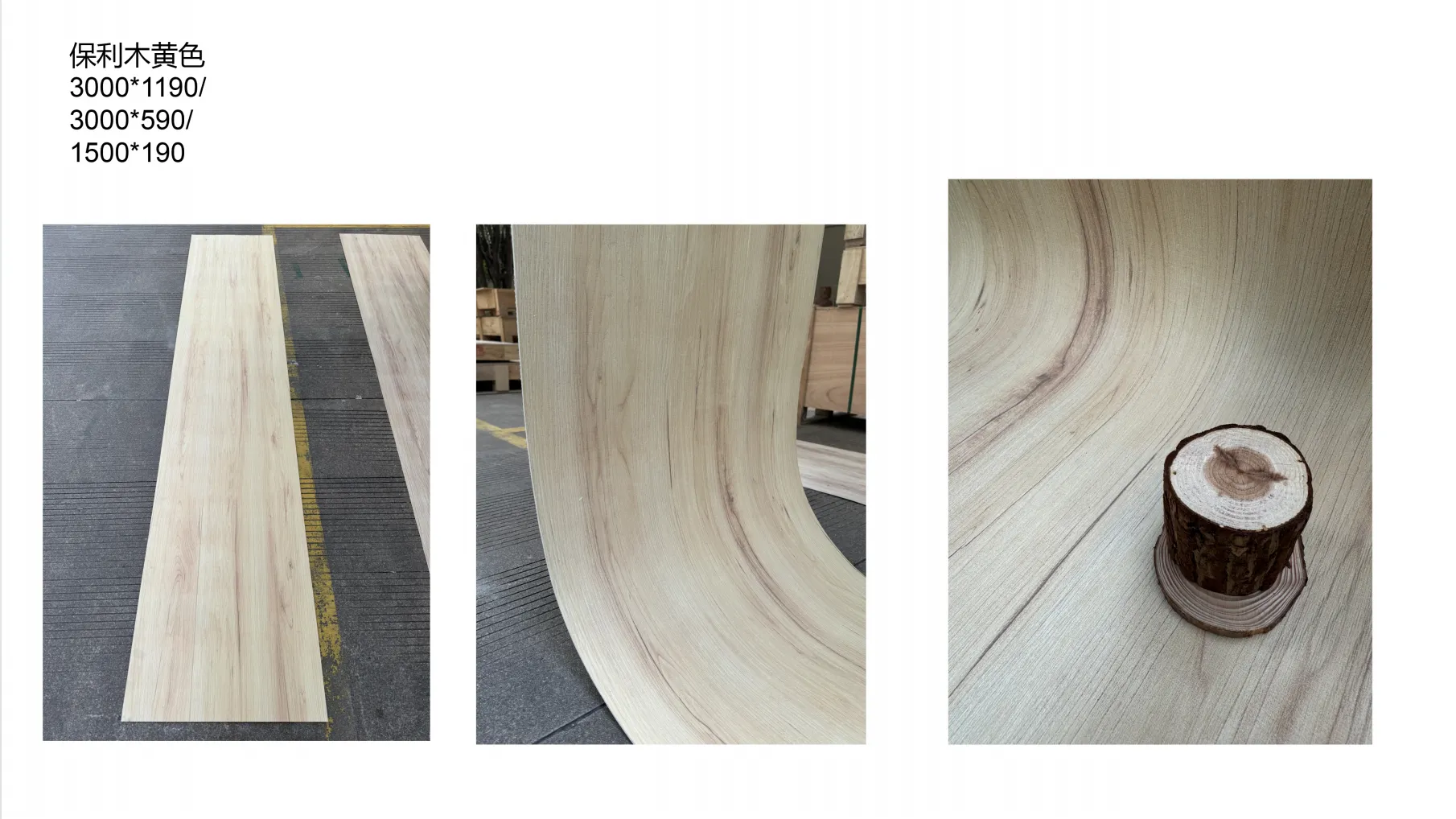
At first glance, Poly Wood Board looks like premium hardwood—rich grain patterns, warm tones, and a tactile finish that invites touch. But beneath that wood-like exterior lies a high-tech core: a modified composite material engineered by COLORIA MCM to withstand Saudi Arabia's worst. Let's unpack what makes it tick:
Unlike cheap "wood-plastic composites" (WPCs) that feel flimsy and artificial, Poly Wood Board is crafted from a proprietary blend of recycled wood fibers, high-density polymers, and reinforcing agents. This mix creates a material that's rigid enough for structural use (think facade cladding, pergolas, or outdoor decking) but flexible enough to resist cracking under thermal expansion—critical in a climate where temperatures swing from 10°C at night to 45°C by day.
COLORIA's engineers didn't just tweak existing formulas; they reimagined what a wood-alternative could be. Poly Wood Board boasts:
But don't just take our word for it. Let's look at how Poly Wood Board performs in real Saudi projects—paired with other COLORIA materials like MCM flexible stone and fair-faced concrete —to create spaces that are both beautiful and bulletproof.
COLORIA MCM isn't new to the Middle East. Over the past five years, their materials have been used in over 50 projects across Saudi Arabia, from luxury resorts in Al Ula to commercial towers in Riyadh. Below, we spotlight three standout projects where Poly Wood Board took center stage—proving its mettle in diverse environments.
Nestled in Riyadh's King Abdullah Financial District (KAFD), the Riyadh Tech Hub is a 10-story commercial complex designed to foster collaboration and innovation. Architect firm Zaha Hadid Associates wanted an exterior that balanced modernity with warmth, avoiding the cold, sterile look of all-glass facades. Their solution? A mix of fair-faced concrete for the main structure and Poly Wood Board for accent cladding and sunshades.
"We needed something that would soften the concrete's industrial feel but wouldn't require constant upkeep," says Lina Hassan, lead architect on the project. "Traditional wood was out of the question—we knew it would warp in the heat. Poly Wood Board checked all the boxes: it looks like teak, installs like a composite, and after two years, it still hasn't faded or cracked. Even the sunshades, which take the full brunt of the afternoon sun, look as good as the day they were installed."
The project also incorporated COLORIA's Lunar Peak Silvery panels for the lobby's feature wall, adding a sleek, metallic contrast to the Poly Wood Board's earthy tones. Together, the materials create a dynamic facade that shifts with the light—warm wood tones glowing at sunrise, cool silvery accents reflecting the midday sun.
On Jeddah's Corniche, a private villa overlooking the Red Sea needed an outdoor living space that could handle salt air, humidity, and the occasional summer downpour. The owner, a retired diplomat with a love for traditional Saudi architecture, wanted the warmth of wood for the terrace decking and pergola, but refused to compromise on durability.
Enter COLORIA's Poly Wood Board in "Teak Grain" finish. Installed in 2021, the decking has now weathered two summer seasons (peaking at 48°C) and countless sandstorms. "I was skeptical at first—how could something that looks this much like wood survive the coast?" admits the villa's project manager, Ahmed Al-Mansoori. "But after two years, there's zero mold, no warping, and the color is just as rich as when we put it down. We even pressure-washed it once, and it came out spotless—no splintering, no water damage. It's been a revelation."
The villa also used MCM flexible stone for the pool surround, chosen for its slip-resistant texture and ability to mimic natural limestone without the porosity. Together, the Poly Wood Board and MCM flexible stone create an outdoor oasis that feels luxurious yet worry-free—perfect for the owner's large family gatherings.
In Al Ula, a UNESCO World Heritage site known for its ancient rock formations, a boutique resort aimed to harmonize modern amenities with the desert landscape. The design called for exterior cladding that echoed the region's natural sandstone but offered the durability needed for high tourist traffic.
COLORIA's solution? A combination of Poly Wood Board (in "Desert Sand" finish) for the guestroom balconies and fair-faced concrete for the main buildings. "We wanted to evoke the warmth of traditional Najdi architecture, where wood and stone were the primary materials," explains the resort's designer, Omar Khalid. "Poly Wood Board let us do that without sacrificing durability. The balconies get intense sun, and with guests coming and going, we needed something scratch-resistant. So far, after a year of operation, there's not a single scratch or stain—even with kids running around with beach toys!"
The resort also used travertine (starry blue) for the restaurant's indoor accent wall, adding a pop of color that complements the Poly Wood Board's neutral tones. The result? A space that feels both timeless and modern, rooted in the desert's beauty but built to last.
To put these success stories into numbers, here's a quick look at key metrics from COLORIA's Saudi projects:
| Project Location | Project Type | COLORIA Materials Used | Duration Installed | Durability Highlights |
|---|---|---|---|---|
| Riyadh Tech Hub | Commercial Office | Poly Wood Board (Teak Grain), Fair-Faced Concrete, Lunar Peak Silvery | 2 years | No fading, 0.2% thermal expansion (well within safety limits), sandstorm resistance verified |
| Jeddah Coastal Villa | Residential | Poly Wood Board (Teak Grain), MCM Flexible Stone (Limestone Beige) | 2.5 years | No mold/rot, salt air resistance confirmed, 95% color retention |
| Al Ula Heritage Resort | Hospitality | Poly Wood Board (Desert Sand), Fair-Faced Concrete, Travertine (Starry Blue) | 1 year | Scratch resistance tested (withstood 500+ guest interactions), UV stability confirmed |
Poly Wood Board isn't just tough—it's also surprisingly versatile. COLORIA offers over 20 finishes, from rich walnut to weathered oak to the villa-friendly teak, allowing architects to match any aesthetic. And because it's a composite, it can be cut, drilled, and shaped like wood, making custom designs (curved pergolas, intricate latticework) achievable without specialized tools.
Take the wood grain board finish, a favorite among Saudi designers for its realistic texture. "Clients often think it's real wood until they touch it," says Majed Al-Zahrani, a Riyadh-based contractor who's used Poly Wood Board in three projects. "It's got that subtle grain variation you get with natural wood, but none of the maintenance. We recently used it for a restaurant's ceiling panels, and the acoustics are great too—much better than drywall!"
Sustainability is another plus. Poly Wood Board is made with 30% recycled materials, and its long lifespan (COLORIA backs it with a 15-year warranty) means less frequent replacement—reducing waste. It's also low-maintenance: no painting, staining, or sealing required. A quick hose-down with water is all it takes to keep it clean, saving both time and resources.
"In Saudi Arabia, where water is precious, low-maintenance materials are a win-win," notes environmental consultant Nada Faisal. "Poly Wood Board's minimal upkeep reduces water usage for cleaning and eliminates the need for toxic wood treatments—both big steps forward for green building."
Poly Wood Board's success in Saudi Arabia isn't just about the product—it's about COLORIA MCM's commitment to the region. The company operates a state-of-the-art manufacturing facility in Dubai, ensuring quick delivery to Saudi projects, and works closely with local architects to tailor solutions to the country's unique needs. Their quality control is rigorous: every batch of Poly Wood Board undergoes testing in simulated Saudi conditions (high heat, UV exposure, sand abrasion) before it leaves the factory.
"We don't just sell materials—we partner with builders," says Karim Boutros, COLORIA's Middle East Sales Director. "When a client in Riyadh asks for a custom color to match their brand, we deliver. When a contractor in Jeddah needs installation training, our team is there. That local support, paired with our global expertise, is what sets us apart."
In a country where the environment is as unforgiving as it is beautiful, Poly Wood Board stands out as a material that doesn't just survive—it thrives. Whether cladding a commercial tower in Riyadh, decking a coastal villa in Jeddah, or accenting a heritage resort in Al Ula, it brings the warmth of wood without the worry, paired seamlessly with COLORIA's other durable offerings like MCM flexible stone and fair-faced concrete.
For Saudi builders and architects, the message is clear: durability doesn't have to mean sacrificing beauty. With Poly Wood Board, you can have both—creating spaces that inspire today and endure tomorrow. As the kingdom continues to build its future, COLORIA MCM is proving that innovation and resilience go hand in hand.
Ready to see Poly Wood Board in action? Visit COLORIA's Riyadh showroom (on King Fahd Road) to view real samples and project photos, or reach out to their team to discuss how it can elevate your next project. In Saudi Arabia's tough climate, the right material makes all the difference—and Poly Wood Board is that material.
Recommend Products












