
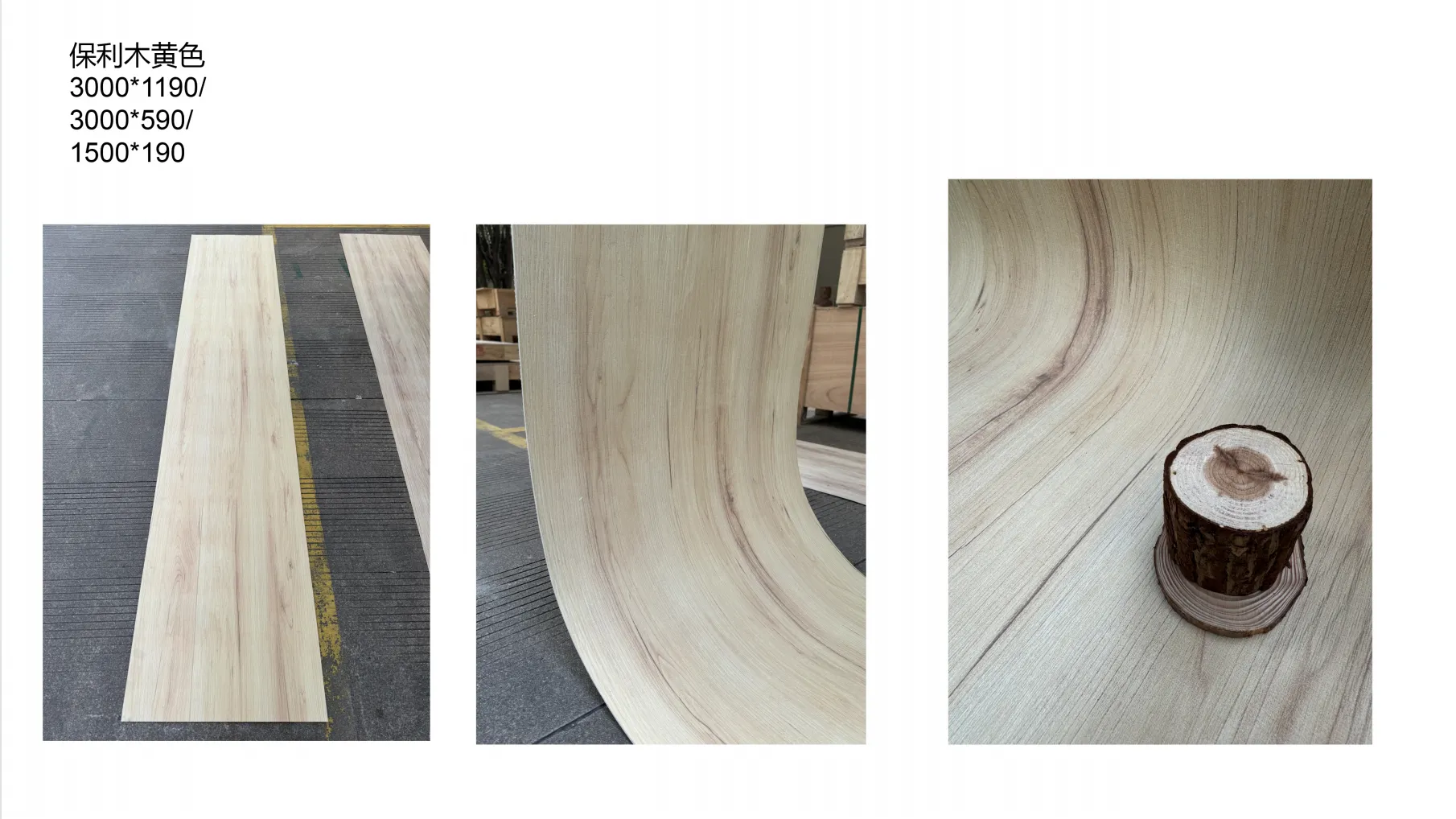
Picture this: You're standing in the middle of a half-finished home renovation, holding a sample of wood-look cladding in one hand and a fire safety checklist in the other. The design team raves about the warm, natural vibe of the material, but your mind keeps drifting to that news story you read last month—about a small electrical spark turning into a full-blown fire because of low-quality building materials. We've all been there: choosing between aesthetics and safety can feel like walking a tightrope. But what if you didn't have to choose? What if there was a material that married the beauty of wood with the rigor of industrial-grade fire resistance? Enter COLORIA MCM's Poly Wood Board—a product that's been turning heads not just for its stunning visuals, but for its uncompromising commitment to fire safety. Today, we're diving deep into its fire rating, the rigorous testing that backs it up, and how real photos of its safety certifications are changing the game for architects, builders, and homeowners alike.
First things first: Let's get to know the star of the show. Poly Wood Board is part of COLORIA MCM's innovative lineup of Modified Composite Material (MCM) products—materials engineered to mimic the look and feel of natural substances (in this case, wood) while packing in performance features that natural wood could only dream of. Think: resistance to moisture, pests, and yes, fire. Unlike traditional wood cladding, which can ignite and spread flames quickly, Poly Wood Board is a hybrid of wood fibers, polymers, and fire-retardant additives, pressed into panels that look so much like real wood, you'll find yourself reaching out to check if it splinters (spoiler: it doesn't). But here's the kicker: its beauty isn't skin-deep. COLORIA MCM didn't just stop at making it look good—they built it to protect. And that protection starts with its fire rating.
If you've ever glanced at a building material's specs, you've probably seen terms like "Class A" or "ASTM E84" thrown around. But what do these actually mean? Fire ratings are more than just certifications—they're a promise that a material has been put through the wringer to ensure it behaves predictably in a fire. For cladding materials like Poly Wood Board, two key tests matter most: flame spread and smoke development. Flame spread measures how quickly fire travels across the material's surface, while smoke development rates how much (and how toxic) the smoke is if it does catch fire. A "Class A" rating, for example, means the material has a flame spread index of 0-25 (on a scale of 0-200, where 0 is asbestos and 200 is untreated wood) and a smoke development index under 450. In short: it's the gold standard for fire resistance in building materials.
But why does this matter for your project? Let's break it down. For homeowners, a high fire rating means peace of mind—knowing that in the unlikely event of a fire, your walls won't act as kindling. For architects and builders, it's about compliance: most commercial and residential codes mandate minimum fire ratings for exterior and interior cladding. And for everyone, it's about sustainability. A material that resists fire isn't just safer—it's more durable, reducing the need for replacements and cutting down on waste. Which brings us to another key term from COLORIA MCM's portfolio: green building materials . Because fire safety and sustainability? They're two sides of the same coin.
So, how does Poly Wood Board stack up? Let's cut to the chase: COLORIA MCM's Poly Wood Board boasts a Class A fire rating under ASTM E84-21, the industry standard test method for surface burning characteristics of building materials. That means when exposed to flame, it exhibits minimal flame spread (we're talking single-digit numbers on the index) and low smoke development. But numbers alone don't tell the whole story. What really sets COLORIA MCM apart is transparency. Instead of just stating "Class A" on a datasheet, they've made it a mission to show you the proof—through real photos of their safety certifications, test reports, and even images of the material undergoing fire testing.
Let's walk through what those tests entail. During the ASTM E84 test, the Poly Wood Board sample is mounted vertically in a 25-foot-long tunnel, with a gas burner at one end. The burner ignites, and researchers measure two things: how far the flame travels along the material (flame spread) and how much smoke is produced (smoke density). For Class A, the flame spread index must be ≤25, and the smoke developed index ≤450. COLORIA MCM's results? A flame spread index of 12 and a smoke developed index of 85—numbers that not only meet Class A requirements but crush them. And yes, they have the photos to prove it: snapshots of the test setup, the certification label from the lab, and even side-by-side comparisons of Poly Wood Board vs. untreated wood during the test (spoiler: the untreated wood sample was charred beyond recognition in minutes, while the Poly Wood Board showed only minor scorching at the edges).
In an industry where "trust us" is often the default, COLORIA MCM is flipping the script with real photos of their safety certifications. These aren't just stock images of generic labels—they're high-resolution shots of the actual certificates issued by accredited labs, complete with test dates, sample IDs, and signature stamps. One photo, for example, shows the ASTM E84 certificate framed in their headquarters, with the test results highlighted in bold. Another series captures the Poly Wood Board in a third-party fire testing facility, with researchers in protective gear monitoring the burn. There's even a gallery of "before and after" images: the material pre-test (pristine, with its signature wood grain visible), mid-test (flame licking at the edge, but not spreading), and post-test (minor discoloration, but structural integrity intact).
Why does this matter? Because in a world of greenwashing and exaggerated claims, seeing is believing. An architect working on a hospital project can pull up these photos in a client meeting to reassure stakeholders that the cladding meets strict healthcare fire codes. A homeowner can scroll through the online gallery and feel confident that their investment isn't just pretty—it's protected. Even contractors benefit: having visual proof of certifications speeds up permit approvals, as inspectors can quickly verify compliance without digging through stacks of paperwork. It's transparency in action, and it's reshaping how the industry views safety certifications.
Curious how Poly Wood Board stacks up against other popular cladding materials? Let's take a look at a side-by-side comparison. We'll pit it against traditional wood, wood concrete board (another hybrid material), and fair-faced concrete (a common fire-resistant alternative).
| Material | Fire Rating (ASTM E84) | Flame Spread Index | Smoke Developed Index | Sustainability | Aesthetic Appeal |
|---|---|---|---|---|---|
| Traditional Wood Cladding | Class C (Unrated) | 150-200 | 600-800 | High (renewable) but low durability | High (natural wood grain) |
| Wood Concrete Board | Class B | 75-100 | 300-400 | Medium (mix of wood and concrete) | Medium (textured, but less natural than wood) |
| Fair-Faced Concrete | Class A | 0-25 | 0-100 | Low (high carbon footprint) | Low (industrial, utilitarian look) |
| COLORIA MCM Poly Wood Board | Class A | 12 | 85 | High (recycled materials, low waste) | High (authentic wood grain, multiple finishes) |
The takeaway? Poly Wood Board doesn't just match the fire safety of fair-faced concrete—it outperforms it in sustainability and aesthetics. And compared to wood concrete board, it's in a league of its own for both fire resistance and visual appeal. It's the rare material that checks all the boxes: safe, sustainable, and stunning.
Fire rating might be the headline, but Poly Wood Board has more tricks up its sleeve. Let's talk durability. Unlike natural wood, it's resistant to rot, mold, and pests—no more worrying about termites or water damage in humid climates. It's also lightweight, making installation a breeze compared to heavy concrete or stone cladding. And let's not forget about design flexibility: COLORIA MCM offers Poly Wood Board in a range of finishes, from warm oak to rich walnut, so you can get that "cozy cabin" vibe or "sleek modern" look without sacrificing safety. Plus, as part of COLORIA MCM's broader MCM lineup—think MCM flexible stone , 3D printing series, and big slab board series—Poly Wood Board plays well with others, letting designers mix and match materials for truly unique spaces.
Take, for example, a recent project in downtown Seattle: a boutique hotel wanted to blend industrial edge with natural warmth. The design team paired Poly Wood Board cladding on the exterior with MCM flexible stone accents around the windows, creating a facade that's both inviting and fire-safe. The result? A building that turned heads for its design and earned praise from fire marshals for its compliance. And yes, COLORIA MCM has photos of that too—real-world installations where safety and beauty coexist.
Whether you're building a home, a restaurant, or a school, the materials you choose shape more than just the look of the space—they shape its safety, durability, and environmental impact. Poly Wood Board isn't just a cladding material; it's a statement. It says, "I care about how this space looks, but I care more about how it protects the people in it." And with COLORIA MCM's commitment to transparency—those real photos of certifications, test results, and installations—you're not just buying a product; you're buying peace of mind.
Let's circle back to that renovation scenario we started with. Imagine holding that Poly Wood Board sample now, but this time, you've got a phone open to COLORIA MCM's online gallery of safety certifications. You scroll through photos of the ASTM E84 test, the Class A label, and a finished home where the cladding looks just as good as the day it was installed—even after years of weather and wear. Suddenly, the tightrope between aesthetics and safety doesn't feel so wobbly. Because with Poly Wood Board, you're not choosing one over the other. You're choosing both.
In a world where building materials are often marketed with empty buzzwords, COLORIA MCM's Poly Wood Board stands out for one simple reason: it delivers. Its Class A fire rating isn't just a line on a spec sheet—it's a result of rigorous testing, cutting-edge engineering, and a commitment to protecting what matters most. And those real photos of safety certifications? They're more than just proof—they're a promise. A promise that when you choose Poly Wood Board, you're choosing a material that's been put through the fire (literally) and emerged stronger.
So, the next time you're standing in that half-finished space, holding a material sample and a checklist, remember: you don't have to choose between beauty and safety. With COLORIA MCM's Poly Wood Board, you can have both. And now, thanks to their real photos of safety certifications, you can see it for yourself.
Recommend Products












