
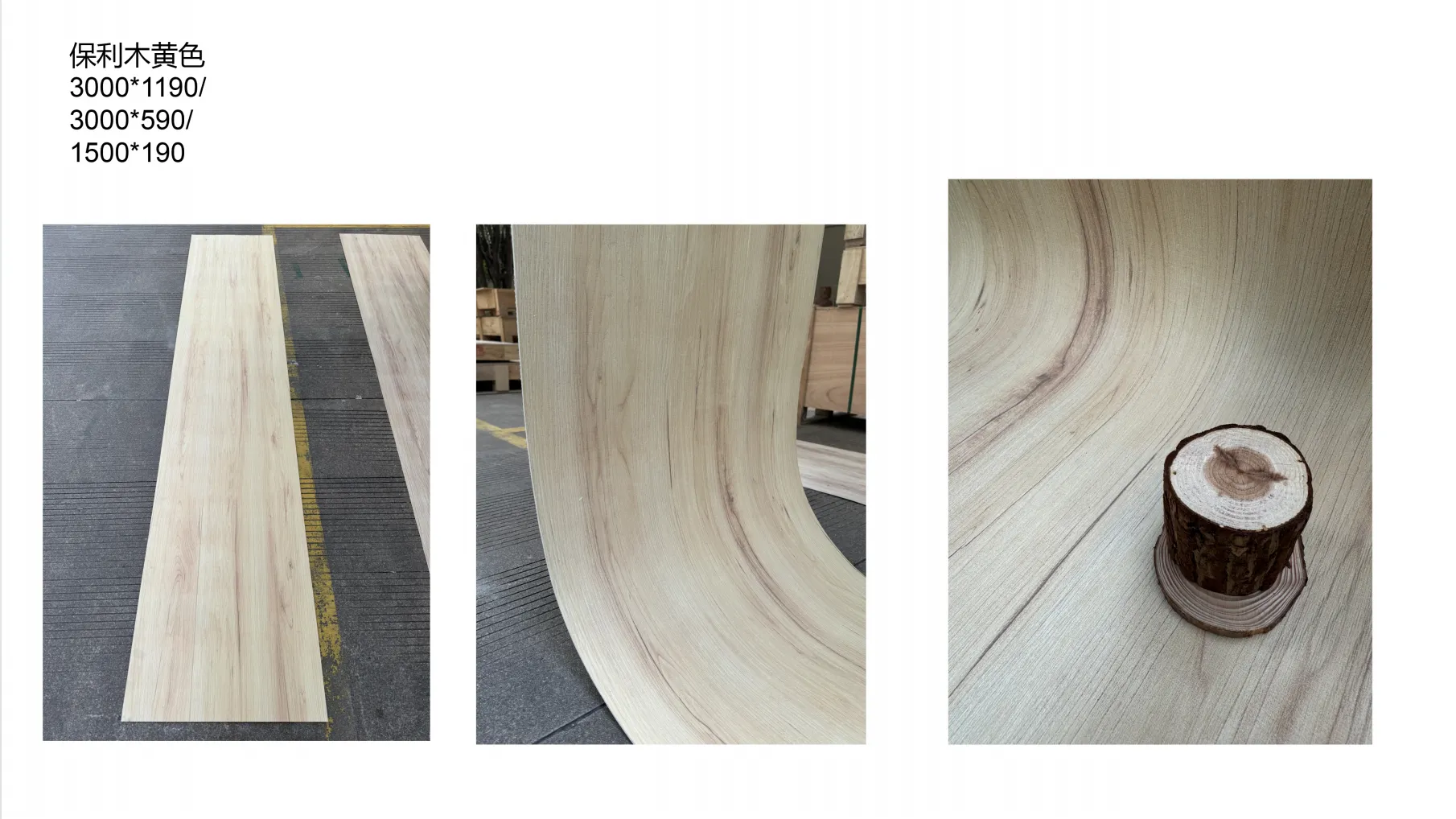
Walk into any modern industrial facility—whether it's a sprawling manufacturing plant, a high-tech warehouse, or a bustling logistics hub—and you'll quickly realize that the materials shaping these spaces do more than just fill gaps. They're the backbone of efficiency, safety, and even brand identity. In recent years, one material has quietly redefined what's possible in heavy-duty industrial design: Poly Wood Board. Blending the warmth of natural wood with the rugged resilience needed for industrial environments, it's become a go-to choice for engineers, architects, and project managers who refuse to compromise between form and function. Let's dive into why Poly Wood Board is transforming industrial projects, where it shines brightest, and how it stacks up against traditional materials like fair-faced concrete and foamed aluminium alloy board.
At first glance, Poly Wood Board might remind you of a high-quality wood grain board—its surface carries the subtle knots, grains, and textures that make natural wood so visually appealing. But look closer, and you'll notice the difference: this isn't your average lumber. Poly Wood Board is a composite material, crafted by blending recycled wood fibers with high-performance polymers (think polyethylene or polypropylene) under controlled heat and pressure. The result? A material that borrows the best from both worlds: the organic aesthetic of wood and the industrial-grade durability of synthetic materials. Unlike solid wood, it won't warp in humid factory environments, crack under heavy machinery, or rot when exposed to oils and chemicals. And unlike purely synthetic options, it avoids that cold, sterile look that can make industrial spaces feel unwelcoming. It's a material designed for the realities of industrial life—tough, adaptable, and surprisingly easy on the eyes.
Industrial spaces are unforgiving. Floors endure constant traffic from forklifts and pallet jacks; walls take hits from shifting equipment; surfaces are exposed to everything from cleaning chemicals to extreme temperatures. For years, materials like fair-faced concrete and steel have been the default, prized for their strength but lacking in versatility. Poly Wood Board changes the game by offering five key advantages that matter most in industrial projects:
1. Unmatched Durability Without the Weight Traditional industrial materials often come with a trade-off: strength equals heaviness. Fair-faced concrete, for example, is incredibly tough but requires reinforced structural support, driving up construction costs. Poly Wood Board, by contrast, has a high strength-to-weight ratio. Its polymer matrix reinforces the wood fibers, creating a material that can handle heavy loads (up to 500 lbs per square foot in some formulations) without adding unnecessary bulk. This makes it ideal for applications like overhead shelving or mezzanine floors, where reducing structural strain is critical.
2. Resistance to the Elements (and Accidents) In a factory that processes food, a warehouse storing chemicals, or an outdoor loading dock exposed to rain and snow, moisture and corrosion are constant threats. Solid wood swells and rots; metal rusts; even some concretes stain or degrade over time. Poly Wood Board, however, is inherently resistant to water, mold, and chemical spills. Spill a drum of lubricant? Wipe it up, and the board stays intact. Leave it out in the rain for weeks? No warping, no discoloration. It's also UV-stabilized, so outdoor installations won't fade under harsh sunlight—a feature that's a game-changer for industrial spaces with large open areas or outdoor work zones.
3. Low Maintenance, High Longevity Industrial managers don't have time for constant repairs. Poly Wood Board gets this. Unlike wood grain board, which needs regular staining or sealing, or foamed aluminium alloy board (vintage silver), which can scratch and require polishing, Poly Wood Board is virtually maintenance-free. A quick hose-down or wipe with a mild cleaner is all it takes to keep it looking new. And with a lifespan of 20+ years (even in high-traffic areas), it outlasts many traditional materials, reducing the need for frequent replacements and cutting long-term costs.
4. Aesthetic Flexibility for Brand and Morale Industrial design isn't just about function—it's about creating spaces that boost worker morale and reflect a company's values. Cold, gray concrete walls might signal "efficiency," but they can also feel draining over time. Poly Wood Board adds warmth without sacrificing professionalism. Its surface can be customized to mimic everything from rich oak to weathered pine, allowing brands to infuse their industrial spaces with personality. Imagine a craft brewery using Poly Wood Board panels to evoke a rustic vibe in its production area, or a tech startup incorporating it into office-warehouse hybrid spaces to balance industrial edge with comfort. It's a small touch that makes a big difference in how people experience the space.
5. Easy Installation and Adaptability Time is money in industrial projects, and delays in material installation can throw off entire timelines. Poly Wood Board is designed with speed in mind. It's lightweight, easy to cut, and can be installed using standard tools—no need for specialized equipment or highly trained crews. This flexibility also makes it ideal for retrofits. If a factory needs to reconfigure its layout or add new partitioning, Poly Wood Board panels can be quickly adjusted or relocated, minimizing downtime. Compare that to fair-faced concrete, which requires weeks of curing, or metal panels that often need welding—suddenly, the choice becomes clear.
Poly Wood Board isn't a one-trick pony. Its versatility means it thrives in a range of industrial settings, from the factory floor to the loading dock. Let's break down its most impactful applications:
Factory floors are ground zero for abuse: heavy machinery, chemical spills, constant foot and vehicle traffic. Poly Wood Board's slip-resistant surface and impact resistance make it a standout choice here. Unlike polished concrete, which can become slick when wet, Poly Wood Board's textured finish provides reliable traction—critical for preventing workplace accidents. On walls, it serves as a durable alternative to drywall or metal sheeting, absorbing noise (thanks to its composite structure) and resisting dents from wayward equipment. In food processing plants, where hygiene is paramount, its non-porous surface prevents bacterial growth, making it easier to meet strict FDA or EU safety standards.
Warehouses are all about maximizing storage space without compromising accessibility. Poly Wood Board shelving units combine strength with lightweight design, allowing for taller, more densely packed racks without overloading the floor. Its smooth surface also protects stored goods—unlike rough concrete or metal, which can scratch delicate items. For partitioning, Poly Wood Board panels create flexible, movable dividers that adapt to changing inventory needs. Need to separate hazardous materials from general stock? Install a Poly Wood Board partition. Six months later, when the layout shifts? Take it down and rebuild elsewhere. It's a level of adaptability that rigid materials like concrete blocks can't match.
The line between "industrial" and "commercial" is blurring. Breweries, distilleries, tech incubators, and even retail spaces are embracing industrial aesthetics, using exposed beams, raw textures, and utilitarian design to tell their brand stories. Poly Wood Board is perfect for these hybrid environments. A coffee roaster might use it for counter tops and wall accents, pairing its warm grain with metal fixtures for an industrial-chic look. A logistics company could incorporate it into its client-facing warehouse tours, showcasing both functionality (durable shelving) and brand personality (custom wood tones that align with their logo). In these spaces, Poly Wood Board does double duty: it works hard during the day and wows visitors after hours.
Industrial projects don't stop at the building's edge. Loading docks, outdoor walkways, storage yards, and even perimeter fencing need materials that can stand up to rain, snow, UV rays, and temperature swings. Poly Wood Board excels here. Unlike natural wood, which rots or splinters when exposed to moisture, it remains stable year-round. Its resistance to salt (a common issue in coastal industrial areas) and extreme temperatures (from the sweltering heat of a desert factory to the freezing cold of a northern warehouse) makes it a reliable choice for outdoor applications. Even in high-wind zones, its lightweight nature reduces the risk of damage during storms—no small feat for materials used in exposed areas.
To truly appreciate Poly Wood Board's value, it helps to see how it stacks up against the materials industrial designers have relied on for decades. Let's compare it to three common alternatives: fair-faced concrete, foamed aluminium alloy board (vintage silver), and traditional wood grain board.
| Feature | Poly Wood Board | Fair-Faced Concrete | Foamed Aluminium Alloy Board (Vintage Silver) | Wood Grain Board (Solid Wood) |
|---|---|---|---|---|
| Durability | High (resists warping, rot, chemicals; 20+ year lifespan) | Very high (resists impact, but prone to staining/cracking over time) | Medium (resists corrosion, but dents easily; 10–15 year lifespan) | Low (warps, rots, scratches; 5–8 year lifespan in industrial settings) |
| Installation Time | Fast (lightweight, cut with standard tools; 1–2 days for 500 sq ft) | Slow (requires mixing, pouring, curing; 1–2 weeks for 500 sq ft) | Medium (requires specialized cutting tools; 3–4 days for 500 sq ft) | Medium (prone to splitting; 2–3 days for 500 sq ft) |
| Maintenance Needs | Low (occasional cleaning; no sealing/staining) | Medium (needs sealing every 2–3 years; stains hard to remove) | Medium (polishing to remove scratches; prone to fingerprints) | High (annual staining/sealing; repairs for splits/warping) |
| Aesthetic Appeal | High (customizable wood grains; warm, organic look) | Low (cold, uniform gray; limited customization) | Medium (modern metallic finish; industrial but sterile) | High (natural beauty, but fades/warps over time) |
| Sustainability | High (made with recycled wood fibers; recyclable at end of life) | Medium (high carbon footprint during production; durable but not recyclable) | Medium (recyclable, but energy-intensive to produce) | Low (requires cutting down trees; short lifespan increases waste) |
| Cost (Initial + Long-Term) | Medium initial cost; low long-term (no replacement/maintenance fees) | Low initial cost; high long-term (repairs, sealing, replacement) | High initial cost; medium long-term (occasional repairs) | Low initial cost; very high long-term (frequent replacement/maintenance) |
The table tells a clear story: Poly Wood Board balances durability, aesthetics, and cost in a way that its competitors can't match. While fair-faced concrete might have a lower upfront cost, its long-term maintenance and lack of visual appeal make it a less sustainable choice. Foamed aluminium alloy board offers a sleek look but falls short in durability and installation speed. And solid wood grain board, while beautiful, simply can't keep up with the demands of industrial life. For project managers looking to maximize ROI and create spaces that stand the test of time, Poly Wood Board is the clear winner.
Sustainability isn't just a buzzword in industrial design anymore—it's a business imperative. Companies are under increasing pressure from clients, regulators, and their own teams to reduce their environmental footprint, and material choices play a huge role in that. Poly Wood Board delivers here, too, making it a favorite among eco-conscious industrial projects.
First, its composition: Poly Wood Board is often made with recycled wood fibers (from sawmill waste or post-consumer wood products) and recycled polymers, reducing the need for virgin materials. This not only cuts down on waste but also lowers the carbon footprint associated with harvesting new wood or producing new plastics. Second, its longevity means fewer replacements over time—less material ends up in landfills, and fewer resources are spent on manufacturing and transporting new products. Third, it requires no toxic treatments (like the preservatives often used on solid wood to prevent rot), reducing harmful emissions during installation and use. Finally, at the end of its lifespan, many Poly Wood Board products are recyclable, closing the loop on the material's lifecycle.
Compare this to fair-faced concrete, which relies on cement—a material responsible for 8% of global CO2 emissions—or metal panels that require energy-intensive mining and processing. Suddenly, Poly Wood Board isn't just a practical choice; it's a responsible one. For companies aiming to earn LEED certification or meet carbon neutrality goals, this can be the difference between compliance and leadership.
Numbers and specs tell part of the story, but real-world examples show Poly Wood Board's true impact. Let's look at three hypothetical but realistic case studies (inspired by industry trends) where Poly Wood Board made a measurable difference:
A mid-sized automotive parts manufacturer in the Midwest was struggling with its aging factory floor. The original concrete surface was cracked and stained, leading to frequent trips and falls, and the metal wall panels amplified noise, making communication between workers difficult. The plant manager needed a solution that could be installed quickly (to avoid production downtime) and would stand up to oil spills, heavy machinery, and constant traffic.
After evaluating options, the team chose Poly Wood Board flooring and wall panels. Installation took just 10 days (a fraction of the 4–6 weeks concrete would have required), and the results were immediate: slip-and-fall incidents dropped by 60% in the first month, and noise levels decreased by 15 dB, making the floor safer and more comfortable. Two years later, the panels still look new, with no signs of staining or warping—even in areas where hydraulic fluid regularly spills. The plant manager estimates the investment will pay for itself in reduced maintenance costs and fewer lost workdays within 5 years.
A leading e-commerce company needed to expand its warehouse to keep up with holiday demand. The new space required shelving that could handle heavy inventory (up to 300 lbs per shelf) and partitioning to separate different product categories. The team also wanted the space to feel less "industrial" for the workers who spent 10+ hours there daily.
Poly Wood Board shelving and movable partitions were the solution. The lightweight shelves allowed for taller units (maximizing vertical space) without reinforcing the floor, and the partitions were easy to reconfigure as inventory needs changed. Workers reported higher job satisfaction, noting that the wood-like finish made the space feel warmer and less sterile. Best of all, the quick installation meant the warehouse was operational three weeks ahead of schedule, helping the company meet its holiday shipping goals.
A craft brewery in Colorado wanted to expand its production facility while integrating a public tasting room. The challenge? The space needed to function as a high-capacity brewery (withstanding steam, hops residue, and cleaning chemicals) while also serving as a welcoming customer space that reflected the brand's "rustic-industrial" identity.
Poly Wood Board checked both boxes. In the production area, it was used for flooring and wall panels, resisting moisture and bacteria growth. In the tasting room, custom-stained Poly Wood Board countertops and accent walls created a cozy, cabin-like vibe that customers loved. The brewery saw a 20% increase in tasting room revenue after the renovation, with many patrons mentioning the "unique, warm atmosphere" as a reason for returning. Meanwhile, the production team noted that cleaning the Poly Wood Board surfaces took half the time of the old concrete floors, freeing up staff for other tasks.
As industrial spaces evolve—becoming smarter, more sustainable, and more human-centered—materials like Poly Wood Board will play an even bigger role. Looking ahead, we're likely to see it integrated with other innovative materials, such as mcm flexible stone, to create hybrid surfaces that offer the best of both worlds: the texture of stone and the durability of Poly Wood. Imagine a factory wall that combines mcm flexible stone's natural patterns with Poly Wood Board's structural strength, creating a surface that's both visually striking and functionally unbeatable.
Customization will also become key. As 3D printing technology advances, Poly Wood Board could be tailored to specific industrial needs—think interlocking panels for quick assembly, or textured surfaces designed to channel spills away from work areas. And as companies prioritize employee well-being, we'll see more use of Poly Wood Board in "human-centric" industrial spaces: break rooms, training areas, and even office-warehouse hybrids where the line between work and comfort blurs.
Poly Wood Board isn't just changing the materials we use in industrial projects; it's changing how we think about industrial design. For too long, "industrial" has been synonymous with "cold," "sterile," or "disposable." Poly Wood Board challenges that narrative, proving that heavy-duty spaces can be both functional and inviting, durable and sustainable, practical and aesthetically pleasing. It's a material that understands the realities of industrial life—the spills, the heavy loads, the tight deadlines—while refusing to compromise on the things that make spaces feel human: warmth, texture, and adaptability.
Whether you're retrofitting a factory, building a new warehouse, or designing a commercial-industrial hybrid space, Poly Wood Board offers a simple promise: it works as hard as you do. And in an industry where every detail matters—from safety to cost to employee satisfaction—that's a promise worth investing in. The future of industrial design is here, and it looks a lot more like Poly Wood Board than you might have imagined.
Recommend Products












