
Exploring how two modern building materials are redefining texture, sustainability, and space design
Walk into any space—whether it's a cozy home, a bustling café, or a sleek corporate office—and the first thing that shapes your feeling about it isn't just the furniture or lighting. It's the materials beneath your hands, above your head, and all around you. Building materials are the silent storytellers of architecture, blending function with emotion to turn structures into experiences. In recent years, two innovations have risen to the forefront of this narrative: Poly Wood Board and 3D Printed MCM . One draws inspiration from nature's timeless warmth, the other from cutting-edge technology's boundless creativity. Let's dive into their world—how they're made, how they feel, where they shine, and why they're quickly becoming favorites for designers and homeowners alike.
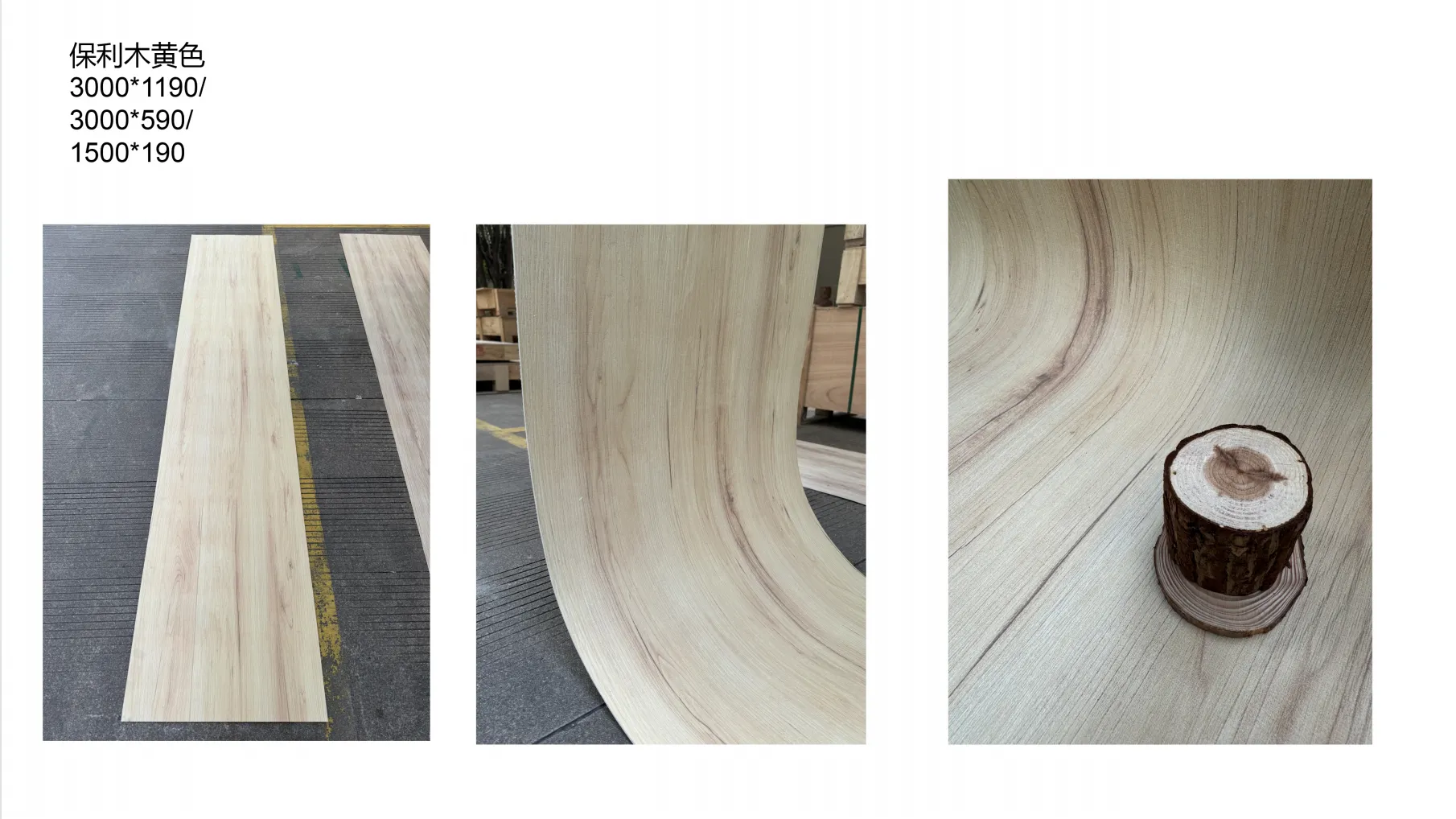
Imagine running your hand over a surface that feels like aged oak, with grains that twist and turn like a forest path—but it never warps in the rain, fades in the sun, or succumbs to termites. That's the promise of Poly Wood Board. Born from the need to replicate wood's organic charm without its maintenance headaches, this material is a blend of recycled plastic, wood fibers, and eco-friendly binders. It's the answer to a design dilemma: how to bring nature indoors (or outdoors) without sacrificing longevity.
What sets Poly Wood Board apart is its texture. Unlike smooth, uniform laminates, it mimics the irregularities of real wood—knots, grain variations, even the subtle roughness of a hand-sanded plank. Some variants, like sawing wood board real photos , capture the exact look of lumber fresh from the sawmill, complete with saw marks and slight color shifts. Others, such as wood grain board , lean into more refined patterns, perfect for spaces where warmth should feel intentional, not rustic.
Applications? The possibilities are as wide as wood itself, but better. Poly Wood Board thrives in high-moisture areas like bathrooms and kitchens, where real wood would rot. It's a star in outdoor spaces too—decking, patio walls, even poolside cabanas—since it resists saltwater, UV rays, and temperature swings. In commercial settings, cafes use it for accent walls to create a "rustic meets modern" vibe, while retail stores line shelves with it to make products feel more approachable. And because it's made from recycled materials, it checks the sustainability box, often earning LEED points for green building projects.
If Poly Wood Board is a love letter to nature, 3D Printed MCM is a poem written by robots—precise, innovative, and full of unexpected beauty. MCM, or Modified Composite Material, has been around for years, valued for its lightweight flexibility. But when paired with 3D printing technology, it becomes something entirely new: a material that can mimic any texture under the sun (or beyond it), from the pockmarked surface of the moon to the ripples of a mountain stream.
The magic starts with a digital design. Architects and designers can upload 3D models of textures—say, lunar peak silvery with its crater-like indentations, or starry green travertine with tiny, glittering flecks—and the 3D printer layers MCM paste (a mix of minerals, polymers, and mcm flexible stone particles) to bring that model to life. The result? Panels with depth, dimension, and details so precise they look hand-carved, but at a fraction of the time and cost.
What makes 3D Printed MCM revolutionary is its flexibility—literally. Thanks to mcm flexible stone as a core component, these panels can bend and curve, conforming to rounded walls, arched doorways, or even ceiling domes. Imagine a hotel lobby with a sweeping, curved wall printed to look like gobi panel —rippled, wind-worn, and impossibly realistic. Or a tech startup's office where the reception desk is clad in 3D art concrete board , printed with geometric patterns that light up when touched. The only limit is the designer's imagination.
Durability? Despite its delicate appearance, 3D Printed MCM is tough. It's fire-resistant, water-resistant, and lightweight, making installation a breeze compared to heavy stone or concrete. It's also customizable in color—whether you want the industrial chic of foamed aluminium alloy board (vintage silver) or the warmth of travertine (vintage gold) , the printer can tint the MCM paste to match. And because it's printed on-demand, there's minimal waste—no excess material cut off and discarded, just panels tailored exactly to the project's dimensions.
To truly understand these materials, let's put them side by side. Here's how Poly Wood Board and 3D Printed MCM stack up in key areas:
| Feature | Poly Wood Board | 3D Printed MCM |
|---|---|---|
| Core Aesthetic | Warm, organic, wood-like textures (e.g., wood line , bamboo mat board ) | Futuristic, customizable, nature-inspired or abstract textures (e.g., lunar peak black , wave panel ) |
| Installation | Easy to cut, drill, and nail (like wood); ideal for DIY or small projects | Lightweight and flexible; best installed by pros for complex curves, but simple panels go up quickly |
| Durability | Resists moisture, rot, pests; lasts 25+ years outdoors | Scratch-resistant, fire-retardant; withstands indoor/outdoor use (up to 30+ years with proper care) |
| Sustainability | Made from recycled plastic/wood fibers; low VOC emissions | Minimal waste via 3D printing; often uses recycled minerals in MCM paste |
| Best For | Rustic homes, outdoor spaces, cafes, retail (warmth-focused designs) | Modern offices, luxury hotels, art installations (statement-making, custom textures) |
In a beach town in Portugal, a small café called "Mar e Terra" (Sea and Earth) wanted to blur the line between indoors and outdoors. The designers chose Poly Wood Board for the walls and ceiling, opting for a charcoal burnt wood board finish that mimics driftwood weathered by salt and sun. The result? A space that feels like a cozy beach shack, but with walls that wipe clean after sandstorms and never need refinishing. Patrons often comment on how the texture "makes the coffee taste warmer"—proof that materials shape more than just sight, but sensation too.
A Silicon Valley startup needed an office that screamed "innovation." Enter 3D Printed MCM. The reception area features a wall printed to look like starry blue travertine —deep indigo with tiny white flecks that catch the light like a night sky. Down the hall, meeting rooms are wrapped in ripple board (grey) , its undulating surface inspired by sound waves. Even the elevator doors got a makeover: printed with linear travertine (claybank) , they look like stacked stone but weigh next to nothing. Employees say the space "feels like working inside a piece of art."
What's next for these materials? Designers are already experimenting with hybrids: Poly Wood Board panels with 3D printed edges for added dimension, or 3D Printed MCM that mimics wood grain but with customizable color gradients. Imagine a home where the living room wall is half wood concrete board (light grey) (a Poly Wood variant) and half travertino (white) 3D printed MCM—warmth meets modernity, no compromises.
Sustainability will only grow more critical. Poly Wood Board manufacturers are exploring plant-based binders to replace synthetic ones, while 3D Printed MCM companies are testing recycled glass and industrial byproducts in their paste mixes. And as 3D printing speeds up, costs will drop, making these textures accessible to more projects—from tiny home renovations to massive stadiums.
At the end of the day, Poly Wood Board and 3D Printed MCM aren't just building materials—they're tools to craft stories. Whether you want your space to feel like a cabin in the woods or a spaceship, they offer the texture, durability, and flexibility to make it happen. So the next time you're planning a project, don't just think about what looks good. Think about what feels right. Because in the world of design, the best spaces aren't just seen—they're experienced.
Recommend Products












